
 Have a question? +971 56 404 0503




Financial
ADIB’s Retail Banking Chief Discusses Market Leadership and Product Innovation Strategy


Exclusive Interview with Amit Malhotra, Group Head of Retail Banking, ADIB
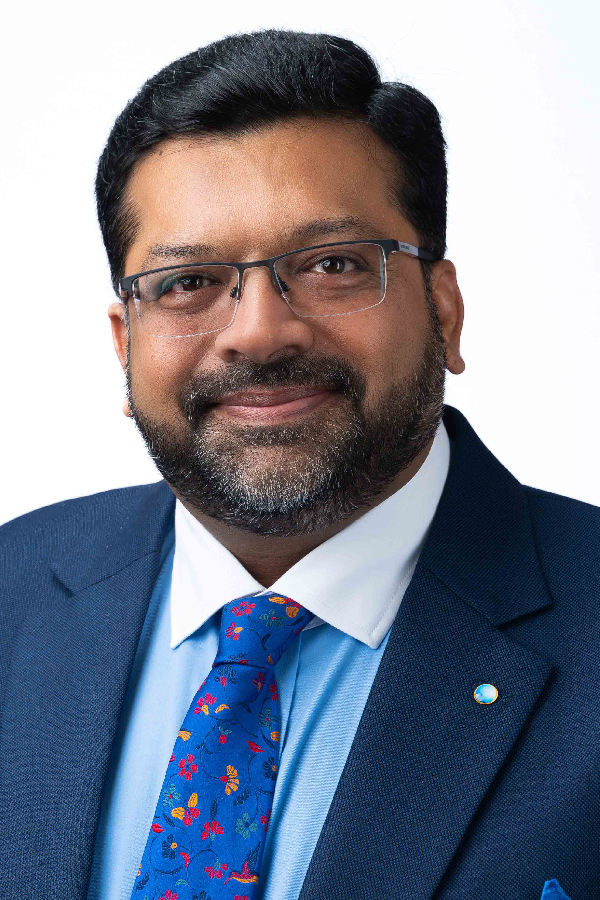
- You launched the remittance service “Remit!” this month in collaboration with Visa. Why might this service contribute to the expansion of your business? How have customers responded to it? And is it limited to the UAE market, which is seeing a growing influx of migrant labour?
The launch of “Remit!” with Visa represents an important milestone for ADIB, expanding our product portfolio and meeting the evolving needs of customers who increasingly require secure, rapid, and cost-effective remittance solutions. It also reflects the bank’s unwavering commitment to innovation, customer-centricity, and financial inclusion.
The UAE, with its large and growing expat population, provides a strong foundation for such services, and remittances remain a critical financial lifeline for many residents. ADIB’s new service leverages the power of Visa’s global network to deliver fast, reliable, and transparent cross-border transfers. This offering not only reinforces ADIB’s position as a leader in digital banking solutions but also addresses the evolving needs of a diverse customer base in one of the world’s largest remittance markets. With a large and ever-growing expatriate population, the demand for secure, rapid, and cost-effective remittance solutions is essential and
the launch of “Remit!” with Visa Direct is a strategic response to the UAE’s unique market dynamics. Visa Direct, known for its real-time payment capabilities, empowers ADIB customers to send funds internationally with unprecedented ease and speed. Transfers that once took days can now be completed within hours—This “remittance at your fingertips” approach transforms the user experience, removing traditional barriers and complexities that have long characterized cross-border payments.
Early feedback has been highly encouraging. Customers value the seamless integration with Visa’s global network, which allows transfers to be completed within hours rather than days. They also appreciate the user-friendly app interface, responsive customer support, and the added confidence of Visa’s robust security protocols. These features have proven particularly reassuring for first-time remittance users.
At present, “Remit!” is tailored for the UAE market. However, given the scale of Visa’s infrastructure, the platform is designed with future scalability in mind, creating potential for expansion into other markets with similar demand.
- What is the volume of investments the bank has injected into new products since the beginning of the year, and what are your expectations for the fourth quarter?
ADIB has consistently invested in new products throughout the year as part of its broader commitment to innovation and growth solidifying its reputation as a market leader in Islamic banking. While specific figures are not disclosed, our strategy prioritizes supporting emerging opportunities and diversifying our product offerings. These include fractional sukuk This innovative product allows a wider range of customers to participate in sukuk investments by lowering the minimum investment threshold, making Islamic finance more accessible and flexible.
Looking to the fourth quarter, we expect momentum to remain strong, with a focus on solutions that address evolving customer needs and position ADIB for sustained long-term growth. The Exceed Rewards Program provides customers with enhanced opportunities to earn and redeem points across a variety of partners and platforms. This program is tailored to deepen customer engagement and loyalty while offering tangible value. Enhanced ATM and CDM Machines: Investment in upgraded ATM and Cash Deposit Machines (CDMs) has modernized branch and self-service banking. These machines now offer improved reliability, increased security, and expanded functionality, catering to evolving customer expectations for convenience and efficiency. In response to the growing demand for digital banking, ADIB has rolled out more than 30 new digital services. These encompass everything from account management and mobile payments to advanced analytics and customer support, ensuring that clients have access to seamless, secure, and personalized banking experiences.
Looking to the fourth quarter, we expect momentum to remain strong, with a focus on solutions that address evolving customer needs and position ADIB for sustained long-term growth.
- Do you intend to launch a new product before the end of the current year?
Innovation remains a central focus for ADIB, and this year has already seen the successful launch of market-first offerings, including the pioneering Smart Sukuk platform. Our strong pipeline of new initiatives reflects this momentum.
While details cannot be shared at this stage, we are actively developing a range of products designed to set new benchmarks in Islamic finance and digital banking. As the year progresses, we expect to announce further launches that demonstrate our commitment to delivering value-driven, Sharia-compliant solutions.
- How many fractional sukuks are currently available on the bank’s platform launched this year, and what is their total size?
ADIB’s Smart Sukuk platform currently offers around 70 sukuk listings, representing a diverse and high-quality suite of Sharia-compliant fixed-income securities. These listings provide retail investors with access to opportunities that were previously reserved for institutional players.
The platform’s fractional model has lowered the minimum investment threshold from USD 200,000 to just USD 1,000, significantly broadening access and participation. Each sukuk varies by issuer, maturity, yield, and asset structure, enabling investors to build well-diversified portfolios in line with their financial objectives.
- What are your financial performance expectations for the bank this year, in terms of growth of profit and returns?
Building on strong momentum in the first half of the year, we expect continued momentum. This performance will be underpinned by solid demand in customer finance, particularly in retail, where ADIB now holds the leading market share in personal and home finance.
Our strategy also emphasizes diversification, with a clear focus on growing non-funded income and fee-based revenues to ensure greater stability and sustainability. With our strong market position and resilient operating model, we are confident in our ability to deliver superior returns and long-term value for all stakeholders.
- Does the bank have any new expansion plans in existing markets or plans to enter new markets next year?
Our near-term focus is on deepening our presence in core markets where ADIB already enjoys a strong footprint, such as the UAE and Egypt. The priority is to strengthen relationships with existing customers by enhancing cross-sell opportunities, upgrading digital platforms, and expanding advisory and support services.
By tailoring solutions and offering integrated product bundles, we aim to deliver more value and build lasting relationships. This approach ensures that growth is sustainable, while leveraging ADIB’s strong brand reputation in markets where we already have scale and expertise.











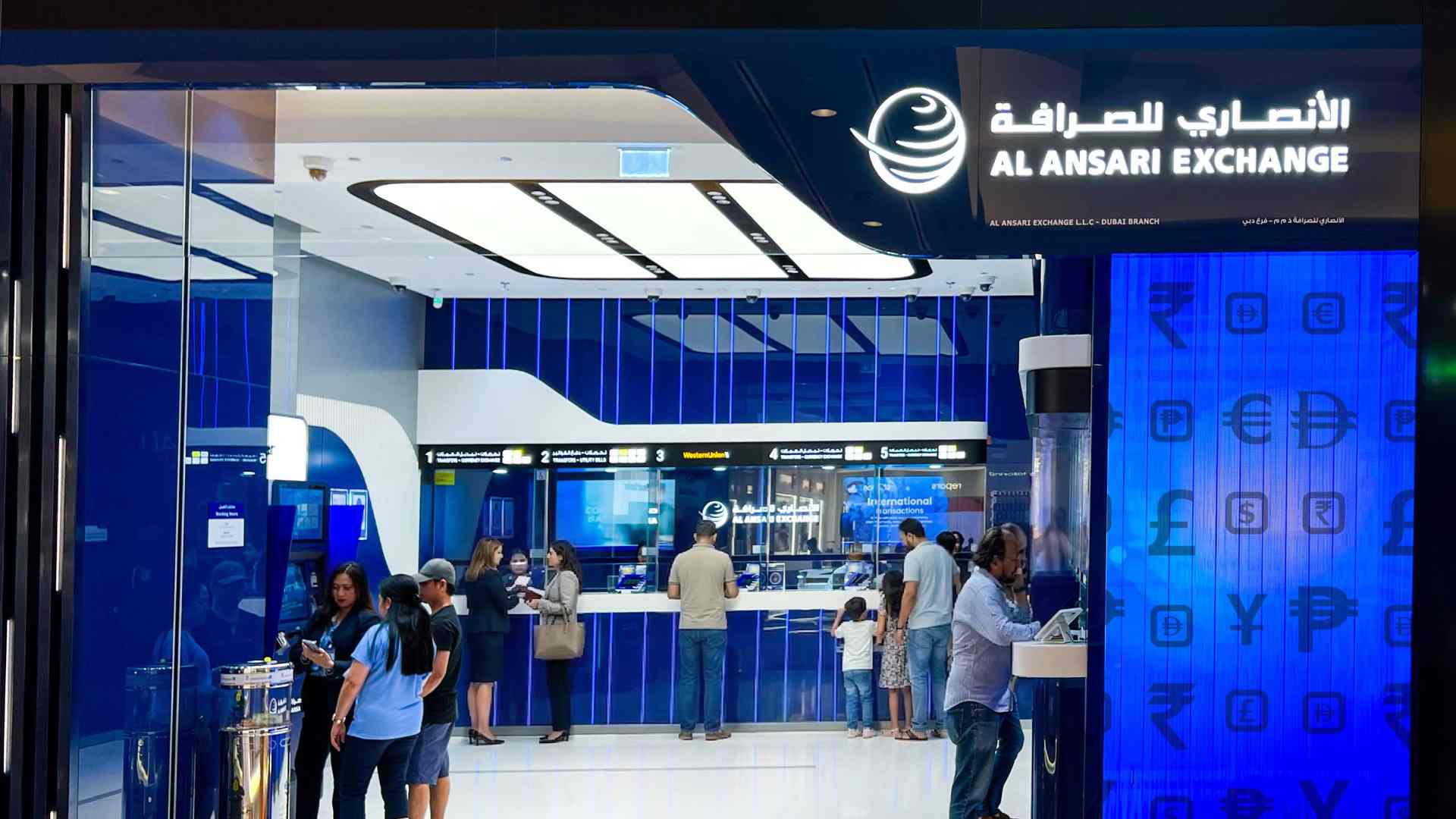
Al Ansari Exchange, the UAE’s leading remittance and foreign exchange company and a subsidiary of Al Ansari Financial Services PJSC (DFM: ALANSARI), has partnered with Dubai’s Roads and Transport Authority (RTA) and in association with MDX Technology Solutions ME, to make nol Travel Cards available at selected branches across Dubai.
The collaboration broadens Al Ansari Exchange’s portfolio of third-party products and extends access to Dubai’s integrated mobility payment system through the UAE’s largest branch networks. It also reflects the company’s strategy of building a connected physical and digital ecosystem that provides customers with convenient access to a wider range of everyday financial and lifestyle services.
Residents and visitors can now purchase nol Travel Cards from selected Al Ansari Exchange branches, distributed through MDX Technology Solutions ME, the RTA-authorised distributor of nol Travel Cards, providing an additional point of access to one of Dubai’s most widely used mobility payment solutions.
The nol Travel Card enables cashless payments across Dubai’s public transport network, including the Dubai Metro, Dubai Tram, public buses, marine transport and public parking. It is also accepted at more than 14,000 retail outlets across the UAE. Through the nol Pay App, cardholders can access more than 200 lifestyle offers and discounts.
Commenting on the collaboration, Musad Ibrahim Alhammadi, Director of Automated Collection Systems at Corporate Technology Support Services Sector, Roads and Transport Authority (RTA), said: “Expanding the availability of nol Travel Cards through strategic collaborations supports RTA’s efforts to make mobility services more accessible across Dubai. Providing additional distribution channels contributes to wider adoption of digital payment solutions and enhances the travel experience for residents and visitors.”
Ali Al Najjar, Chief Executive Officer of Al Ansari Exchange, added: “As customer expectations continue to evolve, we are expanding the role of Al Ansari Exchange beyond traditional financial transactions by bringing together financial, payment and everyday lifestyle services through both our branch network and digital platforms. Making nol Travel Cards available through our branches complements our broader strategy of creating a seamless customer experience while supporting Dubai’s vision for a smart, digitally connected city.”

Resilience is not only about cash reserves, backup servers or alternative suppliers. It also depends on whether a company’s legal rights and permissions still work when the business is under pressure.
By: Maroun Abou Harb, Associate at BSA LAW
Resilience is discussed as an operational or financial discipline. Businesses test liquidity, back up systems and diversify supply chains. Yet every continuity plan rests on legal infrastructure: licenses, delegated authorities, contracts, data permissions, employment arrangements, security rights and evidence.
That infrastructure can fail when needed most. The replacement supplier cannot be appointed without third-party consent. Customer data cannot lawfully be moved to the backup provider. An insurance claim is compromized by late notification. A guarantee was signed incorrectly. The company owns a platform, but not all of its intellectual property.
The most dangerous legal risk is not the missing clause. It is the right management assumes the business has, but cannot use.
In the UAE, the Central Bank’s 2026 Operational Risk Management Regulation now requires licensed financial institutions to implement a comprehensive operational risk and resilience proecedure. The principle is valuable for every company: identify what must continue, locate the legal points of failure and test them before disruption does.
- Can the business lawfully act?
Start with corporate authority, check that licenses match actual activities, constitutional documents reflect the ownership and governance structure, and beneficial-owner, shareholder and director records are accurate. Review reserved matters, signing matrices, powers of attorney and banking mandates.
A deal, borrowing or emergency payment can stall because the authorized signatory is unavailable, a power has expired or an approval threshold was misunderstood. Group companies should confirm which entity employs people, owns assets, contracts with customers and receives revenue.
Run this scenario: if the chief executive and chief financial officer were unreachable tomorrow, who could bind the company, access its accounts and appoint an alternative supplier? If the answer is uncertain, the business has a legal single point of failure.
- Which contracts become dangerous under stress?
Most contract reviews examine value and liability. A resilience review asks a different question: what happens when performance is interrupted?
Build a heat map of critical customer and supplier contracts, ranked by operational importance and consequence of failure. For each, test termination and suspension rights, force majeure and change-in-law provisions, service levels, price-adjustment mechanisms, liability caps, indemnities, insurance, governing law and dispute forum, subcontracting, assignment and change-of-control restrictions. Check notice methods and cure periods; a valuable right can disappear if a notice is sent late or to the wrong address.
Then examine optionality, can the company use a replacement supplier, obtain transition assistance, retrieve its data in a usable format and continue using essential intellectual property? Is there a source-code escrow or step-in mechanism where appropriate?
The aim is not to renegotiate every contract. It is to know which five contracts could stop the business and to fix those first.
- Can technology fail without the legal part failing too?
A technical recovery plan is incomplete if the contracts do not support it. Cloud, payment, telecommunications and managed-service arrangements should align promised recovery times with the company’s tolerance for disruption. Audit rights, incident cooperation, subcontractor controls, data-location commitments and exit assistance should be tested.
The incident playbook must allocate legal decisions. Who determines whether regulators, customers, insurers or affected individuals must be notified? Who preserves evidence and engages external advisers? How will legal privilege or professional confidentiality be preserved? A cyber incident moves quickly; ambiguity over decision-making wastes the hours that matter most.
Conduct an exercise with management, technology, legal, communications and finance. Introduce a realistic vendor outage or data breach and follow the contracts: who calls whom, what must be notified, and what can actually be recovered?
- Does the company know what data and technology it is using?
Across the GCC, privacy and cybersecurity regimes increasingly regulate how data is collected, processed, retained, transferred and protected. A company cannot comply, or recover confidently, without knowing where its data goes.
Create a data map covering customers, employees, vendors and website users. Record the purpose and legal basis for processing, storage location, access rights, retention period, cross-border transfers and third-party processors.
The same exercise should include artificial intelligence, by identifying public and embedded AI tools, the information supplied to them, the outputs relied upon and the human review applied. Confidential information, personal data and third-party intellectual property should not enter a tool because an employee can access it. An approved-use policy, procurement review and output-verification process are proportionate safeguards.
- Can the company protect value when conditions deteriorate?
Management should monitor covenant breaches, unpaid taxes, overdue receivables, expiring insurance, threatened claims and counterparties showing signs of insolvency. The legal team should know which rights permit suspension, security enforcement, contract termination or protective court relief, and whether exercising them could create risk.
People and intellectual property also require continuity planning. Confirm that employment and consultancy terms contain appropriate confidentiality, invention-assignment and post-termination protections, tailored to the governing law. Identify key-person dependencies, succession gaps and access held by departing staff. Register intellectual property where appropriate and maintain evidence of creation and ownership.
Business needs also to review insurance as a contract, not a certificate. Map material risks to coverage, exclusions, deductibles, notification deadlines and consent requirements. The policy is only useful if the company knows how to activate it.
In brief, the output should be that for every critical risk, record the business service affected, relevant entity and contract, responsible owner, required action, deadline and escalation threshold.
Report the highest exposures to the board and repeat the exercise after major acquisitions, restructurings, regulatory changes or technology deployments.
A focused review can produce four useful assets:
- an authority and obligations calendar;
- a critical-contract heat map;
- a data and AI inventory; and
- a tested incident playbook.
No company can remove disruption. It can, however, remove the uncertainty surrounding who may act, what must be done and which rights remain available.

By Joe David, CEO of Nephos Group
“Move to Dubai for tax.”
I hear this constantly. From founders, investors, crypto-native operators – people building real businesses who reduce one of the biggest decisions of their professional lives to a single line on a spreadsheet.

And honestly, it is the wrong way to think about it.
Tax should rarely be the sole reason to relocate. When it is, it is usually where things go wrong. The corporate structure is not set up correctly. The banking relationships are not in place. The founder leaves within 18 months because the deeper rationale was never really there. I have seen this pattern play out dozens of times over the past decade, and it almost always traces back to the same root cause: a decision built on a tax rate rather than a strategy.
The tax-first trap
Dubai’s zero per cent personal income tax rate is real, and it is significant. But leading with tax creates a narrow frame that obscures the fuller picture. Founders who relocate purely for a rate often fail to consider the operational realities of building in a new jurisdiction. They underestimate the compliance infrastructure required to make the move defensible. They overlook the substance requirements that tax authorities in their home countries will scrutinise. When the expected savings do not materialise cleanly, because the structure was an afterthought, disillusionment sets in fast.
This does Dubai a disservice. It reduces a genuinely world-class business environment to a line in a tax planning brochure. The city deserves better than that, and so do the founders making life-altering decisions based on incomplete thinking.
What the successful ones actually optimise for
The founders and investors who get the most out of Dubai are not chasing a tax rate. They are making a broader strategic move.
Jurisdictional access is a major factor. Dubai sits at the crossroads of Europe, Africa and Asia, offering time zone coverage and travel connectivity that few cities can match. For businesses operating across multiple markets, particularly in digital assets, fintech and professional services, that geographic positioning is a genuine competitive edge.
Then there is the capital environment. Dubai has become a magnet for institutional and private capital, with fund structures, family offices and venture vehicles establishing a permanent presence. The banking infrastructure, while still maturing in certain areas, has improved significantly. For crypto-native businesses in particular, the regulatory clarity offered by frameworks like the Virtual Assets Regulatory Authority (VARA) provides something that many Western jurisdictions still cannot: a clear, codified path to operating legally with digital assets.
The business ecosystem itself is another draw. The speed at which you can incorporate, hire, open accounts and begin operating is remarkable compared to legacy jurisdictions. Free zones offer tailored licensing, and the government’s responsiveness to emerging sectors – AI, blockchain, tokenised finance – signals a jurisdiction that is building forward rather than regulating backward.
And then, yes, there is the lifestyle. Climate, safety, connectivity, quality of infrastructure. These are not trivial considerations when you are asking a founding team to commit to a base for the next five to ten years.
Tax is often the outcome of all of this. It is not the strategy itself.
The compliance landscape is shifting
There is another reason the tax-first mindset is increasingly risky. The global compliance environment is tightening rapidly. The Crypto-Asset Reporting Framework (CARF), developed by the OECD, will require automatic exchange of information on crypto transactions between jurisdictions. The EU’s DAC8 directive introduces similar obligations across member states. The days of relocating and assuming your home country’s tax authority will not follow are numbered.
This means that substance, genuine economic activity, real operational presence, defensible corporate structures, matters more than ever. A Dubai relocation that is purely cosmetic will not survive scrutiny. One that is built on genuine strategic foundations, with proper advisory support and compliant structures, will.
The conversation worth having
None of this is an argument against moving to Dubai. Quite the opposite. For the right founder, with the right business, at the right stage, it can be a transformative decision. But that decision needs to be grounded in strategy, not arithmetic.
Before you start calculating your tax savings, ask the harder questions. Does your business model benefit from being in this jurisdiction? Can you build genuine substance here? Are your corporate structures defensible under international reporting frameworks? Do you have the advisory infrastructure to get this right from day one?
That distinction – between tax as a tactic and strategy as a foundation – matters more than most people realise. And it is a conversation worth having before you make any decisions.


HONOR Pad X9b Max Review: When a Tablet Starts Challenging Your Laptop
Home Centre celebrates Emirati Women’s Day with Made By Her, a campaign spotlighting homegrown talent
Delinea Brings Runtime Control for AI Agents to GISEC Global 2026



-
News11 years ago
SENDQUICK (TALARIAX) INTRODUCES SQOOPE – THE BREAKTHROUGH IN MOBILE MESSAGING
-

 Trending10 months ago
OPPO A6 Pro 5G Review: Reliable Daily Driver
-

 Tech News2 years ago
Denodo Bolsters Executive Team by Hiring Christophe Culine as its Chief Revenue Officer
-
 VAR1 year ago
Microsoft Launches New Surface Copilot+ PCs for Business
-

 Automotive2 years ago
AGMC Launches the RIDDARA RD6 High Performance Fully Electric 4×4 Pickup
-
Tech Interviews2 years ago
Navigating the Cybersecurity Landscape in Hybrid Work Environments
-

 Tech News1 year ago
Nothing Launches flagship Nothing Phone (3) and Headphone (1) in theme with the Iconic Museum of the Future in Dubai
-

 VAR2 years ago
Samsung Galaxy Z Fold6 vs Google Pixel 9 Pro Fold: Clash Of The Folding Phenoms