
 Have a question? +971 56 404 0503




Tech Features
Building Sustainable Models for Student Recruitment, Marketing and Global Outreach in Education


By Andrew Vitiuk Chief Commercial Officer Synergy University Dubai

In today’s globalized world higher education institutions are facing increasing challenges in student recruitment, marketing and global outreach. The rapid evolution of technology, changes in demographics and an increasingly competitive global education market necessitate the development of sustainable models that can adapt to the shifting landscape. These models must not only ensure growth and diversity in student populations but also equip students with the skills, knowledge and global perspectives necessary for success in an interconnected world. Key to this transformation are strategies centered around cross-cultural engagement, fostering entrepreneurial mindsets and preparing students for the challenges of a globalised workforce.
The Changing Landscape of Global Education
Higher education today is more than just a pursuit of academic knowledge; it is a global journey that prepares students to thrive in an interconnected diverse world. As the demand for international education rises students have access to a broader range of institutions and are no longer limited by geographic location when considering where to study. This dynamic has increased competition among universities to attract top talent from around the world, especially as prospective students seek institutions that offer high-quality education, diverse cultural exposure and strong future employment prospects.
To remain competitive universities must develop sustainable recruitment models that foster long-term relationships with students. These models must adapt to the changing needs and preferences of prospective students from different cultural backgrounds, regions and demographic groups. Effective recruitment and marketing strategies must be personalized and data-driven, focusing on building an engaging, interactive experience for students that goes beyond traditional marketing techniques like brochures or campus tours.
Equipping Students for a Global Future
As the global workforce becomes more diverse and interconnected, the need for graduates who can navigate cross-cultural environments and think critically about global challenges is more important than ever. Universities must focus on preparing students for a future in which cultural awareness, adaptability and problem-solving will be key to success. This includes fostering a curriculum that encourages critical thinking, innovation and a deep understanding of global issues such as climate change, international trade and geopolitical dynamics.
One of the best ways to prepare students for the global workforce is through cross-cultural engagement. Providing opportunities for international exchanges, internships and collaborative projects with students from diverse cultural backgrounds can enrich the academic experience and broaden students’ perspectives. These cross-cultural engagements allow students to experience first-hand the challenges and rewards of working in global settings, whether in business, politics or social development.
The value of such experiences cannot be overstated. Universities that offer students the opportunity to collaborate on international projects or undertake internships with multinational companies ensure they are prepared to navigate the complexities of the global market. Moreover, these experiences promote empathy, communication skills and a global mindset qualities that are increasingly sought by employers across industries.
Developing Entrepreneurial Mindsets
The UAE is rapidly establishing itself as a leading hub for entrepreneurship and innovation. The country has been recognized as the best global destination for starting and operating businesses achieving a record-high score of 7.7 in the 2023-2024 GEM report. This impressive ranking is reflective of the country’s robust business ecosystem, which includes initiatives like tax-free zones, government-backed accelerators and a favorable regulatory environment for entrepreneurs. As a result, the country has positioned itself as a top destination for entrepreneurs seeking to start and grow businesses in a thriving, supportive environment.
However, the entrepreneurial surge is not confined to the UAE alone. The broader MENA region is also seeing significant growth. Studies show that nearly 46% of employees in MENA are ready to start their own businesses and around 45% of current entrepreneurs in the region have launched their ventures within the past five years. This rise can largely be attributed to the region’s youthful and tech-savvy population, with over 60% of MENA’s population under the age of 30. This demographic is driving innovation in sectors such as Edtech, e-commerce and artificial intelligence (AI), as young entrepreneurs embrace digital tools and technologies to build scalable startups.
As this trend flourishes across the MENA region, universities must play a crucial role in fostering the next generation of innovators. Institutions can help cultivate entrepreneurial mindsets by offering specialized programs in entrepreneurship, providing access to incubators and accelerators and promoting real-world experience through startup competitions or mentorship programs. By equipping students with the knowledge and skills needed to succeed in entrepreneurship, universities can ensure that they are preparing graduates who are ready to contribute to the evolving global economy.
Synergy University Dubai stands out as an example of a higher education institution dedicated to fostering entrepreneurial thinking. They offer a range of programs designed to support students with the knowledge and tools they need to succeed in the rapidly changing business landscape further contributing to the region’s dynamic entrepreneurial ecosystem.
Sustainable Recruitment Models
In the context of global education, sustainable recruitment strategies are crucial to the growth and diversification of student populations. Universities need to move beyond traditional recruitment methods like direct mail, in-person recruitment events and generic online advertisements. The key to sustainability lies in creating a personalised data-driven recruitment approach that focuses on student engagement over the long term.
One effective way to achieve this is through digital marketing and online engagement platforms. Social media, webinars, virtual campus tours and targeted online ads offer universities the ability to reach a global audience in a cost-effective interactive manner. These digital tools allow prospective students to connect with the university and gain an understanding of the campus culture, academic programs and career services long before they make a decision to apply.
Additionally, they should consider forming partnerships with local educational agents, organisations and government to create a more reliable and efficient recruitment pipeline. Collaborating with partners in target regions can help better understand the unique preferences and needs of students in specific markets. It also allows universities to adjust their marketing messages and strategies to better resonate with potential applicants in different cultural contexts.
An equally important element of a sustainable recruitment model is fostering long-term relationships with students once they are enrolled. Prioritising continuous engagement through personalised advising, mentorship and career development services. Offering a range of support services academic, personal and professional ensures that students feel connected to the university, enhancing their retention and success.
Effective Marketing Strategies
To build a sustainable global outreach strategy, institutions must implement effective marketing campaigns that speak to diverse international audiences. These marketing strategies should go beyond simple advertising and focus on storytelling highlighting the experiences and achievements of students, faculty and alumni. By showcasing these stories they can humanize their brand and create an emotional connection with prospective students.
Marketing strategies must also be adaptable to different cultural contexts. Institutions should tailor their messaging to meet the specific needs and expectations of students in different regions. For instance, while a marketing campaign targeting students in Europe might emphasize academic freedom and independent thinking, a campaign in Asia may focus more on family values, scholarships and academic excellence. By customizing these efforts institutions can increase their appeal across different markets.
Data analytics also plays a critical role in effective global marketing. Institutions that collect and analyze data on student engagement and behavior can refine their marketing efforts to better meet the needs of their target audiences.This data-driven approach enables them to make informed decisions about where to allocate resources and how to adjust their messaging to achieve the best outcomes.
Global Outreach and Partnerships
To truly expand their global reach, universities must invest in international partnerships. These partnerships can take many forms from student exchange programs to collaborative research initiatives and dual-degree offerings. Establishing these relationships with institutions around the world not only helps increase recruitment but also strengthens the academic reputation of the university by promoting cross-border academic collaborations.
Moreover they should consider building connections with international organizations, governments and businesses to create opportunities for global research collaboration and innovation. Strategic global outreach can contribute to solving pressing challenges such as climate change, healthcare access and digital transformation while also expanding their global footprint.
Building sustainable models for student recruitment, marketing and global outreach is essential for universities that aim to thrive in an increasingly competitive and interconnected world. By embracing cross-cultural engagement, promoting entrepreneurial mindsets and leveraging data-driven recruitment strategies institutions can attract a diverse and talented student body from around the world. As the UAE leads the charge in fostering entrepreneurial growth and innovation, universities such as Synergy University Dubai are playing a critical role in preparing students to succeed in the fast-evolving global economy. With a focus on developing future leaders who are adaptable, innovative and globally aware higher education institutions can build the sustainable frameworks needed for long-term success.












by Dr Ekaterina Abramova, Adjunct Assistant Professor of Management Science and Operations at London Business School
The AI revolution is not on the horizon; it is already transforming how we work, solve everyday problems, and interact both with one another and with technology. From generative models to agentic systems capable of disrupting entire industries, artificial intelligence has advanced at a pace that few institutions, businesses, or governments are fully prepared for. What once felt like a distant technological possibility has become a structural force shaping labour markets and economies. As a result, one of the most pressing questions facing societies is no longer whether AI will change the world, but whether it will make it fairer. Increasingly the answer depends not only on the technology itself, but on the choices organisations and governments make about how its benefits are shared.
AI has the potential to unlock unprecedented prosperity. Yet history shows that technological revolutions rarely distribute their rewards evenly. Without deliberate intervention, the benefits of AI risk concentrating in the hands of a small number of large technology firms, highly skilled professionals and capital owners. This pattern has already emerged in earlier waves of digital transformation, where wealth and opportunity accumulated disproportionately in regions best positioned to adapt. For AI to foster equality rather than widen disparity, policymakers must treat inclusion as an ex-ante design principle rather than an ex-post correction.
The first crucial step for achieving fairness is improving the data that AI systems rely upon. Algorithms are only as representative as the information used to train them. When datasets exclude marginalised or underrepresented communities, AI risks reinforcing existing biases. Organisations and governments developing AI algorithms should prioritise collecting data from communities historically overlooked in policy design, such as rural populations, low-income groups, minority communities and those outside the formal labour markets. More inclusive datasets lead to fairer systems, more effective public services and policy decisions that better reflect the realities of entire populations, rather than just their most visible segments.
Another equally important aspect is how governments distribute the productivity gains and wealth generated by AI into broader societal benefits. Different regions are experimenting with alternative approaches. In parts of the Middle East, including the United Arab Emirates, economic gains from technological advancement are often channelled through state-led investment strategies rather than relying solely on traditional taxation and redistribution mechanisms. While VAT and other taxes exist, governments often reinvest a significant share of national income derived from natural resources and state-owned enterprises directly into infrastructure, public services, education and economic diversification. This approach builds long-term national capability by funding human capital development, strengthening digital infrastructure and fostering new sectors that create employment and opportunity.
Such strategies highlight an important principle: AI benefits do not need to be redistributed after inequality has emerged. They can be embedded in development strategies from the outset. By investing in education, digital skills and access to technology, governments expand the number of people able to participate in the AI ecosystem rather than merely compensate those left behind. China, for example, has made substantial investments in AI education and research capacity, recognising human capital as central to technological leadership. Every year 100,000 selected teenagers are funnelled into elite science talent streams across top high schools. These “genius classes” systematically train students to excel in international maths, physics, chemistry, biology and computer science competitions.
The pace of the AI revolution makes this challenge more urgent than previous technological transitions. Earlier industrial transformations unfolded over decades, allowing societies time to adapt institutions and labour markets. AI development in recent years has gained pace. Breakthroughs that once took years are now emerging within months, with new capabilities rapidly spreading across sectors from healthcare diagnostics and financial analysis to logistics and defence industries. This acceleration has been further intensified by the present-day AI race to achieve Artificial General Intelligence (AGI), amid a widespread belief that the first government to reach this milestone will gain a decisive strategic advantage. Organisations at the forefront of AI development are reluctant to slow for fear of falling behind geopolitical or commercial rivals. Meanwhile, many governments are hesitant to introduce AI regulation, concerned that premature constraints could hinder innovation and weaken their competitiveness in the pursuit of AI leadership.
However, the path forward requires a global perspective. While governments should encourage innovation, they must also recognise that AI technology will diffuse across borders. Hence governments worldwide should collaborate towards a global AI governing body, or at the very least, agree on minimum safety and fairness standards for AI deployment. The EU AI Act provides an important foundation by identifying unacceptably high-risk AI applications that should be prohibited. When forming such regulatory frameworks, governments should seek guidance from leading AI scientists to ensure they fully understand where the principal risks originate. Indeed, many prominent experts in the field argue that regulation is failing to keep pace with AI innovation.
Allowing AI technology to evolve without placing guardrails in place early risks embedding structural inequalities, particularly in labour markets, education access and capital distribution. Ultimately, the debate about AI and inequality is not primarily about algorithms; it is about governance. Technology reflects the priorities of the societies that deploy it. If policymakers treat AI purely as an engine of leadership and economic growth, its benefits will likely accrue to those already best positioned to capture them. But if AI development is guided by a clear commitment to inclusion through better data, wider access and sustained investment in human capital, it has the potential to expand opportunity on a global scale. As AI reshapes labour markets, workers will need opportunities to develop capabilities that complement intelligent systems rather than compete directly with them. Access to AI infrastructure, computing resources, data and digital connectivity must not be confined to a small group of corporations or wealthy regions.
The direction of the AI revolution is not predetermined. The question is not whether AI will transform our world, but whether governments and institutions will act quickly and thoughtfully enough to ensure that its benefits are broadly shared. In the race to build increasingly powerful systems, equal attention must be given to building the social and economic frameworks that will ensure the future is genuinely fair.

By Alfred Manasseh, COO & Co-Founder of Shaffra
Across the GCC, AI is becoming more operational. The conversation has moved beyond whether organisations are testing AI and toward how deeply these systems are being embedded into daily work. McKinsey’s finding that 84% of GCC organisations have adopted AI in at least one business function shows the region’s strong momentum, but the more important shift is where this technology is now creating measurable value.
AI is beginning to operate inside real enterprise workflows, where productivity, cost, speed, service quality, and governance can be measured. This practical shift means AI is being judged less by novelty and more by whether it can reduce manual work, improve response times, and support better execution across organisations.
Where AI is being deployed
AI deployment is gaining traction in structured, high-volume functions where it can remove this coordination burden and give employees more capacity for skilled output. Asana’s research has found that around 60% of time is spent on “work about work,” such as chasing updates, attending unnecessary meetings, and switching between tools.
Customer service teams are using AI for automated query handling, routing, escalation management, and multilingual support. Operations teams are applying AI to order processing, workflow coordination, and SLA monitoring.
In HR, AI is supporting CV screening, interview scheduling, and onboarding orchestration. In finance, it is being used for invoice processing, reconciliation, and anomaly detection. Sales teams are also applying AI to lead qualification, follow-ups, CRM hygiene, and pipeline updates.
Regional governments are also preparing the workforce for this reality. Digital Dubai recently launched the AI Workforce Transformation Program, known as AI+, to help train 50,000 government employees for an AI-ready workforce.
Three phases of AI workforce evolution
AI use across the workforce can be understood in three phases. First, AI acts as an assistant through copilots, chat interfaces, summarisation, drafting, search, and advisory tools that improve individual productivity. Second, AI becomes an operator, completing defined tasks across CRM, HR, finance, customer service, and operations systems within controlled boundaries. Third, AI develops into a workforce layer, where systems are assigned roles, KPIs, access rights, escalation pathways, and governance controls. At this stage, Autonomous AI Teams operate as governed digital employees, helping structure, assign, monitor, and improve work.
How mature AI deployments operate
AI is not replacing entire jobs. It is restructuring work by taking over repetitive tasks within roles. Human teams are shifting toward oversight, exception handling, decision-making, escalation management, and quality control.
Autonomous AI Teams operate as coordinated systems rather than standalone models. They support humans through role-based actions with defined responsibilities, structured access to enterprise systems, clear decision boundaries, controlled autonomy levels, human escalation pathways, performance metrics, auditability, and governance.
From tools to workforce infrastructure
Before scaling autonomous AI systems, executives need clear visibility into decision-making, accountability, risk controls, and human intervention points. Trust grows when productivity gains are measurable and governance is visible. IBM research shows that 77% of UAE senior leaders have already seen significant productivity gains from AI, which reflects growing confidence in its operational value.
Across Shaffra deployments, Autonomous AI Teams have contributed to more than 2 million manual work hours saved monthly across operational workflows. Organisations have reported up to 80% reductions in operational costs, customer service teams can manage up to five times more queries, and HR recruitment cycles that previously took weeks can be reduced to hours.
The future workforce layer
The GCC has a strong appetite for AI adoption, but many organisations still need to redesign workflows and overcome fragmented legacy systems before AI teams can function as part of daily operations. Research showing that 94% of UAE data leaders lack complete visibility into AI decision-making processes reinforces why explainability, governance, and workflow design must develop alongside deployment.
The next phase of AI is about building a governed workforce layer where humans and Autonomous AI Teams execute together with clarity, accountability, and valuable impact.
Tech Features
FROM CODING TO INTENT: HOW GENERATIVE AI IS REWRITING THE RULES OF PROFESSIONAL CREATIVITY

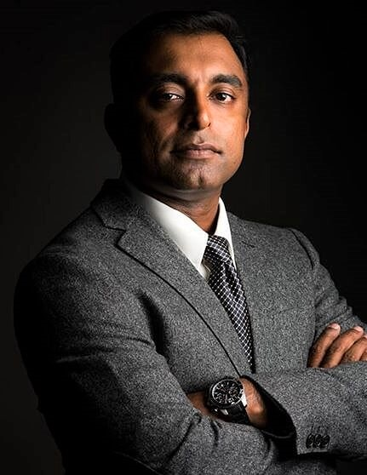
Contributed by Jeff Jacob, Regional Business Team Lead – ISBG at ASUS Middle East & Africa
AI Creative Ecosystems Are Transforming Professional Workflows from Technical Execution to Intent-Driven Innovation
For decades, professional creativity was defined by a precise, hard-earned technical mastery. To be a digital creator involved understanding the underlying mechanics of software: knowing which shortcut keys to press, how to modify complicated codes, and how to adjust render engines frame by frame manually. Designers studied sophisticated software interfaces. Editors memorised keyboard shortcuts. Architects explored multiple layers of modelling systems. Filmmakers designed workflows around rendering pipelines. But the limits of the digital interface restricted creativity. The creator’s thoughts generated an idea, but their hands spent hours, days, or weeks converting that vision into a language that the computer was able to understand.
Today, that equation is fundamentally changing. Generative AI is ushering in a new era in which the focus shifts from execution to intention. It is changing the laws of professional creativity, propelling us from manual digital workflows to the era of intent-driven innovation.
When an efficient AI model can create complex codes, display hyper-realistic settings from a text prompt, or isolate audio frequencies in seconds, technical project execution becomes commoditised. The fundamental value of the human creator centres on intent, the ability to direct, curate, refine, and orchestrate complicated visions. The world is transitioning from one in which creators are valued for how they code or compile to one in which they are appreciated for what they aim to build and why it is important.
This shift represents a significant challenge for conventional hardware philosophy. For years, the computing industry saw professional machines through a strictly quantitative lens. Traditional parameters for evaluating creative laptops and workstations included processing power, graphics performance, display accuracy, storage capacity, and the most aggressive thermal cooling. These factors remain important, but in an intent-driven environment, passive hardware is no longer enough. If the creative process is to become an ongoing, fluid interaction between human intent and artificial intelligence, the technology must evolve. It must grow into an intelligent partner rather than a mere productivity tool.
This is precisely where the concept of technological design must pivot, a shift that many brands anticipated with the expansion of their AI art ecosystems. Rather than seeing AI integration as a superficial software tool, when it is developed as an intelligent, creative collaborator, it bridges the gap between raw computing capacity and human intuition.
A single campaign today may involve long-form video, short-form social assets, AI-generated photography, interactive experiences, 3D content, spatial design, and linguistic adaptations all at the same time. This requires a whole new level of physical and digital collaboration. The modern hardware anticipates the creator’s next action by using dedicated Neural Processing Units, tailored AI workflows, and fully connected software ecosystems. It optimises system resources based not only on raw CPU load, but also on the cognitive needs of an AI-powered pipeline. Physical control interfaces are no longer just shortcuts for legacy software sliders; they are physical extensions of intent, allowing creators to dynamically scrub through AI-generated iterations, manipulate parameters in real time, and maintain a tactile connection to an increasingly non-linear process.
Furthermore, this evolution alters the perspective on the mobility of professional talent. Intent-driven creativity thrives on cross-disciplinary exploration. A filmmaker may need to create architectural backgrounds on set, or a designer may need to run localised, big language models during a client pitch to iterate on branding concepts in real time. By compressing massive AI computing capabilities into extremely sophisticated, colour-accurate, and portable forms, the modern ecosystem assures that the studio is no longer confined to a single desk.
Yet, despite the excitement around AI, a major misconception must also be addressed. Generative AI does not replace creativity. It reframes where human value fits into the creative process. Historically, technical expertise has been a barrier to entrance. Having the ability to master complex structures determined who could participate in creative industries. AI lowers those barriers, but it also emphasises the importance of distinctively human skills such as judgment, taste, narrative, emotional intelligence, cultural understanding, and strategic thinking.
This is why the discussion on AI-powered creativity must extend beyond software. Infrastructure matters. Devices matter. Ecosystems matter. Professionals driving the future of creative industries will require technology that can enable sophisticated AI-native tasks while maintaining reliability, portability, security, and precision. The brands that recognise creativity as a human experience enhanced by intelligent technology will be the ones to succeed in the next phase. Every technology leader must now face the same question: in a future where AI can generate practically anything, how can we empower humans to create something meaningful?
The change of professional creativity is a story of structural emancipation rather than human replacement. As generative AI continues to demystify the technical aspects of execution, the primary focus returns to where it always belonged: the depth of human insight and the precision of artistic vision. The future of professional creation belongs to those who can master the art of intent.


THE AI REVOLUTION AND A FUTURE OF FAIRNESS

World Chocolate Day: Celebrating Chocolate Through Wellness, Balance and Meaningful Indulgence

THE REALITY OF AI DEPLOYMENT ACROSS THE WORKFORCE IN THE REGION


-
News11 years ago
SENDQUICK (TALARIAX) INTRODUCES SQOOPE – THE BREAKTHROUGH IN MOBILE MESSAGING
-

 Trending8 months ago
OPPO A6 Pro 5G Review: Reliable Daily Driver
-

 Tech News2 years ago
Denodo Bolsters Executive Team by Hiring Christophe Culine as its Chief Revenue Officer
-
 VAR1 year ago
Microsoft Launches New Surface Copilot+ PCs for Business
-

 Automotive2 years ago
AGMC Launches the RIDDARA RD6 High Performance Fully Electric 4×4 Pickup
-
Tech Interviews2 years ago
Navigating the Cybersecurity Landscape in Hybrid Work Environments
-

 Tech News12 months ago
Nothing Launches flagship Nothing Phone (3) and Headphone (1) in theme with the Iconic Museum of the Future in Dubai
-

 VAR2 years ago
Samsung Galaxy Z Fold6 vs Google Pixel 9 Pro Fold: Clash Of The Folding Phenoms