
 Have a question? +971 56 404 0503




Home Integrator
FROM COMPLIANCE TO COMPETITIVE EDGE: WHY DIGITAL RECORD-KEEPING IS A BUSINESS IMPERATIVE


By Ibrahim Imam, CEO and Co-founder of PlanRadar
Exploring how structured, searchable documentation is becoming a strategic advantage across industries—from legal audits to ESG reporting and C-suite decision-making.
In an increasingly regulated and fast-paced global economy, record-keeping has evolved from an administrative chore into a strategic pillar of operational resilience. Businesses across sectors are beginning to realize that digital documentation is not just about compliance; it’s about gaining a competitive edge.
From construction sites in the GCC to corporate boardrooms in Europe, the ability to capture, organize, and retrieve information quickly and accurately is driving more efficient audits, mitigating legal risks, enabling real-time ESG reporting, and enhancing stakeholder transparency. As digital-first approaches become the norm, companies lagging in structured record-keeping may find themselves exposed to unnecessary risks and lost opportunities.
The Compliance Foundation
Compliance remains the entry point for many organizations transitioning to digital record-keeping. Regulations such as ISO 9001 (quality management), ISO 45001 (occupational health and safety), and ISO 14001 (environmental management) require traceable documentation for audits and certifications. In the GCC, governments are reinforcing digital compliance standards through initiatives like Dubai Municipality’s Building Information Modelling (BIM) mandates and Saudi Arabia’s Vision 2030 digital transformation agenda.
Failure to maintain proper records can have significant consequences. A 2022 report by Deloitte found that companies without digitized compliance systems faced audit costs 30% higher on average compared to their digitized counterparts. Moreover, when documentation is scattered across emails, PDFs, and paper files, the risk of non-compliance escalates.
Legal Preparedness: Your Digital Audit Trail
Digital documentation also plays a pivotal role in legal defence. Whether it’s a dispute over construction delays, labour claims, or contractual obligations, having a time-stamped, tamper-proof digital trail can make or break a case.
According to a 2023 McKinsey analysis, organizations with centralized digital documentation systems reduced their legal exposure by up to 40%. Platforms like PlanRadar, which automatically log task changes, photos, comments, and approvals in real time, offer an auditable history of activity that reduces ambiguity and supports legal accountability.
The ESG Imperative: Transparency through Data
With Environmental, Social, and Governance (ESG) reporting becoming a global standard, businesses are under pressure to provide verifiable documentation of their sustainability practices. Investors, regulators, and customers alike demand transparency.
A 2023 PwC Global Investor Survey revealed that 79% of investors consider ESG reporting critical to investment decisions, yet 61% express concerns about data reliability. Digital documentation tools help address this gap by enabling real-time data capture for carbon emissions, energy usage, labour conditions, and waste management.
In construction and real estate, digital platforms streamline ESG tracking by integrating documentation workflows—such as material certifications, safety inspections, and water usage logs—into everyday site activity. This not only improves reporting quality but also reduces manual effort and errors.
Boardroom Clarity: Data-Driven Governance
For senior executives and board members, access to real-time, structured information is essential to sound decision-making. Static spreadsheets and outdated reports hinder visibility and strategic responsiveness.
A 2023 Gartner survey indicated that companies leveraging real-time data for board reporting experienced a 22% improvement in executive decision turnaround time. Digital documentation platforms ensure that decision-makers are not relying on anecdotal evidence or fragmented information but are guided by a clear, traceable information stream.
This is particularly valuable in sectors where delays, cost overruns, or safety breaches can have reputational and financial consequences. From investor calls to internal reviews, transparent reporting based on digital records strengthens governance and builds trust.
The Mobile Mindset: Why Stationary Workflows No Longer Work
Today’s workforce is no longer desk bound. From engineers on job sites to facility managers overseeing multiple locations, employees need access to information anytime, anywhere. Mobile-friendly digital documentation platforms are rapidly becoming essential.
In fact, a 2024 Statista report found that over 58% of enterprise software users expect mobile accessibility as a standard feature. Mobile documentation tools allow users to input data on the go, take geotagged photos, complete forms, and sync updates in real time. This reduces delays, eliminates transcription errors, and ensures data integrity.
In regions like the GCC, where large-scale projects span remote desert locations and multi-site developments, mobile documentation isn’t just a convenience—it’s a necessity.
Conclusion: A New Standard for Smart Businesses
Digital record-keeping has moved from a compliance requirement to a business essential. Whether it’s supporting legal defence, meeting ESG mandates, or empowering mobile teams, the ability to generate, manage, and search structured data is shaping the future of operational excellence.
Businesses that invest in reliable, secure, and mobile-enabled documentation platforms will gain more than regulatory peace of mind. They’ll gain agility, transparency, and a measurable advantage in an increasingly competitive market. In the race for innovation and trust, digital record-keeping is no longer optional—it’s a strategic imperative.
Home Integrator
Sobha Realty Expands into the United States and Australia with Land Secured in Both Markets

Sobha Realty has commenced operations in the United States and Australia, securing land for its initial residential projects in North Dallas, Texas, and Southeast Queensland. The expansion marks the next stage of the developer’s international growth, with a phased approach shaped by local housing needs and delivery partnerships in each market.
In the United States, the company is planning single-family home communities in Celina and Frisco, within the Dallas–Fort Worth metropolitan area. In Australia, it has acquired sites in Brisbane and on the Gold Coast. Both programmes will be supported by company equity and local financing, with projects tailored to the requirements of buyers in each market.
Mr. PNC Menon, Founder of Sobha Group, said: “Our expansion into the United States and Australia reflects a long-term commitment to building an international business grounded in quality and trust. Over five decades, we have developed a discipline that places responsibility for the finished product at the heart of every decision. As we enter these markets, our priority is to apply that experience with a clear understanding of local needs. We intend to earn our position through the communities we create and the lasting value we deliver to homeowners.”
Mr. Ravi Menon, Chairman of Sobha Group, said: “The United States and Australia are important markets in Sobha’s next phase of growth. Our strategy is to establish a focused presence in locations with strong housing demand and build scale through disciplined investment and phased delivery. Securing land in North Dallas and South East Queensland gives us a foundation for that approach. We intend to grow deliberately in both markets, creating homes shaped by local needs and built to the standards that define Sobha.”
United States
Sobha Realty has secured land in Celina and Frisco and plans to deliver a phased programme of single-family homes over the coming years. Sales in its first Celina community are expected to begin in 2027, with the programme funded through company equity and local lending.
The first two communities are planned in Celina. The initial development will comprise larger homes on generous lots adjacent to North Sky, followed by a broader community of family homes. Work on the Frisco site is expected to begin in 2027.
The homes will cater to move-up buyers and growing families. The company’s focus on North Dallas is informed by population growth and corporate relocations supporting residential demand across the region.
Beyond its initial sites, Sobha Realty is evaluating opportunities in Austin and Houston, as well as Dallas–Fort Worth submarkets including Southlake, Westlake and Flower Mound. Nashville, Phoenix and Florida are also under consideration as part of its longer-term growth plans.
Australia
Sobha Realty has acquired two sites in Southeast Queensland, in Brisbane and on the Gold Coast. A development application for the Fortitude Valley site in Brisbane is planned within the next month. Construction on both projects is expected to begin in mid-2027, subject to approvals.
The projects are being planned around Australian buyers and local conditions, supported by feasibility assessments undertaken in the market. For its initial developments, Sobha Realty is partnering with Australian tier-one builders, architects and consultants, with the aim of contributing a wider range of housing types and price points.
Company equity will provide the base funding, complemented by financing from Australian banks and non-bank lenders, with bank funding preferred. Beyond Queensland, the company is assessing opportunities in Sydney across apartments and house-and-land developments.
Local delivery and Sobha standards
Mr. Francis Alfred, Managing Director of Sobha Realty, said: “Our entry into these markets begins with understanding how people want to live and translating those needs into homes that combine thoughtful design, innovation and the quality associated with Sobha. In the United States, our initial focus is on single-family homes for growing families and buyers taking the next step in homeownership. In Australia, we are planning projects around local lifestyles and conditions, working with experienced partners. Across both markets, we will combine local insight with Sobha’s expertise in technology, design and quality assurance, building our presence thoughtfully while maintaining the standards that define Sobha.”
In the UAE, Sobha Realty’s Backward Integration model brings design, engineering, manufacturing and construction in-house, from concept to completion. Through Mission 70/70, the company is moving a growing share of construction off-site into highly automated factories, using technology, automation and precision manufacturing to enhance quality and consistency.
Its initial projects in the United States and Australia will be delivered with local partners, with the company intending over time to introduce elements of its Backward Integration model, including factory-built components and advanced construction technologies, into both markets.
The expansion builds on Sobha Realty’s Dubai delivery programme, with 6,000+ homes planned for handover in 2026 across communities including Sobha Hartland, Sobha Hartland II, Sobha Reserve, Sobha One and Verde by Sobha.
Home Integrator
Bollywood Superstar Salman Khan to Attend the Official Unveiling of Kenz De Rasasi at Beautyworld Middle East 2026

Kenz De Rasasi, the newest outlook of Rasasi Perfumes – contemporary luxury fragrance house born from the heritage of Rasasi Perfumes, will make its official debut at Beautyworld Middle East on 6 October 2026, with Bollywood superstar Salman Khan attending as Chief Guest for the brand’s official launch and unveiling.
Salman Khan will join Mr. Anis Abdul Razzak, Owner of Rasasi Perfumes and Chairman of AAR Group, for the unveiling, marking a significant new chapter in the Rasasi fragrance legacy.
Born from decades of perfumery heritage, Kenz De Rasasi has been created to rediscover and reimagine selected treasures from Rasasi’s legacy for a new generation of fragrance consumers.
The name itself reflects this philosophy. “Kenz” means “treasure” in Arabic, while “de” means “of” in French making Kenz De Rasasi, “The Treasures of Rasasi.”
Rather than simply revisiting existing creations, Kenz De Rasasi reimagines each treasure in its entirety from the fragrance and formulation to the bottle, packaging, design, positioning, storytelling and overall consumer experience. The character and heritage at the heart of each creation are preserved, while being given a contemporary new expression.
At Beautyworld Middle East 2026, Kenz De Rasasi will unveil eight fragrance collections, presenting the brand and its fragrance universe to international retailers, distributors, media, creators and the wider fragrance industry for the first time.
Conceptualised and creatively driven by Mr. Anis Abdul Razzak, Owner of Rasasi Perfumes and Chairman of AAR Group, Kenz De Rasasi represents an evolution from within the Rasasi family. Drawing upon decades of perfumery expertise while establishing a distinctive identity of its own, the brand has been created with the ambition of building a globally recognised contemporary fragrance house from Dubai.
Joining Mr. Anis Abdul Razzak for this milestone will be Bollywood superstar Salman Khan as Chief Guest, who will take part in the official launch and unveiling of Kenz De Rasasi at the brand’s Z6-A12 booth from 2:00 PM on 6 October.
The unveiling will bring together the heritage of Rasasi, the creative vision behind Kenz De Rasasi and one of Indian cinema’s most recognised personalities for the official introduction of the brand to the global fragrance industry.
Beautyworld Middle East marks the beginning of a new chapter for Kenz De Rasasi as it introduces its fragrance universe under one defining philosophy: KENZ DE RASASI – A LEGACY REIMAGINED.
Home Integrator
SAAS Properties Launches the Ritz-Carlton Residences, Al Maryah Island at LIVEX 2026
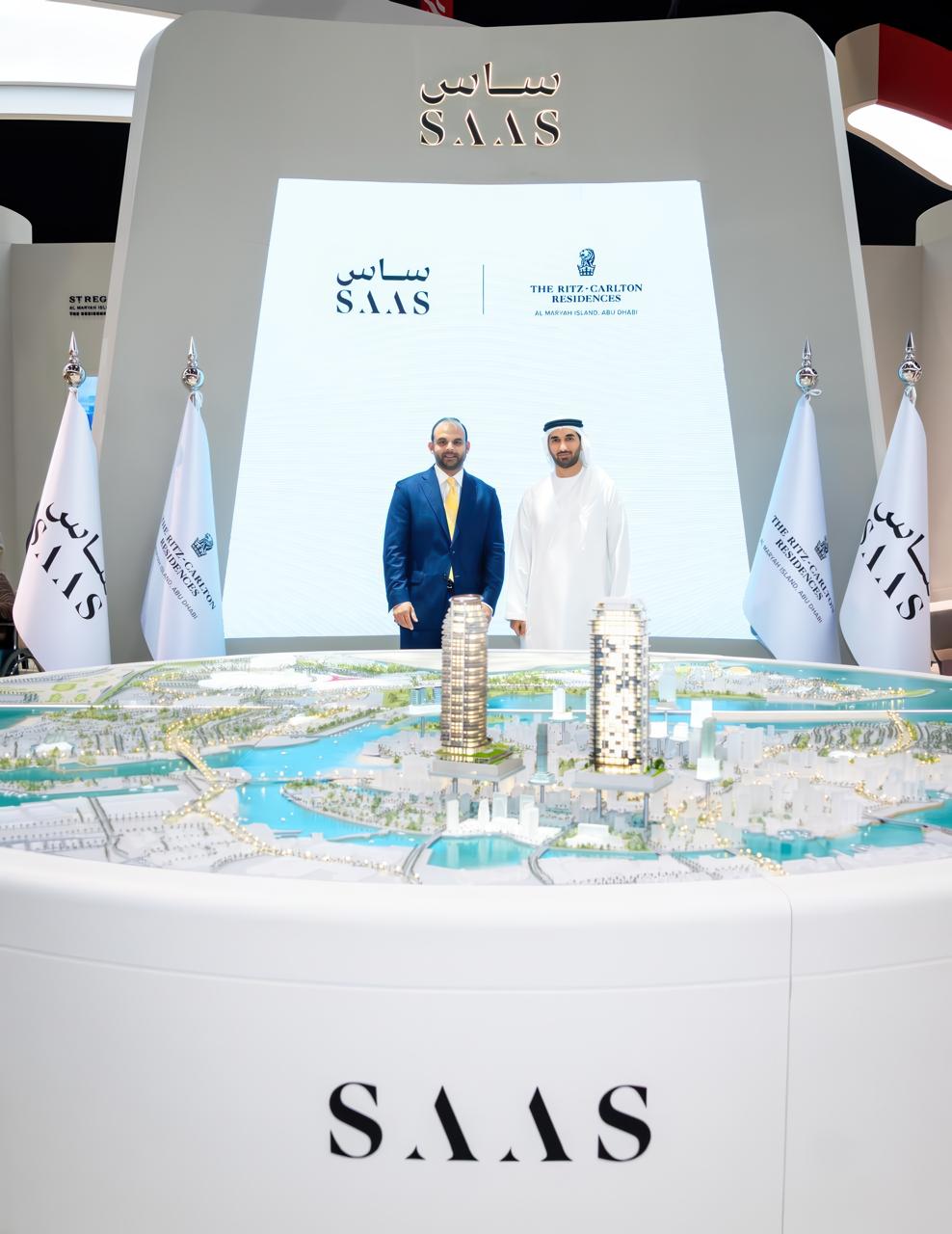
SAAS Properties officially launched The Ritz-Carlton Residences, Al Maryah Island at LIVEX 2026, introducing a new branded residential landmark to one of Abu Dhabi’s most prestigious waterfront destinations.
The launch ceremony brought together Ahmed Al Qassimi, CEO of SAAS Properties, and Jaidev Menezes, Regional Vice President – Mixed-Use Development, Europe Middle East and Africa of Marriott International.
With construction already underway and handover anticipated in the second quarter of 2030, the launch marks another significant milestone in SAAS Properties’ growing portfolio of luxury developments across the UAE.
Set along Al Maryah Island’s waterfront canal, the tower combines sculptural elegance with meticulous architectural detailing. Emerging from a landscaped podium featuring family-focused amenities and resort-inspired spaces, the development has been carefully designed to offer residents a seamless balance between privacy, wellbeing and connectivity.
The building was designed by renowned architect Shaun Killa, Founder and Design Director of Killa Design, whose more than 29 years of international experience have shaped some of the region’s most recognisable architectural landmarks.
The interiors are conceived by acclaimed British designer Tara Bernerd, Founder and Creative Director of Tara Bernerd & Partners, renowned for her global portfolio of luxury hospitality and residential projects. The Ritz-Carlton Residences, Al Maryah Island marks her first project in the Middle East.
The development comprises an exclusive collection of 165 private homes, including one- to four-bedroom simplex residences, duplexes residences, as well as a signature penthouse residence at the pinnacle of the collection.
Residents will have access to a state-of-the-art gym and spa, indoor and outdoor swimming pools, an executive golf lounge, a co-working lounge and boardroom, a cinema, landscaped spaces and dedicated areas for families, all supported by The Ritz-Carlton’s renowned service.
Commenting on the launch, Ahmed Al Qassimi, CEO of SAAS Properties, said: “ Al Maryah Island is one of Abu Dhabi’s most important destinations. We set out to create a residence worthy of it, pairing exceptional design and quality with The Ritz-Carlton’s renowned service.”
Jaidev Menezes, Regional Vice President – Mixed-Use Development, Europe Middle East and Africa of Marriott International added: “We are delighted to further strengthen our relationship with SAAS Properties through the launch of The Ritz-Carlton Residences, Al Maryah Island, Abu Dhabi. This development embodies The Ritz-Carlton brand’s commitment to exceptional service, timeless elegance and memorable residential experiences.”
At LIVEX 2026, SAAS Properties also showcased a selection of its residential and mixed-use portfolio, including The St. Regis Residences, Al Maryah Island.


Mazal Launches First-of-its-kind Escrow-Protected Marketplace for Premium Number Plates Trading
Siyam World Announces Nine Days of Celebrations to Mark Its Fifth Anniversary

Warner Bros. Discovery Brings Extraordinary Journeys, Untold Stories and High-Stakes Challenges to Screens This October



-
News11 years ago
SENDQUICK (TALARIAX) INTRODUCES SQOOPE – THE BREAKTHROUGH IN MOBILE MESSAGING
-

 Trending11 months ago
OPPO A6 Pro 5G Review: Reliable Daily Driver
-

 Tech News2 years ago
Denodo Bolsters Executive Team by Hiring Christophe Culine as its Chief Revenue Officer
-
 VAR1 year ago
Microsoft Launches New Surface Copilot+ PCs for Business
-

 Automotive2 years ago
AGMC Launches the RIDDARA RD6 High Performance Fully Electric 4×4 Pickup
-
Tech Interviews3 years ago
Navigating the Cybersecurity Landscape in Hybrid Work Environments
-
 Tech News2 years ago
Toshiba Announces MG10-D Series of Enterprise HDDs with Capacities up to 10TB
-

 Tech News1 year ago
Nothing Launches flagship Nothing Phone (3) and Headphone (1) in theme with the Iconic Museum of the Future in Dubai