
 Have a question? +971 56 404 0503




Uncategorized
KEEPING A STEADY PACE

By R. Narayan
 The rising number of cyber security threats keep driving demand for security solutions despite overall budgetary pressures. Keeping pace, manufacturers have been bringing to market appliances that incorporate enhanced features to tackle specialized threat prevention, distributed denial of service protection, and application control among other myriad threats.
“The market data seems to indicate that demand is starting to increase again after a long winter nap. We believe that some of this if not most of the increase in demand stems from the fact that Cyberwar and Espionage are prevalent in many CSO and CIO’s minds. Our lab data seems to indicate that botnet based attacks are on the rise along with increasingly more complex malware and viruses that are aimed at spyware and similar access obtaining methods,” says Michael Goedeker, Director Pre Sales ESG, CEEMEA at Sophos.
UTM products that consolidate multiple security technologies into a single network device have been one of the strongest growth segments in security, since these devices enable less TCO and feature centralized management and deeper integration between complementary security technologies. According to IDC, the Unified Threat Management (UTM) segment saw the largest year-over-year revenue increase at 29.2% and accounted for 39.4% of security appliance revenue in 3Q13 as multi-function appliances continue to drive growth in the overall market
Manufacturers are challenged to remain innovative as customers seek to adopt new technologies such as cloud computing, virtualization, and mobile devices. To keep up with a fast evolving security landscape in the region WatchGuard recently launched WatchGuard Dimension, a business intelligence and visibility solution.
Corey Nachreiner, Director of Security Strategy at Watchguard explains, “UTMs will log a lot of data as well as a lot of security events happening in the network. A lot of administrators were therefore suffering from a deluge of logs-they have a lot of network appliances that tell them a lot but are not able to get a lot of business intelligence out of all this information. Dimension is thus a zero install cloud-ready solution which is sold as a virtual platform so that a customer can run it in their own private virtualization network or in a public cloud and then point all WatchGuard appliances to it. All the log data will thus go to Dimension with users getting a visibility control switch.”
Dimension, Corey adds, will also allow users to see things like all the biggest trends happening in your network, what programs your users are using, the different domains they are going to, the biggest security events by region and by user among other features. “It’s a very useful visibility tool that is very easy to install as it’s already pre-packaged for you,” he adds.
With virtualization taking hold, WatchGuard’s virtual strategy is taking shape. The Fireware XTM V and XCS V, WatchGuard’s UTM and email and messaging security products respectively now have virtual versions that work on Hyper V and VMWare. “Many customers are adopting cloud services driven entirely by virtualization in the back-end so it helps secure their cloud environment by offering a virtual version of our UTM platform,” said Corey.
Earlier in the year, Sophos had announced the availability of Sophos UTM Connected, which introduces expanded UTM managed endpoint protection with unique Web in Endpoint functionality, broader wireless coverage for large scale wireless deployments and higher performance networking. The introduction of Web in Endpoint functionality lets Sophos UTM go a stage further and make security layers communicate and combine to deliver more effective protection. This approach simplifies user experience and delivers a higher level of overall protection on which customers can rely.
Michael says, “Web helps to minimize attacks that seek to reroute unsuspecting users to infected websites that then install malware. Web blocks this and adds another layer of security (in an easy way) to all customers that use our UTM products. Customers and partners alike love how we add important security layers in an easy way that just works.
Shahnawaz Sheikh, Regional Director at Dell Sonicwall says that the introduction of Next Generation Firewalls with Generation 6 appliances offered double the power and performance from its previous generation. As lower-midsize companies grow to become upper-midsize and enterprise size, their security needs will get more complex, and they will outgrow their UTM appliances and deploy enterprise network security platforms, such as next-generation firewalls and SWGs (secure web gateways).
He adds, “Today’s security needs are more precisely addressed by Next Generation Firewalls that can delicately balance between the business needs and user needs. The concept of Next Generation Firewall is an extension of UTM technology where it offers all the functionality of UTM from the perspective of threat protection and offers additional benefits like managing applications granularly and getting the visibility of traffic to better manage the security of the network by proactively monitoring the suspicious traffic.”
“Secondly considering the current trends of mobility, cloud computing and consolidation, the demand for BYOD is also the need of the hour for many organizations. Historically Email Security was offered on an appliance, as a software and virtual appliance, this year the launch of cloud based Email security offering has given multiple options to our customers who can choose between the premises deployed solutions from the likes of hardware, software or virtual appliance to cloud based solution that eliminates the need for local deployment and management taking away all the pain of hiring the needed expertise and capex based investment,” adds Sheikh.
Over the year, cyberoam enhanced its UTM product line offerings to meet the new-age risks that come with always on apps and usage of high speed internet on a plethora of devices that users bring into networks. Cyberoam launched its NG series UTM appliances and virtual UTMs in ealier part of this year to protect physical and virtual network environments. These solutions provide feature of next generation Firewalls including advanced Application Controls, granular Layer 8 identity-based controls, Web Application Firewall, Advanced Threat Protection, Flexi-Ports with flexible I/O slots complemented with ease of management.
“Cyberoam realizes that network security needs vary with the size of organizations and the industry they belong to. Cyberoam offers future-ready security to SOHO/ROBO, SMEs and Enterprises with its NG Series network security appliances, available as Next-Generation Firewalls and UTMs. Available as hardware and virtual security appliances, they offer next-generation security features to help organizations secure their networks against emerging security risks. Cyberoam Next-Generation Firewalls (NGFW) with Layer 8 Identity-based technology offer actionable intelligence and controls to enterprises that allow complete security controls over L2-L8 for their future-ready security,” says Ravinder Janotra , Regional Sales Manager – Middle East Cyberoam Technologies.
The SMB story
The threat perception from a cyber attack is always real for Businesses and individuals. SMB customers can be as vulnerable as enterprises but a sizeable minority at least of this segment may not always take proactive security measures. They have a need to be provided easy to install and use IT security solutions and are therefore a strong focus for the UTM manufacturers. Further, SMBs may also need to look at deploying the higher grade next generation firewalls than traditional UTMs since they bring application classification and control as an integral feature and will be able to see and filter the rising web application traffic in the age of thriving social media.
However, According to the Risk of an Uncertain Security Strategy study conducted by Ponemon Institute, many small and midsize businesses (SMBs) are potentially putting their organizations at risk because of uncertainty about the state of their security and threats faced from cyber attacks. The senior management is failing to prioritize cyber security, which is preventing them from establishing a strong IT security posture. The research, sponsored by Sophos, also identified that the more senior the position of the decision maker in the business, the more uncertainty there was surrounding the seriousness of the potential threat.
Michael says, “SMBs are being attacked more and are the target of spyware attacks that seek to steal company technology, secrets or interesting data. Other spam and social engineering attacks are targeting more and more SMB’s so that the symbiotic relationship between the company, partners and the end customers is very important. As attacks and their complexity increase, SMB’s need partners or when done by the customer themselves, a solution that is easy to manage, setup and rollout. Users expect transparency in regards to higher security and minimal disruptions in everyday tasks. This means that new solutions need to be implemented that are easy for the user so that acceptance is increased.”
Michael adds “Our solutions are made to be easy, work and get you protected with minimal setup and rollout times. We also make sure that it is easy to manage and use our solutions.”
Like all other regions, businesses in Middle East are highly aware of threat landscape and have evolved to see security as an issue related to business survival says Ravinder. It occupies top slot in their list of priorities. In fact according to IDC the Middle East IT security and appliance market is anticipated to grow at CAGR of more than 34% between 2010 and 2013.
Ravinder says, “Security awareness and sensitivity amongst SMBs has been increasing and they are willing to invest in security. SMBs can look at security solutions like UTM appliances, Next-Generation Firewalls offering integrated security over single platform to protect their networks which helps them reduce OpEx and CapEx in comparison with use of multiple point network security solutions.”
SMB organizations now have enough possible choices when it comes to choosing solutions that are enterprise class and scalable, opines Shahnawaz.
Dell Sonicwall’s Shahnawaz adds, “In my opinion the SMB segment is well served from a technology perspective as most technologies cater to SMB needs; even the new technologies targeted towards enterprise customers, in a matter of time gets available for SMB customers. BYOD is one of such good examples. Most SMB customers understand the importance of securing their assets from Internet threats and hence they look for security systems that can enable their businesses and offer business continuity during crises.”
Looking ahead
According to industry reports, customers are rapidly adopting the Next Gen Firewalls given the need for granular application intelligence and visualization.
“There is an ongoing approach to educate the customers about the benefits of the next best technology to what they invested few years ago and the growing demand for BYOD solutions keeps our focus on products and services that are needed by masses,” comments Shahnawaz.
As scenarios become more challenging, customers will need quick to deploy solutions and some will look for those arrangements from a new breed of Managed service providers. Cloud versions will find more adoption but shipments of appliances will also rise. Replacement of UTM by cloud options will remain at less than 5% through 2016 according to Gartner however, by then, most UTM devices will leverage cloud-assisted security and management features.
Michael says, “Proactive and intelligent systems that are easy to configure, manage and rollout will be key (and needed) in every security strategy to decrease disruptions and daily business. Partners continue to be a very important key to the successful security strategy and implementation of customers. MSP’s (Managed Security Providers) will become more important to SMB customers as attacks continue to increase in both complexity and damage to business by disruptions. MSPs will help smaller customers with no security staff budget to increase security posture and additional consulting and design help going forward.”
The security market is headed steadily towards high growth curve. Businesses in MEA will choose to invest wisely and enough invest in IT Security driven by dynamic cyber threat landscape and regulatory compliance needs. UTMs and Next generation Firewalls will therefore continue to be one of the focus areas of customers looking to invest in security solutions.
Uncategorized
A TASTE OF INDIA, CLOSER TO HOME: HALDIRAM’S THIRD DUBAI STORE IN SILICON OASIS IS NOW OPEN

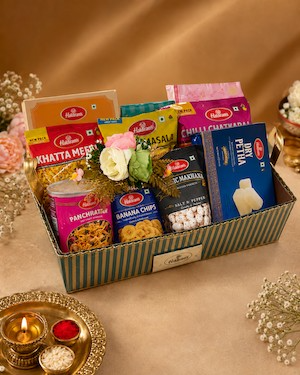
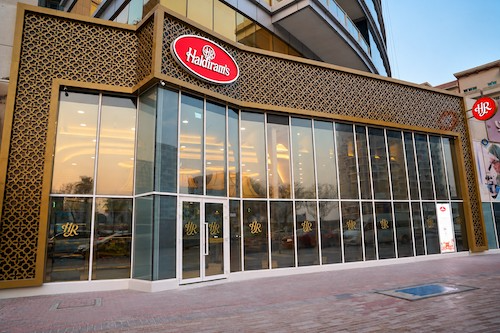

A hot plate of Chole Bhature. Pani Puri with friends. Mithai brought home because there’s good news to share. A festive hamper exchanged with family. Or simply a familiar Indian meal after a long day.
Some food is more than just food. It tastes like home. Haldiram’s brings that feeling closer to Dubai Silicon Oasis with the opening of its third Dubai restaurant, a new destination for pure vegetarian – Indian street food, chaats, meals, traditional mithai, savouries and gifting, all under one roof.
Founded in Bikaner, a town in Rajasthan, India in 1937, Haldiram’s has spent nearly nine decades becoming part of countless Indian family traditions – from everyday meals and spontaneous cravings to festivals, celebrations and auspicious beginnings.
Now, the brand wants its newest Dubai location to become a home away from home for the growing Silicon Oasis community: a place to experience the taste of India and make both the big occasions and the everyday ones feel a little more special.
FROM INDIA TO DUBAI, WITH LOVE
Haldiram’s story began in Bikaner, Rajasthan, India, in 1937. Founded by Ganga Bhishen Agarwal, affectionately known as Haldiram Ji, the brand became synonymous with authentic Indian sweets, snacks, and family traditions.
Nearly 90 years later, the brand has travelled across cities, countries and generations – but the flavours at the heart of it remain deeply rooted in India.
There is bhujia passed around with evening chai. Kaju Katli opened when there is something worth celebrating. Samosas ordered because friends have dropped by. Chole Bhature for a weekend indulgence. Pani Puri that somehow always needs “one more.”
These are flavours tied not only to places, but to memories. And that is the experience Haldiram’s wants to recreate in Dubai: a little piece of India, away from India. Following its recent London launch, Haldiram’s continues to expand its international presence, bringing familiar Indian flavours and traditions to communities around the world. In Dubai, the journey began with Karama in 2024, followed by its flagship restaurant on Sheikh Zayed Road, and now Dubai Silicon Oasis – marking three Dubai locations within three years. Each serves a different part of the city, but with the same idea at heart: bringing the taste of India closer to home.
SILICON OASIS, COME HUNGRY
The new service-model restaurant brings together the breadth of the Haldiram’s experience in an easy, welcoming format designed for everything from a quick weekday bite to a relaxed family meal. Located at Lynx Tower G -G07, G09, Opp Silicon Central Mall, Dubai Silicon Oasis, the restaurant spans approximately 3900 sq. ft., accommodates 72 guests and operates from 9am – 11pm, with prices starting from AED 5 – 38. The menu reads a little like a trip through India’s favourite comfort foods.
- Chole Bhature – AED 28
- Pav Bhaji – AED 26
- Raj Kachori – AED 17 layered with yoghurt and chutneys
- Pani Puri – AED 12
- Aloo Tikki – AED 16
- Classic Samosas – AED 6.
And that is only where it begins. Guests can choose from an extensive menu spanning chaats, Indian street food, savouries, curries, meals and desserts, with live food counters bringing freshness and energy to the restaurant experience. Whether it’s a quick chaat after work, an unplanned family dinner or the sudden need for something that tastes unmistakably like India. The idea is simple: there should always be a reason to come to Haldiram’s.
BECAUSE MITHAI MEANS SOMETHING
At Haldiram’s, mithai has never simply meant dessert. It is how we say congratulations. How we arrive at someone’s home. How we celebrate a new beginning. How we mark a festival. How we turn good news into something everyone can share. The Silicon Oasis restaurant brings that tradition with it.
Its mithai counter will feature Indian favourites including Kaju Katli – AED 1.75/pc, Motichoor Laddoo – AED 2.5/pc and Gulab Jamun – AED 5/pc, alongside an extensive selection of savouries and snacks to enjoy at the restaurant or take home.
Throughout the year, the offering will also follow India’s festive calendar – from ghevar during the Teej and Raksha Bandhan season and now modaks for Ganesh Chaturthi to festive favourites for Navratri, Diwali and other celebrations. Because even thousands of kilometres from India, the traditions do not have to feel far away.
YOUR EVERYDAY. YOUR CELEBRATIONS. YOUR HALDIRAM’S.
Not every Haldiram’s moment needs a festival. Sometimes it is Sunday lunch with the family. Sometimes friends decide to meet over chaat. Sometimes you are craving the food you grew up eating. And sometimes, there is a promotion, a new home, a birthday, an engagement, a festival or simply some good news that deserves to be celebrated with something sweet. The Silicon Oasis restaurant has been created to be part of all of them.
For bigger moments, Haldiram’s curated gifting range brings together mithai, savouries and festive favourites in boxes and hampers for family celebrations, auspicious occasions, festive gifting, corporate gifting and gifts for friends and colleagues. Guests can dine, pick up fresh mithai, take their favourite savouries home or choose a hamper for someone special, all in one visit.
A NEW HOME IN A GROWING DUBAI COMMUNITY
The opening comes at an exciting time for Dubai Silicon Oasis as the area continues to develop as a residential, business and innovation community.
In January 2026, Dubai announced AED 12.8 billion in strategic expansion projects for Dubai Silicon Oasis, spanning residential, commercial, hospitality and innovation infrastructure. For Haldiram’s, however, expansion is not simply about adding another location to a map. It is about becoming part of another community.
Divvyya Kowshik, Vice President, International Operations has mentioned,
“For nearly 90 years, Haldiram’s has been part of people’s everyday moments as well as some of the most important celebrations in their lives.
“That is what we want to bring to Dubai Silicon Oasis. We want Haldiram’s to feel like a little piece of India in Dubai – somewhere you can come when you miss the flavours of home, bring your family for a meal, meet friends over chaat or pick up mithai because there is something worth celebrating.
“Our journey in Dubai began with Karama in 2024, followed by Sheikh Zayed Road, and the response from the community has encouraged us to keep bringing Haldiram’s closer to more neighbourhoods across the city.
“With Silicon Oasis, we hope to become part of both the big moments and the wonderfully ordinary ones – because sometimes even a plate of Pani Puri shared with someone you love is an occasion in itself.”
INDIA MAY BE MILES AWAY. THE TASTE OF HOME DOESN’T HAVE TO BE.
The Haldiram’s Dubai Silicon Oasis restaurant officially opened on September 16, 2026, bringing Indian street food, chaats, meals, mithai, savouries, live counters and gifting together under one roof.
Come for the Chole Bhature. Stay for the chaat. Take the mithai home.And whenever there is something to celebrate – big or small, make it a little sweeter with Haldiram’s.
Location: Lynx Tower G -G07, G09, Opp Silicon Central Mall, Dubai Silicon Oasis
Opening Date: September 16, 2026
Store Size: 3900 sq.ft.
Seating Capacity: 72 guests
Opening Hours: 9am – 11pm Daily
Price Range: AED 5 onwards
Uncategorized
Half a billion people live with arthritis: MEAF puts early action at the heart of World Arthritis Day 2026

Arthritis affects about half a billion people worldwide, yet its physical, emotional and economic impact on everyday life is often underestimated. To strengthen awareness and help people take greater control of their health, the Middle East Arthritis Foundation (MEAF) will host its annual World Arthritis Day community event from 8:00 am to 4:00 pm on 24 October 2026 at the Shangri-La Hotel, Dubai. Inspired by the global Achieve Your Dreams theme, the event will encourage people with arthritis to pursue their goals through earlier diagnosis, informed care and stronger community support.
MEAF is urging people to recognise symptoms and seek medical advice before arthritis limits their independence. The condition is often dismissed as an unavoidable consequence of aging, although it can develop at any stage of life. Patients’ inflammatory arthritis symptoms are often dismissed when laboratory results appear normal, making it important to consult a rheumatologist.
Ankylosing spondylitis commonly begins during the teens or twenties, while juvenile idiopathic arthritis affects approximately one in 1,000 children under 16. A Cleveland Clinic Abu Dhabi study of Emirati rheumatoid arthritis patients recorded an average age of approximately 50, showing how significantly the condition can affect people during their working years. Without appropriate treatment, inflammatory arthritis can cause permanent joint damage and long-term disability, while some forms can also affect the eyes, lungs, heart and kidneys.
Through its patient support work, MEAF sees how chronic fatigue, morning stiffness and unpredictable flare-ups can affect employment as well as exercise, travel and routine activities. Painful hand joints can turn cooking or holding a pen into difficult tasks, while uncertainty around symptoms can contribute to anxiety and isolation. Rates of depression and anxiety among people with arthritis-related diseases can be between two and 10 times higher than in the general population. Exercise does not inevitably worsen arthritis, and suitable low-impact movement can help preserve strength and mobility.
Against this backdrop, MEAF’s event will combine clinical guidance with practical activities and patient experiences, helping attendees become more confident managers of their health. Participants will be able to speak directly with specialists and learn from others who understand the daily challenges of arthritis. Dedicated guidance will support women navigating fertility and pregnancy, with care extending through the postpartum period. The programme will also explore the role of nutrition, physical activity and mental wellbeing in managing the condition alongside medical treatment.
Dr Humeira Badsha, Founding Member of the Middle East Arthritis Foundation, said: “Over three decades of treating people with arthritis, I have seen how quietly the condition can change a life. Pain may appear first, but fatigue, reduced mobility and emotional strain can gradually affect work, relationships and independence. Conditions such as rheumatoid arthritis and ankylosing spondylitis are autoimmune conditions, and early diagnosis is critical to managing them effectively, avoiding joint damage and preventing long-term disability. World Arthritis Day gives us a chance to help people recognise symptoms and seek care earlier. With the right treatment, practical lifestyle guidance and a supportive community, people can manage their condition with confidence and continue pursuing the goals that give their lives meaning.”
This year, MEAF has collaborated with the Emirates Society for Rheumatology to raise awareness, with Dr Amel Ginawi leading public awareness for the Society and stressing the importance of early diagnosis. Attendees can learn, connect and participate in different ways, including a practical nutrition workshop led by a clinical dietitian and sessions covering Tai Chi, accessible dance, mental resilience and sound healing. The event will also feature the RM Dreams Poster Competition, inviting participants to share their dreams and experiences through creative posters, with attendees voting for their favourites and awards presented to the winners.
By bringing patients, caregivers and health professionals into the same conversation, MEAF hopes to replace misconceptions with useful guidance and reduce the isolation that can accompany a chronic condition. The Achieve Your Dreams theme reflects the Foundation’s belief that arthritis should not define what someone can work towards, provided they receive timely care and support suited to their circumstances.
All sessions are free to attend. To participate in the event, please register on https://arthritis.ae/wad.
For more information about MEAF, visit www.arthritis.ae or follow the Foundation on Facebook: Emirates Arthritis Foundation and Twitter: UAE Arthritis.

Beauty is entering its more-is-more, but make it effortless era, and TikTok is helping lead the shift. From five-minute GRWM videos and rapid-fire beauty routines to multitasking product hacks, today’s feeds are redefining what consumers expect from their routines: maximum impact with minimal effort. What starts on the feed is increasingly shaping what happens on the shelf, with beauty brands responding through bold, high-impact color and multifunctional formulas that work harder and tackle multiple concerns in one go.
Enter Wet n Wild, the iconic L.A. beauty brand known for vibrant color and standout formulas, and HASK, bringing targeted haircare designed to address everything from scalp care and repair to volume and manageability – both reflecting a new approach to beauty that is rewriting the rules of how we get ready.
FACE: Make Every Detail Count
The current makeup mood is all about statement details. Rather than committing to an elaborate full-face routine, beauty lovers are using high-impact products to transform their look – think unexpected color, blurred skin, feathered brows and glossy lips.
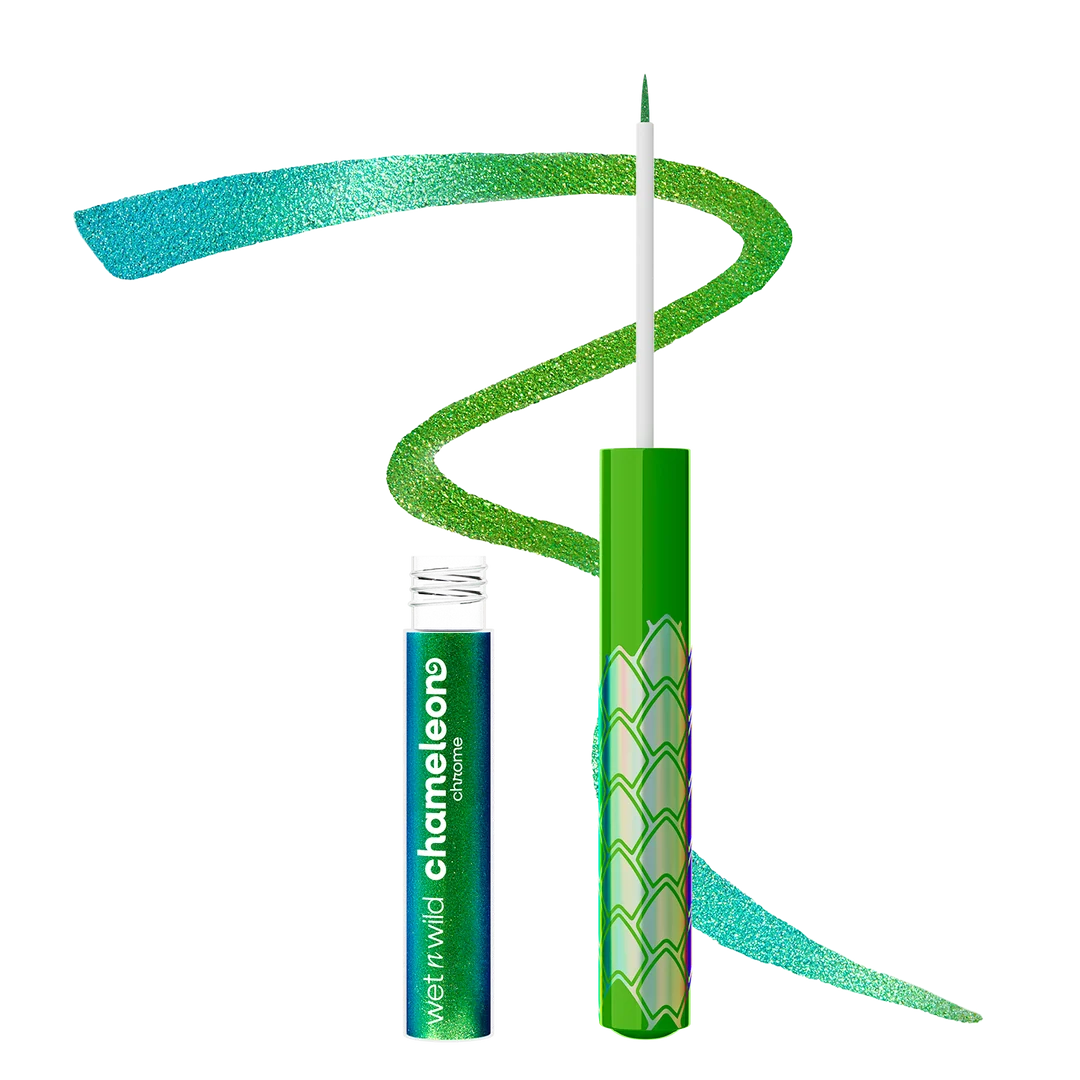
Wet n Wild Chameleon Chrome Liquid Eyeliner in Astro Pulse
For eyes, it taps into the growing appetite for multidimensional makeup. Its light-catching color shifts and shimmers from different angles, turning a simple liner into an instant statement.
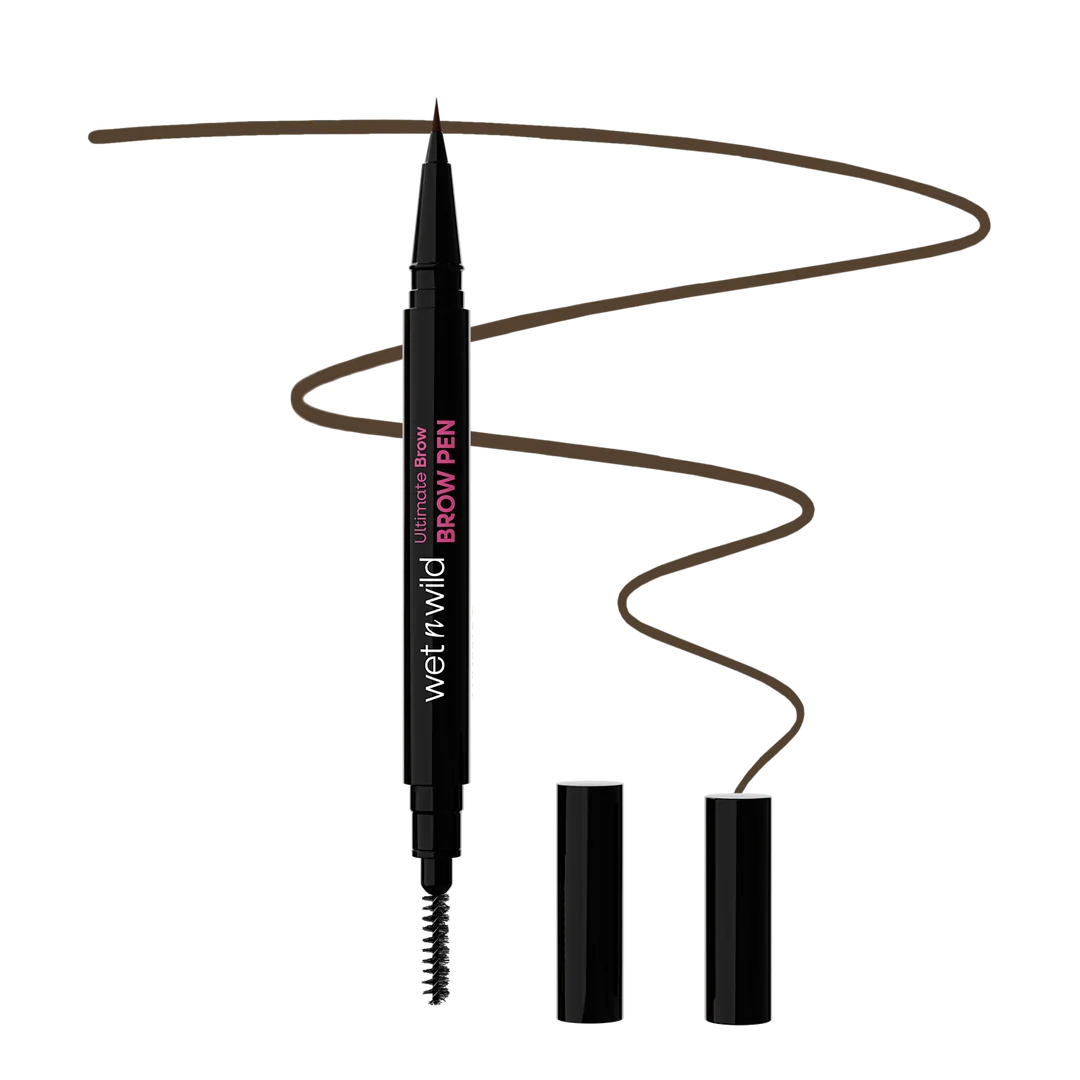
Wet n Wild Ultimate Brow Pen in Dark Brown
Brows are taking a softer approach. Its precise pen creates fine, hair-like strokes for a naturally feathered effect, with a waterproof, smudge-proof formula that lasts up to 16 hours. The result is defined, fuller-looking brows without the overly sculpted finish.
Wet n Wild Mother Fluffer Cloud Blush in Rose the Roof

Cheeks are embracing the cloud-soft makeup trend. Its ultra-airy cream-to-powder formula melts into the skin for a soft-focus flush, delivering bold color with a blurred-matte finish.
Wet n Wild Photo Focus Loose Setting Powder in Soft Pink
Complexion is getting a glow-forward update. The lightweight powder sets makeup while helping blur imperfections and minimize shine, leaving skin looking smooth with a subtle pink tint.

Wet n Wild Mega Inky Lip Color in Desert Crush
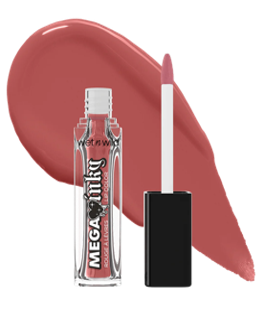
Lips are making a case for long-lasting, high-impact color. Its intensely pigmented formula delivers a smooth matte finish for up to 16 hours, making a single swipe enough to create a statement lip.
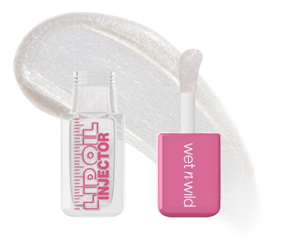
Wet n Wild Lip Oil Injector in Shimmer Me Baby
Glossy lips continue to have their moment, with a focus on plump-looking, high-shine finishes. The lightweight formula delivers a tingly lift and smooth, glossy finish for an effortless juicy-lip effect. Available at leading UAE department stores, hypermarkets, pharmacies, and online at www.amazon.ae , www.noon.com , www.glambeaute.com , and www.namshi.com.
HAIR: Healthy-Looking Hair Starts at the Scalp
The same desire for effortless impact is making its way into haircare, with scalp health, volume and multifunctional formulas becoming increasingly central to the routine.
HASK Tea Tree Oil & Rosemary Invigorating Shampoo, Conditioner & 5-in-1 Leave-In Spray
Scalp-first haircare is becoming an essential part of the beauty routine. Infused with purifying tea tree oil and rosemary, the range helps lift build-up and impurities while cleansing, soothing and revitalizing the scalp. The conditioner helps rehydrate and seal in moisture and shine, while the 5-in-1 Leave-In Spray detangles and moisturises while adding body and shine, controlling frizz, preventing breakage and providing heat protection up to 400°F/205°C.
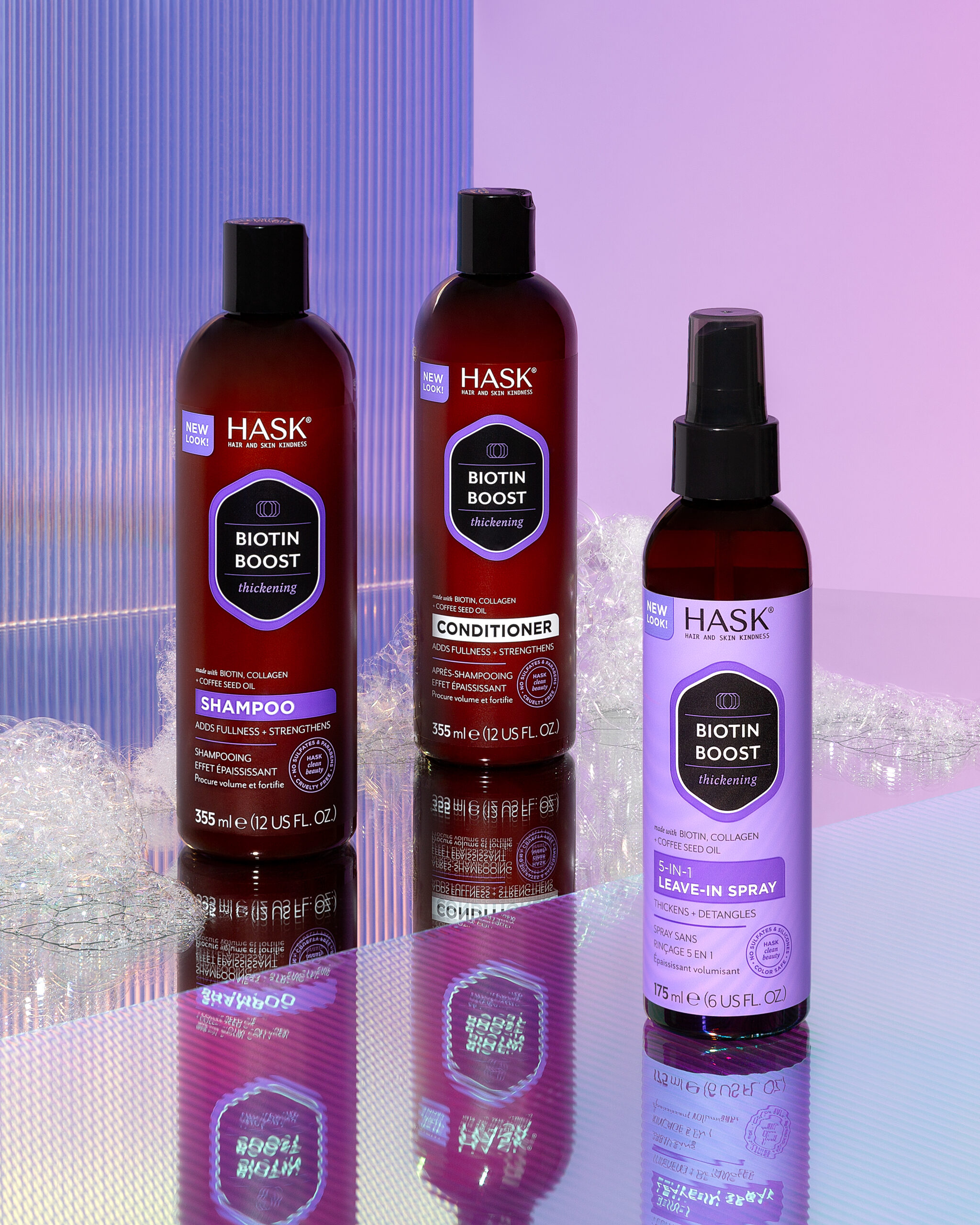
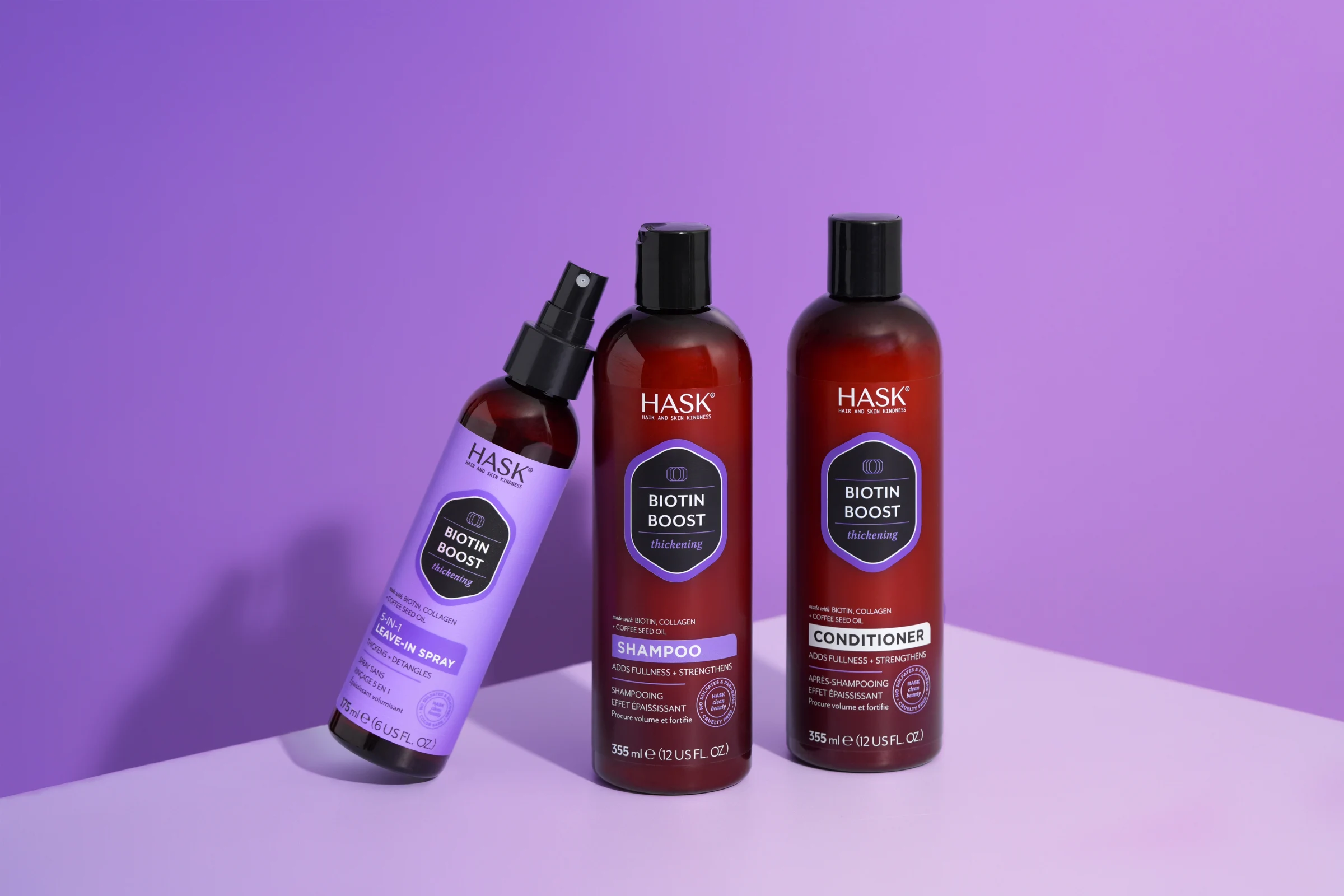
HASK Biotin Boost Thickening Shampoo, Conditioner & 5-in-1 Leave-In Spray
Fuller-looking hair is firmly back on the beauty agenda, with volume-focused routines moving beyond styling and into everyday haircare. Infused with biotin, collagen and coffee, the range helps promote thicker, fuller-looking strands, while the conditioner detangles and softens. The 5-in-1 Leave-In Spray completes the routine by adding body and shine, controlling frizz, preventing breakage and providing heat protection up to 400°F/205°C.
Available at major hypermarkets and supermarkets across the UAE and online at www.glambeaute.com. Beauty is moving beyond the rulebook, with individuality taking center stage. Instead of sticking to one signature look, today’s routines are about experimenting, adapting and choosing products that work around you – not the other way around. To discover more and keep up with the latest news, product launches and beauty updates, follow HASK on Facebook and Instagram at @HASKUAE, and wet n wild on Facebook, TikTok and Instagram at @wetnwildintl.


US$90 BILLION HOTEL PIPELINE SET TO EXPAND GCC AND NORTH AFRICA ROOM SUPPLY BY 27 PERCENT

THE 2026 REAL ESTATE TRENDS EVERYONE CALLED AND HOW THEY’RE PLAYING OUT

Europe’s Data Centres Are Evolving From Power Consumers to Energy Partners



-
News11 years ago
SENDQUICK (TALARIAX) INTRODUCES SQOOPE – THE BREAKTHROUGH IN MOBILE MESSAGING
-

 Trending11 months ago
OPPO A6 Pro 5G Review: Reliable Daily Driver
-

 Tech News2 years ago
Denodo Bolsters Executive Team by Hiring Christophe Culine as its Chief Revenue Officer
-
 VAR1 year ago
Microsoft Launches New Surface Copilot+ PCs for Business
-

 Automotive2 years ago
AGMC Launches the RIDDARA RD6 High Performance Fully Electric 4×4 Pickup
-
Tech Interviews3 years ago
Navigating the Cybersecurity Landscape in Hybrid Work Environments
-
 Tech News2 years ago
Toshiba Announces MG10-D Series of Enterprise HDDs with Capacities up to 10TB
-

 Tech News1 year ago
Nothing Launches flagship Nothing Phone (3) and Headphone (1) in theme with the Iconic Museum of the Future in Dubai