
 Have a question? +971 56 404 0503




Tech News
The Future of Semiconductors Forum 2024: Charting the Course of Electronic Chip Manufacturing and Design in Saudi Arabia

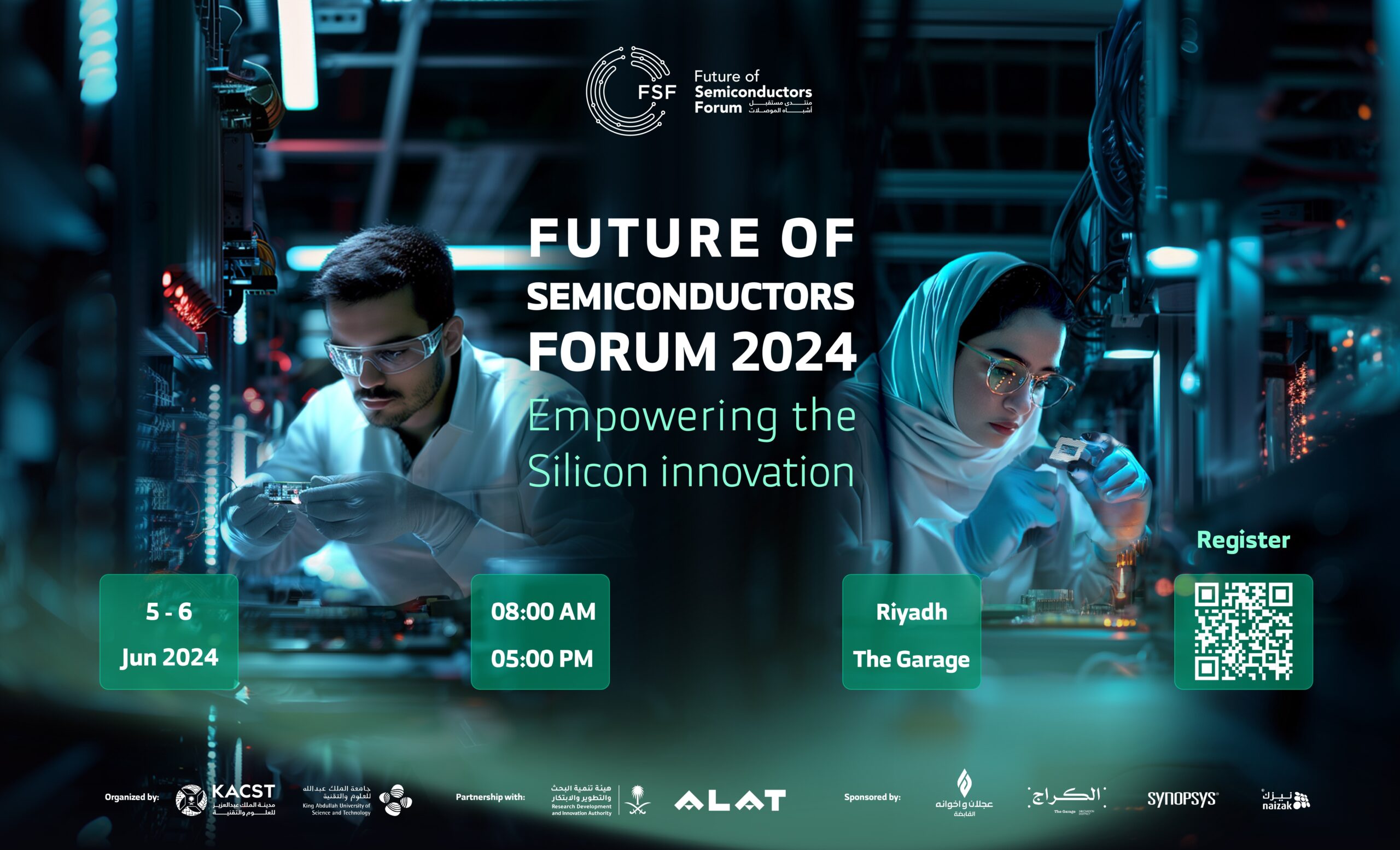
The third edition of the Future Semiconductors Forum 2024 will be held in Riyadh, hosted by King Abdulaziz City for Science and Technology (KACST) in partnership with King Abdullah University of Science and Technology (KAUST). The event, scheduled for June 5-6, 2024, at the Garage Innovation District in Riyadh, aims to promote the domestic production of electronic chips and boost the digital economy within Saudi Arabia.
This forum will gather esteemed policymakers, industrial pioneers, experts, and scholars in semiconductor technology. Notable participants include Shuji Nakamura, a Nobel laureate in Physics for his development of blue/green LEDs and violet laser diodes, alongside Kang Wang, who holds a professorship in electrical engineering and computer science and serves as Co-Director of the Center for Quantum Science and Engineering at UCLA and a Professor of electrical engineering at Raytheon Company. Also in attendance will be Steven P. DenBaars from the University of California – Santa Barbara, renowned for holding more than 190 US patents and co-founding the Institute of Engineering Electricity and Electronics alongside four photonics and electronics companies.
Umesh Mishra, the Dean of the College of Engineering at UCSB, joins the list of distinguished participants, as do Ross Jatou, President of the Semiconductor at Alat Company, Dr. Naveed Sherwani, the Chairman of the Board of Directors and CEO of Rapid Silicon Company, co-designer of Intel microprocessor algorithms and Intel Award winner, and Professor Goutam Chattopadhyay, a research scientist at NASA’s Jet Propulsion Laboratory and the California Institute of Technology.
Dr. Munir Eldesouki, the President of King Abdulaziz City for Science and Technology, stated that the forum reflects the goals and priorities set by HRH Prince Mohamed bin Salman, the Crown Prince, and Prime Minister, in the field of research, development, and innovation. It also plays a significant role in advancing the digital economy in the Kingdom. He emphasized that the event is organized by King Abdulaziz City for Science and Technology (KACST), which serves as a national laboratory and hub for innovation. Its purpose is to enhance the research, development, and innovation system, expedite technological advancements, and promote the localization of technologies.
Dr. Tony Chan, President of King Abdullah University of Science and Technology (KAUST) commended the Semiconductors Future Forum for its accomplishments in the first and second editions. He noted that the new edition offers promising opportunities to enhance the digital economy, advance research cooperation between various entities, and exchange knowledge about best practices in the electronic chip industry by bringing together the most prominent local and international entities under one roof.
The forum’s purpose is to raise awareness about the significance of localizing the electronic chip industry and its contribution to the growth of the digital economy in the Kingdom. It also aims to explore potential opportunities for localizing this crucial industry to make the Kingdom a key player in the electronic chip sector. Additionally, the forum seeks to promote research collaboration and sharing best practices in semiconductor development and manufacturing.
Over two days, the forum will delve into various subjects to outline the semiconductor industry’s future trajectory in the Kingdom by exploring the semiconductor value chain, from raw materials to finished microchips. Additionally, it will examine the application of this cutting-edge technology in areas like space exploration, quantum technologies, 6G communications, electric vehicles, and integrated sensors to enable smart cities.
The third edition of the forum will announce significant initiatives that bolster Saudi Arabia’s standing in the global semiconductor arena, drive transformation in the Middle East, cultivate talent in this vital sector, and address industry challenges to spur economic growth. The forum’s agenda includes various scientific activities such as lectures, panel discussions, research posters, and an accompanying exhibition for global companies to showcase the latest semiconductor development and manufacturing developments.
The forum’s third edition has a strategic partnership with the Research, Development, and Innovation Development Authority and Alat Company. It is sponsored by leading local and international institutions and companies such as Ajlan & Brothers Holding, Synopsys, Siemens, Rapid Silicon, Oxford Instruments, Trysl Tech, Joule, EpicSemi, and International Semiconductor Executive Summits.

In a strategic move to advance enterprise digital enablement and support the technological ambitions of Saudi Vision 2030, Cloudera, the only true hybrid platform for data, analytics, and AI, has agreed to a Memorandum of Understanding (MoU) with MuroonI the technology and digital enablement subsidiary of Tawuniya.
The proposed collaboration aims to evaluate opportunities to help organizations across the region modernize their technology capabilities, accelerate digital transformation, and unlock long-term business value. By leveraging Cloudera’s products and services, the engagement will explore how Cloudera’s hybrid data platforms and AI-driven analytics can help to boost Muroon’s expanding IT and digital enablement objectives.
Under the proposed partnership, Muroon and Cloudera will aim to collaborate on delivering secure data exchange and modern cloud architecture. Integrating Cloudera Anywhere Cloud™ principles, the proposed collaboration will explore ways to deliver a consistent cloud experience, enabling organizations to deploy AI and analytics workloads across private data centers and cloud environments with unified governance and security.
The proposed alliance creates complementary roles for both organizations. Muroon will leverage its delivery capabilities, consulting expertise, implementation services, across the Tawuniya ecosystem and the wider region. Cloudera will look to provide technology leadership, platform expertise, solution architecture, and technical enablement.
Ahmad Shakora, General Vice President of META, Cloudera, said:
“Our proposed collaboration with Muroon represents an important milestone in empowering regional organizations with modern hybrid data and AI architectures. Through Cloudera’s ability to bring AI and analytics to data anywhere it resides, combined with Muroon’s deep digital enablement and implementation capabilities, we aim to accelerate innovation, ensure secure data management, and actively contribute to the digital economy goals of Saudi Vision 2030.”
Faisal Bakhsh, Vice President of Business Development and Services Delivery at Muroon, added:
“As the technology arm of Tawuniya Group, Muroon is dedicated to delivering cutting-edge digital solutions that drive operational efficiency and business growth. Exploring this partnership with Cloudera allows us to harness world-class hybrid data and AI platforms to expand our service capabilities, facilitate secure data exchange, and deliver transformative value to our ecosystem and clients across Saudi Arabia.”
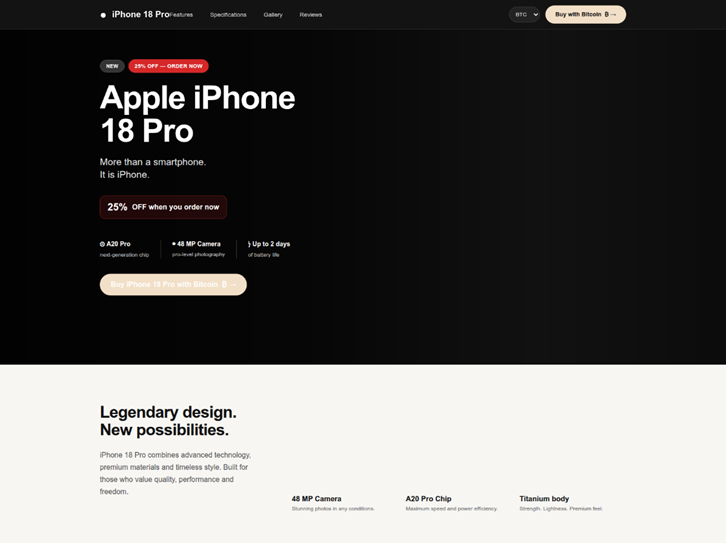
At the start of the two sales waves for the new iPhone 18 models, the buzz has extended far beyond customers and Apple enthusiasts, scammers are also attempting to capitalize on the hype. Kaspersky experts have identified fake websites promoting nonexistent offers designed to deceive users for the new devices. These scam sites have been discovered in multiple languages, including English, Arabic, Portuguese and others.
One of the identified websites offers users the opportunity to “purchase” new devices, complete with technical specifications and a 25% discount. Among the available payment methods, customers are also encouraged to pay in Bitcoin. Its deceptively credible interface is designed to lower the guard of users, prompt them to enter personal information and transfer funds – but in reality, the only thing buyers might receive is financial loss.
Example of a fake website offering to purchase iPhone 18 Pro with Bitcoins
Another fake website invites users to pre-order iPhone 18 Pro devices in a variety of colors, including some that differ from those officially announced by the company at launch, and to select their preferred storage capacity. To make the offer even more enticing, the site claims that customers do not need to pay the full amount upfront and can supposedly settle the remaining balance later. In addition, the “seller” promises a full refund if the purchase is canceled – a claim that should not be trusted.
At the next stage, the fake website requests users’ personal information, including their full name, phone number, email address, city of residence and even their WhatsApp contact details, which may later be used by cybercriminals as part of social engineering schemes. Buyers are then asked to provide their bank card details. Ultimately, every step of the process is designed to extract as much information as possible, which may later be stolen, while victims’ bank accounts may be drained of funds.
“We have seen scam offers emerge around high-profile device launches for years. Consumer excitement can give cybercriminals an additional advantage and improve their chances of profiting. We strongly advise users to be extremely cautious when choosing where to shop and to make purchases only through official and trusted retailers. Offers that seem too good to be true, as well as product selections that are broader than or differ from those officially announced by the company, should be treated as clear warning signs,” says Olga Altukhova, Senior Web Content Analyst at Kaspersky.
To enjoy new devices without worrying about cyberthreats, Kaspersky advises users to:
Enable multi-factor authentication and monitor accounts: activate 2FA on IDs and financial apps and regularly review statements for unauthorized activity.
Always purchase new products through official and reputable stores to avoid falling victim to fraudulent offers.
Check the authenticity of websites before entering personal data. Double-check URL formats and organizations name spellings.
Secure your payment information. Use dedicated virtual cards or a dedicated payment service for online purchases to avoid exposing your credit card or bank account information.
Use a reliable security solution such as Kaspersky Premium that blocks phishing links. To ensure advanced protection against increasingly complex cyber threats, Kaspersky actively amplifies its consumer solutions with AI-powered scam protection – a unified suite of technologies that combines machine learning-based anti-phishing algorithms, real-time behavior monitoring, accompanied by Data Leak and Identity Theft checkers.
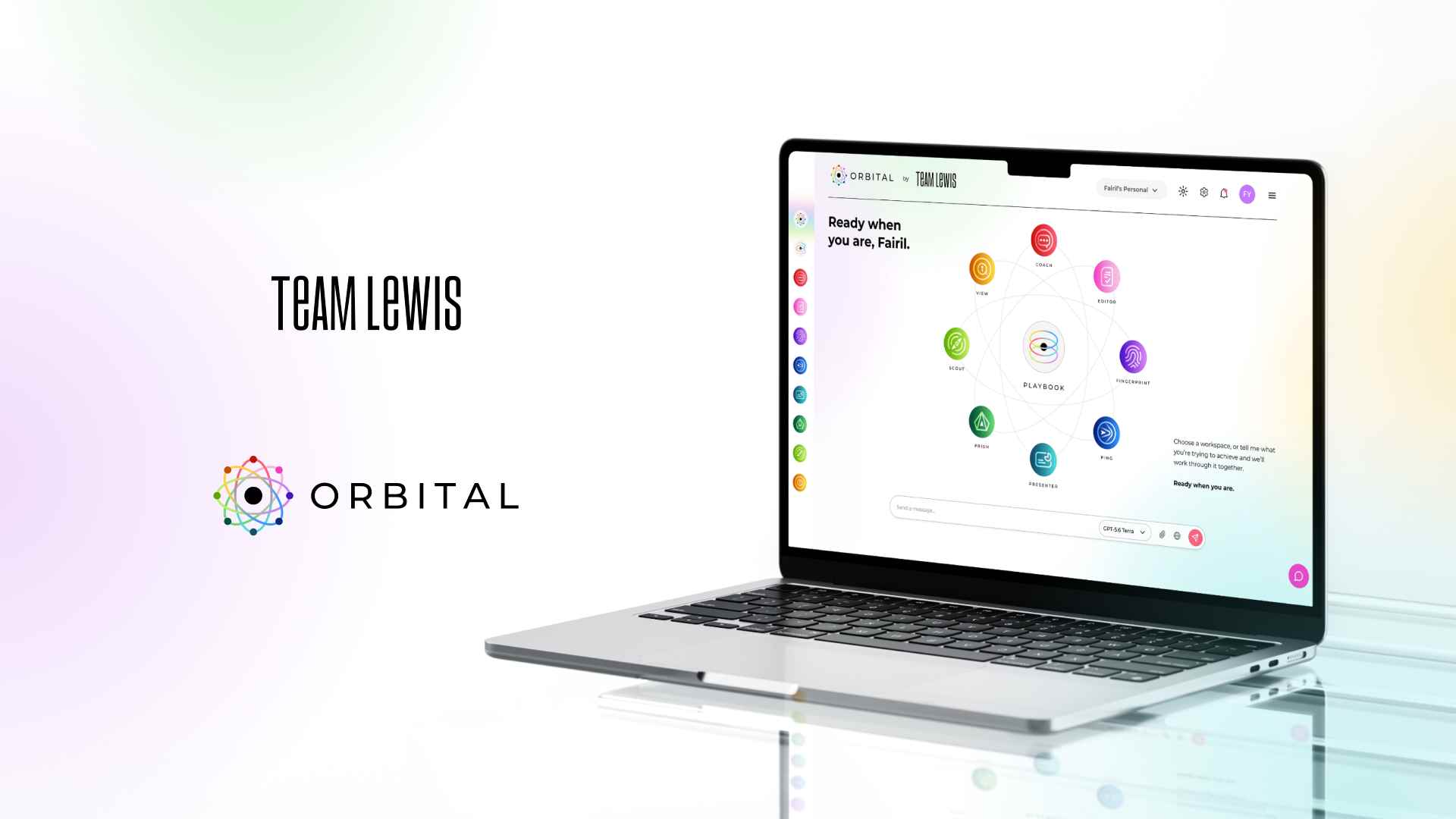
TEAM LEWIS today announced version one of Orbital (OS1), a secure AI operating system. It is designed for multi-market organizations to connect insight, creativity, messaging and public-facing delivery.
Built by marketers for marketers, Orbital brings together data from across PR, CRM, paid media and web activity. It gives teams a clearer view of the factors shaping reputation, demand and AI visibility — and helps them respond with greater speed and confidence.
Marketing teams have access to more data than ever, but turning that information into action, fast, remains difficult. Fragmented platforms, dispersed teams and growing expectations around measurement have made it harder to see the full picture. Orbital has been developed to help close that gap.
Version one of the platform is structured around three connected areas:
Intelligence
Orbital works with each organization’s own data and context to identify the signals influencing reputation, demand and AI visibility.
Creativity
It helps teams turn insight into high-quality creative work at pace and at scale. It also keeps the judgement and originality that strong marketing needs.
Delivery
Orbital also supports the people representing an organization — from media interviews to keynote presentations and leadership moments — helping them communicate clearly and confidently.
Rather than replacing existing marketing infrastructure, Orbital is designed to work alongside it, through API integrations. Client data remains isolated within secure, enterprise-grade environments, supporting the governance and residency requirements expected by regulated industries.
Fairil Yeo, EVP of AI & Growth at TEAM LEWIS, said:
“The advantage increasingly lies with organizations that can act quickly on what they already know. Orbital is designed to shorten the distance between insight and action — helping marketing and communications teams work more effectively across markets, channels and teams.”
Yvonne van Bokhoven, Chief Operating Officer at TEAM LEWIS, added:
“Technology can connect information, but it cannot replace judgement. Orbital gives our specialists a clearer view of what matters, more quickly. The decisions — and the responsibility for making them well — remain human.”
Orbital is now available as part of TEAM LEWIS’s global offering. Its first release, Orbital OS1, establishes the foundation for an ongoing development programme, with further capabilities planned for future releases.
At a glance
- One connected system for marketing intelligence, creativity and delivery
- Uses data from PR, CRM, paid media and web activity
- Designed for complex, regulated and multi-market organizations
- Secure, enterprise-grade client environments
- Designed to complement existing marketing infrastructure
- Combines AI capabilities with specialist human judgement
- Orbital OS1 is the first release in a continuing platform roadmap
For further information, visit teamlewis.com/orbital.


RØDE UNLOCKS 4K CAPTURE MODE ACROSS THE RØDECASTER VIDEO RANGE

REDMI Note 17 Series Launches in UAE With Up to 10,000mAh Battery and Six Years of Security Updates

Cloudera and Muroon Announce Strategic MoU



-
News11 years ago
SENDQUICK (TALARIAX) INTRODUCES SQOOPE – THE BREAKTHROUGH IN MOBILE MESSAGING
-

 Trending11 months ago
OPPO A6 Pro 5G Review: Reliable Daily Driver
-

 Tech News2 years ago
Denodo Bolsters Executive Team by Hiring Christophe Culine as its Chief Revenue Officer
-
 VAR1 year ago
Microsoft Launches New Surface Copilot+ PCs for Business
-

 Automotive2 years ago
AGMC Launches the RIDDARA RD6 High Performance Fully Electric 4×4 Pickup
-
Tech Interviews3 years ago
Navigating the Cybersecurity Landscape in Hybrid Work Environments
-
 Tech News2 years ago
Toshiba Announces MG10-D Series of Enterprise HDDs with Capacities up to 10TB
-

 Tech News1 year ago
Nothing Launches flagship Nothing Phone (3) and Headphone (1) in theme with the Iconic Museum of the Future in Dubai