
 Have a question? +971 56 404 0503




Tech News
Bosch registered sales of 490 million euros in the Middle East in 2023


Bosch ended its 2023 fiscal year with 490 million euros, in consolidated sales in the Middle East, registering 3% increase. The company met its sales expectations despite the challenges faced in the 2023 business year. This growth was attributed to various divisions within Bosch, including Bosch Rexroth, Building Technologies, Mobility Aftermarket, and the Bosch Global Software Technologies subsidiary.
Commenting on the results, Per Johansson, general manager of the Bosch Group in the Middle East, said: “Despite the challenges posed by the market due to geopolitical developments and respective economic impact, Bosch has demonstrated resilience and adaptability. Our associates’ dedication and hard work delivered the best possible results across divisions.” The number of associates employed at Bosch in the Middle East stood at around 485 as of December 31, 2023.
Bosch Middle East: outlook for 2024
“At Bosch, we remain optimistic about the future and are committed to driving growth through our technology ‘Invented for life’ and improving the quality of life. We aim to accelerate our growth in 2024 and beyond, with a focus on continued regional expansion,” Per Johansson added.
Countries in the Middle East are in different stages of development, major players, especially in the Gulf Cooperation Council (GCC), such as Saudi Arabia, UAE, and Oman are making leaps toward economic diversification through the adoption of long-term visions of the respective government leaders. With the adoption of Artificial Intelligence (AI), investment opportunities are set to open across sectors; focus on reducing reliance on fossil fuels and refreshed environmental, social, and governance (ESG) strategies is expected to drive significant sustainable growth in the region. The development of other diversified sectors through investment in AI technologies could strategically position the region for the years to come.
Development of Bosch business sectors
In 2023, sales development in Bosch’s business sectors displayed a mixed picture. Bosch’s Mobility Aftermarket division has seen growth which was driven by the traditional diesel business as well as the passenger car spare parts (batteries, wipers, spark plugs) which was a focus area in 2023. On the other hand, the Bosch Global Software Technologies subsidiary, performed well in the fiscal year 2023 via acquiring new customers in UAE and KSA. The notable growth can be directly attributed to contributions from growing digital enterprise software solutions including enterprise resource planning (ERP), Cloud, and artificial intelligence (AI), along with digital engineering products and services comprising of IoT, product development, and more. The Bosch Rexroth division, focused on serving global application experience in the market segments of mobile and industrial applications as well as factory automation which contributed significantly to the growth of the business in 2023, especially through its refreshed go-to-market strategies and partnerships.
Bosch is at the forefront of innovation in the Building Technologies division driving advancements that enhance safety efficiency and sustainability in modern infrastructure. The division experienced growth, driven by a strategic emphasis on video solutions, conferencing, fire alarm systems, and AI in building management.
Bosch expansion in the Middle East
In 2024, the Bosch Group is planning a strategic expansion in the Kingdom of Saudi Arabia and Oman. This step underlines the company’s commitment to the region and its intention to reinforce its footprint in the Middle East. The growing markets of KSA and Oman are of strategic importance to the Bosch Group in the Middle East as they offer vast potential for expansion, driven by significant economic reforms, infrastructure development, and a focus on sustainability. By leveraging its innovative solutions and aligning with national development goals, Bosch Middle East is planning its contribution to and benefit from the dynamic growth of these key markets.
Sustaining investments in the Middle East
Bosch is strategically focusing on digital transformation and hydrogen as investment areas, reflecting its commitment to innovation, sustainability and addressing global challenges. The Bosch Connected Industry division is spearheading the move towards smart factories as a pivotal component of its digital transformation strategy. By integrating advanced technologies such as IoT, artificial intelligence (AI), and data analytics into their manufacturing processes, Bosch aims to enhance operational efficiency, reduce downtime, and optimize resource utilization. This aligns with Bosch’s commitment to support the region’s broader goals of industrial modernization and economic diversification. Turning the spotlight to hydrogen, it is a clean energy source that is crucial in the journey to net zero. Along the entire hydrogen value chain, Bosch is investing in developing technologies for the production, compression, storage, and use of hydrogen. Starting with developing smart technologies for hydrogen production, Bosch aims to contribute to a more sustainable future.
Bosch champions diversity
Bosch fosters diversity – over 23 nationalities are represented at its location in Dubai. This rich tapestry of cultural backgrounds enhances the company’s creativity, innovation, and global perspective. Bosch actively encourages women to pursue senior positions within the company, aligning with its core values of respect, and equal opportunity. By fostering an inclusive environment where all associates can thrive, regardless of gender or background, Bosch not only strengthens its leadership but also ensures a diverse array of viewpoints and ideas, driving the company’s continued success.
Bosch Group: outlook for 2024 and strategic course
The Bosch Group increased its sales and earnings in 2023 and is successfully implementing its growth strategy despite a difficult environment. Stefan Hartung, chairman of the board of management of Robert Bosch GmbH, said: “In the 2023 business year, we achieved our financial targets and strengthened our market position in a number of business areas, from semiconductors to integrated building systems.” The company increased its sales by 3.8 percent compared to the previous year to 91.6 billion euros despite unfavorable economic and market conditions. At 5.3 percent, the EBIT margin from operations was 1 percentage point higher than the previous year. It was therefore higher than expected, but still lower than the target margin of at least 7 percent required over the long term. Bosch wants to achieve this by 2026. In the first quarter of 2024, sales were down by more than 0.8 percent year on year; after adjusting for exchange-rate effects, this amounts to an increase of 2.7 percent. However, the company expects that it will be difficult to increase the EBIT margin from operations compared to the previous year. In addition to the subdued market environment and the expected further increase in upfront investments in areas of strategic importance, restructuring and process improvements will also have a negative impact at first, with their positive effect coming only after a delay. Even if the economic and social environment remains demanding, Bosch aims to rank among the top three suppliers in its key markets in all regions of the world. “We’re pursuing innovations, partnerships, and acquisitions to ensure we grow as our industries transform – despite economic headwinds,” Hartung said.
In its core mobility business, for example, Bosch is systematically driving forward strategic decisions for future growth. This year alone, it is launching some 30 production projects for electric vehicles. In the growth area of hydrogen, Bosch has reaffirmed its business expectations: by 2030, its sales with hydrogen technology could reach 5 billion euros. Bosch is also systematically exploiting growth opportunities in the area of heating technology. Although the heat-pump market stagnated across Europe in 2023, Bosch was able to grow its business by almost 50 percent. In the years ahead, Bosch will continue to grow significantly faster than the market in this segment. However, there could be a slight improvement in the consumer goods markets after two years of consumer restraint. Bosch expect its own business to stabilize, to which innovations as well as the expansion of its international footprint should contribute. Overall, climate action continues to play a central role for Bosch. In Hartung’s view, it offers great opportunities for growth, even if markets such as electromobility are not developing as fast as expected. Nonetheless, Bosch is continuing to make heavy upfront investments in technologies for a carbon-neutral future, in order to help shape this transformation from the top. “There is pressure to cut subsidies for CO2-efficient technologies. But climate action requires sustained investment – from government, from companies, and from each and every one of us,” Hartung said.
Tech News
Datadobi Adds Data Access Governance to StorageMAP, Enabling Enterprises to Answer the Critical Question: “Who Has Access to What?”

Datadobi, a leader in the Data Storage Management Services space, today announced the general availability of Data Access Governance (DAG) within StorageMAP. The new capability gives organizations visibility into who has access to their unstructured data and whether that access aligns with corporate policy. It extends Datadobi’s ability to help enterprises discover, align, and operationalize data across fragmented environments as their intelligence and orchestration layer.
As AI initiatives, cyber threats, and rising data complexity expose the limits of traditional approaches, DAG addresses a critical gap: organizations cannot govern, protect, or extract value from data they cannot see or control. As AI initiatives, cyber threats, and rising data complexity expose the limits of traditional approaches, DAG addresses a critical gap: organizations cannot govern, protect, or extract value from data they cannot see or control.
StorageMAP’s DAG capability gives administrators comprehensive visibility into access permissions across fragmented unstructured data environments. By surfacing who has access to what data, and whether that access aligns with business and security policy. Organizations can detect misaligned permissions, reduce cyber exposure, and enforce governance at scale. This visibility is the essential first stage of the broader DSMS discipline — visibility, understanding, decision, execution — that determines whether organizations can act on their data with confidence.
The introduction of DAG extends StorageMAP’s existing capabilities across data discovery, classification, risk assessment, lifecycle management and AI Data Readiness. Together, these capabilities help organizations to discover what data they have, align it with business value and risk requirements, and operationalize policy-driven action across their environments. The result is unstructured data that supports AI initiatives, strengthens cyber resilience, reduces cost, and drives long-term business value rather than holding it back.
DAG, which was trialed by a number of beta customers, supports a range of enterprise use cases, from protecting sensitive data and reducing breach impact, to maintaining records compliance and managing risk through mergers, acquisitions, and divestitures. Early access customers identified a gap in their understanding of which critical datasets were exposed and who could access them, often relying on manual investigation to respond to audits and security incidents.
With Datadobi’s DAG capabilities, these organizations quickly identify overexposed data and validate access controls to proactively strengthen their security posture. For organizations investing in AI, it provides the governance foundation that trusted, well-governed data requires. And for those subject to data protection regulations (such as GDPR, HIPAA, or PCI DSS), it delivers the visibility needed to demonstrate that access controls are in place, operating as intended, and aligned with business policy.
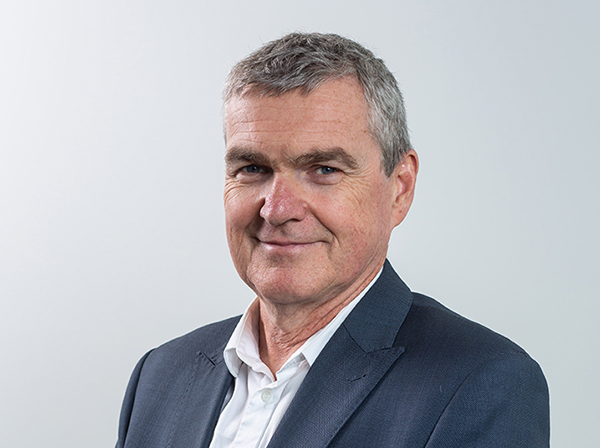
“Unstructured data is at the center of every major enterprise challenge right now including AI readiness, cyber resilience, cost management, and regulatory compliance,” said Michael Jack, Co-founder and Chief Revenue Officer for Datadobi. “But organizations cannot address any of those challenges with data they cannot see or control. Data Access Governance gives teams the visibility to understand who has access to what, identify where risk exists, and take action to bring their unstructured data under control. It is a foundational step in turning unstructured data from a source of risk and complexity into a driver of business value.”

In a strategic move to advance enterprise digital enablement and support the technological ambitions of Saudi Vision 2030, Cloudera, the only true hybrid platform for data, analytics, and AI, has agreed to a Memorandum of Understanding (MoU) with MuroonI the technology and digital enablement subsidiary of Tawuniya.
The proposed collaboration aims to evaluate opportunities to help organizations across the region modernize their technology capabilities, accelerate digital transformation, and unlock long-term business value. By leveraging Cloudera’s products and services, the engagement will explore how Cloudera’s hybrid data platforms and AI-driven analytics can help to boost Muroon’s expanding IT and digital enablement objectives.
Under the proposed partnership, Muroon and Cloudera will aim to collaborate on delivering secure data exchange and modern cloud architecture. Integrating Cloudera Anywhere Cloud™ principles, the proposed collaboration will explore ways to deliver a consistent cloud experience, enabling organizations to deploy AI and analytics workloads across private data centers and cloud environments with unified governance and security.
The proposed alliance creates complementary roles for both organizations. Muroon will leverage its delivery capabilities, consulting expertise, implementation services, across the Tawuniya ecosystem and the wider region. Cloudera will look to provide technology leadership, platform expertise, solution architecture, and technical enablement.
Ahmad Shakora, General Vice President of META, Cloudera, said:
“Our proposed collaboration with Muroon represents an important milestone in empowering regional organizations with modern hybrid data and AI architectures. Through Cloudera’s ability to bring AI and analytics to data anywhere it resides, combined with Muroon’s deep digital enablement and implementation capabilities, we aim to accelerate innovation, ensure secure data management, and actively contribute to the digital economy goals of Saudi Vision 2030.”
Faisal Bakhsh, Vice President of Business Development and Services Delivery at Muroon, added:
“As the technology arm of Tawuniya Group, Muroon is dedicated to delivering cutting-edge digital solutions that drive operational efficiency and business growth. Exploring this partnership with Cloudera allows us to harness world-class hybrid data and AI platforms to expand our service capabilities, facilitate secure data exchange, and deliver transformative value to our ecosystem and clients across Saudi Arabia.”

In a strategic move to advance enterprise digital enablement and support the technological ambitions of Saudi Vision 2030, Cloudera, the only true hybrid platform for data, analytics, and AI, has agreed to a Memorandum of Understanding (MoU) with MuroonI the technology and digital enablement subsidiary of Tawuniya.
The proposed collaboration aims to evaluate opportunities to help organizations across the region modernize their technology capabilities, accelerate digital transformation, and unlock long-term business value. By leveraging Cloudera’s products and services, the engagement will explore how Cloudera’s hybrid data platforms and AI-driven analytics can help to boost Muroon’s expanding IT and digital enablement objectives.
Under the proposed partnership, Muroon and Cloudera will aim to collaborate on delivering secure data exchange and modern cloud architecture. Integrating Cloudera Anywhere Cloud™ principles, the proposed collaboration will explore ways to deliver a consistent cloud experience, enabling organizations to deploy AI and analytics workloads across private data centers and cloud environments with unified governance and security.
The proposed alliance creates complementary roles for both organizations. Muroon will leverage its delivery capabilities, consulting expertise, implementation services, across the Tawuniya ecosystem and the wider region. Cloudera will look to provide technology leadership, platform expertise, solution architecture, and technical enablement.
Ahmad Shakora, General Vice President of META, Cloudera, said:
“Our proposed collaboration with Muroon represents an important milestone in empowering regional organizations with modern hybrid data and AI architectures. Through Cloudera’s ability to bring AI and analytics to data anywhere it resides, combined with Muroon’s deep digital enablement and implementation capabilities, we aim to accelerate innovation, ensure secure data management, and actively contribute to the digital economy goals of Saudi Vision 2030.”
Faisal Bakhsh, Vice President of Business Development and Services Delivery at Muroon, added:
“As the technology arm of Tawuniya Group, Muroon is dedicated to delivering cutting-edge digital solutions that drive operational efficiency and business growth. Exploring this partnership with Cloudera allows us to harness world-class hybrid data and AI platforms to expand our service capabilities, facilitate secure data exchange, and deliver transformative value to our ecosystem and clients across Saudi Arabia.”

International Coffee Day Gets UAE-Made Twist with Rashtions’ Brazilian Coffee Truffle

Why Curation Matters More Than Ever in Fashion Retail

Keeta Marks First Anniversary in the UAE, Celebrating Nationwide Growth and Local Impact



-
News11 years ago
SENDQUICK (TALARIAX) INTRODUCES SQOOPE – THE BREAKTHROUGH IN MOBILE MESSAGING
-

 Trending11 months ago
OPPO A6 Pro 5G Review: Reliable Daily Driver
-

 Tech News2 years ago
Denodo Bolsters Executive Team by Hiring Christophe Culine as its Chief Revenue Officer
-
 VAR1 year ago
Microsoft Launches New Surface Copilot+ PCs for Business
-

 Automotive2 years ago
AGMC Launches the RIDDARA RD6 High Performance Fully Electric 4×4 Pickup
-
Tech Interviews3 years ago
Navigating the Cybersecurity Landscape in Hybrid Work Environments
-
 Tech News2 years ago
Toshiba Announces MG10-D Series of Enterprise HDDs with Capacities up to 10TB
-

 Tech News1 year ago
Nothing Launches flagship Nothing Phone (3) and Headphone (1) in theme with the Iconic Museum of the Future in Dubai