
 Have a question? +971 56 404 0503




Cover Story
AMD’s Strategic Engagement and Innovation in the Middle East

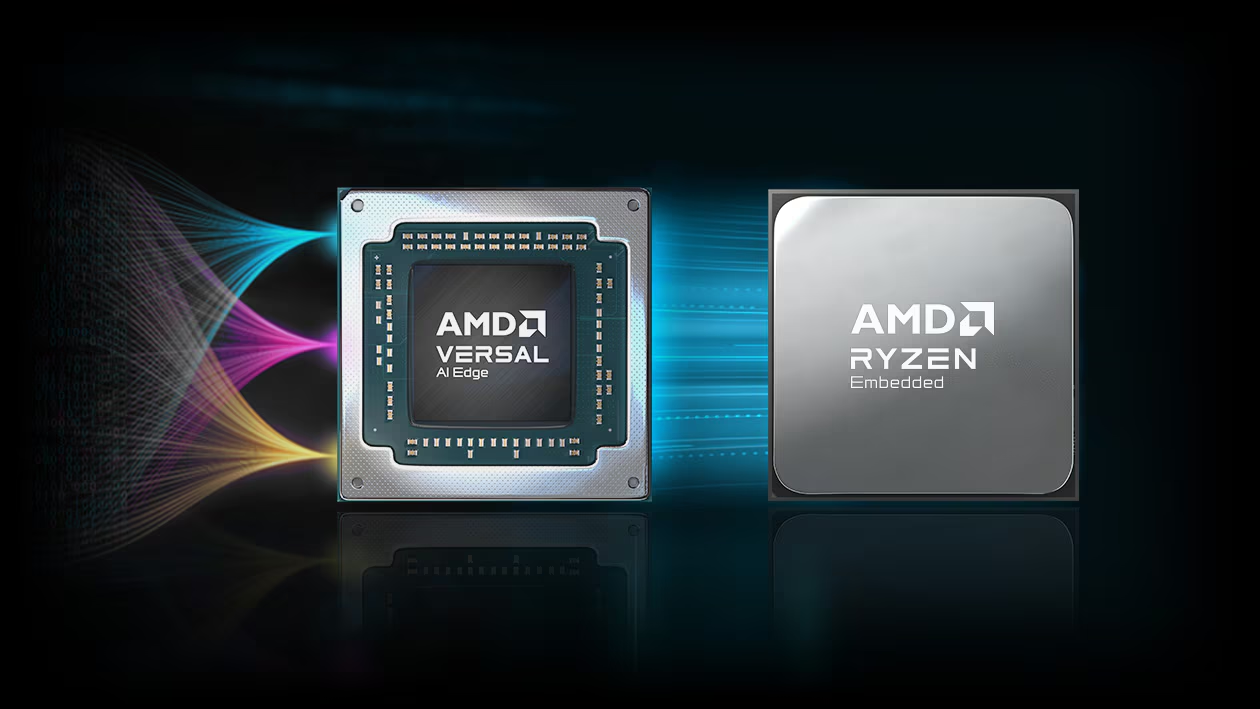
Integrator Media had an exclusive interview with Zaid Ghattas, Senior Regional Manager at AMD, who discussed the company’s extensive engagement with the Middle East market, emphasizing their collaborations with local businesses, educational institutions, and government bodies to advance technology and foster skill development.
He highlighted AMD’s customized approach in sectors like banking, where their technologies have seen notable adoption, and emphasized the importance of user feedback from the region in shaping AMD’s product development and enhancements. This strategic focus aims to meet the specific needs of Middle Eastern users while driving innovation in the industry.
What innovative solutions is AMD offering in the Middle East market to enhance user experience?
AMD stands as a key driver of next-generation compute power. Our reach extends across various components within the computing landscape. We are a leading force behind some of the world’s most powerful and efficient supercomputers. Our leadership extends to server CPUs with our EPYC line, and GPUs with both consumer-focused Radeon and commercially oriented Instinct offerings.
Our portfolio extends to the embedded segment with offerings like the AECG product line, including the Xidax series. Our product suite spans the entire spectrum of computing, from edge devices to the cloud. Furthermore, it incorporates the highly successful Ryzen processors, including Ryzen AI variants. Our collaborative approach with customers prioritizes providing silicon solutions that empower the next generation of computing experiences across the entire edge-to-cloud landscape.
How will the rapid growth in cloud computing impact product development, market strategies, and partnerships in the region?
AMD fosters a collaborative environment within the industry ecosystem. We actively partner with leading cloud service providers like Amazon Web Services, Google Cloud, and Microsoft Azure, alongside established in-country service providers. This strategic approach ensures that our high-performance CPUs and GPUs are readily available within the Middle East market. As cloud adoption accelerates, concerns regarding operational expenditure (OPEX) are rising. By providing efficient hardware solutions, AMD positions itself as a trusted partner capable of optimizing overall OPEX and delivering a superior operational expense experience.
4th Gen EPYC CPUs offer enhanced performance, and lower energy consumption. This ties into AMD’s sustainability focus, condensing data center infrastructure by offering CPUs with high performance at lower power.
How do you address the growth of data centers in the Middle East and related sustainability efforts?
The UAE and Saudi Arabia, especially, are experiencing explosive data center growth. Aligning with the UAE’s focus on sustainability, exemplified by last year’s COP28 conference, AMD offers solutions across various sectors to address this growth.
AMD actively supports public sector clients in education, aviation, transportation, and beyond. Our primary focus is equipping them with the high-performance silicon solutions critical for success in today’s era of exponential AI growth. AI is a top priority for both public and private entities in the UAE. We are working collaboratively to identify use cases, and some truly innovative applications are being developed locally.
AMD prioritizes delivering exceptional performance across CPUs, GPUs, and embedded systems. This commitment extends to lowering power consumption, resulting in superior performance compared to competitors. Our ongoing design advancements ensure this leadership in efficient computing.
How does AMD collaborate with local businesses, educational institutions, and government bodies in the Middle East?
AMD actively collaborates with leading tier-one customers across the region. We engage with diverse verticals including oil and gas, research, education, and banking. This close collaboration allows us to gather invaluable customer feedback that fuels our product development and ensures we deliver solutions that meet their evolving needs. A prime example is our successful partnership with Emirates National Bank of Dubai (Emirates NBD).
Do you think AI is significantly exploring the banking sector, and is this development beneficial for the industry overall?
AI is a dominant trend across industries, with CIOs and AI managers actively exploring its potential. Banking is a prime example, where AI enhances customer experience and optimizes internal productivity. The ability of AI to deliver these benefits makes it a valuable tool across various sectors, from education to infrastructure. AI is rapidly integrating into our daily lives, impacting both business (B2B) and consumer (B2C) experiences. AMD actively collaborates with creators and the gaming community to harness AI’s potential in B2C applications. From AI-powered gaming experiences on PS5 to AI-integrated laptops, AI is undeniably shaping the future. The Middle East is experiencing a surge in AI adoption, fueled by customer demand and government initiatives.
Have AMD technologies seen notable adoption in specific industries? If so, how does AMD customize its products to meet the unique requirements of these industries?
AMD actively collaborates across numerous sectors, including banking, education, healthcare, and public services. Our successful partnership with Emirates NBD in banking exemplifies the benefits we offer. We leverage extensive customer feedback, encompassing performance, sustainability, and power efficiency, to guide our product development and deliver solutions tailored to their specific needs.
Sustainability is a key concern for CIOs, with environmental friendliness and power efficiency becoming crucial factors in technology decisions. AMD prioritizes customer feedback in product development, ensuring our solutions balance performance with sustainability to meet both performance and cost (OPEX/CAPEX) objectives. This focus on energy efficiency establishes AMD as a leader in providing environmentally friendly computing solutions.
AMD’s single- and dual-socket server solutions deliver exceptional performance with a reduced footprint, addressing sustainability concerns for CIOs. This focus on efficiency, coupled with high performance, positions AMD as the ideal choice for diverse industries seeking environmentally friendly computing power.
How does AMD actively engage with users in the Middle East to get feedback? How does this input influence the company’s product development and enhancement?
Our recently launched Instinct MI300X excels in AI applications and is available through major OEMs like Dell and HP. Additionally, AMD has upcoming solutions for end-user and edge devices, building on the momentum from our CES announcements.
Beyond data centers, AMD is bringing AI to the edge with our Ryzen AI capabilities, announced at CES. This on-device AI processing empowers users with new possibilities, enabling applications like object detection and HR tasks at the edge, reducing reliance on data center processing.
AMD stands out as a leader in equipping edge devices with AI capabilities through our Ryzen AI technology. A diverse portfolio of Ryzen AI-powered products from our partners is now available across the region. Furthermore, we empower software developers by providing tools that facilitate the creation of innovative use cases leveraging Ryzen AI’s potential.








By Srijith KN
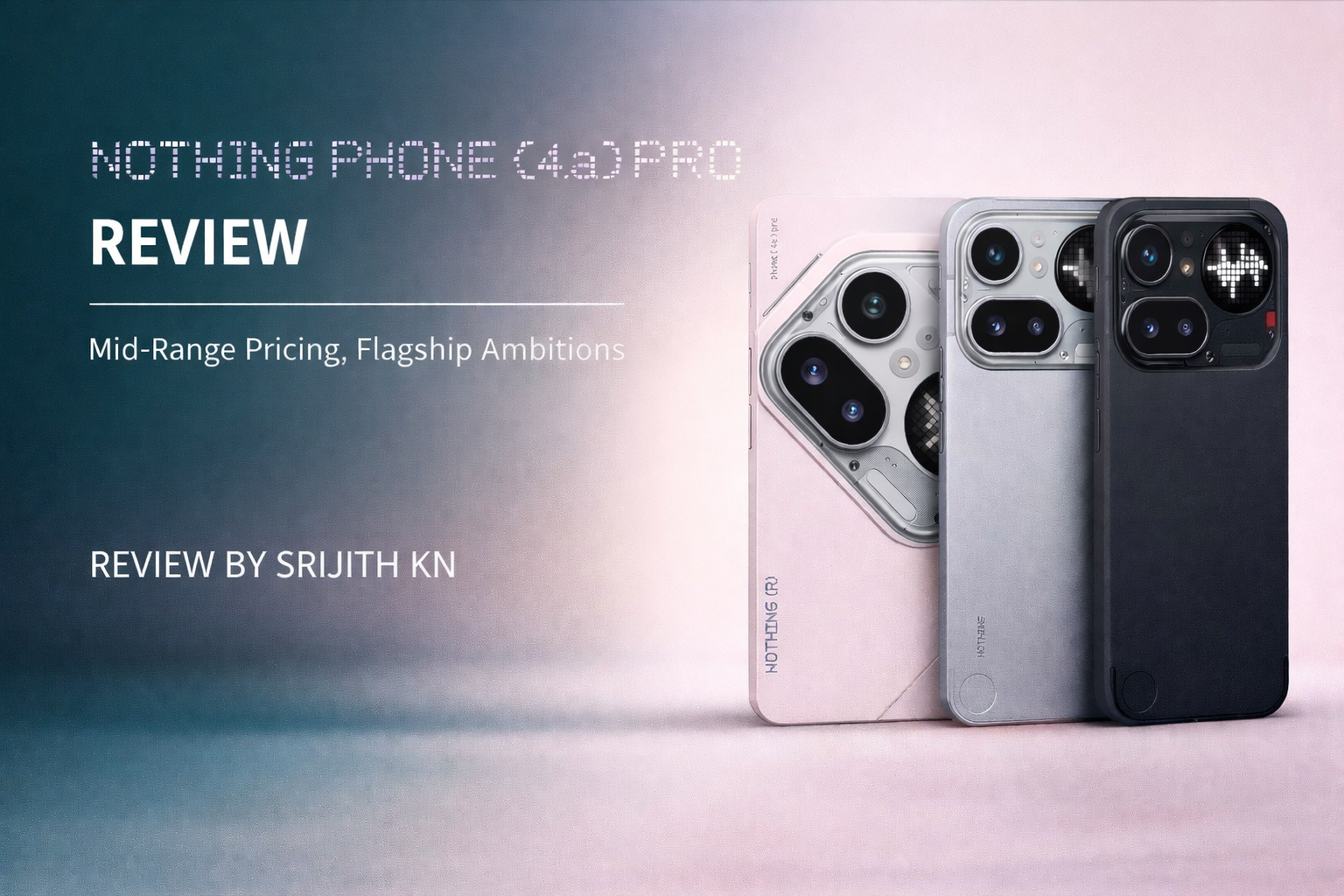
An in-depth look at Nothing’s 4a Pro, the clean stylish looking mid-range powerhouse!
Nothing has built its reputation on standing apart in an increasingly crowded smartphone market. With the launch of the Nothing Phone (4a) and the more ambitious Nothing Phone (4a) Pro, the company continues that philosophy while shifting its positioning. While the standard model focuses on accessibility, the Pro model moves closer to the premium segment, combining refined hardware with one of the most impressive displays in its category.
The Design Shift

The first thing that stands out about the Phone (4a) Pro is its departure from Nothing’s signature transparent aesthetic. Instead of the exposed internal design language that defined earlier models, the Pro adopts a more traditional and solid look with a clean metal frame and a conventional camera bump. At just 7.5mm, it is also the slimmest Nothing phone to date.
It is a different direction, but one that works. The device feels noticeably more premium than its price might suggest. Having used Nothing phones extensively, including the Phone (1) for nearly two years and the Phone (3) as a daily driver, this design shift feels like a more mature step for the brand. For some users, the move toward a more understated look may actually increase its appeal.
A Display Built for Immersion
The Phone (4a) Pro features a large 6.83-inch AMOLED display with a 1.5K resolution and a variable 144Hz refresh rate. On paper, these specifications are already top tier for this price range.
In practice, the display delivers exactly what those numbers promise. The screen feels fast and responsive with extremely smooth scrolling, while peak brightness reaching up to 5000 nits ensures excellent outdoor visibility. For everyday use, the combination of size, speed, and brightness makes the device feel significantly more expensive than its mid-range positioning suggests.
Performance That Surprises
Powering the device is the Snapdragon 7 Gen 4 chipset paired with up to 12GB of RAM. While this chipset is not designed to compete with flagship processors, it represents a meaningful performance jump compared with previous mid-range Nothing devices.
In early testing, the phone handled multitasking comfortably and performed well in gaming scenarios. Nothing has always focused on smooth real-world performance rather than chasing benchmark numbers, and the Phone (4a) Pro continues that same philosophy. For most users, the device feels quick, responsive, and capable of handling everyday workloads without difficulty.
Nothing OS Remains a Strength
Nothing OS continues to be one of the strongest aspects of the device. The software experience remains clean, responsive, and refreshingly free from unnecessary bloatware.
In a smartphone landscape increasingly filled with overly aggressive AI features and cluttered interfaces, Nothing OS stands out for its simplicity. For users who prefer a lightweight Android experience that stays focused on usability, the software remains one of the Phone (4a) Pro’s biggest competitive advantages.
Camera Performance
The Phone (4a) Pro includes a 50-megapixel main camera supported by a telephoto lens designed to offer additional versatility for photography.
In good lighting conditions the camera produces detailed images with balanced colour reproduction. While it may not fully compete with flagship level camera systems, the overall performance remains strong for the device’s price category.
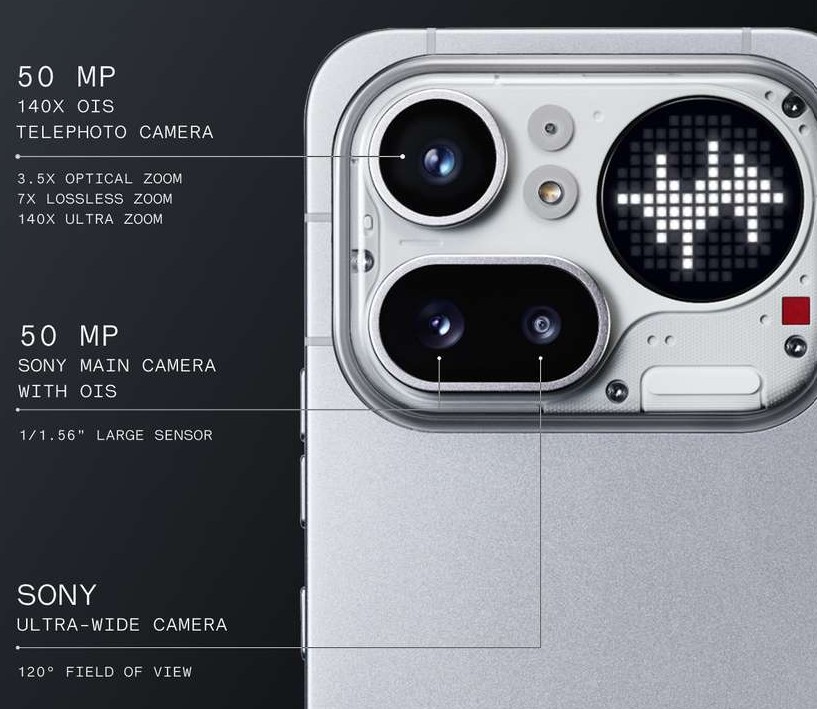
However, there are some compromises. The ultra-wide camera uses an 8MP sensor and the front facing camera represents a slight downgrade compared with higher end models in the Nothing lineup. For most users the results will still be more than sufficient, but the camera system does not completely match flagship expectations.
The 140× Zoom Experiment
One of the more unusual features on the Phone (4a) Pro is the advertised 140× zoom capability. On paper this sounds extraordinary, particularly for a mid-range device.
In practice the phone achieves this through a combination of its 3.5× optical telephoto lens and AI driven image processing that digitally extends the zoom range far beyond what the optics alone can provide.
Testing the feature reveals a surprisingly practical use case. While extreme zoom levels will not replace traditional photography, the ability to zoom into distant text or objects and capture a quick shot to inspect them works well. The heavy lifting appears to come from AI processing, which sharpens the image enough to make those faraway details readable.
Carl Pei once mentioned in an interview that some features come from giving internal teams the freedom to experiment creatively. The 140× zoom feels like one of those ideas. It may not always produce perfect photos, but it works surprisingly well as what could be described as a “digital binocular” mode.
The Glyph System: Refined Identity
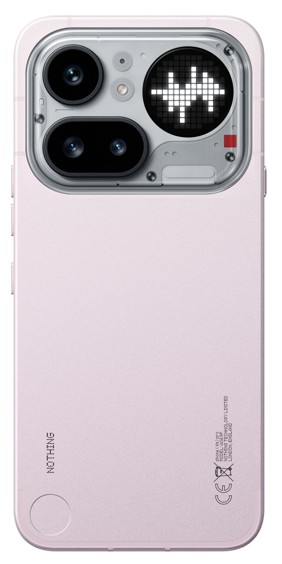
The Glyph lighting system remains one of Nothing’s most recognisable design signatures. On the Phone (4a) Pro the concept evolves with a larger and brighter light array that expands its visual notification capabilities.
The Glyph system can display alerts for incoming calls, timers, notifications, and recording indicators through distinctive lighting patterns on the back of the phone.
While visually distinctive and occasionally useful for quick notifications, the Glyph system still feels more like a signature design element than a practical necessity. That said, the implementation on the Phone (4a) Pro looks particularly striking and continues to give Nothing devices a visual identity that few other smartphones offer.
Editor’s Impressions
Having moved from the Phone (1) to the Phone (3) as my primary device, the Phone (4a) Pro feels like an interesting pivot for Nothing. The shift away from a fully transparent aesthetic toward a polished metal design feels both refreshing and more mature.
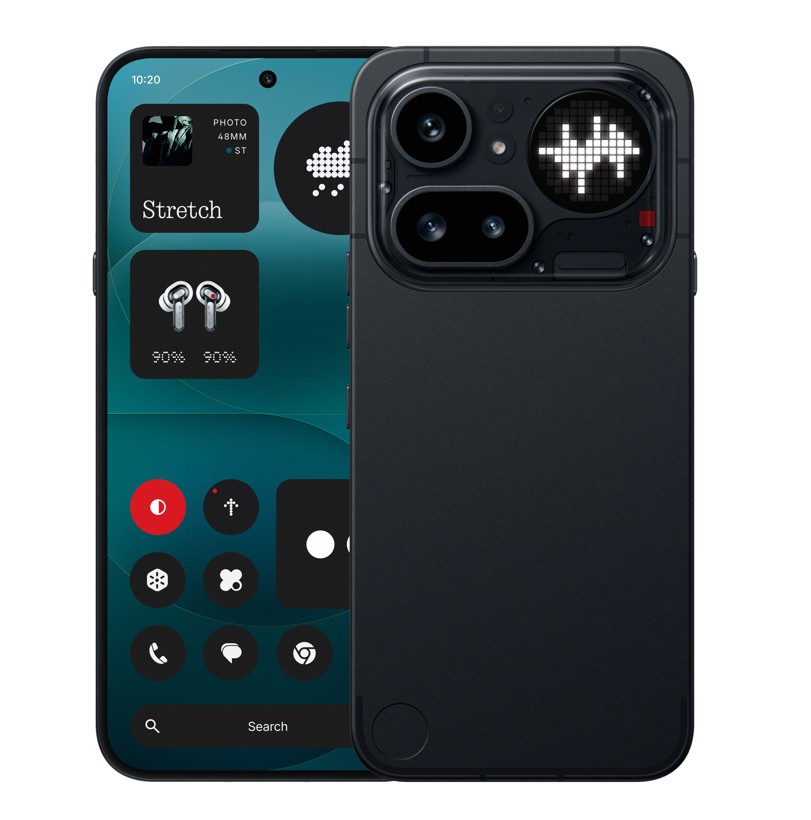
Performance is strong enough for everyday use and even moderate gaming, while the display is easily one of the highlights of the device. The camera system is capable, though there are a few compromises including the 8MP ultra-wide lens and the slightly downgraded front camera.
For users looking for the absolute highest specifications available, there are other devices that push further into flagship territory. But that has never been Nothing’s core philosophy. Instead, the brand focuses on creating devices that feel distinctive, practical, and thoughtfully designed.
For users who want a smartphone with a strong personality without paying flagship prices, the Nothing Phone (4a) Pro offers a compelling balance of style, performance, and value.


The Middle East’s consumer technology market is in the middle of a remarkable run.
Smartphone shipments across the region grew 13 percent in 2025, marking a third consecutive year of growth. Ramadan alone now accounts for 15 percent of annual technology and durables sales across MENA. By any measure, the opportunity is significant.
But headline growth can hide an uncomfortable truth. The way consumers in this region evaluate and choose a technology brand has fundamentally changed. Brands still running the old playbook, buying reach from celebrity and mega influencers, measuring success in gross impressions, and treating the GCC as a single audience, are leaving both conversion and credibility on the table.
Mariam Abouzeid
PR & Influencer Marketing Manager, MEA, Nothing Technology
Having managed PR ecosystems generating billions of impressions across the UAE, Saudi Arabia, and beyond, I have seen this shift unfold in real time.
The data is clear. The market has moved. Many marketing strategies have not.
In today’s GCC market, attention is easy. Credibility is rare.
Beyond the Bigger-is-Better Logic
For most of the last decade, the dominant logic in technology marketing across the region was simple. Bigger reach meant better results. Secure the highest-reach influencers, maximize impressions, and sales will follow.
That logic made sense when social media behaved like a broadcast channel. Today it does not.
The UAE and Saudi Arabia are now among the most digitally saturated markets in the world. Social media penetration in the UAE has reached 111 percent of the population, while Saudi Arabia counts 34.1 million social media identities for a population of 34.7 million.
In markets this connected, audiences are no longer passive viewers. They are sophisticated, fast-moving, and deeply skeptical of content that does not feel earned.
Reach alone is no longer influence.
The Power of the Micro-Influencer By the Numbers
The consequences for influencer marketing are measurable. Macro influencers typically achieve engagement rates of around 1.7 percent. Nano influencers, those with between 1,000 and 10,000 followers, consistently deliver engagement rates of 6 to 8 percent in the UAE market.
When cost per engagement is considered, micro-influencer campaigns cost roughly $0.20 per interaction compared with $0.33 for macro campaigns. More importantly, they routinely deliver 5 to 8 times the return on investment, compared with the 3 to 5 times range typical of macro campaigns. The conclusion is simple.
Reach creates visibility. Trust creates action.
The Shift from Search to Social Feed
To understand why community-driven marketing works, it is important to understand how the modern GCC consumer actually makes a purchase decision.
It rarely begins with a search engine. It begins in the feed.
Nearly half of UAE users, 48.1 percent, and 60 percent of Saudi users now use social networks as their primary tool for researching brands and products. Before a consumer clicks add to cart, they have already passed through a quiet community validation process. They have watched unboxing videos from creators they follow and seen devices appear in the rhythm of everyday life.
Celebrity endorsements signal aspiration. Micro creators signal authenticity.
In consumer electronics, authenticity wins.
The Tiered Ecosystem: A Multi-Dimensional Strategy
The most effective technology marketing campaigns in the region now operate through a deliberate multi-tier structure.
Macro influencers are used sparingly to create cultural moments and announce major launches. Mid-tier creators establish niche authority and technical credibility. Micro-influencers carry the critical work of storytelling and product validation. The final layer, the nano tier, drives conversion through peer trust and cultural familiarity.
This distinction matters.
When consumers see a mega-influencer holding a new smartphone, they recognize an advertisement. When they see someone from their own community using the same device in everyday life, they recognize a recommendation.
That difference shapes behavior.
The GCC creator economy has grown 74 percent over the last two years and now includes more than 263,000 active influencers. Technology has become the fastest-growing vertical within that ecosystem. The pool of credible creators available to brands has never been deeper.
The Regional Calendar Geography Is Not a Strategy
One factor global marketing teams often underestimate is cultural timing.
The GCC is not simply a geography. It operates like a calendar.
Consumer spending in the UAE, Saudi Arabia, and Egypt increases by more than 53 percent during Ramadan. Campaigns that might perform modestly in a typical month can deliver outsized impact when creative work reflects the values and rituals of the season.
That kind of resonance can only be achieved by collaborating with creators who understand the culture from the inside.
Moving From Output to Outcomes
There is an uncomfortable truth at the center of the influencer marketing industry in this region.
Many brands are still measuring the wrong things.
Total impressions and cost per mile remain dominant metrics because they are easy to present in reports. But the shift required is from output metrics to outcome metrics.
The questions that matter are different.
What was the depth of engagement?
How many saves and shares did the content generate?
How much earned advocacy emerged from creators who chose to talk about the product because they genuinely valued it?
Organic enthusiasm cannot be purchased. It can only be earned.
The GCC influencer marketing market is valued at $315.5 million in 2025 and is projected to reach $771.6 million by 2032.
The brands that will lead the next phase of this market will not simply be those with the largest budgets. They will be the brands that understand how their consumers actually make decisions, build disciplined influencer ecosystems, and measure the signals that truly drive behavior.
The Middle East tech consumer is one of the most digitally engaged and brand-aware audiences in the world. They expect strategies that reflect that sophistication.
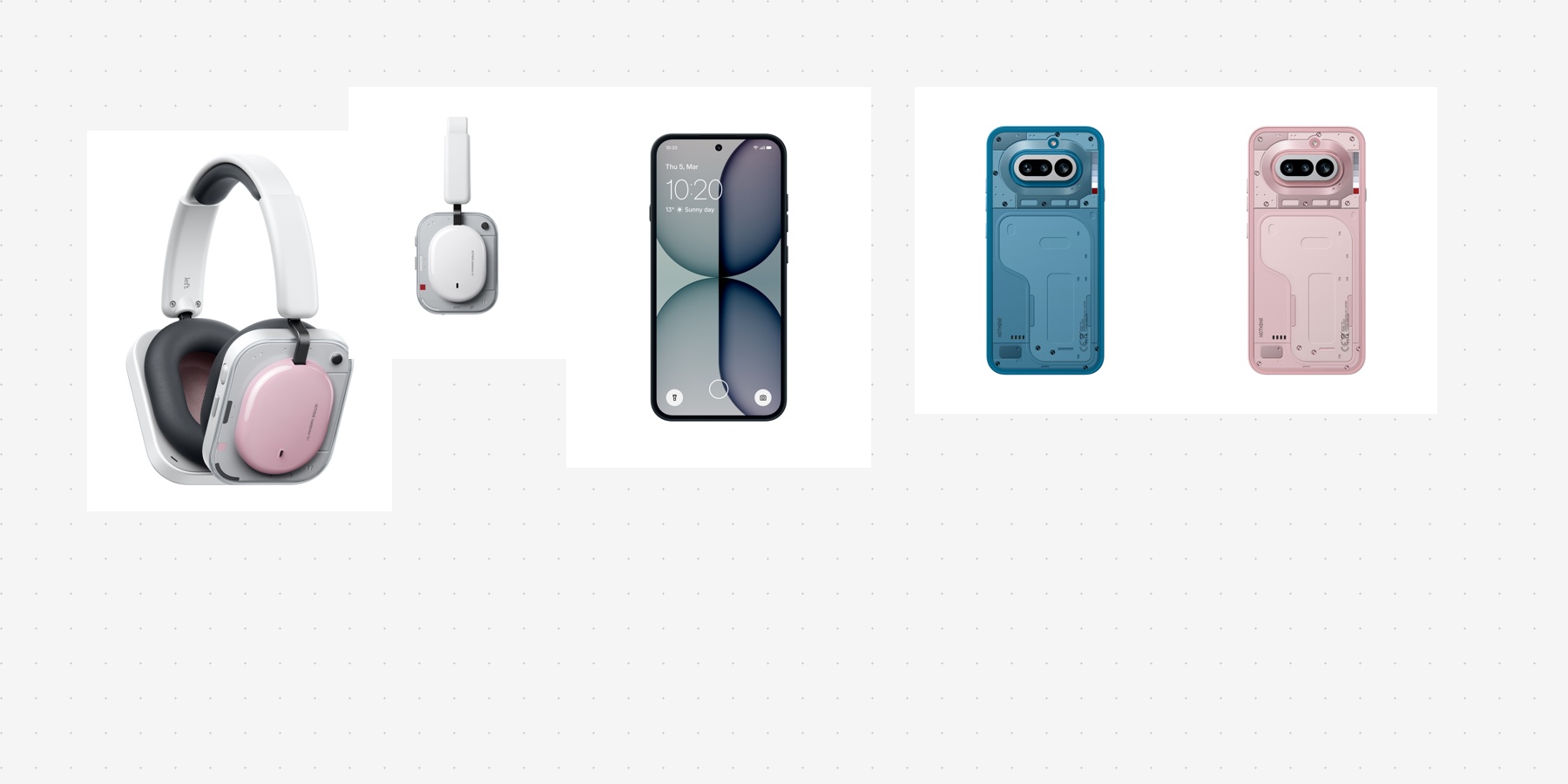
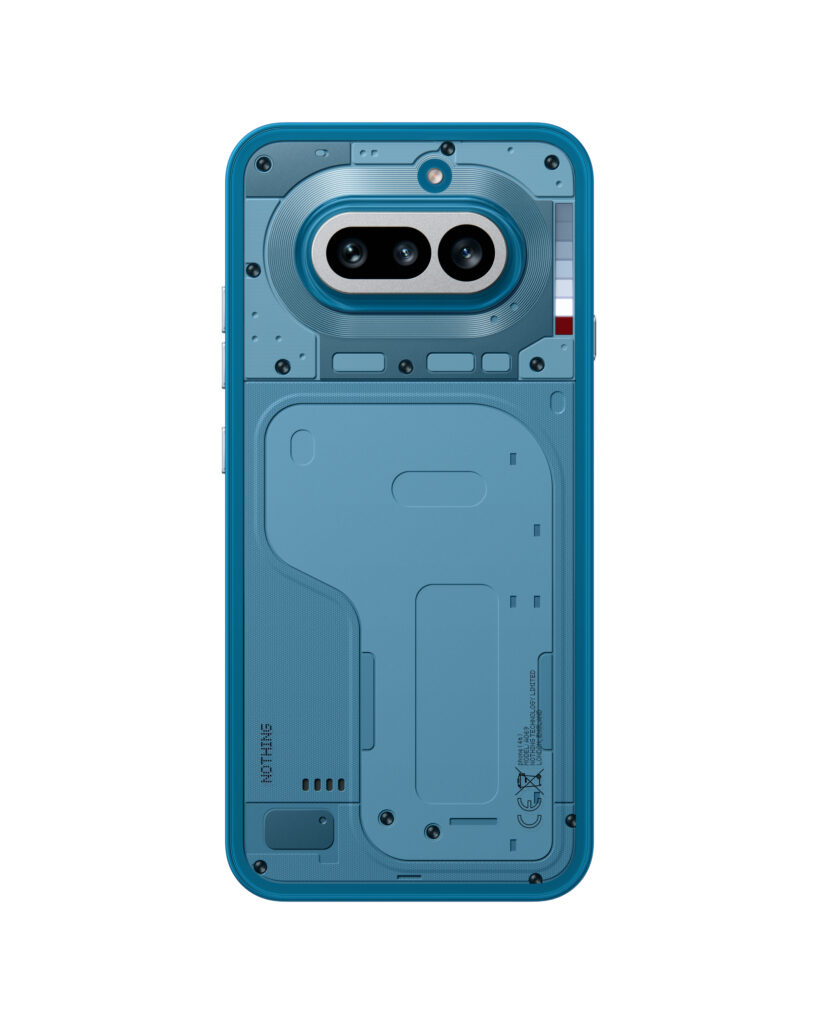
Nothing, has launched the Phone (4a) in the UAE and Saudi Arabia, marking a major leap forward for its smartphone lineup. Nothing has also announced the launch of the Headphone (a), a playful addition to its over-ear audio lineup, designed for a generation that requires tech products that look, sound and feel different.
The new Phone (4a) redefines the mid-range segment, blending refined premium design, bold colour options, flagship-grade cameras with an advanced periscope telephoto lens, and powerful Snapdragon performance. Built on the latest Nothing OS, it reflects the technical warmth of Nothing’s hardware design while delivering a fast, fluid, and highly personal user experience.
The Middle East smartphone market grew 13% in 2025, with the UAE recording 13% year-on-year growth, driven by strong consumer demand for capable mid-tier devices and a wave of high-profile product launches supported by the region’s leading retail partners. With upgrade cycles accelerating and consumers increasingly seeking flagship-grade features at accessible price points, the Phone (4a) makes for the perfect choice.
The launch of Nothing’s Phone (4a) builds on the momentum of the Nothing Headphone (a) available across the UAE now and in Saudi Arabia from 18 March 2026, priced at AED 599/SAR 699. The Headphone (a) comes in four bold colour options; Pink, Yellow, White and Black and is packed with new features including an industry-leading five day battery life on a single charge.
“We’ve been incredibly encouraged by the global response to the Phone (4a) and the positive feedback,” said Rishi Kishor Gupta, Regional Director for Middle East and Africa at Nothing. “Following record-breaking Day-1 sales in India we’re very excited to continue that momentum in the Middle East. With Eid approaching, the Phone (4a), especially when paired with the new Headphone (a), makes for a thoughtful gift at an accessible price.”
The Phone (4a) is available in black, white, blue, and pink in three configurations across the UAE via key retail partners including Amazon, noon, Jumbo Electronics, and Sharaf DG.
- 8+128 GB – AED 1,199 / SAR 1,399
- 8+256 GB – AED 1,499 / SAR 1,599
- 12+256 GB – AED 1,599 / SAR 1,899.
The Phone (4a) will be available in black, white, blue and pink from 18 March 2026 in Saudi Arabia through leading retailers including noon, Amazon, Jarir Bookstore, Al Haddad Telecom, and STC, among others.
Product Specifications:
A Standout Design
The Phone (4a) evolves Nothing’s signature design, fusing human warmth with elite engineering.
Phone (4a)’s upper section of its transparent design highlights a central camera, red Recording Light, and the brand-new Glyph Bar, emphasising functionality, while the lower section reveals internal structures beneath transparent glass. Enhanced metal buttons, a reinforced camera bump, and a strengthened frame deliver greater durability, with IP64 protection and custom submersion support up to 25 cm for 20 minutes. Colour options reach new heights: transparent blue and a soft pink introduce warmth, subtlety, and individuality without compromising sophistication.
Masterful Photography
The Nothing Phone (4a) delivers a best-in-class camera system, featuring a 50MP 3.5x OIS periscope lens, a 50MP OIS main sensor, a versatile Sony ultra-wide, and a 32MP wide-angle selfie camera. Capture every detail from 0.6x to 70x zoom, from expansive landscapes to true-to-life portraits. Powered by the flagship TrueLens Engine 4, Phone (4a) brings cutting-edge computational photography with AI, including Ultra XDR photos co-developed with Google, enhancing highlights and shadows for natural contrast, now also supported in motion photos and directly shareable on Instagram. A fully reimagined camera experience includes expert-designed presets, finely adjustable professional settings, AI Photo Eraser to remove unwanted objects, and seven new Nothing watermarks for creative expression.
The Latest Snapdragon® 7 Series Platform
Powered by the latest Snapdragon® 7s Gen 4, the Phone (4a) offers 7% faster CPU and graphics, and 10% better power efficiency than its predecessor. Combined with LPDDR4x and UFS 3.1, it delivers significantly faster data speeds. Its AI performance is up to 92.5% faster than the Phone (2a), utilising the Snapdragon Neural Intellect and 6th-gen Qualcomm® AI Engine. Gamers benefit from smooth performance, with BGMI running at 120 Hz and PUBG at 90 Hz.
The Evolution of the Glyph Interface
The Nothing Glyph Interface is more than just lights; it’s a functional and playful visual language that is designed to reduce distraction and avoid you having to turn your phone over:
The Nothing Phone (4a) introduces a refined Glyph Bar with 63 mini-LEDs in 7 square light zones, each square precisely controlled for pure, uniform illumination up to 3500 nits, 40% brighter than theGlyph Interface on Phone (3a). Leveraging three patented technologies, including dual-colour injection-moulded lampshades, the design ensures zero light leakage, no yellow edges, and smooth diffusion, keeping notifications clear even in bright sunlight. The Glyph Bar can also double as a gentle fill light for photos or videos. Smarter notifications come to life with progress-based cues for calls, messages, charging, timers, and more. Custom light sequences for contacts and notifications, paired with Nothing’s signature sounds, turn essential alerts into expressive, playful patterns—all while reducing screen distractions.
Nothing OS
Nothing OS is calm, intentional and genuinely helpful. It looks beautiful without being loud, moves fast without feeling rushed, and adapts to you without adding effort.
Nothing OS 4.1, based on Android 16, delivers a cleaner, more intuitive interface with redesigned icons, a refreshed lock screen, and a deeper dark mode. Multitasking is easier with floating apps and resizable Quick Settings, while widgets are more flexible than ever. The AI Dashboard gives precise control over AI features, under-the-hood optimisations make the system smoother and faster, and camera and gallery apps are enhanced. Customisation now includes hiding apps and creating lightweight widgets via the Playground, helping you stay productive, creative, and in control every day.
NOS 4.1 introduces a more vibrant, customisable lock screen, two relaxation-focused widgets, upgraded Live Notifications across the screens and Glyph Interface. Polished animations, and faster app launches make every swipe and interaction effortless and highly intuitive. NOS 4.1 builds on Nothing OS 4.0 with a smarter, smoother, and more personal experience that keeps you informed, relaxed, and fully in control.
3 years of Android updates and 6 years of security patches.
Nothing AI makes life simple, organised, and inspired.
Nothing’s Essential AI tools streamline daily life: Essential Search provides instant, multi-app access to information with a keyword. Essential Memory personalises results based on your activity and saved Memories. Furthermore, the Playground allows users to build and share their own no-code Essential Apps on the home screen, using AI to bring ideas to life. Nothing AI makes your phone smarter, more personal, and infinitely intuitive.
For the first time on the Phone (4a), Essential Space supports cloud access, enabling seamless cross-platform use across phones, desktops, laptops, and more.
A Flagship Display
The Nothing Phone (4a) features a 6.78″ AMOLED display with 1.5K resolution (1224 × 2720) and 440 PPI, delivering exceptional detail across every inch. With peak brightness of 4500 nits (HDR) and 1600 nits (HMB), content remains clear even under direct sunlight, while Ultra HDR photos and videos shine with brilliant highlights and deep AMOLED blacks. A 120 Hz adaptive refresh rate and 2500 Hz touch sampling ensure smooth interactions and instant responsiveness, while 2160 Hz PWM dimming reduces eye strain. The screen is protected by Corning Gorilla Glass 7i, twice as scratch-resistant as previous-generation cover glass, and survives a 1-meter drop, letting users place the phone face down without worry and fully enjoy the transparent design and Glyph Bar.
Listen, Watch, Create, and Play
The Nothing Phone (4a) is powered by a 5080 mAh battery, supporting up to 17 hours of mixed use for music, video, gaming, and messaging. Rapid 50W Fast Charging refills the battery to 60% in just 30 minutes—nearly 10% faster than the previous Phone (2a) Series. Advanced battery health management ensures over 90% capacity retention after 1,200 charge cycles, equivalent to more than three years of daily charging.
Lowest Carbon Footprint Yet
The Nothing Phone (4a) sets a new benchmark for sustainable manufacturing, with a carbon footprint of 51.13 kg CO₂e, the lowest ever for a Nothing device. 30 components use recycled materials, including 30% recycled plastic, 100% recycled aluminium and tin, and 80% recycled steel. Over 99% of the packaging is plastic-free, and the final assembly process uses 100% renewable energy.

DUBAI GETS ITS FIRST HONESTY BASED BREAD COUNTER AS NOBLE SOURDOUGH LAUNCHES IN THE UAE
MAKI AND RAMEN IS TURNING SUSHI INTO A GAME – AND RAMEN INTO A CHALLENGE THIS APRIL
MAGNA AI AND CORVIT NETWORKS FORGE STRATEGIC ALLIANCE TO ACCELERATE PAKISTAN’S NATIONAL AI DEVELOPMENT

-
News10 years ago
SENDQUICK (TALARIAX) INTRODUCES SQOOPE – THE BREAKTHROUGH IN MOBILE MESSAGING
-

 Tech News2 years ago
Denodo Bolsters Executive Team by Hiring Christophe Culine as its Chief Revenue Officer
-
 VAR12 months ago
Microsoft Launches New Surface Copilot+ PCs for Business
-

 Trending6 months ago
OPPO A6 Pro 5G Review: Reliable Daily Driver
-

 Tech Interviews2 years ago
Navigating the Cybersecurity Landscape in Hybrid Work Environments
-

 Tech News9 months ago
Nothing Launches flagship Nothing Phone (3) and Headphone (1) in theme with the Iconic Museum of the Future in Dubai
-

 Automotive2 years ago
AGMC Launches the RIDDARA RD6 High Performance Fully Electric 4×4 Pickup
-

 VAR2 years ago
Samsung Galaxy Z Fold6 vs Google Pixel 9 Pro Fold: Clash Of The Folding Phenoms