
 Have a question? +971 56 404 0503




Cover Story
Inside Accor’s Roadmap to Global Growth


Integrator Media had an exclusive interview with Camil Yazbeck, Global Chief Development Officer, Accor.
As Global Chief Development Officer for Accor’s Premium, Midscale & Economy Division, can you share your vision for the global expansion of the Group’s diverse brand portfolio?
Accor is a world leading hospitality group, offering experiences across more than 110 countries in 5,600 properties, 10,000 food & beverage venues, wellness facilities or flexible workspaces. In 2023, Accor realigned its divisional structure into two divisions, unified by one cohesive vision. This new structure has optimized our growth and performance, enabling us to deliver exceptional results globally.
Our portfolio is anchored by our 47 brands, including 23 Premium, Midscale & Economy (PM&E) brands, which comprise nearly 90% of our global properties and account for around 80% of our development signings. Last year was a record year for signings, and we’re looking forward to carrying this momentum into 2024 with positive projections for continued growth.
Within the PM&E division, we are proud to have three very popular and longstanding brands with global name recognition – Pullman (premium), Novotel (midscale), and ibis (economy). We are rejuvenating these brands by aligning investment and resource allocation to strengthen brand equity and brand loyalty. At the same time, with conversion presenting as a key lever for growth right now, we have five well-known PM&E brands that are extremely adaptable and efficient for hoteliers to join: Mövenpick, Mercure, Handwritten Collection, ibis Styles and greet.
How does Accor stay ahead of trends to ensure its offerings align with the shifting demands of guests and hotel owners?
We believe that hospitality today is so much more than accommodation – we are actively developing and building holistic experiences for our guests as well as forging trusted and supportive partnerships with our owning partners.
Our vision is to create multi-faceted places – with our hotels at the core – where guests and locals can ’live, work and play,’ across the same project. Our pioneering approach to augmented hospitality means our projects can include different elements; hotel brands, extended stay, branded residences, food & drink, wellness and entertainment, all supported by our loyalty program: ALL – Accor Live Limitless. Hotel owners and investors appreciate this approach as an essential way to optimize revenue, unlock value and ultimately compress their cap rate.
“We know that nothing brings people together like sharing drinks and outstanding food together, so our food & beverage offerings are designed to attract local guests along with travelers.”
The new Couqley French Brasserie at Pullman Dubai Downtown is a perfect example of how we partner with high-profile partners to elevate, infuse energy and increase the flow of visitors into our hotels. With its signature central bar, French garden-inspired booth seating, dining tables under olive trees, lights hanging down from triple-height ceilings, and an exterior terrace directly accessible from the promenade of the Dubai Canal, the venue has become a favorite hotspot among the downtown crowd. This is a strategy Accor is successfully using around the world, to not only create more enriching guest experiences, but to also create greater revenue potential for our hotel owners, investors, and the Accor group.
More specifically, what is your vision for the Middle East Region?
This market is thriving, marked by strong RevPAR performance, a robust economy, and favorable policies that encourage responsible tourism development. Accor has ambitious growth plans for the region, with 60 active projects representing close to 12,000 keys that are expected to open under our Premium, Midscale & Economy brands in the next four to five years. We also have a multitude of projects in development across our luxury and lifestyle brands as well.
Across the Middle East, namely KSA and UAE, the region is showing resilience in the face of rising construction costs for a combination of reasons, including investor profiles in the region, a robust economy and governmental policies and the rise of oil prices. In Saudi Arabia, Accor is one of the most established hospitality developers, having been active in the market for more than 30 years. Since the announcement of Saudi Arabia Vision 2030, Accor has played a key role in the development of tourism, through several diverse projects in key locations across the Kingdom. One of the Vision Realization Programs is The National Transformation Project, which includes development of the tourism and national heritage sectors. There is also a national focus on an identified priority list of 10 destinations by national tourism strategy such as Abha, Hail, Al Jouf, Madinah among others. Accor has a multi-pronged strategy underway to support all of the Kingdom’s objectives for Vision 2030, from expanding our areas of focus with leisure destinations (Red Sea, Al Ula, NEOM), to bringing more brands to second wave cities, to our strategic partnership with the Ministry of Tourism to empower Saudi talents through “Tamayyaz by Accor”.
Governments have a target to achieve based on the country’s vision and we are seeing determination in meeting these targets – there is close collaboration between the public sector and private sector to ensure project delivery remains on schedule. In addition, international consultants are partnering with governments to create attractive destinations and accomplish multi projects across either one or numerous markets.
We are confident the region has favorable tailwinds, ensuring projects will continue despite inflationary and cost pressures. There is a high level of spending power in the region to fund domestic travel and we see great potential in Tier 2 and 3 cities with undiscovered natural beauty, evidenced by Accor’s 2023 signing of a master development agreement with Amsa Hospitality to develop 18 premium, midscale and economy hotels across secondary cities within Saudi Arabia over the next ten years.
With over 20 brands under Accor’s Premium, Midscale, & Economy division, how do you ensure each brand maintains its unique identity while contributing to the overall company strategy?
Accor’s strength is in the broad diversity of our brands – the powerful legacy of our core brands, the huge growth potential of our conversion brands, and the unique opportunities among our tactical and regional brands. Our Premium, Midscale & Economy division is structured in such a way that we have the strength to expand our brands with force and scale, maximizing development profitability and increasing operational performance. Organized across four regions: Europe & North Africa; Greater China; the Americas; and Middle East, Africa, Turkey & Asia-Pacific, our regional teams in each market are able to support hotel operational teams and roll out brand standards, maintaining brand continuity around the world, while being close and accessible to our owning partners and remaining nimble to adjust for market specificities.
How does Accor adapt its brand concepts and business models to suit the unique demands of different regional markets?
We prefer to design brands with characteristics that appeal to travelers all around the world. Pullman, for example, is a brand that works as well in Paris, São Paulo, or Bangkok, as it does in Dubai or Makkah. The ibis brand family, celebrating its 50th anniversary this year, has become the world’s best known economy hotel brand, with 2,600 locations in 70 countries. At the same time, we place a high value on infusing our hotels with local culture and flavors – through unique guest experiences, locally-sourced food and drink, local art and design choices.
For example, Novotel offers four distinct design concepts that allow owning and franchisee partners to select an ideal style that best suits the character of the destination. Mercure on the other hand brings a locally-inspired ethos to each of its hotels, as guests of the new Mercure Dubai Deira will discover; while Mövenpick is an ideal brand for hotel conversions, with its adaptable standards that can easily accommodate local market style and guests expectations, as found at Mövenpick Hotel Jumeirah Village Triangle, a multi-property hospitality community in Dubai which also includes a Novotel and an Adagio.
Accor is a market leader in several regions, including Europe, South America, Middle East & Africa, and Asia Pacific. What are the unique strategies employed in these regions to maintain and grow market leadership?
We continue to deepen our leadership position in our historical markets of strength with Novotel and ibis, while expanding the network of Pullman more widely, including markets where we may not have full exposure. We are also keen to explore more untouched leisure destinations where our forward-thinking brands can deliver Accor’s positive hospitality approach to creating eco-friendly and enjoyable holiday experiences. Another key element of our growth strategy is to address independent hoteliers that are looking for the strength and distribution of a global partner, while maintaining the unique character of the hotels they have created. We launched Handwritten Collection in 2023 in response to a market demand for a collection brand in the midscale category and it is already one of world’s fastest growing midscale collection brands. By the end of this year, we should have 30-40 Handwritten Collection hotels opening and operating.
The key to Accor’s leadership however, in my view, is the way we think like an owner – striving to match the right brand to the right project, thereby giving us the clearest route to meeting the owner’s cost of capital and return on equity (ROE) expectations. Our development teams are comprised of people with experience on the owners’ side. Accor itself has first-hand experience in the owner’s seat and although the Group shifted to a fully asset light business model several years ago, one of our core values is that we continue to think and execute like an owner. This means we bring that balanced perspective while delivering a level of strength and capacity more powerful than what an owner can achieve independently. Our local development teams in the Middle East bring on-the-ground market intelligence, coupled with the strength of our global scale and our relationships with 120+ developers around the world.
What trends do you anticipate will have the most impact on the hospitality industry in the coming years, and how is Accor preparing to address them?
One of the most impactful trends is hotel conversions – the growing desire among independent hotel owners to find a global hospitality partner that can help them grow their business in an increasingly competitive market. Another factor is the current lending environment, which is making access to capital more challenging for developers. In both cases, Accor has emerged as the partner of choice, thanks to our adaptability and commitment to innovation, our seamless transition process, our unmatched spectrum of brands, and our welcoming culture that celebrates authenticity, diversity and entrepreneurialism. Opportunities to convert exist across all of our brands, however we expect certain brands such as Mövenpick, Handwritten Collection, and Mercure, to continue being significant growth drivers in this space.
Second, the trend toward branded residences is expanding beyond luxury and lifestyle – segments which Accor also leads with brands including Orient Express, Raffles, Fairmont, Sofitel and more – into the premium and even midscale categories. Recent examples include Swissotel Doha Corniche Park Towers; Movenpick Resort & Residences Teuta Bay, Montenegro; Novotel Residences Makkah, Saudi Arabia; Pullman Residences Newtown Singapore; and Swissôtel Cesme, Turkey.
Apartment-style, extended stay accommodations are also increasingly attractive to younger generations of travelers who enjoy mixing business trips with leisure pursuits and who want to experience destinations more authentically when they travel. Developers and hotel investors are keen to develop extended-stay properties given the segment’s attractive business model – with lower breakeven occupancies, higher operating margins, and strong returns on investment. Fortunately, Accor has developed an expertise as one of the world’s largest operators of extended stay and serviced apartment properties, with a diverse portfolio that includes 13 brands ranging from economy to luxury, including longstanding market leader Adagio; the refreshingly modern Mercure Living and Novotel Living; and the innovative premium offerings of Swissôtel Living and Pullman Living.
Finally, Accor is also leading the way in sustainable hospitality – a shift that is more than a trend, it is essential for the future of the travel industry. Accor’s development team is committed to creating positive impact – economically, socially & environmentally. We collaborate and engage with our investors, hotel owners, employees, suppliers and guests to undertake the journey together towards net-zero carbon. All our brands operate in line with Accor’s ESG commitments, as well as their own brand-led strategies and initiatives in fostering positive hospitality and environmental action – such as Novotel’s new international partnership with WWF (World Wide Fund for Nature) that will see Novotel champion the protection and restoration of the ocean through science-based action and conservation projects. Another one of our brands, Mantis, recently unveiled plans for three new properties in Bahrain, Saudi Arabia and the UAE. Renowned for its lush, eco-resort experiences and commitment to preserving the communities, wildlife and the environment.










The Middle East’s consumer technology market is in the middle of a remarkable run.
Smartphone shipments across the region grew 13 percent in 2025, marking a third consecutive year of growth. Ramadan alone now accounts for 15 percent of annual technology and durables sales across MENA. By any measure, the opportunity is significant.
But headline growth can hide an uncomfortable truth. The way consumers in this region evaluate and choose a technology brand has fundamentally changed. Brands still running the old playbook, buying reach from celebrity and mega influencers, measuring success in gross impressions, and treating the GCC as a single audience, are leaving both conversion and credibility on the table.
Mariam Abouzeid
PR & Influencer Marketing Manager, MEA, Nothing Technology
Having managed PR ecosystems generating billions of impressions across the UAE, Saudi Arabia, and beyond, I have seen this shift unfold in real time.
The data is clear. The market has moved. Many marketing strategies have not.
In today’s GCC market, attention is easy. Credibility is rare.
Beyond the Bigger-is-Better Logic
For most of the last decade, the dominant logic in technology marketing across the region was simple. Bigger reach meant better results. Secure the highest-reach influencers, maximize impressions, and sales will follow.
That logic made sense when social media behaved like a broadcast channel. Today it does not.
The UAE and Saudi Arabia are now among the most digitally saturated markets in the world. Social media penetration in the UAE has reached 111 percent of the population, while Saudi Arabia counts 34.1 million social media identities for a population of 34.7 million.
In markets this connected, audiences are no longer passive viewers. They are sophisticated, fast-moving, and deeply skeptical of content that does not feel earned.
Reach alone is no longer influence.
The Power of the Micro-Influencer By the Numbers
The consequences for influencer marketing are measurable. Macro influencers typically achieve engagement rates of around 1.7 percent. Nano influencers, those with between 1,000 and 10,000 followers, consistently deliver engagement rates of 6 to 8 percent in the UAE market.
When cost per engagement is considered, micro-influencer campaigns cost roughly $0.20 per interaction compared with $0.33 for macro campaigns. More importantly, they routinely deliver 5 to 8 times the return on investment, compared with the 3 to 5 times range typical of macro campaigns. The conclusion is simple.
Reach creates visibility. Trust creates action.
The Shift from Search to Social Feed
To understand why community-driven marketing works, it is important to understand how the modern GCC consumer actually makes a purchase decision.
It rarely begins with a search engine. It begins in the feed.
Nearly half of UAE users, 48.1 percent, and 60 percent of Saudi users now use social networks as their primary tool for researching brands and products. Before a consumer clicks add to cart, they have already passed through a quiet community validation process. They have watched unboxing videos from creators they follow and seen devices appear in the rhythm of everyday life.
Celebrity endorsements signal aspiration. Micro creators signal authenticity.
In consumer electronics, authenticity wins.
The Tiered Ecosystem: A Multi-Dimensional Strategy
The most effective technology marketing campaigns in the region now operate through a deliberate multi-tier structure.
Macro influencers are used sparingly to create cultural moments and announce major launches. Mid-tier creators establish niche authority and technical credibility. Micro-influencers carry the critical work of storytelling and product validation. The final layer, the nano tier, drives conversion through peer trust and cultural familiarity.
This distinction matters.
When consumers see a mega-influencer holding a new smartphone, they recognize an advertisement. When they see someone from their own community using the same device in everyday life, they recognize a recommendation.
That difference shapes behavior.
The GCC creator economy has grown 74 percent over the last two years and now includes more than 263,000 active influencers. Technology has become the fastest-growing vertical within that ecosystem. The pool of credible creators available to brands has never been deeper.
The Regional Calendar Geography Is Not a Strategy
One factor global marketing teams often underestimate is cultural timing.
The GCC is not simply a geography. It operates like a calendar.
Consumer spending in the UAE, Saudi Arabia, and Egypt increases by more than 53 percent during Ramadan. Campaigns that might perform modestly in a typical month can deliver outsized impact when creative work reflects the values and rituals of the season.
That kind of resonance can only be achieved by collaborating with creators who understand the culture from the inside.
Moving From Output to Outcomes
There is an uncomfortable truth at the center of the influencer marketing industry in this region.
Many brands are still measuring the wrong things.
Total impressions and cost per mile remain dominant metrics because they are easy to present in reports. But the shift required is from output metrics to outcome metrics.
The questions that matter are different.
What was the depth of engagement?
How many saves and shares did the content generate?
How much earned advocacy emerged from creators who chose to talk about the product because they genuinely valued it?
Organic enthusiasm cannot be purchased. It can only be earned.
The GCC influencer marketing market is valued at $315.5 million in 2025 and is projected to reach $771.6 million by 2032.
The brands that will lead the next phase of this market will not simply be those with the largest budgets. They will be the brands that understand how their consumers actually make decisions, build disciplined influencer ecosystems, and measure the signals that truly drive behavior.
The Middle East tech consumer is one of the most digitally engaged and brand-aware audiences in the world. They expect strategies that reflect that sophistication.
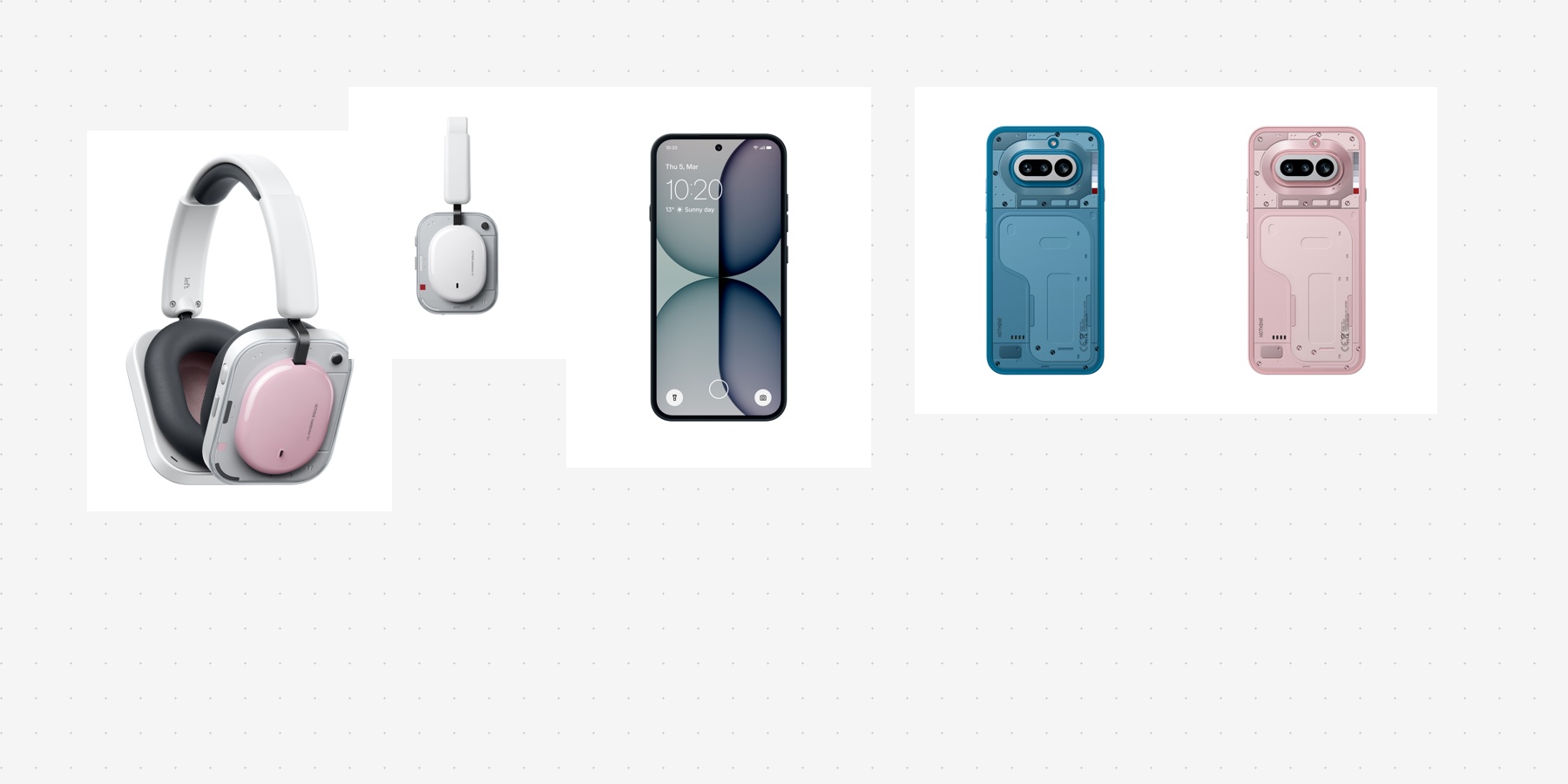
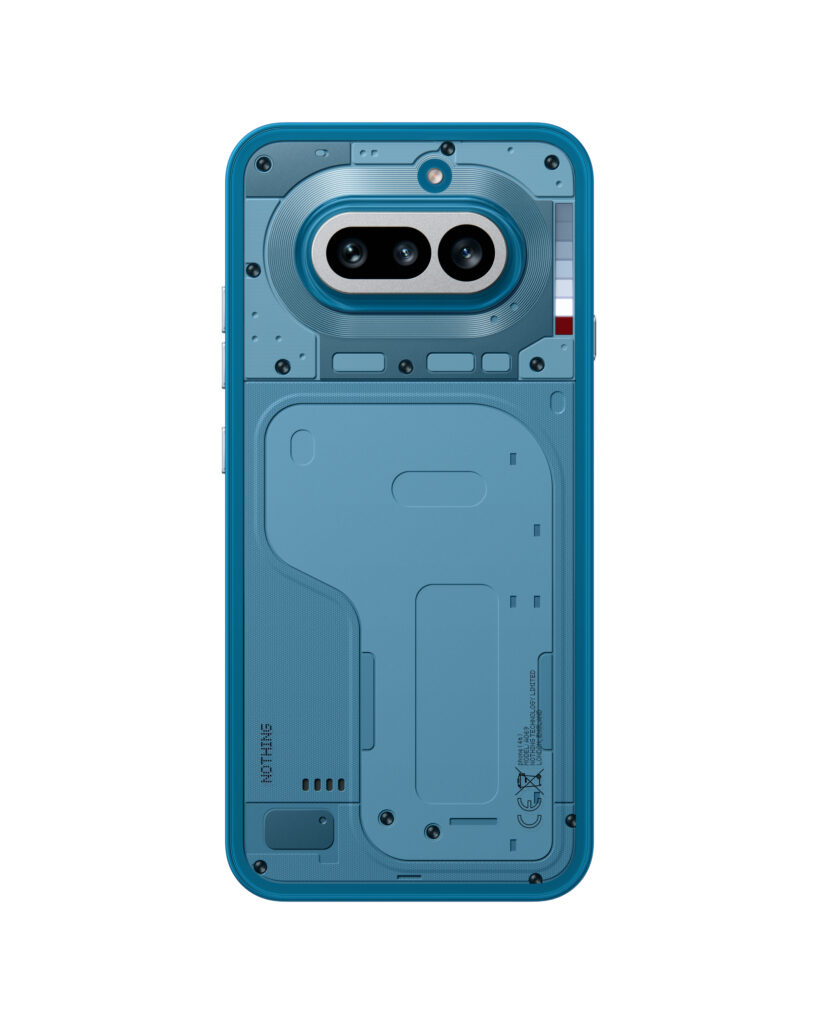
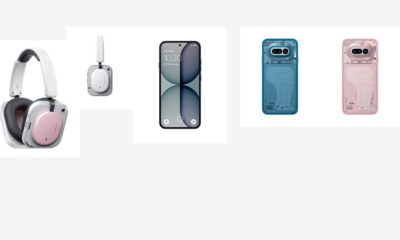
Nothing, has launched the Phone (4a) in the UAE and Saudi Arabia, marking a major leap forward for its smartphone lineup. Nothing has also announced the launch of the Headphone (a), a playful addition to its over-ear audio lineup, designed for a generation that requires tech products that look, sound and feel different.
The new Phone (4a) redefines the mid-range segment, blending refined premium design, bold colour options, flagship-grade cameras with an advanced periscope telephoto lens, and powerful Snapdragon performance. Built on the latest Nothing OS, it reflects the technical warmth of Nothing’s hardware design while delivering a fast, fluid, and highly personal user experience.
The Middle East smartphone market grew 13% in 2025, with the UAE recording 13% year-on-year growth, driven by strong consumer demand for capable mid-tier devices and a wave of high-profile product launches supported by the region’s leading retail partners. With upgrade cycles accelerating and consumers increasingly seeking flagship-grade features at accessible price points, the Phone (4a) makes for the perfect choice.
The launch of Nothing’s Phone (4a) builds on the momentum of the Nothing Headphone (a) available across the UAE now and in Saudi Arabia from 18 March 2026, priced at AED 599/SAR 699. The Headphone (a) comes in four bold colour options; Pink, Yellow, White and Black and is packed with new features including an industry-leading five day battery life on a single charge.
“We’ve been incredibly encouraged by the global response to the Phone (4a) and the positive feedback,” said Rishi Kishor Gupta, Regional Director for Middle East and Africa at Nothing. “Following record-breaking Day-1 sales in India we’re very excited to continue that momentum in the Middle East. With Eid approaching, the Phone (4a), especially when paired with the new Headphone (a), makes for a thoughtful gift at an accessible price.”
The Phone (4a) is available in black, white, blue, and pink in three configurations across the UAE via key retail partners including Amazon, noon, Jumbo Electronics, and Sharaf DG.
- 8+128 GB – AED 1,199 / SAR 1,399
- 8+256 GB – AED 1,499 / SAR 1,599
- 12+256 GB – AED 1,599 / SAR 1,899.
The Phone (4a) will be available in black, white, blue and pink from 18 March 2026 in Saudi Arabia through leading retailers including noon, Amazon, Jarir Bookstore, Al Haddad Telecom, and STC, among others.
Product Specifications:
A Standout Design
The Phone (4a) evolves Nothing’s signature design, fusing human warmth with elite engineering.
Phone (4a)’s upper section of its transparent design highlights a central camera, red Recording Light, and the brand-new Glyph Bar, emphasising functionality, while the lower section reveals internal structures beneath transparent glass. Enhanced metal buttons, a reinforced camera bump, and a strengthened frame deliver greater durability, with IP64 protection and custom submersion support up to 25 cm for 20 minutes. Colour options reach new heights: transparent blue and a soft pink introduce warmth, subtlety, and individuality without compromising sophistication.
Masterful Photography
The Nothing Phone (4a) delivers a best-in-class camera system, featuring a 50MP 3.5x OIS periscope lens, a 50MP OIS main sensor, a versatile Sony ultra-wide, and a 32MP wide-angle selfie camera. Capture every detail from 0.6x to 70x zoom, from expansive landscapes to true-to-life portraits. Powered by the flagship TrueLens Engine 4, Phone (4a) brings cutting-edge computational photography with AI, including Ultra XDR photos co-developed with Google, enhancing highlights and shadows for natural contrast, now also supported in motion photos and directly shareable on Instagram. A fully reimagined camera experience includes expert-designed presets, finely adjustable professional settings, AI Photo Eraser to remove unwanted objects, and seven new Nothing watermarks for creative expression.
The Latest Snapdragon® 7 Series Platform
Powered by the latest Snapdragon® 7s Gen 4, the Phone (4a) offers 7% faster CPU and graphics, and 10% better power efficiency than its predecessor. Combined with LPDDR4x and UFS 3.1, it delivers significantly faster data speeds. Its AI performance is up to 92.5% faster than the Phone (2a), utilising the Snapdragon Neural Intellect and 6th-gen Qualcomm® AI Engine. Gamers benefit from smooth performance, with BGMI running at 120 Hz and PUBG at 90 Hz.
The Evolution of the Glyph Interface
The Nothing Glyph Interface is more than just lights; it’s a functional and playful visual language that is designed to reduce distraction and avoid you having to turn your phone over:
The Nothing Phone (4a) introduces a refined Glyph Bar with 63 mini-LEDs in 7 square light zones, each square precisely controlled for pure, uniform illumination up to 3500 nits, 40% brighter than theGlyph Interface on Phone (3a). Leveraging three patented technologies, including dual-colour injection-moulded lampshades, the design ensures zero light leakage, no yellow edges, and smooth diffusion, keeping notifications clear even in bright sunlight. The Glyph Bar can also double as a gentle fill light for photos or videos. Smarter notifications come to life with progress-based cues for calls, messages, charging, timers, and more. Custom light sequences for contacts and notifications, paired with Nothing’s signature sounds, turn essential alerts into expressive, playful patterns—all while reducing screen distractions.
Nothing OS
Nothing OS is calm, intentional and genuinely helpful. It looks beautiful without being loud, moves fast without feeling rushed, and adapts to you without adding effort.
Nothing OS 4.1, based on Android 16, delivers a cleaner, more intuitive interface with redesigned icons, a refreshed lock screen, and a deeper dark mode. Multitasking is easier with floating apps and resizable Quick Settings, while widgets are more flexible than ever. The AI Dashboard gives precise control over AI features, under-the-hood optimisations make the system smoother and faster, and camera and gallery apps are enhanced. Customisation now includes hiding apps and creating lightweight widgets via the Playground, helping you stay productive, creative, and in control every day.
NOS 4.1 introduces a more vibrant, customisable lock screen, two relaxation-focused widgets, upgraded Live Notifications across the screens and Glyph Interface. Polished animations, and faster app launches make every swipe and interaction effortless and highly intuitive. NOS 4.1 builds on Nothing OS 4.0 with a smarter, smoother, and more personal experience that keeps you informed, relaxed, and fully in control.
3 years of Android updates and 6 years of security patches.
Nothing AI makes life simple, organised, and inspired.
Nothing’s Essential AI tools streamline daily life: Essential Search provides instant, multi-app access to information with a keyword. Essential Memory personalises results based on your activity and saved Memories. Furthermore, the Playground allows users to build and share their own no-code Essential Apps on the home screen, using AI to bring ideas to life. Nothing AI makes your phone smarter, more personal, and infinitely intuitive.
For the first time on the Phone (4a), Essential Space supports cloud access, enabling seamless cross-platform use across phones, desktops, laptops, and more.
A Flagship Display
The Nothing Phone (4a) features a 6.78″ AMOLED display with 1.5K resolution (1224 × 2720) and 440 PPI, delivering exceptional detail across every inch. With peak brightness of 4500 nits (HDR) and 1600 nits (HMB), content remains clear even under direct sunlight, while Ultra HDR photos and videos shine with brilliant highlights and deep AMOLED blacks. A 120 Hz adaptive refresh rate and 2500 Hz touch sampling ensure smooth interactions and instant responsiveness, while 2160 Hz PWM dimming reduces eye strain. The screen is protected by Corning Gorilla Glass 7i, twice as scratch-resistant as previous-generation cover glass, and survives a 1-meter drop, letting users place the phone face down without worry and fully enjoy the transparent design and Glyph Bar.
Listen, Watch, Create, and Play
The Nothing Phone (4a) is powered by a 5080 mAh battery, supporting up to 17 hours of mixed use for music, video, gaming, and messaging. Rapid 50W Fast Charging refills the battery to 60% in just 30 minutes—nearly 10% faster than the previous Phone (2a) Series. Advanced battery health management ensures over 90% capacity retention after 1,200 charge cycles, equivalent to more than three years of daily charging.
Lowest Carbon Footprint Yet
The Nothing Phone (4a) sets a new benchmark for sustainable manufacturing, with a carbon footprint of 51.13 kg CO₂e, the lowest ever for a Nothing device. 30 components use recycled materials, including 30% recycled plastic, 100% recycled aluminium and tin, and 80% recycled steel. Over 99% of the packaging is plastic-free, and the final assembly process uses 100% renewable energy.
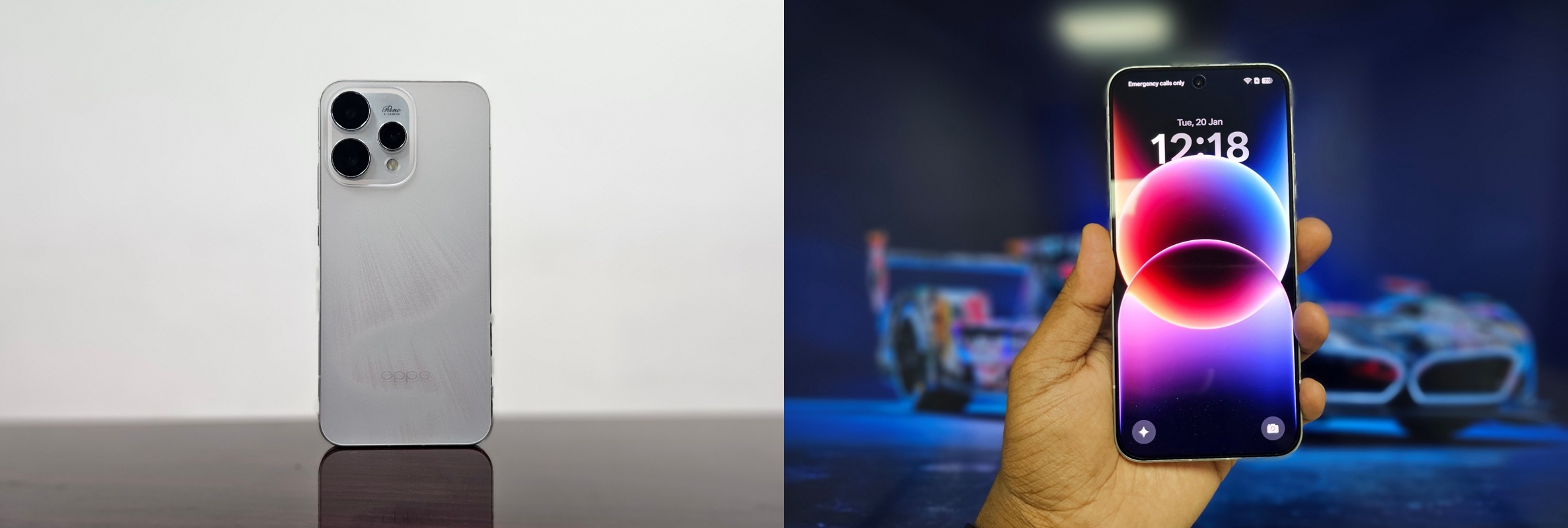
Let me establish something upfront: I don’t get excited about smartphones anymore. After years of testing devices that promise innovation and deliver incremental updates, my expectations have been thoroughly calibrated to disappointment. “Revolutionary camera system” means slightly better night mode. “All-day battery” means you’ll need to charge by dinner. “Premium design” means it looks good in photos but feels cheap in hand.
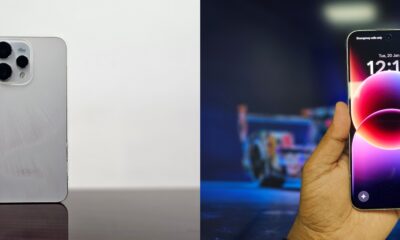
The OPPO Reno15 5G didn’t really change this perspective. It’s a mid-range device in a crowded segment, launching without major fanfare, promising features we’ve heard before. On paper, it looks competent but not groundbreaking. However, it actually delivers what it promises, and that’s what matters.
The OPPO Reno15 5G isn’t trying to be everything to everyone. It’s laser-focused on one thing: being the best camera phone you can get in the mid-range segment. After a month of real-world testing, I can confidently say it succeeds, although with some minor compromises along the way.
Elegant & Well-Built
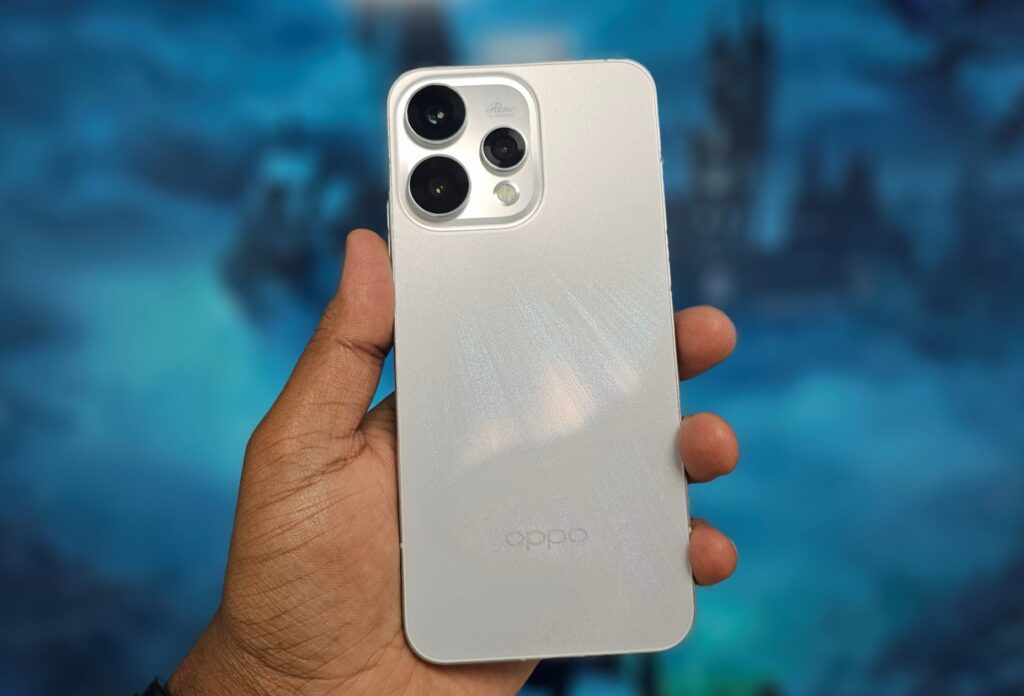
I tested the Aurora White variant, and I need to talk about this design because it’s genuinely special. OPPO calls it the “Dancing Aurora Design,” and in this case, the marketing hyperbole is justified. The back panel features precision-etched textures that recreate the northern lights phenomenon: glow patterns that shimmer and flow as light hits the surface from different angles. The finish also happens to be highly resistant to fingerprints and smudges, which is a practical bonus.
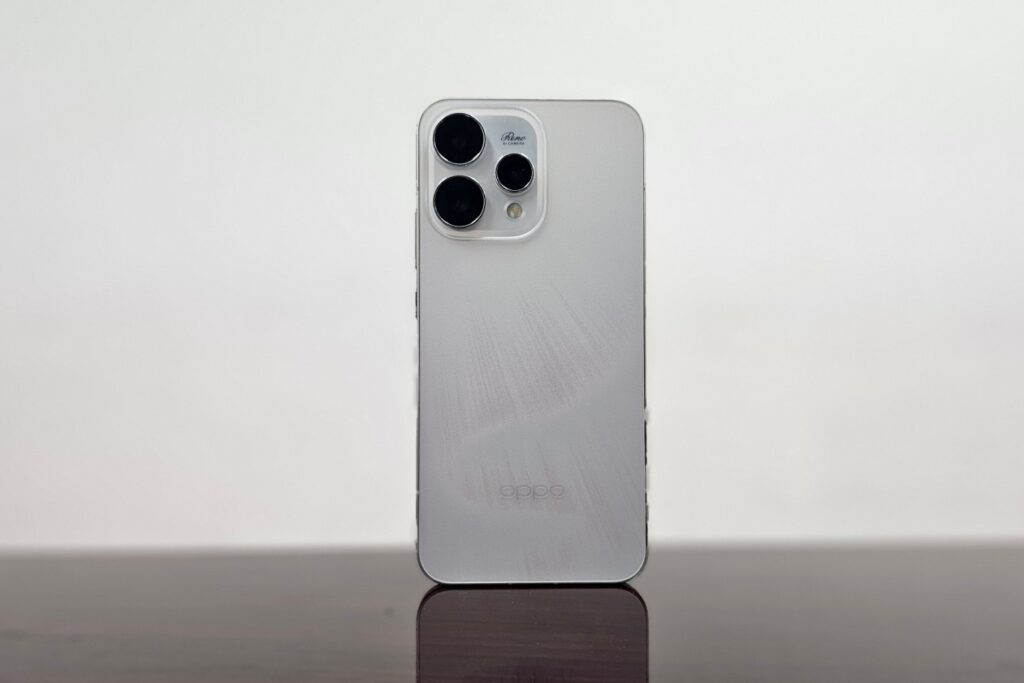
This one-piece sculpted glass design flows seamlessly without visible seams or gaps. Combined with the aerospace-grade aluminum frame and IP69 water resistance, this phone feels premium in hand, more so than its price suggests. At 7.8mm thin and 197g, it strikes an appreciable balance. It’s substantial enough to feel quality-built but not so heavy that extended one-handed use becomes uncomfortable.
ColorOS 16: Fast, Fluid & Polished, But Bloated
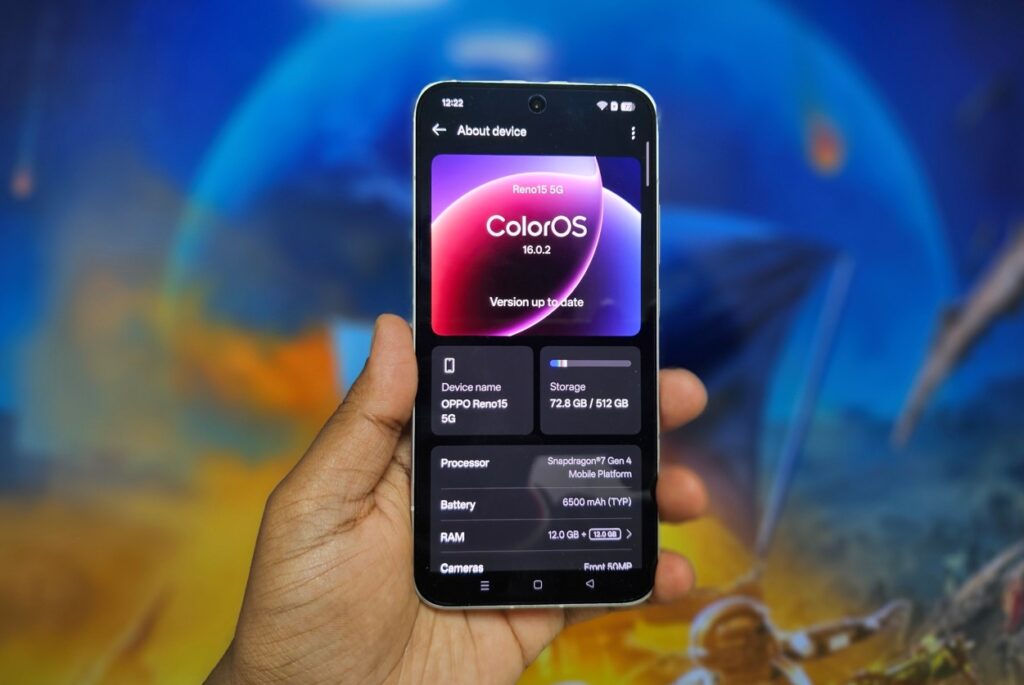
ColorOS 16 based on Android 16 is OPPO’s most refined software yet; but it still can’t escape the bloatware problem that plagues OPPO devices.The new update with upgraded internals, delivers noticeably fluid performance. Every interaction feels smooth, transitions are seamless, and the system maintains consistent responsiveness even under heavy multitasking.
I can run Spotify, Maps, WhatsApp, Chrome with 15 tabs, and camera apps simultaneously without stuttering or app reloads. The OS intelligently balances system resources. In practical terms, this means apps stay in memory longer, and switching between them is instantaneous.
AI Features That Actually Matter:
AI Recording with Transcription: Real-time transcription with speaker identification works surprisingly well. I’ve tested it in meetings: accuracy averages 80-85% with mixed accents, and speaker differentiation is consistent. Auto-generated titles are impressively accurate.
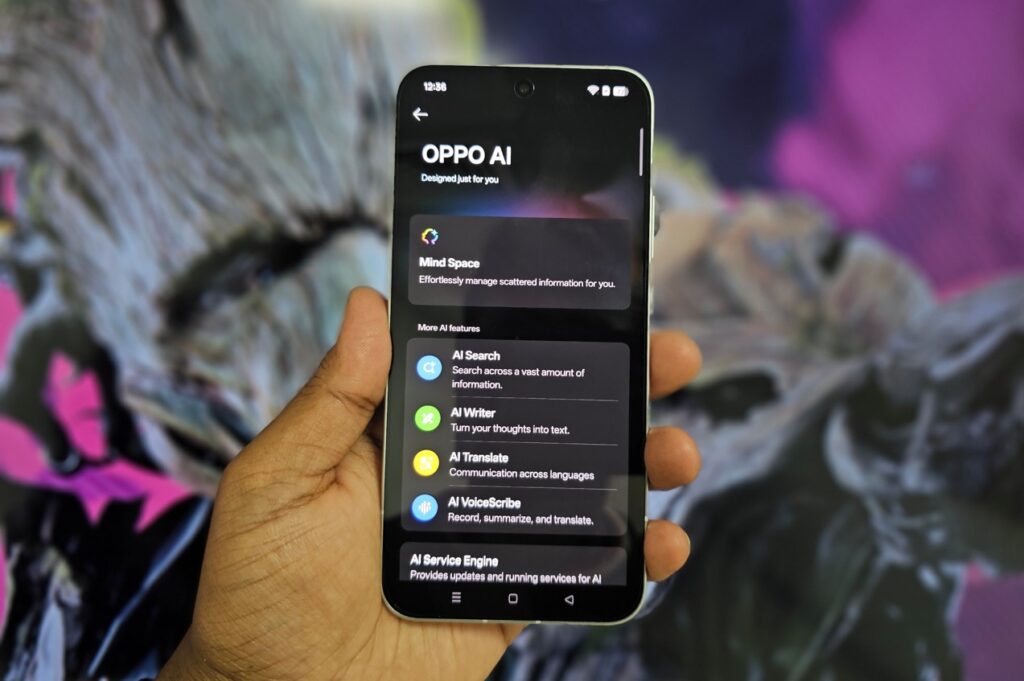
AI Clear Voice: Background noise reduction during calls genuinely works. Tested while walking near construction sites and busy roads; call quality remained clear with minimal background interference.
AI Writer: System-wide text generation for emails, captions, and drafts is convenient but not revolutionary. Quality is comparable to ChatGPT but having instant access without switching apps is genuinely useful.
The Bloatware Problem:
Out of the box, the Reno15 came loaded with unnecessary apps: OPPO’s duplicate app store, pre-loaded games, redundant utilities, and promotional content. Most can be uninstalled, but it requires 15 minutes of cleanup after first setup which is highly recommended.
Worse, some apps persistently send notifications promoting OPPO services and suggesting additional downloads. I had to manually disable notifications for multiple pre-installed apps. This is unacceptable at this price point as it makes the phone feel like it’s marketed at you rather than working for you.
Software Update Commitment:
OPPO promises 4 years of Android updates and 5 years of security updates. Launching with Android 16, that means guaranteed updates through Android 20 and security patches until 2030. For a mid-range device, this is exceptional.
The Triple Rear Camera System: Where Mid-Range Gets Serious
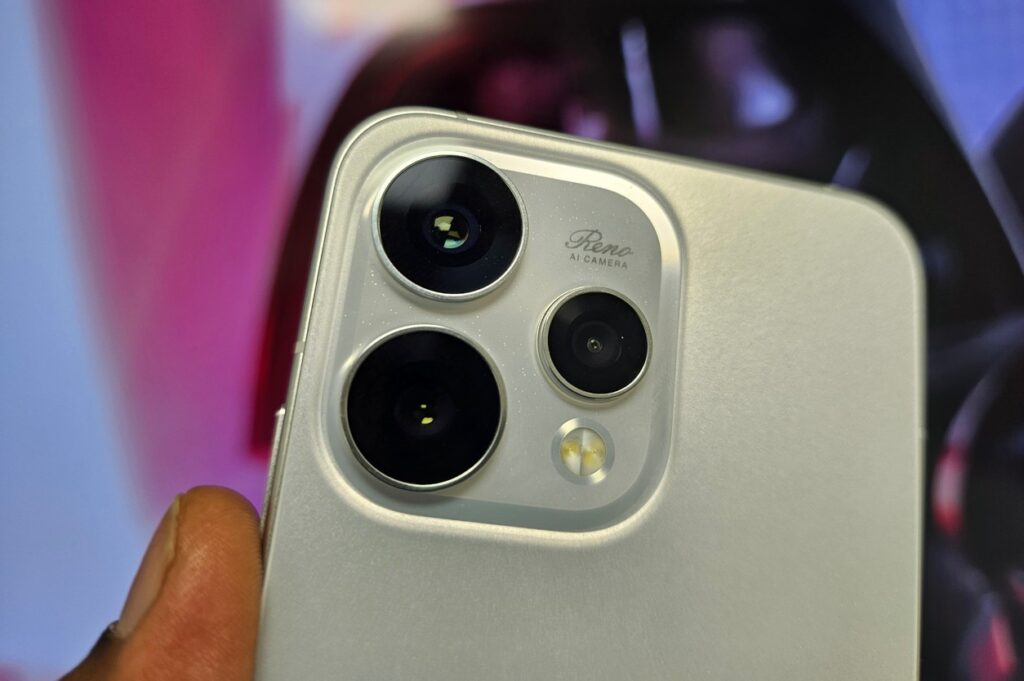
50MP Main Camera (f/1.8, OIS): The main camera is the consistent performer. I’ve shot extensively across Dubai’s extreme lighting conditions: harsh noon sun, deep shadows, golden hour, dim restaurants, and night markets. The camera handles it all with impressive competence.
The f/1.8 aperture and 2-axis OIS combination delivers sharp, well-exposed photos in most conditions. The OIS genuinely works. I can shoot one-handed while walking and still get sharp results about 80% of the time. Dynamic range is legitimately impressive for this price bracket. Backlit scenarios that would turn subjects into silhouettes on most mid-rangers produce balanced, usable photos on the Reno15.
50MP Telephoto (f/2.8, 3.5x optical zoom, OIS): This is the phone’s secret weapon. A 50MP telephoto with 3.5x optical zoom and OIS at this price point? That’s nearly unheard of. The classic 85mm-equivalent focal length is perfect for portraits – natural compression, flattering perspective, beautiful background separation.
I’ve shot dozens of portraits, and the results consistently rival phones costing significantly more. The bokeh looks organic, edge detection is accurate even around messy hair, and skin tones remain natural. The OIS means I can shoot handheld in less-than-ideal lighting and still get sharp results.
The zoom range is practical:
- 3.5x optical: Excellent quality
- 7x digital: Very good for social media
- 10x digital: Acceptable for documentation
- 20x+: Quality degrades rapidly
What genuinely surprised me: the telephoto actually works at night. Most phone telephotos become unusable after sunset. The Reno15’s telephoto with OIS captures usable low-light portraits. Some noise is visible, but shots remain sharp and detailed.
8MP Ultra-Wide: The Weaker Sibling: Here’s where compromises become obvious. The 8MP ultra-wide is adequate at best. Daytime shots are fine, good for landscapes, architecture, and group photos. Distortion is well-controlled, and colors match the main camera reasonably. But at night? Quality drops noticeably. Images come out soft, noisy, and lacking detail. Images are definitely usable, but not as impressive as the other two sensors.
The 50MP Front Camera: Best in Class, Full Stop
Let’s address the standout feature immediately: the 50MP front camera with autofocus is the same sensor used in the Reno15 Pro and Pro Max models. At this price point, having a flagship-grade selfie camera is unprecedented.
Why This Matters:
Most mid-range phones use 16MP or 32MP front cameras with fixed focus and mediocre quality. The Reno15’s 50MP sensor with autofocus captures genuinely detailed selfies that withstand cropping and editing. When you zoom into selfie photos, you can actually see texture, skin detail, and fine elements; they don’t just dissolve into mushy, over-processed blobs.
Autofocus on a Selfie Camera:
This sounds minor until you actually use it. The autofocus ensures sharp selfies whether you’re 30cm away or at arm’s length. It also enables macro-style close-ups. I’ve taken detailed selfies showing individual makeup details, fabric textures, and even eye reflections with perfect focus.
Group Selfies:
The field of view is wide enough to fit 6-7 people comfortably without awkward arm extensions. I tested this at multiple gatherings. the ultra-wide capability means everyone fits in frame without cutting off heads or forcing people to squeeze uncomfortably close.
Video Calls:
The 50MP sensor delivers exceptional video call quality. On Zoom, Google Meet, and WhatsApp video calls, multiple people commented on how sharp and clear my video looked compared to their feeds. For anyone doing frequent video calls or content creation, this front camera alone justifies consideration.
Stereo Speakers: Impressive, and Tunable
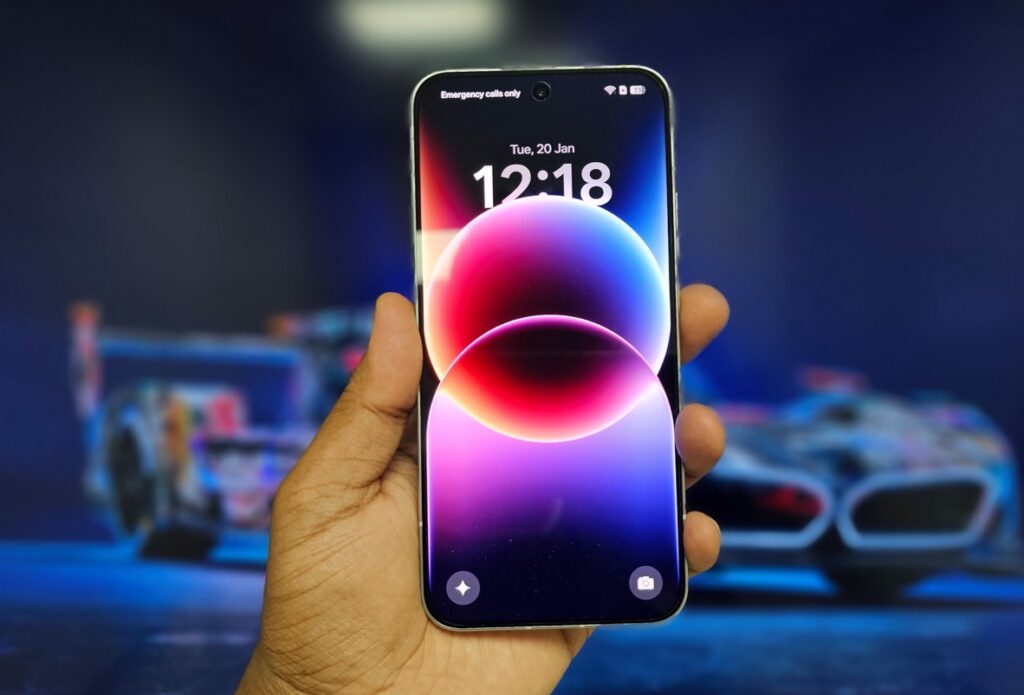
The Reno 15’s dual stereo speaker setup includes a unique “Ultra Volume Mode” that boosts output up to 300% beyond normal maximum volume. In theory, this sounds great for noisy environments. In practice, it’s a mixed bag.
Audio quality is very good. There’s decent bass presence, clear vocals, and controlled high-frequency response. The speakers deliver rich, full sound that’s genuinely enjoyable for media consumption and casual music listening. The stereo separation is good. Watching videos with the phone in landscape orientation provides a satisfying spatial audio experience. Gaming audio feels immersive with clear directional cues.
At 300% Volume in the Ultra Volume Mode, volume definitely increases; it’s genuinely loud enough to hear in very noisy environments. But audio quality deteriorates noticeably. I tested this extensively. For normal use, 70-90% regular volume is ideal. The 300% mode is only useful in specific scenarios; construction sites, extremely loud environments, or emergency situations where you need maximum audibility regardless of quality.
The Fingerprint Scanner: Actually Superfast
The optical in-display fingerprint scanner is genuinely one of the fastest I’ve tested. Recognition is near-instantaneous as there’s virtually no delay between touching the sensor and unlocking. It feels less like authentication and more like the phone simply recognizing you exist.
The registration process is quick and straightforward. The sensor area is well-positioned, easy to reach with your thumb in normal grip. Success rate is exceptionally high in my experience as I’ve tested with wet fingers, slightly oily fingers, and different screen protectors, and it consistently works on the first attempt.
Two-Day Battery Life: Liberation From Charging Anxiety
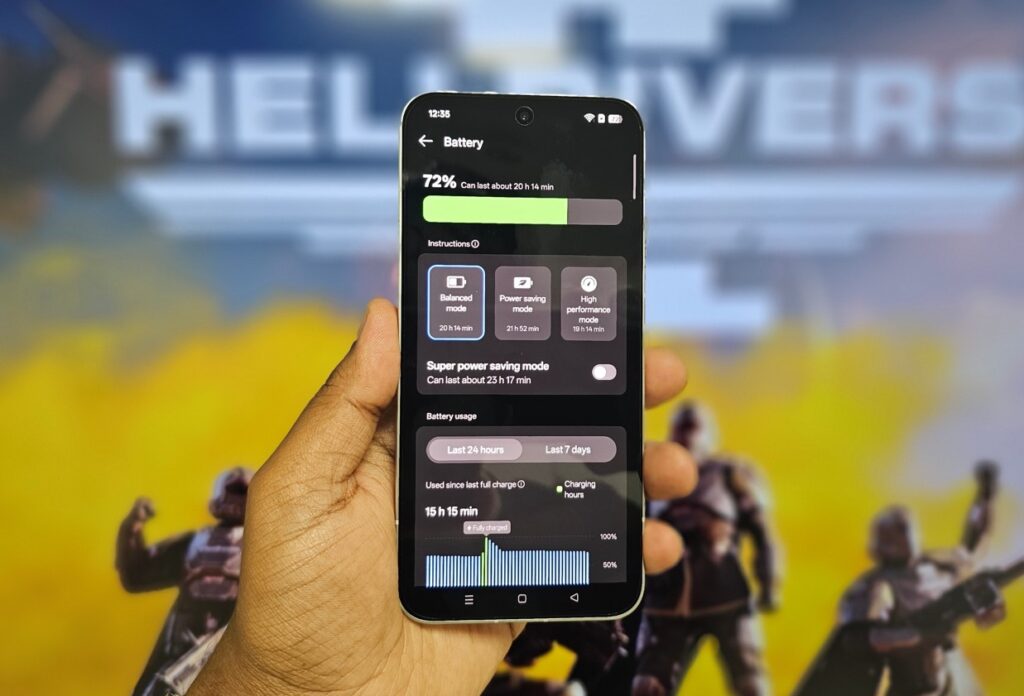
The 6500mAh battery delivers genuine two-day endurance for most users. My usage is heavy with extensive photography, social media, messaging, navigation, music streaming, video calls, and web browsing. Even with this load, I consistently finish full days with 35-40% remaining.
On lighter days (weekends with less photography and screen time), I’ve easily achieved two full days before needing to charge. I’ve forgotten to charge overnight multiple times. Woke up with 43%, proceeded with normal usage including photography, navigation, and media consumption, and still finished the day with 12%. That’s the kind of reliability that eliminates battery anxiety entirely.
When you do need to charge, 80W SUPERVOOC is impressively fast. 0-50% takes about 20 minutes. A full charge from near-empty takes approximately 50 minutes. And critically, OPPO includes the 80W charger in the box; a detail that shouldn’t be noteworthy but has become increasingly rare. The phone also supports battery health optimization. You can set a charging limit to extend long-term battery lifespan. The system can also learn your charging patterns and slow charging overnight to reduce battery stress.
Performance: Good Enough, Not Exceptional
The Snapdragon 7 Gen 4 delivers solid mid-range performance. This isn’t a flagship processor, and OPPO isn’t pretending it is. Apps launch quickly, multitasking is smooth, and daily tasks feel responsive. For typical usage (messaging, browsing, photography, social media, navigation, streaming music), it’s more than adequate. I’ve run Google Maps navigation with Spotify streaming in the background while messaging on WhatsApp and browsing Chrome with 12+ tabs open. Everything continued running smoothly without slowdown or app reloads.
Gaming Performance:
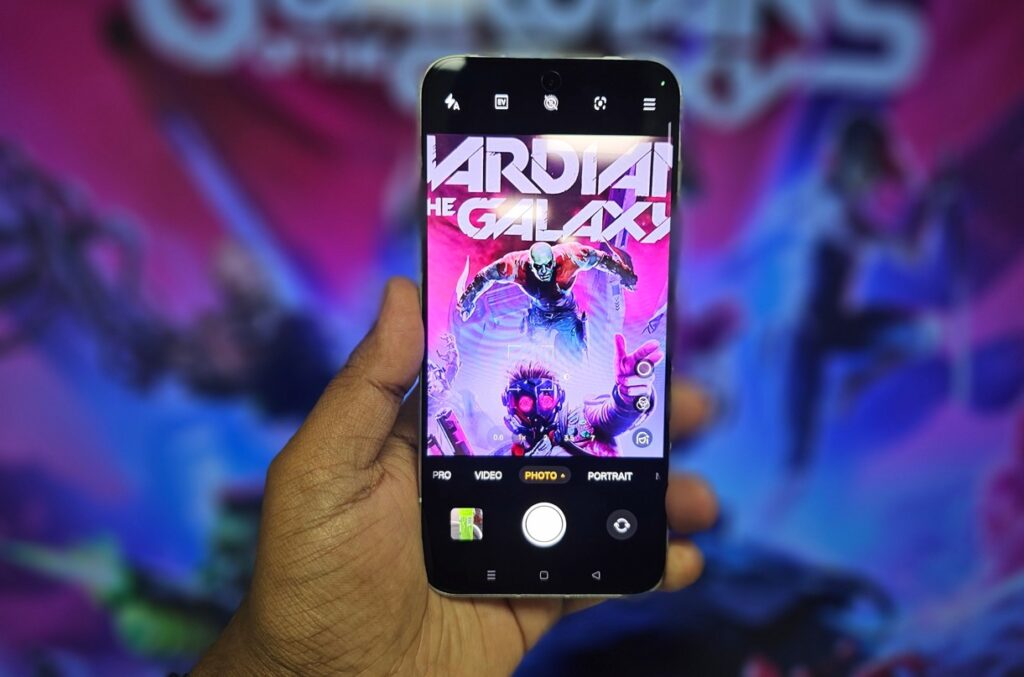
I tested PUBG Mobile and Call of Duty Mobile. At high settings, both run smoothly at 60fps. At maximum settings, frame rates occasionally dip but remain playable. Thermal management is good; the phone gets warm but never uncomfortably hot.
For casual and moderate gamers, performance is perfectly acceptable. You can enjoy popular titles at good visual quality with smooth performance. Competitive gamers demanding absolute maximum frame rates and minimum latency should look to flagship chips, but for everyone else, this processor is sufficient.
Who Should Buy the OPPO Reno15 5G?
Buy it if:
- Camera quality is your priority: This is arguably the best camera phone in the mid-range segment, full stop
- Selfies and video calls matter: The 50MP front camera with autofocus is unmatched at this price
- Portrait photography is important: The 50MP telephoto makes this phone a portrait powerhouse
- You want two-day battery life: 6500mAh delivers genuine endurance
- You value design: The Aurora White finish is genuinely beautiful
Skip it if:
- You need flagship gaming performance: Mid-range chip means mid-range gaming
- Stock Android is essential: ColorOS is feature-rich but heavily customized
The Verdict: Best Mid-Range Camera Phone
The OPPO Reno15 5G is the mid-range camera phone to beat right now. The combination of 50MP main camera, 50MP telephoto, and especially the 50MP front camera creates a photography experience that rivals devices costing significantly more. Add genuine two-day battery life, beautiful design, and fast charging, and you have a compelling package.
The front camera alone makes this phone worth considering for anyone who prioritizes selfies and video calls. Having the same 50MP sensor as the Pro models at mid-range pricing is unprecedented value.But OPPO undermines this with bloatware, persistent promotional notifications, and a weak ultra-wide camera. ColorOS 16 is polished and feature-rich, but the out-of-box experience feels cluttered and commercial rather than premium.
If camera quality (especially selfies and portraits) is your priority, the Reno15 5G delivers exceptional value. Just be prepared to spend 15 minutes cleaning up bloatware and disabling promotional notifications after first setup.
For content creators, selfie enthusiasts, portrait photographers, and anyone who values two-day battery life in a beautifully designed package, this is the mid-range phone to get.
Rating: 8/10
Camera: 9/10 – Exceptional main and telephoto, best-in-class selfie camera, weak ultra-wide
ColorOS 16: 7/10 – Polished and feature-rich, undermined by bloatware
Battery: 9.5/10 – Genuine two-day endurance
Performance: 7.5/10 – Good for daily use, not a dedicated gaming powerhouse
Design: 9/10 – Aurora White color option is genuinely beautiful
Value: 9/10 – Best camera-to-price ratio in mid-range segment
This is the mid-range camera phone I’d actually recommend—just disable the bloatware first.


RADISSON BLU HOTEL DUBAI DEIRA CREEK WELCOMES EASTER WITH A WEEKEND OF SEAFOOD FEASTS, FAMILY BRUNCHES AND FESTIVE CELEBRATIONS
CINEMACITY STARLIGHT OPENS IN MARINA MALL ABU DHABI
CELEBRATE EASTER 2026 AT SUN SIYAM IRU VELI WITH MAGICAL OCEAN-INSPIRED EXPERIENCES AND FAMILY FESTIVITIES

-
News10 years ago
SENDQUICK (TALARIAX) INTRODUCES SQOOPE – THE BREAKTHROUGH IN MOBILE MESSAGING
-

 Tech News2 years ago
Denodo Bolsters Executive Team by Hiring Christophe Culine as its Chief Revenue Officer
-
 VAR11 months ago
Microsoft Launches New Surface Copilot+ PCs for Business
-

 Tech Interviews2 years ago
Navigating the Cybersecurity Landscape in Hybrid Work Environments
-

 Tech News8 months ago
Nothing Launches flagship Nothing Phone (3) and Headphone (1) in theme with the Iconic Museum of the Future in Dubai
-

 Automotive1 year ago
AGMC Launches the RIDDARA RD6 High Performance Fully Electric 4×4 Pickup
-

 Trending5 months ago
OPPO A6 Pro 5G Review: Reliable Daily Driver
-

 VAR2 years ago
Samsung Galaxy Z Fold6 vs Google Pixel 9 Pro Fold: Clash Of The Folding Phenoms