
 Have a question? +971 56 404 0503




Hospitality
Designing the Next Generation of Functional, Future-Ready Foods


Exclusive interview with İnanç Işık, General Manager – Retail, Kerry Middle East
You’ve spoken about the balance between taste, functionality, and sustainability. What technological advances are helping Kerry achieve sustainable innovation without compromising flavour or performance?
At Kerry, sustainability and taste are inseparable. Our Tastesense™ portfolio enables up to 50% sugar and salt reduction while preserving flavour integrity. We combine biotechnology, fermentation, and enzymology to extend shelf life and reduce food waste, supporting circular economy goals. Proprietary tools like Kerry NutriGuide model nutritional impact during reformulation, ensuring healthier profiles without trade-offs. These innovations are embedded in our Smart Taste™ platform, which addresses cost, supply, and regulatory pressures while maintaining indulgent taste. For example, our Cocoa Booster technology allows up to 20% cocoa reduction, mitigating volatility and lowering carbon footprint without compromising sensory experience.
Ingredient volatility — such as fluctuating cocoa and sugar prices — remains a major industry challenge. How is Kerry using R&D and data-led formulation to help manufacturers manage supply and cost risks?
Cocoa prices have surged by over 300% in the past year, and sugar markets remain highly volatile due to global supply constraints and regulatory pressures. Kerry addresses these challenges through a combination of predictive formulation tools like NutriGuide and advanced ingredient technologies.
For cocoa, our Cocoa Booster solutions enable up to 20% cocoa reduction without compromising indulgent taste or compliance. For sugar, our Tastesense™ technology delivers up to 50% sugar reduction, helping manufacturers manage cost exposure without compromising on taste while meeting consumer demand for healthier profiles.
These strategies not only reduce reliance on volatile raw materials but also improve manufacturing efficiency, delivering cost savings of up to 24% in bakery applications, while ensuring consistent quality, sustainability, and great taste.

Kerry’s approach to innovation often begins in foodservice before scaling to retail. How does this process work in practice, and what tools or insights make it effective?
Foodservice is our innovation incubator. Concepts validated in quick-service and casual dining channels, where trends emerge fastest, are adapted for retail using Taste Charts, Trendspotter AI, and Kerry Kalaido®, our generative AI concepting tool. These tools accelerate ideation-to-launch by combining consumer insights, sensory science, and chef-led prototyping. At Gulfood, we showcased Gold Brew Qahwa and Nashville Chicken Chips, examples of foodservice-inspired ideas scaled for retail through Kerry’s integrated RD&A network and global manufacturing footprint.
With the rise of GLP-1 health trends and growing demand for high-protein, functional products, how is Kerry adapting its strategy to meet new consumer nutrition needs?
GLP-1 adoption is reshaping consumer priorities toward satiety, digestive health, and metabolic support. Kerry’s Proactive Health platform delivers science-backed solutions like BC30™ probiotics for protein absorption, Eupoly-3™ omega-3s for heart health, and Tastesense™ masking solutions to improve flavour in high-protein, reduced-sugar formulations. Our proprietary research identifies five GLP-1 consumer personas, guiding innovation in formats such as protein bars, functional beverages, and meal replacements. At Gulfood, concepts like the Hot Honey Power Bar demonstrated how indulgence and functionality can coexist.
Kerry recently partnered with KidZania on the Kids Flavour Detective Workshop. How do initiatives like this help your teams understand emerging taste preferences and design products for future generations?
The Kids Flavour Detective Workshop gave us direct access to Gen Alpha’s flavour preferences through hands-on co-creation. Gen Alpha has more active taste buds and higher sensitivity to sweet, bitter, umami and spicy compounds. Insights from this activation helped us develop new cheese powder concepts, Savoury Parmesan and Creamy Gouda, featured at Gulfood. These initiatives ensure our innovation pipeline reflects the evolving tastes of younger consumers, enabling brands to future-proof their portfolios with flavours that resonate across generations.
Collaboration with research institutions such as KAUST and KHNI highlights Kerry’s investment in science-driven innovation. How do these partnerships translate bioscience and smart-health research into everyday food solutions?
Our partnerships with KAUST and the Kerry Health & Nutrition Institute (KHNI) accelerate breakthroughs in microbiome science, cellular biology, and functional ingredient development. These collaborations underpin innovations like personalised AI nutrition platforms, clean-label reformulation, and functional ingredients for better health. By embedding cutting-edge science into everyday application, from sugar reduction systems to hydration solutions, we deliver solutions that meet consumer health needs without compromising taste.
Looking ahead, what does the future of food manufacturing look like to you — and how will Kerry continue to lead the transformation of the region’s food ecosystem?
The future is digital, sustainable, and personalised. Expect AI-driven predictive analytics, carbon reduction strategies, and bioscience-led nutrition to dominate. Kerry will continue to lead by combining taste leadership, sustainability, and science-backed innovation, shaping a resilient food ecosystem for MENAT and beyond. Our ambition is clear: to reach two billion people with sustainable nutrition solutions by 2030, while enabling customers to deliver products that are better for people, society, and the planet.
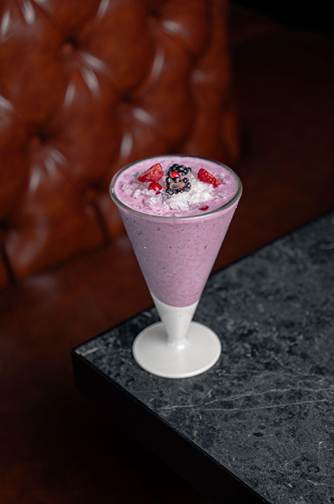
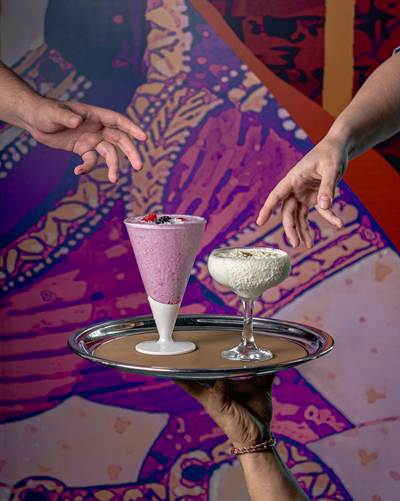
Rohini, the award winning Indian restaurant at Mövenpick Hotel Jumeirah Lakes Towers, is welcoming the summer season with a new lassi line, bringing two refreshing blends to the menu: the vibrant Very Berry Lassi and the rich Khoya and Coconut Lassi. A refreshing classic, blended to perfection with authentic flavours and a touch of indulgence, the new additions offer guests a cooling counterpoint to Rohini’s daring, spice forward menu.
Known for reimagining Indian classics with a bold, contemporary edge, Rohini has built its identity around unexpected pairings and vibrant presentation, and the new lassi line follows that same spirit. The Very Berry Lassi blends the traditional yoghurt base with fresh, tart berries for a bright, summery profile, while the Khoya and Coconut Lassi leans into rich, creamy notes for a smoother, more indulgent finish. Both are designed to sit comfortably alongside Rohini’s signature dishes, whether as a palate cooling accompaniment or a stand alone treat.
The launch reflects Rohini’s ongoing commitment to keeping its menu responsive to the season, giving regulars and first time diners alike a reason to return as temperatures rise. Guests are invited to explore the delightful selection of refreshing blends crafted to complement the Rohini experience, and discover their favourite sip. The lassi line is now available at Rohini, located within Mövenpick Hotel Jumeirah Lakes Towers, Cluster A, Jumeirah Lake Towers, Dubai.


The excitement of UFC 333 is making its way to Etihad Arena ahead of the main fight on Saturday, 24th of October. For fans planning to visit Yas Island, Yas Plaza Hotels brings together six distinct stays, with plenty to enjoy before and after the action.
Yas Island offers an array of stays to complement the energy of fight weekend, giving visitors the perfect opportunity to recharge before the action and unwind after the final bell. Yas Plaza Marina brings a relaxed, contemporary atmosphere, while Yas Plaza Circuit provides a welcoming base for families. Those seeking a more peaceful escape can enjoy the nature-inspired surroundings of Yas Plaza Mangroves, while Yas Plaza Bay offers spacious family suites. Crowne Plaza Yas Island adds a touch of Mediterranean charm, and Staybridge Suites Yas Island caters to guests seeking additional space and comfort with its apartment-style suites. With something to suit every travel style, the excitement extends well beyond the Octagon.
Across the collection, guests can enjoy shared access to pools, wellness and sports facilities, as well as 21 dining venues. It’s an easy way to turn fight night into a longer island escape, with time to gather over a meal, unwind by the pool or make the most of Yas Island between bouts.
Hospitality
Sun Siyam Expands Its Maldives Guest Offering with Five Distinctive Halloween Experiences

White sands. Crystal-clear lagoons. Palm trees swaying in the breeze. Not exactly where you would expect to come face-to-face with a horror icon, wander through the strange world of Beetlejuice or find little witches and superheroes trick-or-treating beneath coconut palms. Yet every October, Sun Siyam proves that Halloween and paradise make an unexpectedly perfect match. Across the collection, guests can choose their own Halloween adventure. Lose yourself inside a cinematic horror of Cult Classics production at Siyam World, step into the delightfully strange universe of Beetlejuice at Sun Siyam Olhuveli, celebrate Maldivian traditions beneath the stars at Sun Siyam Iru Fushi, embrace relaxed beachfront festivities at Sun Siyam Iru Veli, or watch little monsters set off on tropical trick-or-treat adventures at Sun Siyam Vilu Reef. Whatever your Halloween personality, there is an island waiting.

Where horror becomes a holiday
At the centre of it all is Siyam World, where Halloween has become something of a legend in its own right. Never one for a handful of pumpkins and a themed buffet, the resort returns with CULT CLASSICS, its boldest Halloween production yet. Inspired by the cult horror films that defined generations, guests are invited to step inside an interactive walkthrough where every corner reveals another surprise. Live performers, cinematic sets, immersive storytelling and unexpected encounters blur the line between audience and performance, creating an experience that is as theatrical as it is thrilling. Survive the walkthrough and the night is only just beginning. The experience unfolds into a spectacular live production, where cinematic storytelling, immersive sets, theatrical performances and unexpected encounters blur the line between audience and show. It is horror, but with a distinctly Siyam World twist: bigger, bolder, brilliantly over the top and impossible to experience from the sidelines. And when the scares give way to the after-party, DJ and music producer SARRA takes over the decks. Blending Afro House, Afro Tech House, Indie Dance and Latin House, her sound moves through deep grooves, layered percussion and global rhythms, bringing a high-energy electronic soundtrack to the night. Known for building sets that evolve with the dancefloor, SARRA will take CULT CLASSICS from immersive horror spectacle into a Halloween party that keeps going long after the final scare.
The Wonderfully Weird Side of Paradise
At Sun Siyam Olhuveli, guests are invited to leave reality behind and enter the wonderfully weird world of Beetlejuice. Inspired by the cult classic, the resort undergoes a dramatic transformation, where black-and-white stripes, glowing green lighting, theatrical installations and playful surprises turn familiar island spaces into an immersive fantasy. From themed cocktails and imaginative dining to roaming characters and live performances, the island embraces the strange from day into night. Taking over the decks is international DJ Giada Brincè, bringing her signature blend of hypnotic Afro House rhythms and sophisticated electronic sounds to the celebration. Having performed across destinations including Monte Carlo, Mykonos and Italy, and built a global following through her live sets and social channels, Brincè will bring a refined but high-energy soundtrack to Olhuveli’s Halloween night. Expect the wonderfully weird, the theatrical and the unexpected, with a seriously good beat behind it.
At Sun Siyam Iru Fushi, Halloween meets authentic Maldivian hospitality. Guests gather beneath the stars at Islander’s Grill for a beachfront barbecue showcasing freshly caught seafood, premium cuts and Mediterranean and Asian-inspired flavours before the rhythmic energy of a traditional Bodu Beru performance fills the night. The celebrations continue at Water’s Edge with a lively Halloween DJ party where tropical rhythms keep families and friends dancing late into the evening.
At Sun Siyam Iru Veli, Halloween unfolds at an easy island pace. Young guests begin the day with festive crafts at Turtle Kidz Club before the celebrations move to Chemistry Bar for a lively pool party complete with DJ beats, themed drinks and poolside dining. As evening arrives, the island swaps spooky surprises for barefoot elegance with a beachfront Lobster BBQ accompanied by live music beneath the stars.
Meanwhile, at Sun Siyam Vilu Reef, Halloween comes to life with Ocean Haunt, an island-wide celebration where tropical charm meets playful imagination. Families can expect a day filled with music, dancing, face painting, creative crafts and the colourful Little Monsters Parade, while younger guests unleash their creativity decorating ghostly cookies and spooky treats at Turtle Kidz Club. As darkness falls, the festivities continue with a themed beachfront BBQ, where DJ beats, ocean breezes and a touch of island magic transform Halloween into a relaxed celebration beneath the stars. Equal parts family fun and barefoot luxury, Ocean Haunt captures the lighter, more whimsical side of Halloween in paradise.
Whether guests are seeking blockbuster entertainment, immersive fantasy, authentic island celebrations, elegant beachfront evenings or unforgettable family adventures, Sun Siyam offers a Halloween unlike anywhere else in the Maldives. Because Halloween does not have to be wrapped in fog, falling leaves or cobwebs. Sometimes the best scares happen with warm sand beneath your feet, a cocktail in hand and the Indian Ocean quietly watching in the background.
Fear has never looked so good.
For those inspired to swap autumn for the tropics, there has never been a better time to plan an island escape. Sun Siyam Resorts is currently offering a range of exclusive seasonal offers across its Maldivian collection, with added value including savings on accommodation, complimentary transfers, resort credits and signature experiences. Many offers are available for bookings made until 31 October 2026, making Halloween the perfect excuse to discover paradise with a darker twist.


Chinese Cars Are Reshaping the GCC Market, but Resale Value Could Be the Next Battleground

PNY Brings Enterprise-Grade Computing Power to Dubai AI Festival
Rohini Refreshes Its Summer Menu with Two New Lassi Blends



-

 Trending12 months ago
OPPO A6 Pro 5G Review: Reliable Daily Driver
-

 Tech News2 years ago
Denodo Bolsters Executive Team by Hiring Christophe Culine as its Chief Revenue Officer
-
 VAR2 years ago
Microsoft Launches New Surface Copilot+ PCs for Business
-

 Automotive2 years ago
AGMC Launches the RIDDARA RD6 High Performance Fully Electric 4×4 Pickup
-
Tech Interviews3 years ago
Navigating the Cybersecurity Landscape in Hybrid Work Environments
-

 Hospitality2 years ago
Gulfood 2025 30th Edition Kicks Off Today, Setting New Benchmarks in F&B Growth and Innovation
-

 VAR10 months ago
Huawei Nova 14 Pro Review: Where Camera Excellence Meets Ecosystem Evolution
-

 Tech News1 year ago
Nothing Launches flagship Nothing Phone (3) and Headphone (1) in theme with the Iconic Museum of the Future in Dubai