
 Have a question? +971 56 404 0503




Tech News
Milestone Systems Sets New Pace, Outgrows Global VMS Market


At Intersec 2025, Milestone Systems made a resounding statement about the future of data-driven video surveillance and analytics. The Danish video management software (VMS) leader showcased its latest innovations, highlighting the transformative role of artificial intelligence (AI) in redefining safety and operational efficiency across industries.
A Growing Regional Footprint
According to the independent, global analyst company Omdia, Milestone Systems is estimated to be the largest supplier of video management software in the Middle East and Europe.
The Middle East, a region investing heavily in smart cities and large-scale infrastructure, has proven fertile ground for Milestone’s ambitious growth. The company has consistently outpaced the average growth rate of 8-9% in the VMS sector, driven by heightened demand for robust and intelligent surveillance solutions.
“We are proud to participate for the 15th time in Intersec 2025, as a security leader in the transformation of the Middle East towards smart cities.” said Louise Bou Rached, Regional Director of META at Milestone Systems “Our strategy is to strengthen partnerships with integrators, resellers, and end-users to drive growth and innovation and simultaneously expand our presence in the MENA region.”
Milestone’s plans include strategically bolstering its UAE operations and Saudi Arabia’s rapidly growing market, where smart city initiatives like NEOM signal tremendous potential.
Tech for Tomorrow’s Challenges
Central to Milestone’s presence at Intersec was the flagship product, XProtect Video Management Software, and the AI-driven BriefCam Video Analytics platform. Milestone underscored the value of collaboration, announcing seamless integrations with eight leading technology partners, including Conexao Technology and CIAS. These partnerships highlight the open-platform flexibility of XProtect, a key differentiator in a crowded market.
Together, these technologies demonstrated the power of converting video into actionable data insights, from monitoring bustling airports to streamlining operations and enhancing public safety supporting diverse industries from retail, hospitality, and healthcare to public safety and government infrastructure.
The company’s emphasis on AI-driven analytics reflects the growing demand for smarter surveillance tools that go beyond recording footage. BriefCam’s capabilities, for instance, allow organizations to analyze hours of video in minutes, enabling everything from faster emergency response and forensics to operational cost savings.
MENA’s Next Big Play
Milestone’s reputation has been bolstered by its role in securing major events like the FIFA World Cup, which showcased its ability to handle complex, high-stakes environments. Now, the company is turning its focus to the Middle East’s booming hospitality and aviation sectors, two pillars of the region’s economic diversification efforts.
“The demand for hybrid and cloud-based VMS solutions is surging as governments and businesses prioritize digital transformation,” Bou Rached noted. “Our technology is designed to meet these evolving needs, ensuring the safety of public spaces while enabling smarter business operations.”
A Future Shaped by Innovation
As the Middle East accelerates its journey toward smart cities, Milestone Systems is positioning itself as a cornerstone of this transformation. By combining advanced AI, strategic partnerships, and an expanding regional presence, the company is helping shape a safer, more connected future for cities, businesses, and communities alike.
At Intersec 2025, the message from Milestone Systems was clear -innovation in video analytics isn’t just about surveillance, it’s about empowering industries, enhancing public safety, and building smarter cities for generations to come.










Alteryx Inc., a leading AI-ready data and analytics company, today announced the appointment of Sabya Sen as Vice President, IMEA & APAC, to lead its business across India, the Middle East, Africa, and Asia-Pacific (IMEA & APAC). In this role, Sen will focus on accelerating customer outcomes and scaling adoption of the Alteryx One platform across some of the world’s fastest-growing markets for AI and data innovation.
Sen brings deep regional expertise and a strong track record of execution to this role. Most recently, he served as Vice President, Head of UKI & Emerging Markets Europe at Alteryx, where he drove consistent growth, built high-performing teams, and strengthened customer relationships across global markets.
The appointment comes at a critical phase for AI adoption globally and across IMEA and APAC, where governments and enterprises are increasing investments in digital transformation. In the Middle East, national strategies like Saudi Arabia’s Vision 2030 and UAE’s We the UAE 2031 are accelerating innovation agendas. The region’s AI market is projected to reach $320 billion USD, while globally, 89% of leaders plan to maintain or increase AI budgets in 2026. Despite this momentum, many organizations remain in pilot phases, underscoring the need for scalable, governed analytics solutions that can support enterprise-wide AI adoption.
“It is my priority to continue delivering meaningful outcomes for our customers and community,” said Sabya Sen, Vice President, IMEA & APAC. “Across the Middle East, India, and Asia-Pacific, we are seeing unprecedented momentum driven by ambitious national transformation agendas. These efforts are accelerating economic diversification, advancing digital innovation, and firmly positioning these regions as global hubs for data and AI-led growth.”
Prior to joining Alteryx, Sen spent 11 years at Salesforce in a variety of leadership roles, supporting customers across the insurance, financial services, and healthcare industries, where he helped organizations leverage data and technology to transform their operations. In his new role, Sen will focus on helping organizations move beyond experimentation to enterprise-scale AI adoption by delivering trusted, AI-ready data and analytics through the Alteryx One platform.
“Over the past few years, Sabya has had a tremendous impact on Alteryx and has demonstrated a remarkable level of focus, discipline, and strong commercial execution,” said Jason Janicke, Senior Vice President, EMEA & APJ at Alteryx. “He has delivered results, built a strong team culture, and consistently raised the bar. We can’t wait to see the impact that Sabya has in this next role.”
Tech News
VERTIV EXPANDS THERMAL PORTFOLIO WITH NEW WALL-MOUNT COOLING SYSTEM FOR EDGE AND SMALL DATA ROOMS IN EMEA

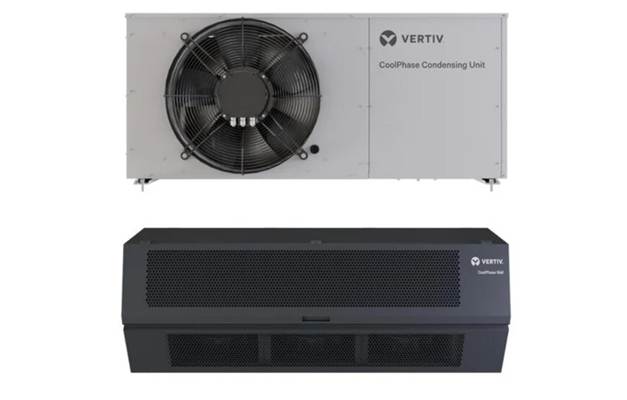
Vertiv (NYSE: VRT), a global leader in critical digital infrastructure, today announced the launch of the Vertiv™ CoolPhase Wall, a space-saving, wall-mount cooling system designed for small IT spaces and edge environments. The system is designed for the needs of IT equipment, removing heat and enabling continuous operation while taking up zero floor space. Vertiv CoolPhase Wall is available now across Europe, Middle East and Africa (EMEA).
As distributed computing becomes more critical to business operations, compact IT environments need high-quality thermal control designed for sensitive electronic systems. However, many are still using comfort cooling systems designed for human comfort rather than addressing the high sensible heat ratio (SHR) and higher airflow requirements of IT equipment. Vertiv CoolPhase Wall addresses this gap with a purpose-built system that provides the required SHR along with integrated monitoring and control capabilities to protect equipment and enable24/7 operational continuity.
Built for installation flexibility, the Vertiv CoolPhase Wall features a split system with an indoor wall-mounted cooling unit. The system delivers up to 60% greater airflow than standard comfort cooling systems and leverages variable-speed compressors and variable speed fans to modulate to meet heat load demand and improve energy efficiency to enable operational cost reductions.
Designed to handle thermal loads up to 11 kW, the Vertiv CoolPhase Wall is engineered to operate reliably in outdoor ambient temperatures ranging from -35 to 48℃. The system features the Vertiv™ Liebert® iCOM™ operational control, which enables local configuration and supervision of key operating parameters. For extended visibility and remote access, the Vertiv CoolPhase Wall includes onboard remote communication capability to provide real-time alerts and operational status through a secure web interface.
The Vertiv™ CoolPhase Wall utilizes R-32 refrigerant, a low-global warming potential (GWP) alternative that reduces environmental impact while maintaining thermal performance. This positions Vertiv ahead of evolving regulatory requirements, including the European Union’s F-Gas regulations that restrict the use of high-GWP refrigerants. While many comfort cooling systems are still transitioning to lower-GWP options, Vertiv is applying these standards to IT-focused cooling, giving organizations confidence that their deployments are aligned with future environmental expectations.
“As IT continues to expand into areas that were not originally intended for high-density electronics, the demand for adaptable and energy-efficient cooling solutions is increasing across EMEA,” said Sam Bainborough, vice president, EMEA thermal business at Vertiv. “The Vertiv CoolPhase Wall is engineered to support continuous operations, enabling customers to maintain reliable, efficient thermal performance in small IT rooms and edge sites year-round.”
Vertiv CoolPhase Wall expands the company’s comprehensive thermal management portfolio, which includes precision cooling system for edge deployments, enterprise data centers, and high-density AI environments, ranging from room-based cooling to direct-to-chip liquid cooling and rear door exchangers.

MAXION, a UAE-based platform empowering social connections, has reported 399% year-on-year growth in its user base in 2025 following the introduction of an AI-powered infrastructure designed to prioritise real-world interaction. The growth reflects strong adoption of the platform’s technology-driven approach to facilitating meaningful relationships. Over the same period, the company reached a 406% increase in annual recurring revenue.
MAXION operates as a hybrid SaaS and marketplace platform built on an AI-powered system that processes behavioural, scheduling, and conversion data across the full lifecycle of an interaction. The system analyses availability alignment, time to meeting, attendance confirmation, repeat meeting patterns, and structured feedback following in-person meetings, helping members move from introduction to real-world conversation more efficiently. To support the continued development of these capabilities, MAXION has secured $900,000 in early-stage funding, which has been allocated toward AI integration, infrastructure development, senior product hires, and operational expansion.
The UAE’s international population provides a strong environment for MAXION’s growth, with Dubai alone home to a rapidly expanding base of ultra-high-net-worth individuals (UHNWIs). At the same time, the UAE online relationship services market is anticipated to grow by more than 9.21% by 2031, highlighting sustained demand for platforms that help individuals form meaningful connections in fast-moving urban environments.
To date, more than 40,000 individuals have applied to join MAXION, with approximately 7,000 active members accepted into the curated community. Through a selective onboarding process, the platform maintains a gender balance close to 50:50, compared with traditional platforms where participation averages approximately 70:30 male to female. The community primarily consists of high-performing professionals aged 25 to 45 working across finance, consulting, technology, entrepreneurship, and senior corporate leadership roles.
Christiana Maxion, Founder and CEO of MAXION, said: “Our long-term vision is to restore real-world connection in a fast-moving world. Technology should help people meet sooner rather than spend months behind a screen. We use data to make it easier for people to meet at the right time, allowing members to focus on getting to know each other rather than spending weeks in digital conversation. MAXION is designed to move people from introduction to real conversation quickly, where interactions feel more natural, and intentions become clearer. Over time, we want to build a platform that supports strong partnerships and lasting communities.”
In the past six months alone, MAXION has facilitated more than 2,000 in-person meetings between members. The platform measures success by the relationships formed between members, with users typically returning every three months and continuing to engage with the app over periods of up to two years. MAXION has also established strategic partnerships with brands to reduce logistical friction surrounding real-world meetings and create a smoother experience for members.
Adoption is currently concentrated in Dubai, with growing traction in Abu Dhabi. The company plans to deepen its presence across the UAE while preparing for expansion into international professional hubs such as Singapore, London, and New York, where dense expatriate populations and fast-paced professional environments create similar demand for intentional connection.
Over time, MAXION aims to support members beyond the first stage of connection by creating value for couples as their relationships develop. The long-term vision is to help build urban communities where meaningful relationships remain central to modern professional life.

ALTERYX EXPANDS REGIONAL LEADERSHIP WITH SABYA SEN TO LEAD IMEA & APAC
QASHIO LAUNCHES SME SUPPORT INITIATIVE WITH DUBAI CHAMBERS
HOP INTO EASTER AT MCGETTIGAN’S WITH FAMILY ROASTS, EGG HUNTS AND CLASSIC SUNDAY FAVOURITES

-
News10 years ago
SENDQUICK (TALARIAX) INTRODUCES SQOOPE – THE BREAKTHROUGH IN MOBILE MESSAGING
-

 Tech News2 years ago
Denodo Bolsters Executive Team by Hiring Christophe Culine as its Chief Revenue Officer
-
 VAR12 months ago
Microsoft Launches New Surface Copilot+ PCs for Business
-

 Tech Interviews2 years ago
Navigating the Cybersecurity Landscape in Hybrid Work Environments
-

 Trending5 months ago
OPPO A6 Pro 5G Review: Reliable Daily Driver
-

 Tech News9 months ago
Nothing Launches flagship Nothing Phone (3) and Headphone (1) in theme with the Iconic Museum of the Future in Dubai
-

 Automotive1 year ago
AGMC Launches the RIDDARA RD6 High Performance Fully Electric 4×4 Pickup
-

 VAR2 years ago
Samsung Galaxy Z Fold6 vs Google Pixel 9 Pro Fold: Clash Of The Folding Phenoms