
 Have a question? +971 56 404 0503




Home Integrator
Designing with Intention


Exclusive interview with the CEO of Home Box, Mr. Ajay Antal, on space-smart living, home-proud, and value that lasts in the modern Middle East.
Home Box has rapidly expanded across the GCC market to become 3rd largest home retailer. What core principles have driven this growth, and how do you maintain consistency across diverse markets?
What truly makes a house feel like home? In my opinion, the answer was never just furniture or decor. It was — and remains — about freedom, function, and the emotional fabric of living well. “Our journey is rooted in one profound belief: that every home, no matter the budget, deserves to be a sanctuary of beauty, functionality, and personal pride.” Home Box has been built on the foundation of stylish, smart, value-driven living for all. Yes, we are a go-to for modern apartments, but we’re equally relevant for families upgrading to larger villas, professionals curating home offices, or entrepreneurs setting up Airbnb spaces.
From space-saving essentials to expansive collections for living rooms, bedrooms, kitchens, bathrooms, and even gardens, our assortment is curated to inspire. Whether you’re looking for a minimalist Scandinavian vibe, a modern Majlis-inspired sofa, or smart storage solutions, Home Box provides aspirational style at honest prices. Our regional consistency comes from listening deeply to each market — adapting assortments, price ladders, and instore experiences, while keeping our brand promise universal: affordable style, without promotional gimmicks, 365 days a year.
Your leadership has been crucial in positioning Home Box as a go-to destination for affordable home solutions. How do you balance cost-effectiveness with design innovation and material quality?
We start by throwing away the trade-off. In traditional retail, there’s this outdated assumption: you can either have good design, or a good price. We don’t believe in “either-or.” We ask – why not both? 70% of our collections are designed in-house or in exclusive collaboration with trusted global partners. This gives us control over design, materials, and — importantly — costs. But we never cut corners where it matters. We are in the value segment, yes, but value doesn’t mean compromise. It means clarity. Our storage-rich bedroom sets, genuine marble and sintered stone dining ranges, and water-resistant collections reflect thoughtful value engineering. Products come with warranties of 2 to 10 years, ensuring customers feel secure in their choices.
For short-term rentals or Airbnb hosts, we offer on-trend, high-utility furniture at multiple price points, making Home Box the go-to destination for setting up stylish spaces efficiently. Home Box offers a wide range of mattresses designed to suit different body types and sleep preferences, all backed by warranties ranging from 5 to 15 years. It’s part of our commitment to customers. Better Sleep-Smarter Prices
“We believe in intelligent designs: furniture that bends, flexes, and works harder, like a hydraulic lift-up storage bed or a compact sofa that transforms your living room without overwhelming it.
Ultimately, design isn’t about luxury labels — it’s about life-enhancing solutions. That’s where affordability and aspiration meet.”
Space is fast becoming the new luxury. How is Home Box redefining the concept of ‘smart living spaces’ to meet the demands of modern, space-constrained urban homes?
This is a subject close to my heart, because I’ve lived it. When I moved to Dubai years ago, I remember struggling to fit dreams into rented square feet. I had a foldable dining table, a shoe rack that doubled up as a side table, and cushions that worked harder than furniture. That experience never left me.
Today, as cities grow taller and lives get busier, we are seeing a generational shift. Our customer doesn’t want more—they want meaningful. And that’s exactly where Home Box steps in. Today, many of our customers face similar realities. Urban homes are shrinking, but aspirations aren’t.
That’s why we’ve championed the ‘Compact Living’ movement — offering everything from foldable dining tables, stackable chairs, hidden storage sofas, to kitchen and garden organisers.
In select stores, we’ve created experience zones that simulate 25 sqm apartments — inspiring customers to live large in small spaces. We’re also seeing rising demand for multi-functional homeware — modular shelving, decorative yet practical storage, and space-saving kitchenware. For us, it’s not about selling products. “It’s about selling possibilities of decluttered, meaningful, and joyful living.”
Home Box’s rapid growth in e-commerce, including becoming the highest searched home brand on marketplace, marks significant milestones. How do these developments reflect the brand’s commitment to changing customer behaviour and growth?
Digital has always been part of our DNA — but today, it’s at the heart of how our customers discover, engage, and decide. Becoming UAE’s most-searched home brand on the marketplace reflects two things:
- Our agility in meeting modern shopping habits — convenience, speed, and seamless omnichannel experiences.
- The trust customers place in us for delivering style and value online.
But it’s not just about transactions — it’s about trust. We’ve invested in rich content, express deliveries, flexible payments, world-class after-sales service and prominent digital-first launches. For compact-home dwellers, busy families, and younger audiences, we’re often their first stop — virtually. That’s why we continue to enhance mobile-first experiences, digital partnerships, and hyper-personalised recommendations. Our strategy is simple: be where the customer is. Whether you shop online or offline, Home Box ensures a cohesive, intuitive, and inspiring journey — blending technology with human warmth.
What excites you most about Home Box’s future in shaping intuitive, space-smart living, and what lasting impact do you hope it leaves on how people emotionally connect with their homes, wellness and work?
The future of Home Box is about empowering people to be ‘Home Proud’ — without breaking the bank. We envision homes that are not only stylish and functional but also emotionally uplifting. Homes that adapt to life’s changes — whether you’re setting up your first home, expanding to accommodate a family, or optimising a rental space.
Our focus is threefold:
- Expanding curated collections built around modern living & conscious materials.
- Leveraging AI for smarter product curation & personalised customer journeys.
- Reimagining store experiences that blend inspiration with practicality.
But more than products, it’s the emotional connection we foster — helping customers feel seen, valued, and empowered in their home-making journey. If Home Box leaves behind a legacy, it will be this: We made the idea of a beautiful, intelligent home not a dream, but a reality, for millions across the region. We proved that affordability and aspiration are not opposites — they’re partners. We want ‘Home’ to feel like more than a place. “We want it to feel like a win for their heart, for their life, and for their wallet.”












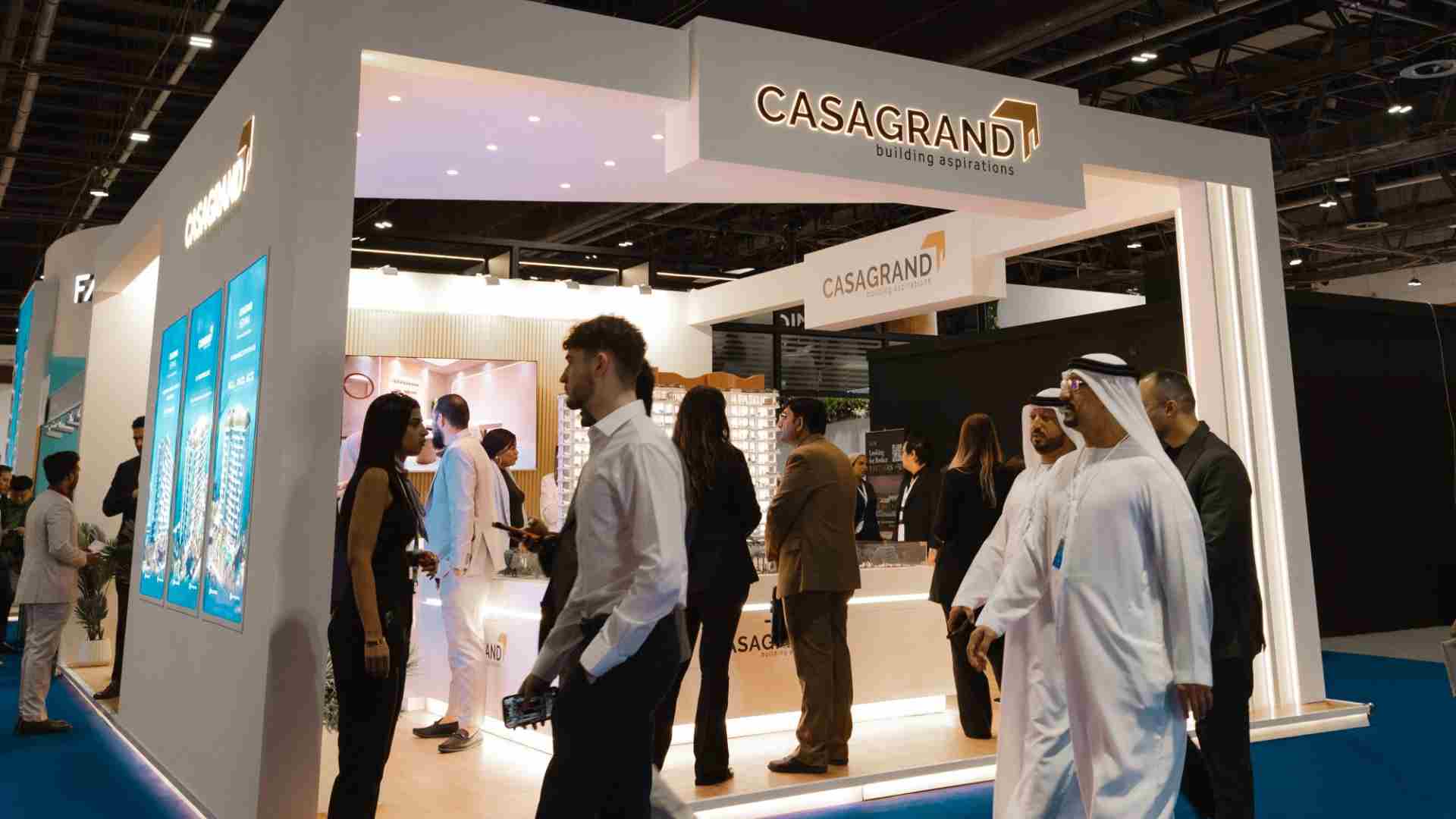
Casagrand, one of India’s leading real estate developers, is participating in IPS Congress 2026, where it is showcasing its Flagship project HERMINA, at Dubai Islands, while highlighting its plans to develop more than 6 million sq. ft. of premium residential and mixed-use developments in Dubai over the next three years.
The developer’s UAE expansion builds on the strong market response to Casagrand HERMINA, its residential development in Dubai Islands, which has achieved 60% sales since its launch. The performance marks an encouraging first milestone for Casagrand as it expands its presence in one of the region’s most dynamic real estate markets.
“Our first year in the Dubai real estate market has been incredibly rewarding and has reinforced our confidence in the opportunities ahead,” said Luthfullah K, Director – Dubai, Casagrand. “With plans to develop more than 6 million sq. ft. of premium residential and mixed-use space over the next three years, we are focused on building a strong and diverse development pipeline in Dubai. We see significant potential across both established communities and emerging growth corridors, and our approach will continue to be guided by the evolving needs of the market.”
“The response to Casagrand HERMINA has further strengthened our confidence, with the project already achieving 60% sales. As we look ahead, we are excited to introduce more projects to Dubai and build on Casagrand’s 22-year track record of development in India. Our ambition is to establish Casagrand as a trusted and respected developer in the UAE, with a growing portfolio that delivers quality and long-term value to residents and investors,” added Luthfullah.
Since the opening of IPS Congress 2026, more than 500 visitors have already walked into the Casagrand stand, reflecting strong interest in HERMINA and the developer’s expanding portfolio in Dubai. Visitors can explore the project and learn more about Casagrand’s upcoming developments and plans for the UAE market.

Exclsuive interview with Rajneel Kumar, Co- Founder of Rentify
What gap in today’s rental renewal journey led Rentify to develop the Renewal Command Center andwhat does it aim to fundamentally change for property managers and tenants?
Renewals are one of the most valuable recurring events in a residential portfolio, yet they are often managed far too late.
Close to 80% of residential tenants renew each year. That means the renewal book is not an administrative workflow. It is a recurring revenue pipeline. Yet in many portfolios, the process still begins weeks before expiry, with teams working across spreadsheets, emails and disconnected systems.
We built the Renewal Command Center to change that.
The process starts months earlier, with the tenancy history, payment behaviour and relevant portfolio information already structured before the conversation begins.
For property managers, that creates greater visibility over future revenue and gives teams time to make better commercial decisions. For tenants, it means earlier clarity, more transparent terms and greater flexibility around how rent is paid.
The bigger shift is simple: treat retention with the same discipline traditionally reserved for acquisition.
Rentify is positioning Earn AI as an operating system with a specialised AI workforce. What does this mean in practical terms for property managers managing increasingly complex portfolios?
Property management has historically scaled by adding people. We believe the next generation will scale by giving those people significantly more operating capacity.
That is what we mean by an AI workforce.
Earn AI has specialised agents responsible for different parts of the rental lifecycle. Intelligence structures and understands the portfolio. Collections works across outstanding rent. The Renewal Command Center manages the renewal workflow. Each agent has a specific mandate, while important commercial decisions remain subject to human approval.
The difference becomes more significant as portfolios grow. Whether a manager is responsible for 200 units or 8,000, every unit should receive the same level of attention.
Our objective is not to replace the property manager. It is to remove the relationship between portfolio growth and administrative workload.
And importantly, this does not require companies to replace their existing systems. Earn AI is designed to work alongside the ERP, PMS or spreadsheet they already use.
How does the Renewal Command Center bring together tenant intelligence, lease generation, insurance, Open Banking and payments to create a more seamless rental renewal experience?
The problem with renewals is rarely that one individual step is particularly difficult. It is that five or six different steps are handled separately.
Our approach is to turn them into one connected journey.
The Command Center can bring together the tenant’s payment and tenancy history, the commercial renewal decision, lease generation, insurance, affordability information and ultimately payment into the same workflow.
For example, Open Banking through Spare can provide consented financial information that helps support affordability decisions. Insurance through YallaCompare can be introduced at the relevant point in the journey rather than as a disconnected afterthought. Payment and direct-debit capabilities can then complete the process.
For the tenant, the experience becomes much simpler: one journey from renewal offer to signed lease and payment.
For a property manager, the benefit is equally important. Fewer handoffs, less manual coordination and much better visibility over exactly where every renewal sits.
AI adoption often raises questions around trust, judgement and human oversight. How is Rentify ensuring that automation supports decision-making while still keeping the human element at the heart of property management?
There is a very clear line we have drawn at Rentify. The system can prepare and recommend; people remain accountable for the decision.
A property manager understands a landlord relationship, a tenant circumstance or the commercial context of a building in ways that cannot simply be reduced to an algorithm.
What AI can do extremely well is make sure that person has the right information at the right time.
It can surface the renewal early, assemble the tenancy history, identify relevant signals, prepare the workflow and ensure actions do not disappear because someone was busy that afternoon.
And importantly, those actions should be visible and auditable. A manager should be able to understand what happened, why it happened and what information was used.
That is the model we believe in.
The AI carries the repetitive operational load. The property manager retains the judgement, accountability and relationship. At portfolio scale, that distinction becomes incredibly powerful.

By Dr Eleni Margioti, Neuropsychology Lead – The Brain & Performance Centre, A DP World Company
Memory lapses and slower recall are often accepted as an inevitable part of ageing, but a growing body of research tells a more encouraging story. Cognitive decline is not a fixed timeline; it is heavily influenced by daily habits, and some of the most effective of those are also the simplest. The brain responds to how we use it, at every age.
The principle behind this is neuroplasticity – the brain’s ability to form new connections and reorganise itself in response to new demands, well into later life. Just as muscles respond to resistance training, the brain responds to being challenged in ways that are unfamiliar or slightly challenging. The key word is “slightly”. Exercises that feel effortless stop offering much benefit once they become routine, which is why variety matters as much as consistency.
Start with working memory
Working memory is the ability to hold information in mind while actively using or manipulating it. We rely on it throughout the day, for example, keeping track of a conversation while formulating a response, holding a PIN in mind long enough to enter it, or mentally reorganising information we have just heard.
Simple daily challenges can exercise this system: repeat a short sequence of numbers backwards, count backwards from 100 in sevens, or hear a short list of items and then recall them in reverse order. As these tasks become easier, gradually increase the difficulty to keep your working memory challenged.
These exercises take only a few minutes and place demands not only on working memory, but also on attention and executive control. The aim is not simply to get better at a particular exercise, but to regularly challenge the brain to hold, manipulate, and work with information.
Make cognitive exercise challenging
Not all cognitive activities challenge the brain in the same way. Sudoku, card games and strategy games can be particularly engaging because each game presents a different problem to solve, requiring attention, planning, working memory and flexible thinking. Playing cards with others can add another layer of challenge through social interaction, decision-making and adapting to another person’s moves.
Puzzles can also provide useful cognitive stimulation, but repeatedly completing the same type of familiar task may become less demanding with practice. The key is variety and progressive challenge: choose activities that remain engaging, change from one attempt to the next, and require you to think, adapt and develop new strategies.
Learn something with no practical use
There is a strong case for taking up a skill purely because it is unfamiliar – a new language, a musical instrument, even learning to draw. These activities activate multiple brain regions at once: memory, coordination, auditory or visual processing, and sustained attention. The learning curve is uncomfortable at first, and that discomfort is largely the point. It is the mental effort of building a new skill, rather than eventual mastery of it, that appears to matter most for neuroplasticity and cognitive reserve.
Do not separate the mind from the body
Cognitive exercises work best alongside physical movement, not instead of it. Activities that combine the two, dancing, tai chi, or even walking while doing simple mental arithmetic, ask the brain to coordinate movement and thought at the same time, which is a more demanding and more effective form of stimulation than either done alone. Aerobic exercise also increases cerebral blood flow and supports the release of neurotrophic factors involved in forming new neural connections.
Make it social
Conversation is one of the most complete cognitive workouts available. It draws on memory, language, attention and emotional interpretation, often within a single sentence. Group activities like a book club, a card game, volunteering, combine social engagement with mental challenge, and social isolation has been consistently linked with an increased risk of future cognitive decline.
Protect the sleep that consolidates it
Mental exercise only pays off if the brain has the opportunity to consolidate what it has practised. Memory consolidation takes place largely during deep sleep, alongside the clearance of metabolic waste products. Maintaining a consistent sleep schedule and good-quality sleep is an important part of cognitive health. Cognitive training provides the challenge; sleep helps the brain consolidate and retain what it has learned.
Consistency over intensity
The most common mistake is treating cognitive exercise as an occasional activity rather than a habit. An hour of puzzles once a week does far less than ten- or fifteen-minutes woven into daily life. Pairing a new mental exercise with an existing routine over morning coffee, during a commute, or before bed, tends to be what makes it stick.
None of these strategies can guarantee the prevention of cognitive decline, and persistent or concerning memory changes should always be discussed with a healthcare professional. However, the brain remains remarkably adaptable throughout life. The most effective approaches do not need to be complicated; they simply encourage the brain to keep doing what it does best: learning, adapting, and responding to new challenges.


VELAA PRIVATE ISLAND ANNOUNCES THE VELAA VAMPIRE CHRONICLES FOR HALLOWEEN 2026

Accor Loyalty Pays Off: Members Spend 2.6x More, Driving Growth at Mövenpick Hotel Apartments Downtown Dubai

Majestic Hotels Celebrates World Tourism Day with Two Decades of Dubai Hospitality and a Growing Homegrown Legacy



-
News11 years ago
SENDQUICK (TALARIAX) INTRODUCES SQOOPE – THE BREAKTHROUGH IN MOBILE MESSAGING
-

 Trending11 months ago
OPPO A6 Pro 5G Review: Reliable Daily Driver
-

 Tech News2 years ago
Denodo Bolsters Executive Team by Hiring Christophe Culine as its Chief Revenue Officer
-
 VAR1 year ago
Microsoft Launches New Surface Copilot+ PCs for Business
-

 Automotive2 years ago
AGMC Launches the RIDDARA RD6 High Performance Fully Electric 4×4 Pickup
-
Tech Interviews2 years ago
Navigating the Cybersecurity Landscape in Hybrid Work Environments
-

 Tech News1 year ago
Nothing Launches flagship Nothing Phone (3) and Headphone (1) in theme with the Iconic Museum of the Future in Dubai
-

 VAR2 years ago
Samsung Galaxy Z Fold6 vs Google Pixel 9 Pro Fold: Clash Of The Folding Phenoms