
 Have a question? +971 56 404 0503




Tech News
IBM Sets the Course to Build World’s First Large-Scale, Fault-Tolerant Quantum Computer at New IBM Quantum Data Center


IBM unveiled its path to build the world’s first large-scale, fault-tolerant quantum computer, setting the stage for practical and scalable quantum computing.
Delivered by 2029, IBM Quantum Starling will be built in a new IBM Quantum Data Center in Poughkeepsie, New York and is expected to perform 20,000 times more operations than today’s quantum computers. To represent the computational state of an IBM Starling would require the memory of more than a quindecillion (10^48) of the world’s most powerful supercomputers. With Starling, users will be able to fully explore the complexity of its quantum states, which are beyond the limited properties able to be accessed by current quantum computers.
IBM, which already operates a large, global fleet of quantum computers, is releasing a new Quantum Roadmap that outlines its plans to build out a practical, fault-tolerant quantum computer.
“IBM is charting the next frontier in quantum computing,” said Arvind Krishna, Chairman and CEO, IBM. “Our expertise across mathematics, physics, and engineering is paving the way for a large-scale, fault-tolerant quantum computer — one that will solve real-world challenges and unlock immense possibilities for business.”
A large-scale, fault-tolerant quantum computer with hundreds or thousands of logical qubits could run hundreds of millions to billions of operations, which could accelerate time and cost efficiencies in fields such as drug development, materials discovery, chemistry, and optimization.
Starling will be able to access the computational power required for these problems by running 100 million quantum operations using 200 logical qubits. It will be the foundation for IBM Quantum Blue Jay, which will be capable of executing 1 billion quantum operations over 2,000 logical qubits.
A logical qubit is a unit of an error-corrected quantum computer tasked with storing one qubit’s worth of quantum information. It is made from multiple physical qubits working together to store this information and monitor each other for errors.
Like classical computers, quantum computers need to be error corrected to run large workloads without faults. To do so, clusters of physical qubits are used to create a smaller number of logical qubits with lower error rates than the underlying physical qubits. Logical qubit error rates are suppressed exponentially with the size of the cluster, enabling them to run greater numbers of operations.
Creating increasing numbers of logical qubits capable of executing quantum circuits, with as few physical qubits as possible, is critical to quantum computing at scale. Until today, a clear path to building such a fault-tolerant system without unrealistic engineering overhead has not been published.
The Path to Large-Scale Fault Tolerance
The success of executing an efficient fault-tolerant architecture is dependent on the choice of its error-correcting code, and how the system is designed and built to enable this code to scale.
Alternative and previous gold-standard, error-correcting codes present fundamental engineering challenges. To scale, they would require an unfeasible number of physical qubits to create enough logical qubits to perform complex operations – necessitating impractical amounts of infrastructure and control electronics. This renders them unlikely to be able to be implemented beyond small-scale experiments and devices.
A practical, large-scale, fault-tolerant quantum computer requires an architecture that is:
- Fault-tolerant to suppress enough errors for useful algorithms to succeed.
- Able to prepare and measure logical qubits through computation.
- Capable of applying universal instructions to these logical qubits.
- Able to decode measurements from logical qubits in real-time and can alter subsequent instructions.
- Modular to scale to hundreds or thousands of logical qubits to run more complex algorithms.
- Efficient enough to execute meaningful algorithms with realistic physical resources, such as energy and infrastructure.
Today, IBM is introducing two new technical papers that detail how it will solve the above criteria to build a large-scale, fault-tolerant architecture.
The first paper unveils how such a system will process instructions and run operations effectively with qLDPC codes. This work builds on a groundbreaking approach to error correction featured on the cover of Nature that introduced quantum low-density parity check (qLDPC) codes. This code drastically reduces the number of physical qubits needed for error correction and cuts required overhead by approximately 90 percent, compared to other leading codes. Additionally, it lays out the resources required to reliably run large-scale quantum programs to prove the efficiency of such an architecture over others.
The second paper describes how to efficiently decode the information from the physical qubits and charts a path to identify and correct errors in real-time with conventional computing resources.
From Roadmap to Reality
The new IBM Quantum Roadmap outlines the key technology milestones that will demonstrate and execute the criteria for fault tolerance. Each new processor in the roadmap addresses specific challenges to build quantum systems that are modular, scalable, and error-corrected:
- IBM Quantum Loon, expected in 2025, is designed to test architecture components for the qLDPC code, including “C-couplers” that connect qubits over longer distances within the same chip.
- IBM Quantum Kookaburra, expected in 2026, will be IBM’s first modular processor designed to store and process encoded information. It will combine quantum memory with logic operations — the basic building block for scaling fault-tolerant systems beyond a single chip.
- IBM Quantum Cockatoo, expected in 2027, will entangle two Kookaburra modules using “L-couplers.” This architecture will link quantum chips together like nodes in a larger system, avoiding the need to build impractically large chips.
Together, these advancements are being designed to culminate in Starling in 2029.










Tech News
100 UAE Students Recognised for Mathematics Achievements at Cuemath Parent Summit in Dubai
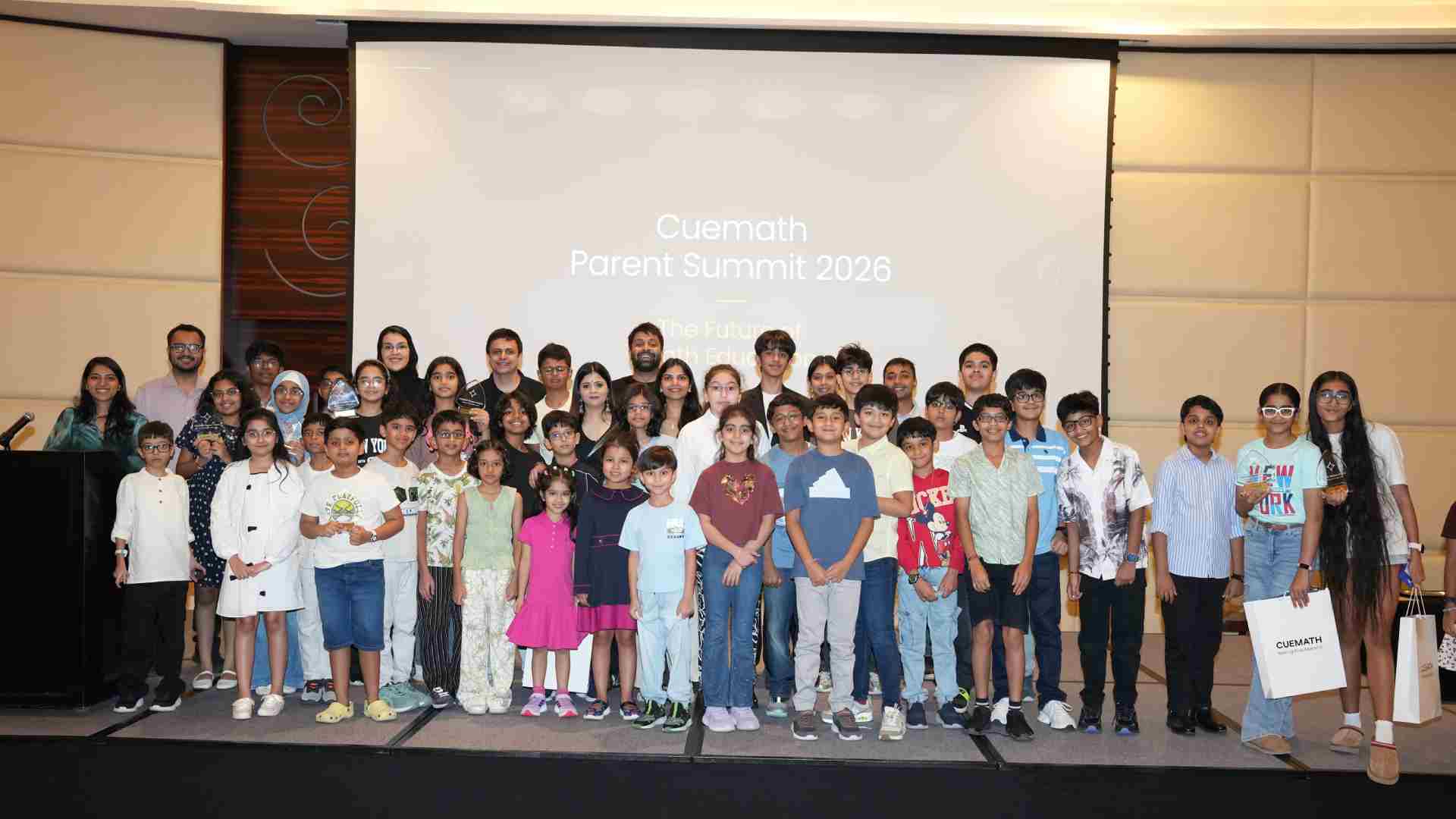
Cuemath recognised 100 UAE students for mathematics achievements at its Parent Summit 2026, themed “The Future of Math Education,” at The Westin Dubai Mina Seyahi Beach Resort & Marina. Students and parents celebrated annual achievements and explored mathematical capabilities for an AI-driven world.
Awards included 56 Distinctions in School Mathematics, 27 in National Competition and 17 in International Competition; 16 students received MathFit Rising Star special mentions for effort and progress.
Achievements spanned school examinations, national assessments, the UK Junior Mathematical Challenge, SOF International Mathematics Olympiad, Math Kangaroo, World Maths Championship and Germany’s Mathematik-Olympiade.
Grade 4 Revaan Birla ranked first worldwide in SOF’s Olympiad, reaching 99,499 registered schools across 72 countries. Grade 6 Maahi Batra secured national gold and first place at Germany’s Mathematik-Olympiade, competing in German despite it not being her first language. Grade 7 Hritika Somani secured two golds at the Mathematik-Olympiade in Frankfurt; Grade 4 Krishiv Binoi Nair won Math Kangaroo gold, among over six million participants across 90 countries.
Manan Khurma, Founder and CEO of Cuemath, said: “Parent Summit celebrates what we call being ‘MathFit’ — developing a child’s ability to reason, persevere, and feel genuinely at ease with numbers. True mathematical capability isn’t just about speed or memorisation; it is about building the mental stamina to tackle unfamiliar challenges with confidence.
“Seeing so many of our UAE students excel across school, national and global stages proves that when effort and curiosity are nurtured, mathematical potential is truly limit-free.”
Pooja Purohit, Cuemath tutor, said: “Online learning involves weeks of consistent, quiet focus from a child. The Parent Summit is meaningful because it brings that journey into the light. Hearing their name recognised in front of their families validates those hours of perseverance and builds a proud, confident mindset.”
Cuemath’s pre-event “Teach-It-Back” contest invited all summit participants to explain any maths concept in a two-minute video, emphasising teaching as a sign of being MathFit. Winners received AED 1,000 in cash prizes, announced at the summit.
“This event celebrated our students’ achievements and how engaging mathematics develops skills beyond the classroom. Seeing the enthusiasm of the students and the pride of their families was incredibly rewarding,” said Asma Mohamed, Partnerships & Community Engagement Manager, Cuemath Middle East.
Shalav Kumar, parent of Nevaeh Halder Kumar, who placed first among 67 students from KG to Grade 10, said: “It was wonderful to see an event that made math so engaging and hands-on for kids of every age — a truly well-organized experience that brought out the best in every young presenter.”
Nevaeh added: “It was so much fun teaching everyone about data and graphs — I can’t wait to be part of this contest next year!”
Tech News
Core42 Launches Partner Program to Expand Sovereign Enabled Cloud and AI Choice in the UAE

Core42, a G42 company specializing in sovereign enabled cloud and AI infrastructure, today announced the launch of the Core42 Partner Program giving independent software vendors (ISVs), technology partners, startups and resellers new ways to build and sell cloud and AI solutions in the UAE. The program launches with a network of more than 50 partners and is built on Core42’s established cloud environment, which currently supports more than 47 Abu Dhabi government entities.
Through the Technology Partner track, ISVs and startups can bring their solutions to Core42 Sovereign Enabled Public Cloud and build with Microsoft Azure services. Core42 Insight provides the data residency, governance, monitoring and security controls around those deployments, while Core42 teams work directly with partners on architecture, compliance documentation and taking the solution to market.
Through the Channel Partner track, resellers and solution providers can sell Core42 cloud and AI solutions to customers with specific data residency, control, security and compliance requirements. Core42 supports them with sales training, technical expertise and go-to-market support to help develop opportunities and grow their business.
“Government and regulated industries need greater choice in the cloud and AI solutions available to them, while retaining clarity over where their data sits, how their environment is governed and which controls apply to each workload,” said Ahmed Labib, VP Partnerships and Ecosystems, Core42. “The Core42 Partner Program brings more technology companies into our ecosystem and helps them build around those requirements. For customers, that means access to a broader range of solutions. For our partners, it creates new opportunities to build, sell and grow in the UAE.”
The launch strengthens Core42’s partner-first ecosystem model, which spans silicon leaders, hosting providers, ISVs, and model providers, and builds on the company’s strategic collaboration with Microsoft for sovereign cloud delivery. Core42 Sovereign Enabled Public Cloud combines Microsoft Azure services with UAE-specific data residency, governance, monitoring and security controls managed through Core42 Insight. Partners can design solutions around the requirements of a particular customer and the relevant workload classification.
The suitability of each solution depends on its workload classification, customer requirements and applicable regulatory framework. Core42 works with partners to identify the relevant technical and governance controls, while partners and customers remain responsible for obtaining any required regulatory or sector-specific approvals.
Joining the program takes three steps: partners apply, describing how they want to build or sell with Core42; onboard with the resources, training, and support they need; then launch solutions, register opportunities, and scale their business.
Tech News
MECSR hosts ‘Retail Congress MENA 2026’ as Industry leaders discuss AI and Retail’s Future
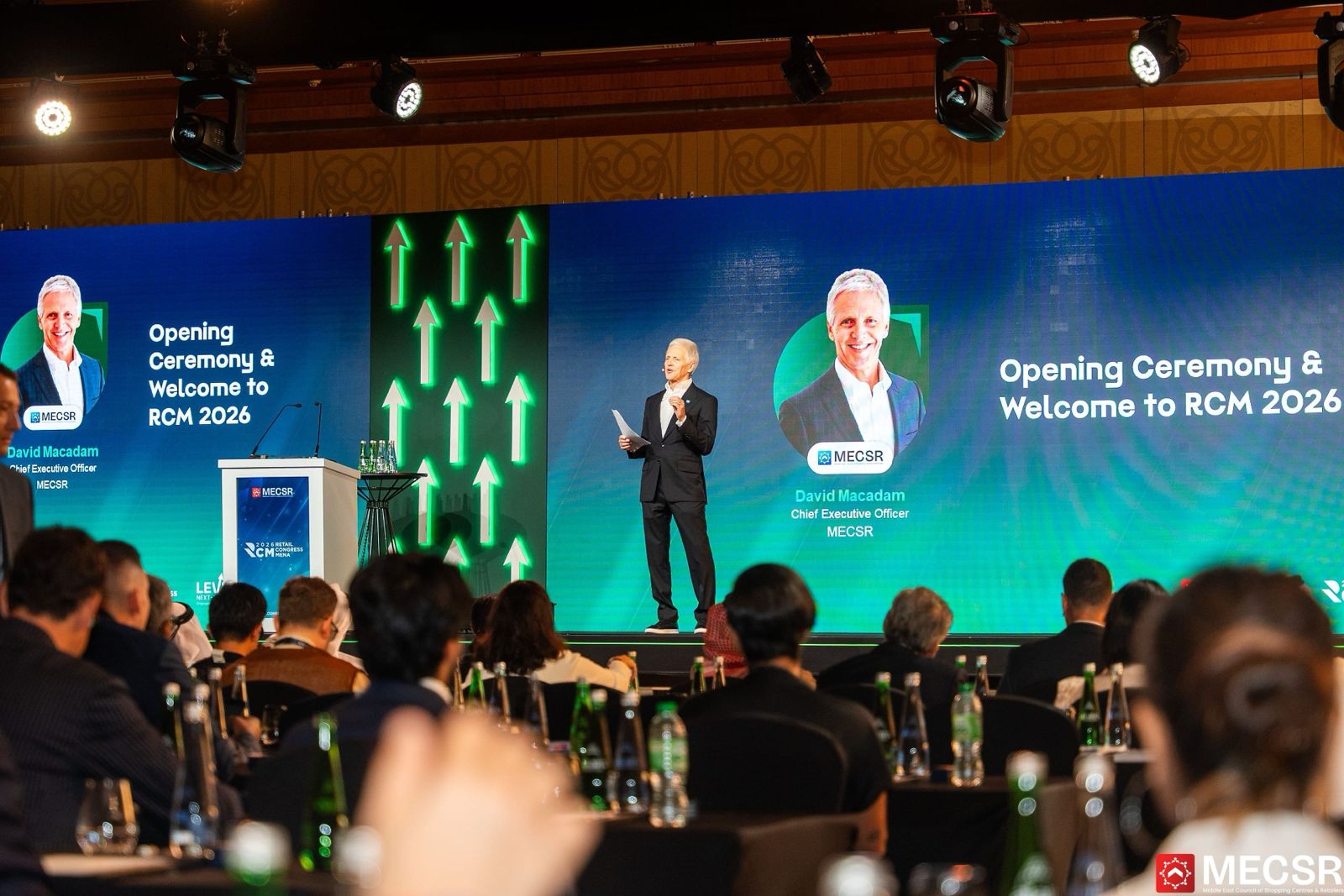
AI, leadership, the future of retail and Dubai’s Retail and Tourism Agenda took centre stage on day one of ‘Retail Congress MENA 2026’, as retail leaders, shopping centre and real estate professionals from the region gathered at Ritz-Carlton, DIFC, Dubai on Monday to exchange insights on the trends, challenges and opportunities shaping the next chapter of MENA’s retail industry.
The two-day congress, organized by the Middle East Council of Shopping Centres & Retailers (MECSR) is taking place on 5th-6th October under the theme ‘Level Up: Empowering Tomorrow’s Leaders Today’.
The opening featured a series of keynote sessions, panel discussion and thought-provoking industry conversations focused on leadership, innovation, technology and the evolving expectations of today’s consumers and their impact on the retail market.
The event began with the opening remarks by David Macadam, CEO, MECSR; Richard Dean, Master of Ceremonies followed by Dr. Younis Al Mulla, Chairman, MECSR and Ayman Alburti, Board President, MECSR; CEO, Azad Properties, MECSR / Azad Properties.
The event kicked off with an insightful session titled ‘Dubai’s Retail and Tourism Agenda: The View from the City’ featuring Mohammed Feras Arayqat, Vice President, Retail Calendar and Promotions, Dubai Festivals and Retail Establishment (DFRE).
Arayqat discussed how Dubai’s retail sector and tourism economy have evolved alongside each other over the past two decades, and how the city’s continued growth in visitors and residents demanding are influencing the way retail destinations are planned, leased and programmed. He also highlighted the role of Dubai’s retail calendar and major campaigns in driving footfall and shaping the city’s retail landscape in the years ahead.
Another key session ‘The Human Future: AI, Happiness and How We Will Live, Work and Gather’ by Mo Gawdat, Former Chief Business Officer, Google [X] and Founder, One Billion Happy in discussion with David Macadam, CEO, MECSR.
The conversations focussed on the growing impact of artificial intelligence on business, the workplace and human behaviour. Gawdat with Macadam outlined how AI could reshape the way people work, shop and interact. He emphasised the need for leaders to navigate technological change with a greater focus on people’s wellbeing and confidence. The also highlighted the growing importance of employee and consumer wellbeing as businesses adapt to rapid technological change.
In the next session ‘NEXT | Leading Through the New Realities’ featuring Alain Bejjani the author of NEXT | Leading Through the New Realities and former Chief Executive Officer of Majid Al Futtaim Holding, was in
conversation with Richard Dean, Master of Ceremonies. The discussion explored how the conditions that shaped the Gulf’s retail and real estate sector over the past two decades are changing. The speaker further examined what these shifts mean for regional leaders and operators and how leadership must evolve to respond to new market realities. He highlighted the importance of recognising change early and enabling organisations to remain decisive and adaptable as the business environment continues to shift.
Another insightful session was ‘Capital and Confidence: Navigating the Region’s Next Chapter ‘featuring Gogi George, Director, Asset Management, Lulu International Holdings Ltd accompanied by Shane Eldstrom, Chief Executive Officer, United Developers (Place Vendôme); Duaij Al Rumaihi, Chief Commercial Officer, Seef Properties; Richard Dean, Master of Ceremonies and Tarik Abdullah Alaklan, Director Of Luxury Accounts, Cenomi Centers.
The speakers discussed how regional owners and developers are assessing a changing market environment, including evolving approaches to risk and return. They shared their perspectives on the current operating landscape and how businesses are navigating market shifts while positioning themselves for the region’s next phase of growth.
‘Brand Retail in the Gulf: Sustaining Growth in a More Demanding Market’ featuring John Hadden, · Chief Executive Officer, Alshaya Group in conversation with David Macadam, CEO, MECSR was focussed on rising consumer expectation across the Gulf and the convergence of shopping and entertainment.
Hadden also outlined how physical and online retail are increasingly aligning and what the region must do to maintain its position as a leading centre for brand retail.
The event continued with ‘Right in the Heart: Reinventing a Legacy Mall for Modern Retail’ featuring Mary Del Dosso, Mall Director, BurJuman and Reef Malls, Al Ghurair Group in talk with David Macadam, CEO, MECSR. Del Dosso discussed the repositioning of BurJuman, one of Dubai’s landmark shopping centres, including its evolving tenant mix, food, community and brand decisions shaping its future.
Day one concluded with a key session ‘AI in Retail: Levelling Up the Operation’ held by Baiju Pappachan, Founder and Managing Director, Raffle_Tech & BUZ Marketing LLC; Nevzat Yavan, Chief Operating Officer, ESAS Properties and Hamdi Kulahcioglu, Senior Partner, Akerio in conversation with David Macadam, CEO, MECSR.
The session focused on the growing use of artificial intelligence across retail operations, from shopping centre platforms to pricing, customer engagement and relationship and brand management. The speakers share their
experiences of implementing AI, its impact on customers and teams, and the opportunities they see for further adoption.
Day two will open with “The Road to Jeddah,” featuring David Macadam, Ayman Alburti (Azad Properties) and Thamer AlAboud, Chairman of the Tourism and Culture Council at Jeddah Chamber, previewing MECSR’s Saudi expansion.
Further sessions include “The Leadership Conversation: What It Takes to Lead Retail at Scale,” featuring Nasser Alajmi (AWJ Real Estate), Neeraj Teckchandani, CEO of Apparel Group, and Nada Ghaoui Abousaab (FIKRA Consultants) as moderator.
“Betting Big on the Gulf: Brands, Markets and the Plans,” featuring Kapil Sethi (GMG) and Majid Algothmi (RED Malls/Azad Properties). “The Holy Cities Opportunity,” featuring Konrad Kolankiewicz (Knowledge Economic City) and Mohammad Iqbal Alawi (Alsarah Holding), with Nada Ghaoui Abousaab (FIKRA Consultants) as moderator and “The Operator’s Playbook: Unlocking the Full Potential of Every Asset,” featuring Jihad Dirani (Abdullah Al Othaim Investment Co); Khaled Abuhamdeh (Al-Futtaim Group); Khalid Aljanahi (Cenomi Centers) and Rony Mourani, CEO of Mall of Qatar, with Richard Dean as moderator.
The programme will close with “The Next Wave: Retail, Dining and Destinations Reshaping the Mall,” featuring Ahmad Alkashakri (Restaurants & Cafés Owners Association) and Todd Pilgreen (Gensler), with David Macadam as moderator, followed by his closing keynote address.
Exhibition and Awards
Alongside the conference, the Retail Congress MENA exhibition will showcase destination malls, retail concepts, real estate developments and specialist services. The programme also features the MECSR Shopping Centre & Retailer MENA Awards, recognising outstanding assets, initiatives and teams across the region.
The MECSR Awards 2026 finalists have been announced, recognising outstanding achievements across the region’s retail and shopping centre industry. For the full list of finalists, please click here MECSR_Awards_Finalists and to attend the Gala Awards, please register at retailcongress.me.
Strong Industry Support
Retail Congress MENA 2026 is supported by leading developers, retail organisations, technology companies and industry partners from across the region.
The event is supported by four Diamond Sponsors: Cenomi Centers, Unified Real Estate Development, Azad Properties | RED Malls, and Al Othaim Investment, alongside Platinum Sponsors Knowledge Economic City Co. and Red Sea Mall. Danah Real Estate and Dalma Mall are Gold Sponsors, while Yardi Systems and Champion Group are Silver Sponsors. MRI Real Estate Software, Giftstarr, BurJuman, Kingdom Centre, and Ground Control Entertainment are Bronze Sponsors.
The event also features Awwal Events and Amusement Services International LLC as Exhibitors. AI Solutions LLC, Chris G Studios, Crystal House Sharjah, Dhamani, Artex, Eleva AI, Fairplatz and Premagic are Support Partners, while Eye of Dubai, Eye of Riyadh, Experience Abu Dhabi and Yardstick Marketing are Media Partners.


UAE Ranks First Globally in Citizen Satisfaction with Government Digital Services at 89%, BCG Survey Finds

The Financial Sector Facing Its Black Swan: How AI Agents Are Redefining the Industry

100 UAE Students Recognised for Mathematics Achievements at Cuemath Parent Summit in Dubai



-
News11 years ago
SENDQUICK (TALARIAX) INTRODUCES SQOOPE – THE BREAKTHROUGH IN MOBILE MESSAGING
-

 Trending11 months ago
OPPO A6 Pro 5G Review: Reliable Daily Driver
-

 Tech News2 years ago
Denodo Bolsters Executive Team by Hiring Christophe Culine as its Chief Revenue Officer
-
 VAR1 year ago
Microsoft Launches New Surface Copilot+ PCs for Business
-

 Automotive2 years ago
AGMC Launches the RIDDARA RD6 High Performance Fully Electric 4×4 Pickup
-
 Tech News2 years ago
Toshiba Announces MG10-D Series of Enterprise HDDs with Capacities up to 10TB
-
Tech Interviews3 years ago
Navigating the Cybersecurity Landscape in Hybrid Work Environments
-

 Tech News1 year ago
Nothing Launches flagship Nothing Phone (3) and Headphone (1) in theme with the Iconic Museum of the Future in Dubai