
 Have a question? +971 56 404 0503




Tech Features
Cybersecurity in 2025: Trends, Challenges, and Opportunities


As technology evolves, so do the challenges businesses face in keeping their digital assets secure. Cyber threats are becoming more sophisticated, and companies must adopt smarter strategies to stay ahead. Looking ahead to 2025, several key trends are set to shape the cybersecurity landscape. These trends highlight the need for proactive measures, collaboration, and innovation.
1. The Growing Threat of Persistent Cyberattacks
Cyberattacks are no longer quick strikes. Today’s attackers aim to exhaust their targets with prolonged campaigns that evolve over time. A key example is Distributed Denial of Service (DDoS) attacks, where hackers continuously adapt their tactics, overwhelming organisations’ defences over days or even weeks.
Businesses must prepare by investing in systems that can adapt to changing threats and ensuring their teams are equipped to handle extended attacks without burnout.
2. Securing the Supply Chain
The supply chain remains a critical weak link in cybersecurity. High-profile breaches have shown how vulnerabilities in third-party systems can ripple across entire industries. Many organisations are now testing updates in phases rather than applying them broadly to minimise risks.
Building stronger relationships with suppliers and industry peers and implementing stricter controls can help prevent supply chain disruptions.
3. Unified Cybersecurity Platforms
Organisations are moving towards integrated cybersecurity platforms, where tools work together seamlessly. This approach simplifies operations, reduces costs, and ensures better protection.
However, businesses must ensure these platforms are compatible with their existing systems. The challenge lies in finding solutions that not only meet their needs but also enhance the effectiveness of the overall security framework.
4. Artificial Intelligence: Friend and Foe
AI is transforming cybersecurity on both sides of the equation. For defenders, AI-powered tools can analyse threats faster and predict potential risks. For example, AI can help identify unusual activity on a network and forecast future attacks.
However, attackers are also using AI to automate their methods, making their attacks more effective and harder to counter. Businesses must stay ahead by adopting AI tools that can detect and counter these advanced threats.
5. Cloud Security: A Growing Concern
Cloud computing offers flexibility, but it also introduces risks. Many businesses rely on cloud services without fully understanding the potential vulnerabilities. A failure in a major cloud service could disrupt operations for countless businesses, even those not hosted on the cloud directly.
To minimise risks, organisations should diversify their cloud providers, improve visibility into their cloud environments, and ensure critical systems have backups.
6. Preparing for State-Sponsored Cyberattacks
Geopolitical tensions are driving an increase in state-sponsored cyberattacks. These attacks often target critical infrastructure, creating significant disruptions.
Organisations should work closely with government bodies and security organisations to stay informed and coordinated. Sharing information and best practices across industries will be vital for defence.
7. Bridging the Cybersecurity Skills Gap
The cybersecurity skills gap continues to widen, with a shortage of experienced professionals. Many new hires focus on surface-level tasks without fully understanding the underlying systems they are protecting.
Companies must prioritise training programmes that give employees a deeper understanding of cybersecurity fundamentals. Investing in tools that simplify complex processes can also help make the most of limited resources.
8. The Risks of Over-Reliance on Technology
Many organisations rely heavily on technology without considering what happens if it fails. For instance, a disruption in a commonly used service, like cloud-based analytics tools, could create widespread problems.
To avoid such risks, businesses should plan for contingencies, such as using multiple service providers and ensuring their systems can operate independently if needed.
The Path Forward
Cybersecurity in 2025 will require businesses to think strategically and act proactively. Here’s how companies can prepare:
- Invest in Adaptability: Develop systems that can respond to evolving threats.
- Strengthen Collaboration: Work with industry peers and regulatory bodies to share insights and resources.
- Focus on Fundamentals: Train teams to understand and address root causes, not just surface-level issues.
- Diversify and Secure Infrastructure: Avoid over-reliance on single solutions and ensure redundancy where possible.
The future of cybersecurity is challenging, but it also offers opportunities for innovation. By staying informed and adaptable, businesses can protect their assets and thrive in an increasingly digital world.











Enterprise AI has entered a new phase. The conversation is no longer centred on whether organisations should invest in artificial intelligence, but on how they can transform that investment into measurable business value.
By: Mohammed Hilili – General Manager, Lenovo Gulf

Across the GCC, enterprises are moving beyond experimentation. Pilot projects are giving way to enterprise-wide deployments as organisations seek to integrate AI into customer experiences, business operations, software development, cybersecurity and decision-making. Yet despite growing investment, many AI initiatives continue to struggle to deliver the outcomes leadership teams expect.
In my experience, the reason is rarely the technology itself. More often, organisations begin with the wrong conversation.
Too many AI discussions start with infrastructure specifications, GPU availability or the latest foundation models. These are undoubtedly important decisions, but they are not the first ones organisations should make.
The first question is much simpler.
What business problem are we trying to solve?
Without a clear answer, AI initiatives often remain isolated demonstrations of technical capability rather than platforms capable of delivering sustainable business value.
From AI Pilots to Enterprise Platforms
Across industries, organisations have spent the past two years experimenting with generative AI. Many have successfully launched departmental pilots that demonstrate what AI can achieve within a controlled environment. The greater challenge now lies in scaling those experiments across the enterprise.
That transition requires far more than additional computing power. It demands clear governance, high-quality data, well-defined business objectives and an architecture capable of supporting continuous growth. Successful AI adoption is increasingly becoming an organisational transformation exercise rather than simply another technology deployment.
Business Strategy Before Infrastructure
I recently worked with a leading regional financial institution looking to strengthen its research and development capabilities through AI. The ambition was clear, but many practical questions remained unanswered.
How much computing capacity would the organisation require? Which GPU architecture would support both current and future workloads? How could the environment remain scalable as AI adoption expanded across the business?
These may appear to be technology questions. In reality, they are strategic business decisions with long-term operational consequences.
Instead of beginning with hardware selection, we started by understanding the organisation’s objectives. Together with the leadership team, we assessed AI readiness, identified priority business outcomes and defined what success would look like before discussing infrastructure.
Only after establishing that foundation did we determine the appropriate compute resources, architectural approach and deployment model required to support long-term growth.
The result was not simply a successful implementation but an AI platform capable of evolving alongside the organisation’s ambitions.
AI Readiness Extends Beyond Technology
Many organisations still view AI readiness primarily through the lens of infrastructure. In reality, readiness begins much earlier.
Leadership alignment, data quality, governance frameworks, cybersecurity, skills development and measurable business outcomes all influence whether an AI initiative succeeds or stalls. Infrastructure remains essential, but it should support strategy rather than define it.
The organisations achieving the strongest results are those treating AI as a long-term business capability rather than a series of disconnected technology projects.
Building for a Hybrid AI Future
Enterprise AI environments are also becoming increasingly hybrid. Certain workloads will remain on-premises to address latency, compliance or data sovereignty requirements, while others will leverage the scalability of public cloud environments.
This makes architectural flexibility increasingly important. Organisations need infrastructure strategies capable of supporting multiple deployment models while allowing AI workloads to evolve alongside changing business priorities.
Selecting technology is therefore no longer simply about purchasing hardware. It is about building an adaptable foundation capable of supporting continuous innovation over many years.
The GCC Opportunity
The GCC is uniquely positioned to accelerate enterprise AI adoption. Governments across the region continue investing heavily in digital transformation, sovereign AI capabilities and next-generation cloud infrastructure while strengthening regulatory frameworks around data governance and cybersecurity.
These investments provide organisations with an increasingly mature environment in which to deploy AI at scale. However, long-term success will depend less on access to technology than on the ability to align AI investments with clear operational priorities and measurable business outcomes.
As AI becomes embedded within core enterprise operations, leadership decisions made today will determine competitive advantage for years to come.
Why Clarity Still Comes Before Compute
Technology will continue evolving at remarkable speed. New AI models, specialised processors and deployment approaches will continue reshaping the enterprise landscape.
What will remain constant is the importance of making the right decisions before investing.
At Lenovo, this philosophy shapes how we work with customers. We believe AI is not simply a product to deploy, but an organisational capability that develops over time. By combining advisory expertise with infrastructure, lifecycle services and long-term planning, organisations can reduce uncertainty, optimise investment and build AI platforms that continue creating value as business needs evolve.
The organisations that lead in the AI era will not necessarily be those with the largest AI budgets or the most powerful infrastructure. They will be those that begin with business clarity, build the right foundations and scale with purpose.
Because in enterprise AI, infrastructure enables transformation—but clarity makes it possible.

BY: Owais Mohammed, Regional Lead & Sales Director at WD for the Middle East, Africa, Turkey, and the Indian Subcontinent
The UAE’s ambition to become a global AI powerhouse is well established. Government investment is flowing, infrastructure is scaling, and organisations across every sector are accelerating their AI programs. But beneath the strategic announcements and the technology deployments, a fundamental question goes unanswered: is the data storage infrastructure underpinning all this built for what comes next?
For many organisations, the honest answer is: not yet. Storage is rarely the first conversation in an AI strategy discussion. It tends to be treated as a commodity decision made late in the planning cycle, long after the headline architecture choices like GPUs/CPUs have been made. That approach made sense in simpler times, but not in today’s data-driven AI economy.
The scale of what is coming
To understand why, organisations need to understand the sheer data volume that is coming their way. Global data creation is forecast to rise to 718.5 Zettabytes (ZB) through 2030 (IDC source: Market Forecast: IDC Global DataSphere Forecast, 2026-2030, June 2026, Doc #US53425426), more than tripling in five years.
AI is both a driver and a consumer of this growth. Every model trained, every inference run, every data pipeline operating continuously across a distributed architecture is generating and demanding access to data at a scale that earlier generations of infrastructure were not designed to support.
Businesses that will absorb this growth successfully are not those with the fastest individual components. They are those with architectures designed to handle volume, variety, and velocity simultaneously, at a cost that remains economically sustainable as scale increases. That is the storage strategy challenge that needs to be addressed upfront and not as an afterthought.
Why a single technology cannot solve it
A common mistake is to frame the storage decision as a technology choice: SSDs versus HDDs, flash versus spinning disk, performance versus capacity. The world’s most sophisticated storage operators, including hyperscalers and major cloud service providers, have already moved past this framing. They do not choose one technology. They deploy multiple of them, in a tiered architecture that places data on the medium best suited to its requirements.
The logic is straightforward. SSDs deliver the high IOPS and low latency that real-time, performance-critical applications demand. HDDs provide the massive capacity and cost efficiency required for the vast middle tier of active and warm data, and currently continue to represent approximately 63% of worldwide installed storage capacity through 2030. Tape generally handles archival, regulatory, and compliance workloads where retrieval times of hours or days are acceptable, representing just under 8% of worldwide installed cloud storage capacity in 2025.
These are not competing technologies. They are complementary ones, each serving a distinct purpose within a coherent architecture. The question is how each is deployed where it delivers the greatest value.
Making tiered architectures work in practice
Knowing that tiered storage is the right model and implementing it effectively are two different things. At the scale hyperscalers operate, where storage volumes are measured in hundreds of exabytes, manual allocation of data across tiers is neither practical nor efficient. Nor can all data live on cost prohibitive flash. The mechanism that makes tiered architecture manageable is software-defined storage (SDS), which pools resources centrally and provisions capacity dynamically based on demand. Rather than pre-allocating fixed capacity to individual applications, SDS responds to where data needs to be, improving overall utilisation and reducing waste.
Together, tiered architecture and SDS provide the flexibility and economic efficiency that hyperscale environments depend on. But this model is not the exclusive preserve of the world’s largest operators. For emerging infrastructure providers, including Neoclouds that are expanding rapidly across the region, the same principles apply. Architecture decisions made today will determine whether future growth is economically sustainable or structurally constrained. The window to get this right is earlier than many organisations assume.
Innovation at the storage level
Architectural thinking also changes how storage technology itself must evolve. An organisation that understands its workloads, plans for data growth, and builds tiered infrastructure will eventually reach the limits of what current storage innovations can deliver. That is why, manufacturers like WD are approaching HDDs not only as a mature, reliable product but as a technology with significant headroom remaining to help increase capacity, lower power and cost effectively scale AI data. They are advancing recording technologies, exploring novel materials, and embedding intelligence at the drive level. The aim is not incremental improvement. It is expanding the boundary of what high-capacity storage can deliver for the architectures customers are building today and the workloads they will run tomorrow.
The leadership dimension
The organisations that navigate the AI era most effectively will not be those that simply procure the latest hardware. It will be those that understand the architectural decisions that determine long-term performance, cost and scale, ask better questions earlier in the planning process, and treat storage infrastructure strategy as a source of competitive advantage rather than a procurement exercise.
Storage sits at the foundation of every AI workload, every data pipeline, and every digital service an organisation delivers. Getting the architecture right is not a technical detail. It is a leadership decision. And in a market moving as quickly as the UAE’s, it is one that deserves to be made with the same rigour and strategic intent as any other.

Every year, Emirati Women’s Day offers a moment to pause and reflect on just how far Emirati women have come, and how much further their ambitions are taking them. Across artificial intelligence and technology, entrepreneurship, sustainability, industry and beyond, Emirati women are no longer simply entering these spaces, they are shaping them, leading critical decisions and setting new benchmarks for what is possible.
This progress has not happened by chance. It is the result of a national vision that has consistently placed women’s empowerment at the heart of the UAE’s development, widely regarded as the driving force behind the advancement of Emirati women. Together, these efforts have built an ecosystem of mentorship, opportunity and structural support that allows Emirati women to move beyond simply having a seat at the table to actively influencing the direction of entire industries.
This Emirati Women’s Day, we spoke to three Emirati women who are doing exactly that, each carving out space in fields as varied as AI infrastructure, entrepreneurship and industrial sustainability. Their stories reflect not only how far the journey has come, but also a shared sense of responsibility: to keep the doors open, and to inspire the next generation of Emirati women to walk through them with confidence.
Amal Almaamari, Program Director at Core42, (a G42 Company)
The UAE has created an environment where women are encouraged to pursue ambitious careers, take on meaningful responsibilities and contribute to sectors that are shaping the country’s future. As an Emirati woman working in AI, I see this opportunity firsthand. At Core42, I am able to contribute to the infrastructure and capabilities helping organizations adopt AI securely, at scale and with greater control over their data and technology.
What is particularly inspiring is seeing Emirati women increasingly take on roles across engineering, product development, strategy and leadership. The opportunities available today allow us not only to participate in the technology sector, but to build expertise, influence decisions and contribute to the UAE’s ambitions in AI and advanced technology.
Emirati Women’s Day is a celebration of that progress and the confidence the UAE continues to place in its women. It also reminds us of our responsibility to build on these opportunities and inspire the next generation of Emirati women to see technology as a field where they can grow, lead and make a lasting impact.
Amreen Iqbal, Founder and Creative Director of Piece of You
What stands out to me about building a business here is how much the UAE actively invests in women being part of its growth story. From mentorship networks to platforms that put Emirati entrepreneurs in front of the right audiences, the opportunities aren’t hypothetical, they’re structural. Piece of You exists because I had the confidence and support to take an idea and turn it into something real. On Emirati Women’s Day, I think about how many doors have opened for women in my generation that weren’t open before, and how many more are opening for the next one.
Hamda Al Shamsi, Admin Assistant at Geocycle Waste Recycling UAE at Holcim UAE
The UAE has created an environment where women are empowered to pursue their ambitions, develop their skills, and contribute meaningfully across every sector. Today, Emirati women are building careers in fields ranging from technology and engineering to sustainability, manufacturing, energy, and leadership.
As an Emirati woman and the only woman currently working at Geocycle UAE, I have personally experienced the importance of having the opportunity to step into a technical and industrial field and prove that there is a place for women in every sector.
For me, Emirati Women’s Day is a celebration of how far we have come, but also a reminder of the opportunities ahead. The support and vision of the UAE leadership, together with the efforts of Her Highness Sheikha Fatima bint Mubarak, have helped create a generation of Emirati women who are confident to pursue their goals and make a difference. I believe the next step is to continue encouraging young Emirati women to explore fields they may not traditionally consider. When women are given the opportunity to learn, lead, and contribute, they do not only build successful careers — they help build a stronger and more sustainable future for the UAE.


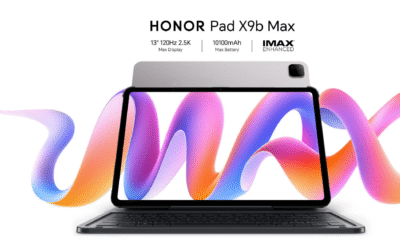
HONOR Pad X9b Max Review: When a Tablet Starts Challenging Your Laptop
Home Centre celebrates Emirati Women’s Day with Made By Her, a campaign spotlighting homegrown talent
Delinea Brings Runtime Control for AI Agents to GISEC Global 2026



-
News11 years ago
SENDQUICK (TALARIAX) INTRODUCES SQOOPE – THE BREAKTHROUGH IN MOBILE MESSAGING
-

 Trending10 months ago
OPPO A6 Pro 5G Review: Reliable Daily Driver
-

 Tech News2 years ago
Denodo Bolsters Executive Team by Hiring Christophe Culine as its Chief Revenue Officer
-
 VAR1 year ago
Microsoft Launches New Surface Copilot+ PCs for Business
-

 Automotive2 years ago
AGMC Launches the RIDDARA RD6 High Performance Fully Electric 4×4 Pickup
-
Tech Interviews2 years ago
Navigating the Cybersecurity Landscape in Hybrid Work Environments
-

 Tech News1 year ago
Nothing Launches flagship Nothing Phone (3) and Headphone (1) in theme with the Iconic Museum of the Future in Dubai
-

 VAR2 years ago
Samsung Galaxy Z Fold6 vs Google Pixel 9 Pro Fold: Clash Of The Folding Phenoms