
 Have a question? +971 56 404 0503




Uncategorized
ABU DHABI, WHERE THE WORLD UNITED FOR PATIENT SAFETY

At the 2nd International Forum of Pharmaceutical Inspectorates (IFPI), held on November 24–25 at the Marriott Hotel Downtown Abu Dhabi, global regulatory authorities and pharmaceutical industry leaders reaffirmed a shared commitment to ensuring safe, effective medicines worldwide. Co-chaired for the second year by the Russian Federation, the Forum drew representatives from more than 50 countries. With medicines often manufactured in one country, packaged in another, and prescribed in a third, the Forum stressed that shared standards and transparent dialogue remain essential to global patient safety.
The program opened with high-level plenary sessions attended by heads of representatives of the regulatory authorities and experts from Russia, the UAE, France, Serbia, India, Singapore, Indonesia, Myanmar, the US, Cuba, Chile, Jordan, Egypt, Turkey, Armenia, Belarus, Kyrgyzstan, Afghanistan, Pakistan, Ecuador, and others, and African nations participating in the African Medicines Regulatory Harmonization (AMRH) initiative. Subsequent sessions focused on GMP regulatory challenges, the harmonization of pharmaceutical production requirements, and approaches to mutual recognition of GMP inspection results. Delegates also examined inspection mechanisms for biological products and strategies to improve access to modern medicines across different health systems.
Shared mission: patient safety above all: “Cooperation between regulatory authorities increases the availability of high-quality, safe, and effective medicines while improving transparency,” said Vladislav Shestakov, Co-Chair of the Organizing Committee and Director of the State Institute of Drugs and Good Practices (SID & GP). “Quality is not merely about inspections and reports—it begins with the mindset of its creators. Like classical music, achieving a pure sound requires professional instruments and fine-tuning.” For the second consecutive year, Russia served as Co-Chair of the Forum’s Organizing Committee. The representative of the UAE, Dr. Shaikha Al Mazrouei, Director of Reference National Laboratory, Drug Department, Emirates Drug Establishment, stressed that countries that strive to ensure the modern level of quality of medicines and their accessibility to patients, as well as to develop their own R&D-based pharmaceutical industry, are convinced of the efforts to deepen the harmonization process. “Today, we are discussing how regulatory harmonization can help ensure that medicines are available to patients in our countries on faster and safer pathways. And, of course, the GxP practice system is the most important part, the core of the entire process. Closer integration into global regulatory processes and the development of digital healthcare are the tools that ensure the success of this movement. In this regard, the Forum provides an important chance for the entire GMP community to gather and discuss the challenges that we face and how we can help each other overcome them.”
Collaborate: This year’s Forum brought together GMP authorities, business leaders, and technical experts to enhance transparency, support regulatory convergence, and strengthen global GMP oversight. The message—collaborate—resonated throughout keynotes and panel discussions, underscoring that interconnected health systems require unified regulatory approaches. As biotechnology advances, global supply chains expand, and AI reshapes healthcare, regulators must work together to safeguard the quality and safety of medicines. Participants included officials and regulators from about 50 countries—among them Jordan, Cuba, Indonesia, the UK, the US, China, India, Italy, Belgium, Denmark, Serbia, Mongolia, and Turkey—alongside pharmaceutical manufacturers and international experts.
Key themes and high-level discussions: The Forum addressed critical areas shaping the global
pharmaceutical landscape, including:
● Harmonization of pharmaceutical manufacturing regulations and movement toward unified quality standards
● Access to modern medicines across diverse healthcare systems
● Regulatory trust, reliance, and mutual recognition of GMP inspections
● Inspection approaches for biological medicinal products and mechanisms for information exchange
Dmitry Galkin, Director of the Department for the Development of the Pharmaceutical and Medical Industry at the Ministry of Industry and Trade of the Russian Federation and Head of the Russian GMP Inspectorate, noted that the global regulatory environment is undergoing rapid transformation. With innovations—from gene therapy to antibody-based drugs—emerging at unprecedented speed, regulatory systems must adapt continuously. “A new architecture of global pharmaceutical regulation is taking shape, where mutual recognition of inspections, data exchange, and comparable quality standards become key elements,” he said.
A space to learn, exchange, and evolve: Alongside high-level discussions, delegates participated in workshops and case-based sessions to strengthen technical expertise and inspection competencies. The Forum served as a space for shared learning and practical problem-solving. Participation by the Russian Ministry of Industry and Trade and the State Institute of Drugs and Good Practices underscored ongoing efforts to integrate with the global GMP community. The Forum aspires to continue to serve as a key platform for shaping a unified GMP agenda, reinforcing professional trust, and coordinating regulatory initiatives.
Contributions from leaders such as Dr. Olga Lidia Jacobo Casanueva, Director of Cuba’s Center for State Control of Medicines, further highlighted the value of international cooperation. “The IFPI Forum demonstrates how global collaboration can substantially strengthen regulatory systems and elevate the quality, consistency, and integrity of GMP inspections worldwide. This platform allows us to share experiences openly, learn from one another, and build confidence among inspectorates—an essential foundation for safeguarding public health across borders. ASEAN is committed to contributing actively to this shared vision. Through harmonized standards, capacity building, and a science-based inspection approach, we aspire to become a trusted regulatory partner in the global pharmaceutical ecosystem. Indonesia is proud to support these efforts, ensuring that our collective work ultimately leads to improved access to safe, effective, and high-quality medicines for patients everywhere,” said Prof. Dr. Taruna Ikrar, M.Biomed., Ph.D., Head of the Indonesian FDA (BPOM).
Looking ahead: Across the two days, one message stood out: progress in pharma begins with people—those who inspect, regulate, innovate, and ask, “Can we do this better?” The discussions set the stage for ongoing collaboration and the return of a more robust next edition.

Authored by Michael Smirnow, Chief Investment Officer, Arabian Capital Gulf
With the dirham pegged to the US dollar and UAE investors exposed to global markets, decisions made by the Federal Reserve and the US government can influence local borrowing costs, liquidity, and investment sentiment. Michael Smirnow, Chief Investment Officer, Arabian Capital Gulf After the global financial crisis, U.S. authorities tried to stimulate the economy primarily through monetary measures: the Federal Reserve cut interest rates to zero and launched quantitative easing (QE) for the first time, purchasing assets to provide market participants with liquidity.
As a result, the Fed’s balance sheet grew to USD 8 trillion by 2021. However, between 2008 and 2020, the U.S. economy did not experience rapid growth, and inflation regularly remained below the target level. Everything changed in 2020, when the government entered the stimulus fray for the first time in many years. While the Fed’s accommodative monetary policy primarily helped large banks and market participants, at the onset of the pandemic the U.S. government began distributing money to households and increasing budget expenditure across nearly all areas.
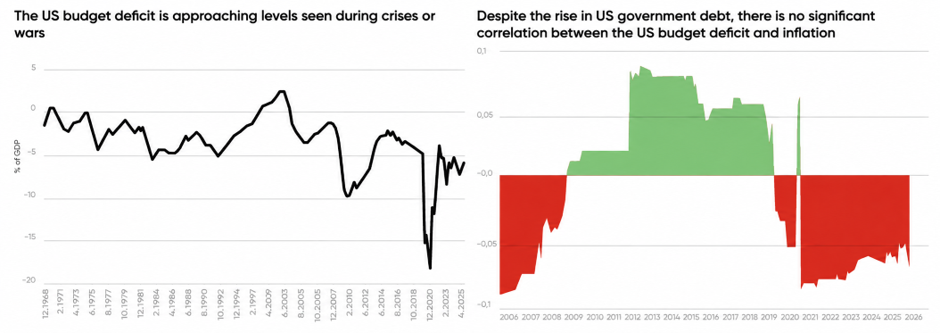
Compared with monetary measures, these fiscal stimulus measures proved to be a significantly more powerful tool for stimulating the economy; however, they increased government debt by the aforementioned 61%. Against this backdrop, we expect the next few years to be shaped primarily by fiscal stimulus, with government action, rather than the Federal Reserve, becoming the key factor for investors. Indeed, while the private sector ran large deficits before 2008, the deficit now lies with the government, while private-sector indebtedness is declining. In the years following the pandemic, the largest government deficits coincided with the strongest growth in financial markets. This is unsurprising, since a public-sector deficit becomes private-sector income. This dynamic enabled the U.S. economy to remain resilient in 2023-2024 despite the Fed’s record pace of interest-rate increases. Whichever U.S. political party is in power will continue along this path; Trump is also doing the same through legislation known as the “Big Beautiful Bill.”
As long as inflation in the United States remains under control, this race will continue. The current balance between monetary and fiscal stimulus vividly illustrates this argument. On the one hand, the U.S. Federal Reserve is adopting an increasingly neutral stance and is clearly in no hurry to cut interest rates or introduce new stimulus programmes. On the other hand, the Treasury is entering the fray: as yields on long-term U.S. bonds confidently exceed 5%, the Treasury has launched a program to buy back its long-term debt. In effect, this gives the bond market the same kind of stimulus the Fed previously delivered.
Thus, the balance of power is changing, but the direction remains the same: the United States still needs accommodative monetary conditions. If these are not achieved through monetary measures, they will be achieved through fiscal ones.
(Arabian Gulf Capital (AGC) holds a Category-1 Investment Firm license issued by the Central Bank of Bahrain and provides tailored investment solutions to individual, corporate, and institutional clients.)
Uncategorized
EYWA Way of Water to be EMFIS® Certified for Low-Electromagnetic Environment in Dubai’s Business Bay

Step into a bedroom at EYWA Way of Water and you will feel like entering a sanctuary. The invisible electromagnetic hum that fills every modern home has been filtered out. This allows the body to recover and improve residents’ longevity. Engineered quiet for the nervous system: This is the EMFIS® Certification quality seal, which will be granted to this waterfront residential development on the Dubai Water Canal in Business Bay. The project is targeting EMFIS® certification as part of a wider suite of international wellness benchmarks that includes LEED Platinum, WELL Platinum, and WiredScore Platinum.
The appointment builds on EMFIS’s earlier certification of EYWA – Tree of Life, which established the partnership between the two organisations and made EYWA one of the region’s first residential developments to certify electromagnetic hygiene as a measurable, independently verified building standard. At EYWA Way of Water, EMFIS® is applying the same methodology at greater scale across approximately 65 ultra-luxury residences spanning 2– to 5-bedroom apartments, duplexes, and a penthouse, designed by OAD (Zane Tetere-Sulce) with John R Harris as consultant. Delivery is expected around 2028.
At EYWA Way of Water, EMFIS® will pay particular attention to bedrooms, and verifying that shielding and infrastructure choices keep exposure within the bounds EMFIS® considers appropriate for long-term occupancy. All while preserving the aesthetics of the spaces. Where integrated at the design phase, as is the case at EYWA Way of Water, EMFIS’s approach has achieved reductions of up to 98.7% in low-frequency electric fields and 81.8% in high-frequency electromagnetic fields that are verified through independent third-party testing. That’s the difference between a room full of EMF pollution and one fit for a retreat.
Electromagnetic exposure remains the one dimension of indoor environmental quality that most healthy-building frameworks have yet to address. Modern buildings generate a continuous electromagnetic environment from internal wiring, Wi-Fi networks, smart systems, and external 5G infrastructure, operating around the clock regardless of occupancy. The World Health Organization classifies radiofrequency electromagnetic fields as possibly carcinogenic, and mounting regulatory action in Europe, including France banning Wi-Fi in daycare centres and Switzerland writing precautionary EMF limits for schools and hospitals into national law, reflects growing institutional recognition of the issue.
The Global Wellness Institute values the global wellness real estate market at $876 billion, on a trajectory to $1.8 trillion by 2030. In the UAE, the sector has grown from $3.3 billion in 2017 to $14.6 billion in 2025, expanding at 21% annually, making it one of the fastest-growing real estate categories in the region. Wellness-focused properties already command a price premium of 10 to 25% over conventional equivalents. EMFIS’s own benchmarked data across certified projects shows low-EMF certification specifically delivering an average added value of approximately 14%, reflecting a market that increasingly distinguishes between properties that carry a wellness label and those that can demonstrate independently verified wellness standards.
Federico Marangoni, Founder and CEO of EMFIS® commented “Green building told us how a building treats the world outside it. The next question – the one EYWA Way of Water is helping answer – is what a building does to the people inside it over the course of a lifetime. Electromagnetic pollution is the dimension of the indoor environment the industry has not yet had the tools to measure and certify. That is exactly the gap EMFIS® closes, and EYWA Way of Water is one of the clearest examples in the region of a developer addressing it at design phase, where it makes the most difference. EYWA Way of Water is pitched to offer the quietest square meters in Dubai.”
Mariska Stoffel, Director of Design & Development at R.Evolution commented, “Architecture is becoming much more sophisticated in how it responds to human wellbeing. When people spend around 90% of their time indoors, we are shaping the environment where much of daily life happens. That means looking beyond aesthetics to the invisible conditions created by the building itself. Sleep and recovery are a key part of that, which is why EMFIS® provides an important benchmark for how we address electromagnetic exposure. At EYWA Way of Water, we are designing for people who take a long-term view of both capital and personal wellbeing, while creating healthier, more considered living environments in an increasingly connected world.”
Shailesh Bhandari, Director, John R Harris commented “At John R Harris & Partners, sustainability is embedded in our thinking from the first line of a project. EYWA Way of Water extends that principle into territory the industry is only beginning to navigate seriously: the electromagnetic environment that residents live within every day. Partnering with EMFIS® reflects our belief that truly well-crafted spaces actively support the health and longevity of those who inhabit them.”
EMFIS® has certified projects across eight countries in Europe and the Middle East and operates a GCC showroom in the UAE. Founded on research conducted at EPFL (École Polytechnique Fédérale de Lausanne) and recognised by Switzerland’s national standardisation body, a member of ISO, it is currently the only organisation in the world dedicated specifically to measuring, certifying, and managing electromagnetic exposure within the built environment. The appointment of EMFIS® to EYWA Way of Water is part of a growing pipeline of UAE and GCC projects in which electromagnetic environment certification is being integrated from the earliest stages of design, rather than treated as a post-occupancy consideration.
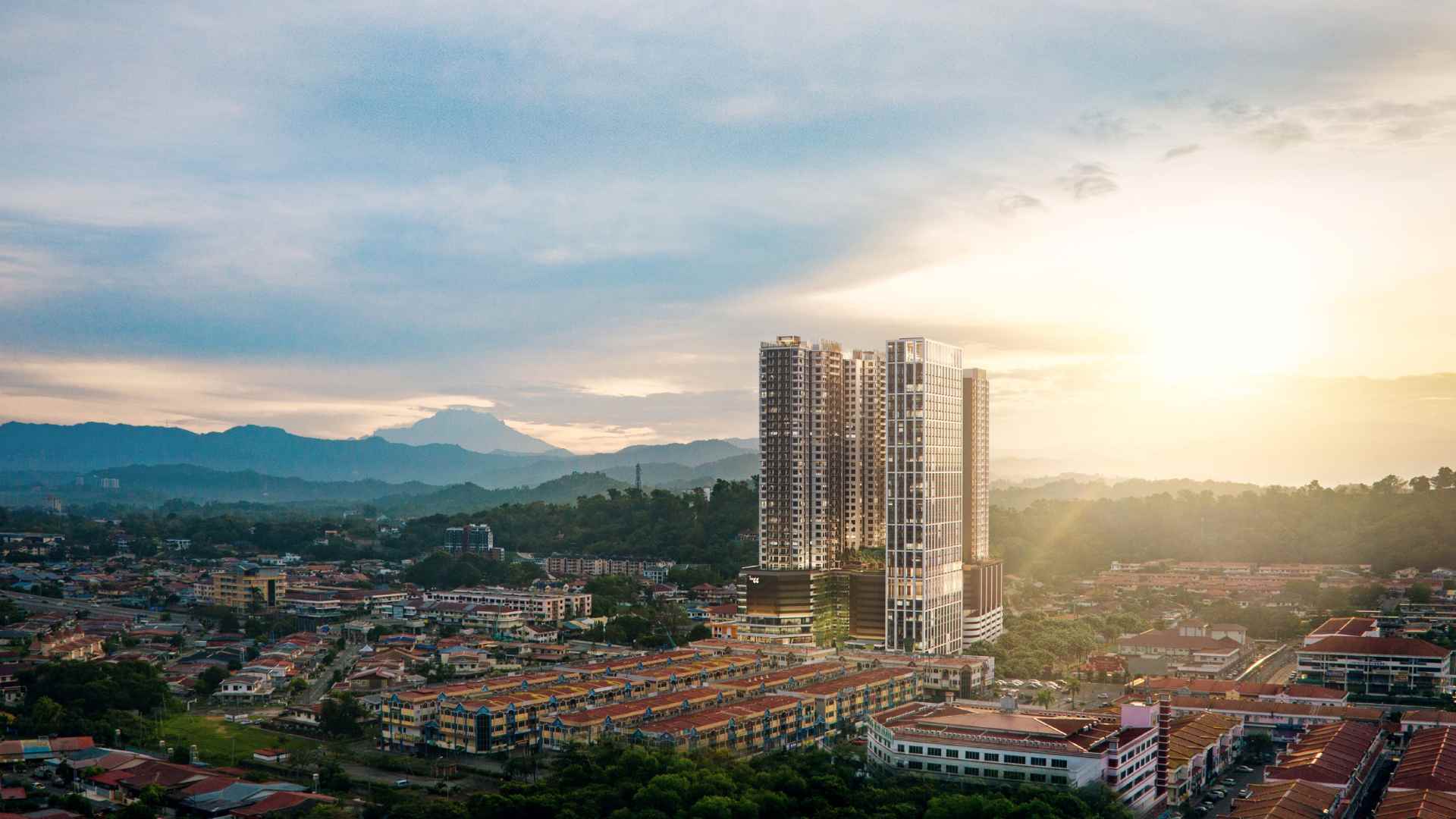
Minor Hotels, a leading global hotel owner and operator, has announced Avani Kota Kinabalu, a 352-key premium lifestyle hotel set to open in Q1 2027. Forming part of The Logg Luyang integrated development by KTI Landmark, the property will introduce the Avani brand to Sabah and expand Minor Hotels’ presence in Malaysia.
Avani Kota Kinabalu will cater to leisure and corporate demand in Kota Kinabalu, one of East Malaysia’s principal commercial centres and a key gateway to Borneo. Approximately 10 minutes from Kota Kinabalu International Airport, the hotel will provide access to the city’s business districts, residential neighbourhoods and visitor attractions.
The announcement supports Minor Hotels’ strategy of expanding its lifestyle portfolio in destinations with growing domestic, regional and international demand. Avani Kota Kinabalu will also strengthen the group’s presence in Malaysia, joining Anantara Desaru Coast Resort & Villas in Johor, as it continues to pursue development opportunities across Asia.
Developed by KTI Landmark, The Logg Luyang will bring together hospitality, commercial and lifestyle components within the established Luyang neighbourhood. Avani Kota Kinabalu will serve as the development’s hospitality anchor, offering accommodation, dining, wellness and event facilities for hotel guests and the local community.
“Kota Kinabalu is evolving rapidly as a regional business and tourism hub, creating strong demand for a hotel that can move easily between corporate, leisure and social use,” said Winston Gong, General Manager of Avani Kota Kinabalu. “Our focus will be on delivering an efficient, locally relevant guest experience while building a property with genuine appeal to the city’s residents.”
Designed by Shah Architect, with landscape architecture by SD2 and interiors by INdulge, Avani Kota Kinabalu will feature 352 rooms tailored to business trips, short breaks and longer stays.
Avani Kota Kinabalu will feature five dining and social venues for hotel guests and the local community. The all-day dining restaurant will serve Sabahan, Malaysian, Korean and international cuisine, with live cooking stations, local specialities and a signature Avani Sunday Lunch. A contemporary Chinese restaurant will focus on Sabah Hakka heritage and regional flavours, while the Lobby Lounge will transition from a daytime meeting space into an evening venue serving afternoon tea, as well as cocktails and whiskies.
The Pantry will offer handcrafted bakery items, desserts and premium coffee for dining in or takeaway. On the rooftop, SEEN Restaurant & Bar will bring the established rooftop dining and nightlife concept to Sabah through globally inspired cuisine, mixology, curated music and destination-led experiences.
The hotel will also include dedicated meeting and banquet facilities for conferences, weddings and social events. Leisure facilities will include an infinity pool and AvaniFit gym, with nearby Tun Fuad Stephens Park offering access to outdoor recreation.
Avani Kota Kinabalu will combine accommodation, rooftop dining, wellness and event facilities within a major integrated development, strengthening Minor Hotels’ lifestyle offering in Malaysia and supporting the group’s continued expansion across Asia.

DO FISCAL STIMULUS MEASURES SUPPORT THE US MARKET GROWTH, AND IS A DEFAULT POSSIBLE?
DO FISCAL STIMULUS MEASURES SUPPORT THE US MARKET GROWTH, AND IS A DEFAULT POSSIBLE?

Zeekr UAE and AWR Automotive Unveil Redesigned Flagship Showroom on Sheikh Zayed Road in Dubai



-
News11 years ago
SENDQUICK (TALARIAX) INTRODUCES SQOOPE – THE BREAKTHROUGH IN MOBILE MESSAGING
-

 Trending11 months ago
OPPO A6 Pro 5G Review: Reliable Daily Driver
-

 Tech News2 years ago
Denodo Bolsters Executive Team by Hiring Christophe Culine as its Chief Revenue Officer
-
 VAR1 year ago
Microsoft Launches New Surface Copilot+ PCs for Business
-

 Automotive2 years ago
AGMC Launches the RIDDARA RD6 High Performance Fully Electric 4×4 Pickup
-
Tech Interviews2 years ago
Navigating the Cybersecurity Landscape in Hybrid Work Environments
-

 Tech News1 year ago
Nothing Launches flagship Nothing Phone (3) and Headphone (1) in theme with the Iconic Museum of the Future in Dubai
-

 VAR2 years ago
Samsung Galaxy Z Fold6 vs Google Pixel 9 Pro Fold: Clash Of The Folding Phenoms