
 Have a question? +971 56 404 0503




Tech Interviews
ARCERA Accelerates Life Sciences Growth in Middle East

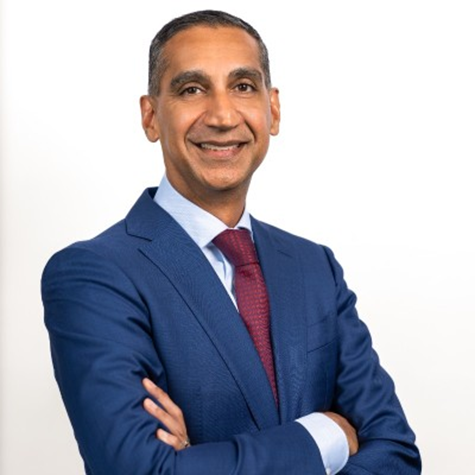
Exclusive interview with Sunil Bhilotra, Chief Investment Officer, Arcera
Why is life sciences emerging as a priority asset class in the Middle East?
Life sciences is becoming a priority asset class because it sits at the intersection of healthcare resilience, industrial development and long-term economic value creation. Across the Middle East, governments are looking beyond healthcare delivery alone and asking how they can build deeper capability in clinical research and development, and manufacturing of innovative medicines. That shift is being driven by rising prevalence of acute and chronic diseases, greater focus on medicine security, and the need to reduce exposure to global supply disruptions.
From an investment perspective, the sector has attractive fundamentals. Demand is structural, the region’s population needs are evolving, and governments are creating the policy conditions for long-term growth. The UAE’s focus on genomics, pharmaceutical manufacturing and innovation is one example of how life sciences is becoming part of the wider economic diversification agenda.
Arcera was established within this context. By bringing a number of life sciences companies including Acino, M8 Pharmaceuticals and Amoun Pharmaceutical Company together under one company headquartered in Abu Dhabi, we have formed an integrated platform that employs more than 6,000 people across 90 markets, with a META footprint spanning 13 countries and more than 500 commercial colleagues on the ground. This reflects a broader regional shift toward building globally competitive life sciences platforms that combine strategic healthcare priorities with sustainable growth.
How is Arcera’s investment strategy driving resilience and long-term returns?
Our investment strategy is focused on building the conditions for durable long-term growth: scale, control, and relevance. By bringing complementary businesses together under one Abu Dhabi-headquartered platform, Arcera has created a stronger base from which to manage supply continuity, expand market reach, and invest with a longer horizon than a standalone pharmaceutical company could typically support.
That resilience is also what strengthens the return profile. We are not relying on one product, one market, or one growth lever. Our strategy combines an established portfolio with targeted investment in priority therapeutic areas, manufacturing capability, partnerships, M&A, and in-licensing. This gives the business a balanced model that enables stable revenue today, with room to capture future growth in areas where regional demand and global innovation are moving quickly.
Healthcare demand is structural, but returns depend on execution, access, and the ability to operate reliably across business and economic cycles. At Arcera, our strategy is designed around those fundamentals. It builds a platform that can absorb disruption, support national healthcare resilience, and create long-term value by connecting Abu Dhabi’s patient capital with real operating capability across the life sciences sector.
What role do M&A and in-licensing play in scaling across key therapeutic areas?
M&A is what built our foundation. When we brought together the businesses we acquired, we built a unique life sciences business with global regulatory, commercial, market access, supply chain and manufacturing capabilities that would take decades to build from scratch. That kind of scale gave us the operational base to run a leading global business structured in deeply rooted regional relevance, with the credibility to attract global partnerships.
But scale is not enough on its own. The portfolio has to evolve, and that is where in-licensing becomes critical. As an example, our licensing agreement with AriBio for an investigational oral Alzheimer’s therapy was a deliberate move into a disease area where the regional need is significant and the science is genuinely exciting. Another example is the collaboration agreement we signed with Fosun Pharma recently that takes that a step further, exploring licensing opportunities across oncology, neuroscience, rare diseases, and cardiometabolic health, and potentially localising advanced biotechnology in the UAE. These activities demonstrate how we are building scientific know-how on top of the commercial platform we already have.
Ultimately, M&A gives you the platform, and in-licensing gives you the future. Global innovators are looking for partners who can actually deliver their therapies to patients in complex markets. If you demonstrate track record and have the capabilities and experienced commercial teams on the ground, you become a genuinely attractive partner of choice for biotechs and multinationals. That is the position Arcera is building toward, and deals like the ones we are doing now are how you get there.
What makes Abu Dhabi a strong hub for patient capital and healthcare investment?
Abu Dhabi is a unique place where sovereign and commercial ambitions are highly aligned. Guided by the Department of Health – Abu Dhabi’s vision for preventative and personalised care at scale, as well as the Abu Dhabi Industrial Strategy’s ambition to position the Emirate as a leading industrial hub, the government has made healthcare and life sciences a strategic priority. This has enabled faster policy decisions, investment in infrastructure, and regulatory reform, creating a highly supportive foundation for long-term sector growth.
The ecosystem being built around sovereign capital is also maturing quickly. Organisations across the ecosystem are deeply engaged in developing healthcare and life sciences in the UAE and are playing active roles in driving its growth. At Make it in the Emirates for example, Arcera is announcing a number of collaborations that reflect the depth of collaboration taking shape across healthcare, manufacturing, and innovation. These are practical examples of how Abu Dhabi is creating the conditions for businesses to build, expand, and create long-term value within a supportive national framework.
What ultimately makes Abu Dhabi unique is that it is not trying to necessarily replicate what exists elsewhere, it is building its own model where sovereign capital, clinical capability, manufacturing infrastructure, and global partnerships come together in one place. For investors and companies like Arcera, this creates an environment where capital can be deployed with long-term confidence, while actively contributing to the development of a globally competitive life sciences ecosystem.
What does it take to build a globally competitive life sciences platform from the Gulf?
I believe it takes three things: scale, reputation and execution. Scale gives a company the footprint to compete internationally. Reputation comes from maintaining a high bar on quality systems, regulatory discipline, manufacturing standards and trusted partnerships. Execution is what connects those capabilities to patients.
For a UAE-based company, the opportunity is to combine regional proximity with global capability. Arcera is doing this by building from Abu Dhabi while operating across international markets, strengthening in key therapeutic focus areas such as cardiometabolism, neurosciences, oncology and rare disease, and investing in digital, data and AI to improve how we operate. The region has ambition, but ambition has to be matched by the patient, detailed work of integration, governance, quality and access.
What are your plans for the next few years?
We are in our second year as a fully integrated company, and we are committed to scaling our enterprise and deepen our commitment to bringing innovation, both in our day-to-day operations as well as in our portfolio of medicines. We will keep elevating our performance and expanding our long-term partnerships to strengthen global impact, while remaining steadfast in our support of Abu Dhabi and the UAE’s ambition to build a global life sciences and healthcare hub.
Our recent collaborations also open significant new possibilities, from licensing assets in advanced clinical development to potentially incubating new biotechnology capabilities on the ground in the UAE. Alongside that, we are deepening our digital and AI capabilities to drive greater speed and precision across everything from manufacturing to medical engagement.
Above all, we remain close to the needs of the patients and stakeholders who place their trust in us and remain focused on building for the next generations. The foundation is in place. The next phase is about translating it into lasting impact for patients and sustained value for our stakeholders.


As artificial intelligence becomes embedded in higher education, universities face a growing challenge: ensuring that students develop independent thinking rather than simply producing polished AI-assisted work. From rethinking assessments to preserving the value of intellectual effort, the conversation is shifting towards what Turnitin calls learning integrity.
In this interview with Amal Dimashki – Regional Director, MENAT & Pakistan, Turnitin explores how institutions can balance AI adoption with critical thinking, meaningful assessment and the development of essential learning skills.

Students are becoming increasingly comfortable prompting AI, but how can universities ensure they are still developing independent reasoning and critical thinking rather than simply producing better AI-assisted answers?
Prompting is becoming an important skill, but being able to write a sophisticated prompt is not the same as being able to think critically.
AI can be a very effective learning partner. It can help students brainstorm, explore different perspectives, challenge an argument or receive feedback on something they have written. But students still need to do the cognitive heavy lifting. If they simply prompt AI for an answer and then refine that answer until it looks better, we may improve the quality of the output without necessarily developing the student’s thinking.
This is why AI literacy needs to go beyond teaching students how to prompt. Students need to learn how to critically evaluate AI-generated content, verify information and sources, question what they are given and make their own judgments about the output. Turnitin’s guidance on responsible prompting encourages students to engage with AI iteratively and interrogate its responses rather than simply accepting what it produces.
We want students to use AI as a learning partner while remaining actively engaged in the learning process and taking ownership of the work they produce. Turnitin’s guidance to students reinforces this by encouraging them to ensure that the majority of their work remains their original thinking.
Universities therefore need to develop AI literacy alongside critical thinking and independent judgment, so that becoming better at using AI does not come at the expense of developing the skills students are there to learn.
What should a modern assessment look like if institutions want to measure a student’s actual understanding rather than just the quality of the final submitted work?
In an AI-enabled environment, assessing only the final product gives us a limited view of whether learning actually took place. A polished final submission does not necessarily tell us how the student arrived there.
This is where a process-based approach to assessment becomes increasingly important. Educators can build meaningful checkpoints into the learning journey through outlines, drafts, formative feedback, revisions and reflection. This allows them to see how the student’s thinking developed, how they responded to feedback and where they may need additional support. Turnitin’s multipart assignments, for example, are designed around structured checkpoints for guidance and reflection throughout the writing process.
At Turnitin, we refer to the broader framework behind this as learning integrity. It expands traditional academic integrity by placing greater emphasis on the integrity of the learning process and ensuring that students are doing the work necessary to learn and develop.
It brings us back to a familiar principle: “show your work.” Greater visibility into drafts, revisions and the development of ideas gives educators richer evidence of how a student approached the assignment rather than relying on a single snapshot at the end. Turnitin Clarity, for example, provides visibility into how students develop their work from ideation through to final submission.
This does not mean making every assessment more complicated. It means designing assessment around the learning objective and creating opportunities for students to demonstrate that they have developed the skills being assessed.
The final submission will continue to matter, but it can be considered alongside evidence of the learning process that produced it.
AI makes it possible to get answers, summaries and explanations almost instantly. Do you worry that this could reduce students’ ability to sustain attention, read deeply and work through difficult material without immediate assistance?
There is certainly a risk, and students themselves recognise it. Turnitin’s research found that 64% of students are concerned that the use of AI in education may be shortcutting their learning.
Learning should not become a completely frictionless process. Researching a subject, developing a point of view, articulating ideas with evidence, editing and working through something difficult all require effort, and some of that effort is where learning happens.
Turnitin refers to this through the concept of “productive struggle.” Cognitive growth and long-term retention require students to engage with difficulty rather than having every challenge immediately removed for them.
That does not mean students should struggle without support. AI can provide guidance and feedback throughout the learning process. Turnitin Clarity’s AI Assistant, for example, is designed to prompt reflection and support students throughout their writing without generating the full response for them.
As AI becomes more capable, preserving productive struggle will become increasingly important. We want students to benefit from the support AI can provide without removing the effort involved in developing knowledge and skills.
4. Looking ahead, how do you see the role of academic integrity evolving as AI becomes embedded in writing, research and learning, and what will universities need to change over the next few years?
Academic integrity will remain fundamental, but its role is expanding as AI becomes embedded in learning.
At Turnitin, we describe this evolution through learning integrity, a proactive expansion of traditional academic integrity that places greater emphasis on the integrity of the learning process. It reflects the need to understand how students are developing their work and ensure they are developing the skills their education is intended to build.
Over the next few years, universities will need to translate this into practice. AI governance needs to provide educators with clear guidance, while recognising that responsible AI use will not look the same across every subject or assessment. Turnitin’s learning integrity framework recognises a spectrum ranging from no AI in some contexts to defined AI use cases and more open use in others.
Educators will also need greater agency over how AI is introduced into teaching and assessment. Turnitin’s latest Learning Integrity Insights found that AI decision-making is moving closer to faculty and teaching and learning leaders, while educators are asking for education-specific AI that is flexible enough to reflect how they actually teach and design assignments.
Technology therefore needs to adapt to pedagogy, rather than pedagogy adapting to the technology. This is the principle behind Turnitin Clarity’s configurable AI settings, which allow educators to determine the level and type of AI support appropriate for an individual assignment.
Over the next few years, universities will need to bring these pieces together: clear AI governance, greater educator agency, assessment practices that support learning integrity, and technology designed around the needs of teaching and learning.
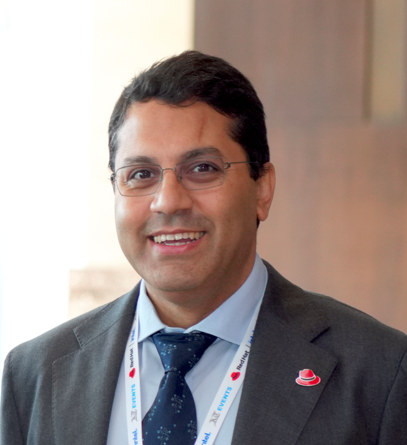
Exclusive interview with Anirban Mukherjee, Director of Solutions Architecture, Red Hat
Digital sovereignty is increasingly moving beyond data residency. What does genuine operational control look like for organisations that need to retain control over their data, applications and infrastructure?
Data residency answers where information sits. Operational control answers who can run, inspect, recover, and change the stack when it matters.
In practice, that means organisations can choose where workloads run – on premises, sovereign cloud, or public cloud – without rewriting applications every time. It means they can audit the software supply chain, keep recovery paths under their own governance, and decide which models, tools, and partners sit in their AI and application environments.
For many MENA enterprises and public-sector bodies, the test is simple: can you keep serving citizens and customers if a single vendor, region, or connectivity path is constrained? Open hybrid platforms give you that room to manoeuvre because the control plane and the open source components stay portable.
As organisations continue to rely on hyperscalers, where do you see the strongest case for combining public cloud with sovereign cloud and on-premises environments?
Hyperscalers remain excellent for elasticity, global reach, and certain managed services. The strongest case for a mixed model is when data sensitivity, latency, or regulatory expectations vary across the same organisation.
We routinely see customer data, AI inference close to the data, and regulated workloads stay in sovereign or on-premises environments, while less sensitive or bursty workloads use public cloud. The point is not to reject public cloud. It is to stop treating it as the only place innovation can happen.
An open hybrid cloud approach lets MENA organisations keep one consistent platform experience across those footprints, so teams are not rebuilding skills and tooling for every environment.
Could the growing AI infrastructure requirement actually increase technology concentration, and what can organisations do to avoid creating a new form of dependency around AI platforms?
Yes, the growing AI infrastructure requirements can actually increase technology concentration, – if every AI workload is tied to one model provider, one accelerator vendor, or one proprietary stack, concentration risk simply moves up a layer.
Organisations reduce that risk by treating AI like the rest of enterprise IT: multiple models for multiple jobs, open tooling where possible, and a platform that can run across hardware and clouds. Smaller, purpose-built open models are often a better fit for specific enterprise tasks than relying on one giant external model for everything.
In the Middle East, where national AI strategies are accelerating investment, the winners will be the ones who can innovate quickly without locking the next decade of infrastructure decisions into a single vendor path.
Open hybrid cloud is often positioned as a way to balance control with access to innovation. What does a mature open hybrid cloud strategy look like in practice?
Maturity looks like consistency. Same platform, same security and policy controls, same developer experience – whether the workload sits in a national data centre, a partner sovereign cloud, or a hyperscaler.
It also looks like deliberate placement: you put each application and AI workload where it creates the best outcome for cost, performance, and governance, and you can move it when those conditions change.
For solution architects in this region, the practical question is: can the customer ship new services without creating a parallel stack every time? If the answer is yes, the hybrid strategy is working.
Vendor dependency is difficult to eliminate entirely. How should organisations assess concentration risk and maintain credible alternatives without creating unnecessary complexity?
You will always have dependencies. The goal is to make them conscious and reversible.
Assess concentration by asking: what breaks if this vendor changes pricing, exits a market, or restricts a capability? Which workloads have no second path? Where does your data or model IP become hard to extract?
Credible alternatives do not mean running five of everything. They mean open standards, portable workloads, and a clear exit or dual-run plan for the few systems that truly matter. Complexity comes from unmanaged sprawl. Discipline comes from a shared platform and clear ownership of what must stay portable.
Red Hat’s role is to help customers keep that optionality – from infrastructure through to AI – so strategic independence is designed in, not bolted on after a crisis.

Exclusive interview with Shadi Hatoum, Regional Director MEA at Tealium
The UAE is moving quickly from AI experimentation to deployment. What do you think will determine which organizations actually turn adoption into measurable business value?
The organizations that create measurable value will be those that connect AI to a clearly defined business decision, then give it the right data and operating model to support that decision.
The UAE has already built significant momentum. Boston Consulting Group found that 42% of UAE organizations qualify as AI Leaders, while 37% have reached the scaling stage of AI maturity. The next test is whether that maturity translates into sustained outcomes.
Deploying a model is not the same as changing how a business operates. AI needs trusted, consented, and real-time context around customer identity, behavior, intent, and journey stage. It also needs clear ownership, measurable objectives, and teams that understand how to use the output.
From my perspective, data readiness and organizational adoption will be the two biggest differentiators. The organizations that can put reliable context in front of AI at the moment of decision, and embed the resulting insight into daily workflows, will be best positioned to turn adoption into measurable value.
How much of the current gap between AI ambition and AI impact comes down to fragmented or outdated customer data?
A significant part of the gap comes down to data readiness, although technology alone is not the whole answer. Most organizations do not lack data. Their challenge is that the data is fragmented, difficult to interpret, or unavailable when a decision needs to be made.
Historical data provides useful depth, but AI also needs data in motion. It needs to understand what a customer is doing now, what has changed, what the customer has consented to, and whether the signal belongs to the correct individual or account.
Tealium’s Future of Customer Data research found that 88% of organizations consider real-time data important to achieving business objectives. That is important because an AI system working from yesterday’s profile may produce a technically valid recommendation that is no longer relevant.
The real opportunity is to create a trusted context layer that connects identity, behavior, consent, and intent, then makes that context available to models and decisioning systems while the customer interaction is still taking place.
Does agentic AI create a new governance problem for enterprises, particularly when agents are acting on customer data without constant human intervention?
Agentic AI does not make the principles of governance entirely new, but it raises the stakes and increases the speed at which controls need to operate. When an AI agent can move from recommendation to action, governance can no longer be treated only as a periodic policy or review exercise. It needs to operate within the data flow and decision process itself.
Enterprises need clear controls over which data an agent can access, the purpose for which it can use that data, how identity and consent are verified, which actions it is authorized to take, and when a person must review or approve the outcome.
The key question is not only whether an agent can access a piece of customer data. It is whether the agent should use that data for this customer, for this purpose, at this moment.
That requires trusted data, current consent, auditability, defined action limits, and clear escalation paths. As autonomy increases, accountability needs to become more precise, not less.
Which sectors in the Middle East do you think are furthest ahead in using real-time customer data and AI together effectively?
From my experience across the region, telecommunications and travel, hospitality, and tourism are among the most active and promising sectors because they generate frequent customer signals and have a clear need to respond in the moment.
In a recent discussion with the Chief Commercial Officer of a major telecom operator in the region, we talked about growth as filling a bucket while also stopping the leaks. Acquisition fills the top, but poor service, irrelevant engagement, and unresolved friction allow value to escape through churn. Sustainable growth requires both attracting new customers and protecting the loyal customer base already in the bucket.
This is where AI-supported decisioning can create real value. Trusted, consented, real-time behavioral data can help an operator recognize changes in usage, service issues, digital engagement, and signs of churn. The next best action may be to resolve a problem, recommend a more suitable plan, position a bespoke package at the right time, or avoid making an offer when the customer first needs support.
The objective is not to push more offers. It is to improve relevance and timing. That can support retention, strengthen loyalty, and create opportunities to grow average revenue per user, or ARPU, by responding to what the customer needs in that moment.
Travel, hospitality, and tourism have a similarly strong opportunity. The customer journey moves from inspiration and research to booking, arrival, the in-destination experience, and loyalty. Each stage creates different needs. A traveler facing disruption needs assistance, while a guest already at a destination may value a timely, personalized experience or service.
These sectors show why hyper-personalization at scale depends on trusted, consented behavioral data in motion. The value comes from giving AI initiatives the current context they need to choose the next best action for that specific moment.
At AI Everything Abu Dhabi 2026, what are the biggest changes you are seeing in the conversations enterprises are having compared with a year or two ago?
The biggest change is that enterprises are no longer asking whether they should adopt AI. They are asking how to move it into production, connect it to measurable outcomes, and govern it at scale.
A year or two ago, many conversations centered on experimentation and individual use cases. Today, the questions are more operational. Leaders want to understand how AI will work with their existing data, how agents will receive current customer context, how decisions will be controlled, and how value will be measured beyond a successful pilot.
I am also hearing much more emphasis on adoption. Organizations recognize that a model does not create value by itself. Teams need clear use cases, practical training, shared measures of success, and confidence in the data behind the recommendation.
The conversation has therefore moved from AI capability to AI readiness. That includes the quality of the data foundation, the governance around it, the ability to make decisions in real time, and the people and processes required to turn those decisions into action. For me, that is a sign that the market is becoming more mature and more focused on sustainable business impact.


The Connected Home Is Evolving into an Intelligent Ecosystem

New Partnership Connects Residential Wellbeing With Preventive Healthcare

Dubai Ride-Hailing App Zed Strengthens Leadership with Appointment of Shobhit Singhal to Shape Its Future



-

 Trending12 months ago
OPPO A6 Pro 5G Review: Reliable Daily Driver
-

 Tech News2 years ago
Denodo Bolsters Executive Team by Hiring Christophe Culine as its Chief Revenue Officer
-
 VAR2 years ago
Microsoft Launches New Surface Copilot+ PCs for Business
-

 Automotive2 years ago
AGMC Launches the RIDDARA RD6 High Performance Fully Electric 4×4 Pickup
-
Tech Interviews3 years ago
Navigating the Cybersecurity Landscape in Hybrid Work Environments
-

 Hospitality2 years ago
Gulfood 2025 30th Edition Kicks Off Today, Setting New Benchmarks in F&B Growth and Innovation
-

 VAR10 months ago
Huawei Nova 14 Pro Review: Where Camera Excellence Meets Ecosystem Evolution
-

 Tech News1 year ago
Nothing Launches flagship Nothing Phone (3) and Headphone (1) in theme with the Iconic Museum of the Future in Dubai