
 Have a question? +971 56 404 0503




Tech Features
How the Middle East Moved Beyond Followers to Build Brands


Yet another compelling new piece by Mariam Abouzeid, Marketing Manager, MEA at Nothing Technology
There is a $771 million evolution happening at the center of the Middle East marketing industry. For the past five years, the global narrative around influencer marketing was built on a flawed premise that reach equals influence. Brands in New York and London debated whether the creator economy was a bubble, while marketers obsessed over vanity metrics and fleeting viral moments. In the GCC, we stopped debating and started building. The influencer marketing market in the GCC is valued at $315.5 million in 2025 and is projected to reach $771.6 million by 2032. But the real story is not the money. It is the maturity.

Having overseen communications strategies that collectively generated billions of impressions across the region, I have watched Dubai and Riyadh transform from emerging markets into the global vanguard of creator led brand building.
The signals are clear. The Middle East is not catching up to the global influencer economy. We are leading it. We are doing it by fundamentally reprioritizing how creators are used, moving them out of the traditional PR umbrella and embedding them as the ultimate engine for mass awareness and deep brand trust. When you look at brands like Huda Beauty, which generates over $75 million a year through the strategic amplification of creator content, you see the blueprint for the future. Huda Kattan built a billion dollar empire right here in Dubai not by treating influencers as a PR add on, but by embedding them into the core architecture of the brand. This creator first model has paved the way for a new generation of Middle East beauty empires, from Youmna Khoury’s Youmi Beauty to Aliona Shcherba’s Aliona Cosmetics, proving that the region is no longer just consuming global beauty trends. It is exporting them.
The Mass Awareness Machine
Before we examine where the Middle East is going, it is worth understanding the foundation it has built. Influencers are the most powerful mass awareness engine ever created. In a region where the GCC is on track to have 263,000 active influencers in 2025, brands have access to a decentralized media network that no television buy or billboard campaign can replicate. When 60 percent of Saudi users and 48.1 percent of UAE users use social networks as their primary tool for researching brands and products, creators are not supplementing the media plan. They are the media plan. According to EMARKETER, US social network amplified content ad spending is projected to match creator sponsored content revenues at $14.15 billion in 2027 before surpassing them in 2028. Brands are about to spend more money boosting creator content than they pay
creators to make it. In the UAE and Saudi Arabia, this strategy is already taking hold. Ounass, the Middle East premier luxury e-commerce platform, provides a perfect example of this evolution. They do not just pay influencers for one off posts. They use data driven insights to identify top performing creators, then amplify that content through targeted performance marketing, blending emotional storytelling with rational product attributes to build a luxury narrative that resonates deeply with Gulf consumers and drives measurable return on ad spend/ But here is where the Middle East diverges from the global playbook. While Western brands are still treating influencers purely as awareness tools, the GCC has moved further up the value chain.
The QSR Reality Check: Awareness vs Consideration
To understand this shift, look no further than the highly competitive food and dining sector in the Middle East. This is a category where influencer marketing has been deployed more aggressively than almost any other. At the mass market end, brands like Americana operating KFC and Pizza Hut, McDonald’s, Papa Johns, and Subway pour millions into influencer campaigns to stay top of mind. Yet AlBaik, the beloved Saudi homegrown champion, topped YouGov KSA QSR Rankings 2026 with a consideration score exceeding 50 percent, a position built on decades of genuine consumer love, not just influencer hype. Global giants McDonald’s and KFC follow at 26.9 percent and 23.2 percent consideration respectively, despite their enormous social media presence.
At the premium end, the contrast is even sharper. Shake Shack, Five Guys, P.F. Chang’s, Joe & The Juice, and homegrown hero SALT have all built their GCC presence on the back of creator driven content, using beautiful food photography, viral reels, and influencer queues around the block. Nobu and Zuma in Dubai have become synonymous with aspirational lifestyle content, their dining rooms perpetually filled with creators documenting every dish.
Consider the rise of % Arabica. The Kyoto born coffee brand has grown into a $1.3 billion global giant with virtually zero traditional marketing. In the UAE, its minimalist, highly aesthetic stores were designed specifically for the Instagram and TikTok era. The brand relies entirely on organic discovery, user generated content, and influencer footfall to drive its massive queues. It is the ultimate example of a brand built entirely on the back of social media awareness and creator aesthetics .
The stories of FIX Dessert Chocolatier and Bi Laban are perhaps the most instructive. FIX Can’t Get Knafeh of It chocolate bar became a global social media phenomenon in 2024 and 2025, generating a staggering 1,259 percent year over year explosion in social conversations. The viral awareness was undeniable, leading to $22 million in sales at
Dubai Duty Free in the first quarter of 2025 alone 10 . But as the Ehrenberg Bass Institute for Marketing Science noted, the viral fad diluted the brand identity, turning a specific product into a generic design brief copied by everyone 11 . Similarly, Bi Laban became a regional sensation engineered through influencer seeding and relentless creator buzz. The queues were real. But when the hype faded, the business fundamentals were exposed. Viral awareness, it turned out, is not a substitute for operational excellence, quality consistency, and genuine consumer loyalty.
The data reveals a stark reality. Hype does not seamlessly translate into habit. While 53 percent of Saudi residents eat fast food weekly, their ultimate choice of where to dine is driven by cleanliness at 48 percent and price at 46 percent, operational realities that no influencer can fake 12 . Influencers drive the initial discovery, cited by 61 percent of consumers as their source for finding new spots, but they are highly inefficient at closing the sale 12 .
The Cost of Misalignment: When Influence Breaks Brands
If the Middle East is learning how to build brands through creators, the global market has provided the ultimate cautionary tales of what happens when influence is misaligned with brand equity. The collapse of the Adidas and Yeezy partnership remains the most expensive influencer marketing failure in history. Adidas tied its cultural relevance to a single, highly volatile creator. When the relationship imploded, Adidas posted its first annual loss in 30 years, warning of a $1.3 billion revenue hit due to unsold inventory 13 . The lesson for regional brands is clear. Renting cultural relevance from a creator without building your own brand equity is a catastrophic financial risk.
Similarly, Pepsi infamous Kendall Jenner campaign remains the textbook example of scripted authenticity failing spectacularly 14 . Pepsi paid a massive premium for Jenner reach, assuming her follower count would automatically translate into cultural resonance. Instead, the tone deaf execution sparked a global backlash, proving that massive awareness without genuine cultural alignment actively damages brand trust. These global failures have taught Middle East marketers a crucial lesson. Awareness without alignment is dangerous. Influence must be anchored in trust, not just reach.
The Beauty Blueprint: From Awareness to Empire
If the F&B sector illustrates the limits of viral conversion, the beauty and luxury sectors provide the blueprint for the great reprioritization. Huda Kattan built Huda Beauty into a billion dollar empire using this exact logic. She did not treat influencers as a direct sales channel. She treated them as a massive awareness engine. Today, Huda Beauty generates over $75 million a year through paid media amplification of creator content. The brand understood early that organic influencer
posts build top of funnel awareness, but it is the paid amplification of that content that drives actual scale.
Similarly, Mona Kattan fragrance brand Kayali has mastered this shift. Kayali does not rely on influencers to push promo codes. It uses them to build cultural relevance and awareness around scent layering. The result? According to Sephora merchant partners, Kayali now has one of the highest repurchase rates in the entire fragrance category globally 15 . The brand uses influencers to get the consumer attention, but relies on product quality and brand equity to secure the conversion and the repeat purchase.
This blueprint is now being replicated by the most powerful creators in the GCC. Kuwaiti influencer Noha Nabil leveraged her massive regional following to launch Noha Nabil Beauty, building a brand deeply rooted in Arab culture and diversity that earned her a spot on the Forbes Women Behind Middle Eastern Brands list 16 . Similarly, Emirati superstar Balqees Fathi transformed her 13 million Instagram followers into a luxury cosmetics empire with Bex Beauty, merging global innovation with specific GCC beauty ideals 17 .
These founders understand that influence is the spark, but operational excellence and cultural alignment are the engine.
The Trust Capital of the World
This is why the Middle East is winning. Brands here have realized that influencers are not a shortcut to conversion. They are the architects of trust. According to the 2026 Edelman
Trust Barometer, global trust is contracting inward. People are retreating into insular, values aligned circles, making it harder than ever for mass corporate messaging to penetrate 18 . Yet, the UAE topped the 2026 Edelman Trust Index globally with a score of 80 out of 100, up eight points from the previous year 19 .
Why? Because brands in the UAE and Saudi Arabia understood early that trust cannot be broadcast. It must be brokered. As Edelman research highlights, in an insular world, trust is built and scaled by creators who act as cultural mediators 18 .
This is backed by new academic research. A 2026 study from Imperial College Business School on influencer authenticity found that the era of renting credibility through one off posts is over 20 . Professor Omar Merlo research proves that when brands treat influencers as long term partners rather than transactional media channels, they move from a transactional to a transformational relationship with consumers 20 .
The Global Validation: Unilever Pivot
The model pioneered in the Middle East is now being adopted by the world largest advertisers. In early 2026, Unilever made a declaration that validated everything regional marketers have been building. The FMCG giant shifted 50 percent of its total digital advertising budget away from traditional corporate ads and directly into social media and creators 21 . By April 2026, that commitment had translated into a network of 300,000 influencers actively promoting Unilever brands globally 22 .
Unilever CMO Leandro Barreto described the strategy as building Desire at Scale, using creators to embed brands authentically in culture 22 . This is exactly what the Middle East has been doing for years. When a global giant like Unilever restructures its entire marketing apparatus to match the creator first model, it proves that influencer marketing has officially graduated from the PR department to become the central nervous system of modern brand building.
The Academic Consensus on Brand Value
The data is clear, and the academic consensus is catching up to what we already know in the GCC. A recent Harvard Business Review study on how brand associations drive customer spending found that what consumers spontaneously think about a brand matters far more than what they agree with on a rating scale 23 . The research proves that brand equity is built through deep, authentic associations over time.
Furthermore, as McKinsey 2026 State of Marketing report highlights, branding has returned as the number one priority for marketing leaders globally 24 . CMOs view branding ability to drive distinctiveness and embody a clear value proposition as critical to building competitive differentiation 24 . In the Middle East, we know that the fastest, most authentic way to build that distinctiveness is through the voices of trusted creators.
The Way Forward: Leading the Next Era
The next wave of global marketing innovation will not come from Silicon Valley or Madison Avenue. It is coming from Dubai and Riyadh. According to EMARKETER, 57 percent of ad buyers globally say influencer ads and partnerships are their top investment priority for 2026. The world is finally waking up to the power of the creator economy, but the Middle
East is already living in its future.
We have moved past the vanity metrics. We have moved past the debate over whether influencers belong in PR or paid media. We have built an ecosystem where creators are the undisputed architects of mass awareness, brand trust, and deep consideration.
The Middle East audience is among the most digitally connected and brand aware anywhere in the world, and it expects marketing strategies that reflect that level of sophistication. Influencer marketing is not just growing here. It is setting the global standard. The brands that recognise this will not just win the region. They will lead the world.
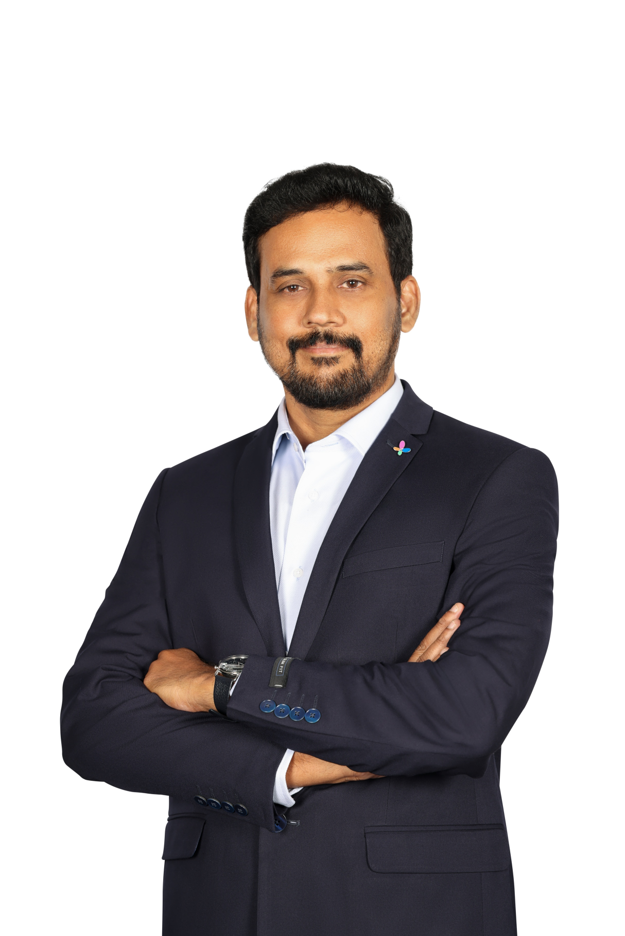
Article by Prasanna Rajendran, Vice President – EMEA, Kissflow
Across the Middle East, governments and enterprises are investing heavily in cloud infrastructure to support national digitization agendas, from Vision 2030 in Saudi Arabia to the UAE’s push toward AI-driven government services. Gartner forecasts that IT spending across the Middle East and North Africa will reach $169 billion in 2026, an 8.9 percent increase over 2025, with software spending alone growing 13.9 percent.
Infrastructure as code (IaC) is the practice of defining and provisioning computing infrastructure, including servers, networks, databases, and load balancers, using machine-readable configuration files rather than manual processes or interactive consoles. Rather than logging into a console to click through setup wizards, teams describe their entire infrastructure in version-controlled code that can be reviewed, tested, and deployed like any other software artifact.
For CIOs and IT leaders, this matters because IaC has become the operational standard for any organization running workloads at scale. Grand View Research valued the global IaC market at $1.2 billion in 2025 and projects it to reach $6.1 billion by 2033, a compound annual growth rate of 22.3 percent. That trajectory reflects a clear shift: enterprises are moving from manual, ticket-driven infrastructure management to automated, code-driven provisioning.
What is infrastructure as code?
At its core, IaC means defining resources such as virtual machines, storage volumes, network configurations, security policies, and access controls in declarative or imperative code files. Those files become the authoritative record of what your infrastructure looks like at any moment.
IaC generally follows one of two approaches, depending on whether teams want to define an outcome or prescribe the route to it. Declarative IaC describes the desired end state: you specify what you want, such as three servers, a load balancer, and a database cluster, and the tool works out how to get there. Terraform, AWS CloudFormation, and Azure Bicep all use this method. Imperative IaC instead specifies the exact steps to reach an outcome. You write procedural instructions: create this server, then attach this disk, then configure this network. Ansible and Chef follow that model more closely.
The declarative approach dominates enterprise adoption today because it is easier to maintain and less error-prone. You describe the outcome rather than the procedure, which keeps the code readable even as infrastructure complexity grows.
What separates IaC from traditional infrastructure management is version control. Every change is tracked in Git, reviewed through pull requests, and deployed through automated pipelines. This is the mechanism Gartner points to when it describes IaC as the route to cloud governance and self-service at scale.
Why infrastructure as code matters for enterprise IT
Manual infrastructure management does not scale. When an operations team provisions servers through tickets and console clicks, every environment differs slightly, every deployment carries risk, and every audit turns painful. IaC removes these problems systematically.
Consistency and reproducibility
IaC guarantees that the development, staging, and production environments are consistent. Configuration drift, the slow divergence of environments over time, disappears because every deployment is generated from the same code. When an incident occurs, you can rebuild an environment from scratch in minutes.
Speed and agility
Organizations using IaC provision entire environments in minutes rather than weeks. When business conditions change, whether through a product launch, a capacity spike, or a compliance deadline, IaC lets you respond at the speed of code.
Security and compliance
With IaC, security policies are embedded directly in infrastructure templates. Guardrails apply automatically. Compliance checks run in the CI/CD pipeline before any change reaches production. Security stops being a gate at the end of the process and becomes part of how infrastructure gets built.
Cost efficiency
IaC gives you precise control over resource provisioning. Idle capacity gets identified and decommissioned through code rather than through quarterly manual audits. Cost discipline has grown into a standing function for this reason: 59 percent of the 759 organizations Flexera surveyed for its 2025 State of the Cloud Report now run a dedicated FinOps team, up from 51 percent the year before.
Key infrastructure as code tools for the enterprise
Several tools now anchor enterprise IaC strategy, each suited to a different environment. Terraform and its open-source fork, OpenTofu, remain the dominant choice for cross-cloud work, offering declarative provisioning across multiple clouds using HCL. Organizations standardized on a single cloud often turn to native alternatives instead: AWS CloudFormation for AWS-centric environments, using JSON or YAML, and Azure Bicep for Azure-native deployments. Ansible takes an imperative, YAML-based approach and excels at configuration management and application deployment rather than pure provisioning. Pulumi appeals to developer-led teams by letting them define declarative infrastructure in familiar languages such as Python, TypeScript, or Go.
Common challenges when adopting infrastructure as code
Adopting IaC is not without friction. The most immediate obstacle is usually a skills gap, because IaC asks infrastructure teams to work the way developers do, with version control, code reviews, and CI/CD pipelines. That shift is cultural as much as it is technical, and it requires deliberate investment in training.
State management adds complexity of its own. Declarative tools maintain state files that track current infrastructure, and multi-team environments need remote state backends, locking, and workspace isolation from day one to avoid conflicts.
Legacy system integration is another common obstacle, since not everything can be expressed in code immediately. Most organizations start with new cloud workloads and progressively extend IaC to existing systems through API wrappers.
Governance and drift detection require ongoing discipline. IaC only delivers its full value once it becomes the sole path for infrastructure changes, which makes continuous drift detection and sustained cultural enforcement critical rather than optional.
Where workflow automation fits in an IaC-driven enterprise
Infrastructure as code solves the provisioning problem. Enterprise IT complexity does not stop there. The layer above IaC, covering the processes, approvals, and operational logic that run on top of provisioned infrastructure, is where most organizations still depend on fragmented tools, manual handoffs, and spreadsheet-based tracking. That gap is especially visible across the Middle East, where cloud adoption and ambitious national targets often outpace the operational processes needed to govern them.
Regulatory pressure widens the gap further. Gartner forecasts worldwide sovereign cloud IaaS spending at $80 billion in 2026, a 35.6 percent rise over 2025, with governments as the main buyers. Provisioning infrastructure inside a national boundary is one requirement. Proving that every approval, exception, and access grant on that infrastructure followed a governed path is another, and code alone does not answer it.
This is where workflow automation platforms operate as a digital backbone for enterprise operations. IaC automates the infrastructure layer. A no-code or low-code workflow platform automates the process layer: IT service requests, change management approvals, vendor onboarding, compliance workflows, and the hundreds of cross-functional processes that connect people, systems, and decisions across the enterprise.
For IT leaders across the region pursuing IaC adoption, particularly those operating under strict data residency and regulatory requirements, this kind of platform complements the strategy by giving business teams a way to build and manage operational workflows without adding to the IT backlog. IaC handles your infrastructure. Workflow automation handles everything that runs on it.
See how Kissflow governs the change approvals, access requests, and compliance workflows that sit on top of your cloud infrastructure in a 30-minute demo.
Tech Features
Role of Digital Citizenship in Countering Misinformation and Protecting Social Cohesion in UAE

Dr. Soumaya Abdellatif, Head of Sociology Department, Associate Professor, College of Humanities and Sciences, Ajman University
The greatest challenge of our time is not merely that people believe false information. It is that the very boundary between truth and opinion, fact and emotion, credibility and visibility, has become increasingly vague.
This shift signals a transformation in symbolic authority itself. Trust has not simply declined – it has been displaced. Traditional institutions no longer monopolize credibility, while digital platforms have multiplied voices without necessarily strengthening legitimacy.
In societies such as the UAE – built on coexistence, institutional trust, and the delicate management of cultural diversity, this challenge carries particular strategic weight. This is where digital citizenship ceases to be an educational slogan and becomes a matter of national importance.
Beyond Media Literacy
At its core, digital citizenship is a contemporary form of civic responsibility. It deals with how individuals participate in the digital public sphere, how they interpret information, and how they contribute – consciously or unconsciously, to the production of collective trust.
(1)As Manuel Castells once stated, power in network societies increasingly operates through control over communication flows. The question is no longer simply who speaks, but whose voice becomes visible, amplified, and believed.
Trust as Social Infrastructure
In the UAE, misinformation is not merely a media concern – it is also a matter of social architecture. The country’s model of stability rests on institutional credibility, intercultural coexistence, and high levels of public trust.
This explains why the UAE has invested heavily, not only in digital transformation, but also in institutional clarity and communication governance. (2) Federal Decree-Law No. 34 of 2021 on combating rumours and cybercrime reflects an important principle: digital stability is inseparable from social stability. The objective is not merely punitive regulation, but the protection of public confidence itself.
Youth, Families and the Transformation of Authority
Young people are not passive consumers of information; they are producers of narratives, identity, legitimacy, and influence. They shape public conversations long before institutions respond to them.
In previous generations, legitimacy flowed vertically: from institutions, schools, family structures, and recognised expertise. Today, authority is increasingly negotiated horizontally- through peers, influencers, networks, and algorithmic visibility.
In addition, families act as the first school of civic trust. Long before formal media literacy programs, individuals learn how to relate to truth, disagreement, and legitimacy inside the home.
Why Social Sciences Matter
The response to misinformation cannot be reduced to fact-checking mechanisms or technical media literacy alone. What is required is a deeper intellectual infrastructure – one that social sciences are uniquely positioned to provide.
Sociology, communication studies, political science, and anthropology do not merely teach individuals how to verify information; they teach them how power operates, how legitimacy is constructed, how public opinion is shaped, and how collective trust is sustained or eroded.
A National Priority
The UAE has positioned itself as a global leader in artificial intelligence, digital governance, and future-oriented policy. This ambition is both necessary and admirable.
In this scenario, digital citizenship is not a secondary educational concern. It is part of national security, social sustainability, and the long-term legitimacy of institutions.
The UAE is not only managing digital transformation; it is helping to define what responsible digital modernity should look like.
Because in the end, the future of social cohesion will not be decided by technology itself, but by who is trusted to interpret reality in the digital age.

Enterprise AI has entered a new phase. The conversation is no longer centred on whether organisations should invest in artificial intelligence, but on how they can transform that investment into measurable business value.
By: Mohammed Hilili – General Manager, Lenovo Gulf

Across the GCC, enterprises are moving beyond experimentation. Pilot projects are giving way to enterprise-wide deployments as organisations seek to integrate AI into customer experiences, business operations, software development, cybersecurity and decision-making. Yet despite growing investment, many AI initiatives continue to struggle to deliver the outcomes leadership teams expect.
In my experience, the reason is rarely the technology itself. More often, organisations begin with the wrong conversation.
Too many AI discussions start with infrastructure specifications, GPU availability or the latest foundation models. These are undoubtedly important decisions, but they are not the first ones organisations should make.
The first question is much simpler.
What business problem are we trying to solve?
Without a clear answer, AI initiatives often remain isolated demonstrations of technical capability rather than platforms capable of delivering sustainable business value.
From AI Pilots to Enterprise Platforms
Across industries, organisations have spent the past two years experimenting with generative AI. Many have successfully launched departmental pilots that demonstrate what AI can achieve within a controlled environment. The greater challenge now lies in scaling those experiments across the enterprise.
That transition requires far more than additional computing power. It demands clear governance, high-quality data, well-defined business objectives and an architecture capable of supporting continuous growth. Successful AI adoption is increasingly becoming an organisational transformation exercise rather than simply another technology deployment.
Business Strategy Before Infrastructure
I recently worked with a leading regional financial institution looking to strengthen its research and development capabilities through AI. The ambition was clear, but many practical questions remained unanswered.
How much computing capacity would the organisation require? Which GPU architecture would support both current and future workloads? How could the environment remain scalable as AI adoption expanded across the business?
These may appear to be technology questions. In reality, they are strategic business decisions with long-term operational consequences.
Instead of beginning with hardware selection, we started by understanding the organisation’s objectives. Together with the leadership team, we assessed AI readiness, identified priority business outcomes and defined what success would look like before discussing infrastructure.
Only after establishing that foundation did we determine the appropriate compute resources, architectural approach and deployment model required to support long-term growth.
The result was not simply a successful implementation but an AI platform capable of evolving alongside the organisation’s ambitions.
AI Readiness Extends Beyond Technology
Many organisations still view AI readiness primarily through the lens of infrastructure. In reality, readiness begins much earlier.
Leadership alignment, data quality, governance frameworks, cybersecurity, skills development and measurable business outcomes all influence whether an AI initiative succeeds or stalls. Infrastructure remains essential, but it should support strategy rather than define it.
The organisations achieving the strongest results are those treating AI as a long-term business capability rather than a series of disconnected technology projects.
Building for a Hybrid AI Future
Enterprise AI environments are also becoming increasingly hybrid. Certain workloads will remain on-premises to address latency, compliance or data sovereignty requirements, while others will leverage the scalability of public cloud environments.
This makes architectural flexibility increasingly important. Organisations need infrastructure strategies capable of supporting multiple deployment models while allowing AI workloads to evolve alongside changing business priorities.
Selecting technology is therefore no longer simply about purchasing hardware. It is about building an adaptable foundation capable of supporting continuous innovation over many years.
The GCC Opportunity
The GCC is uniquely positioned to accelerate enterprise AI adoption. Governments across the region continue investing heavily in digital transformation, sovereign AI capabilities and next-generation cloud infrastructure while strengthening regulatory frameworks around data governance and cybersecurity.
These investments provide organisations with an increasingly mature environment in which to deploy AI at scale. However, long-term success will depend less on access to technology than on the ability to align AI investments with clear operational priorities and measurable business outcomes.
As AI becomes embedded within core enterprise operations, leadership decisions made today will determine competitive advantage for years to come.
Why Clarity Still Comes Before Compute
Technology will continue evolving at remarkable speed. New AI models, specialised processors and deployment approaches will continue reshaping the enterprise landscape.
What will remain constant is the importance of making the right decisions before investing.
At Lenovo, this philosophy shapes how we work with customers. We believe AI is not simply a product to deploy, but an organisational capability that develops over time. By combining advisory expertise with infrastructure, lifecycle services and long-term planning, organisations can reduce uncertainty, optimise investment and build AI platforms that continue creating value as business needs evolve.
The organisations that lead in the AI era will not necessarily be those with the largest AI budgets or the most powerful infrastructure. They will be those that begin with business clarity, build the right foundations and scale with purpose.
Because in enterprise AI, infrastructure enables transformation—but clarity makes it possible.


New Cequence & EMA Research: 94% of Enterprises Trust Their AI Agents Aren’t Over-Provisioned. Only 33% Actually Enforce It.
DO FISCAL STIMULUS MEASURES SUPPORT THE US MARKET GROWTH, AND IS A DEFAULT POSSIBLE?
DO FISCAL STIMULUS MEASURES SUPPORT THE US MARKET GROWTH, AND IS A DEFAULT POSSIBLE?



-
News11 years ago
SENDQUICK (TALARIAX) INTRODUCES SQOOPE – THE BREAKTHROUGH IN MOBILE MESSAGING
-

 Trending11 months ago
OPPO A6 Pro 5G Review: Reliable Daily Driver
-

 Tech News2 years ago
Denodo Bolsters Executive Team by Hiring Christophe Culine as its Chief Revenue Officer
-
 VAR1 year ago
Microsoft Launches New Surface Copilot+ PCs for Business
-

 Automotive2 years ago
AGMC Launches the RIDDARA RD6 High Performance Fully Electric 4×4 Pickup
-
Tech Interviews2 years ago
Navigating the Cybersecurity Landscape in Hybrid Work Environments
-

 Tech News1 year ago
Nothing Launches flagship Nothing Phone (3) and Headphone (1) in theme with the Iconic Museum of the Future in Dubai
-

 VAR2 years ago
Samsung Galaxy Z Fold6 vs Google Pixel 9 Pro Fold: Clash Of The Folding Phenoms