
 Have a question? +971 56 404 0503






From 25th to 30th May, List Bar presents a special International Burger Week experience, featuring a curated selection of expertly crafted burgers made with premium ingredients, all served in a lively and relaxed setting perfect for social gatherings or unwinding after a long day.
Each burger order is paired with a complimentary pint, adding extra value to this exclusive offering and making it an ideal choice for those looking to enjoy great food in a vibrant atmosphere.
Offer Details
Date: 25th to 30th May | Offer: Buy any burger and enjoy a complimentary pint | Location: List Bar, Al Jaddaf Rotana Suite Hotel

By Rabih Haydar, Director of Partnerships EMEA, Autotech Ventures
Innovation is abundant across the global mobility landscape, but successful large-scale deployments are rare. Many markets remain stuck in pilot mode, testing promising technologies without the regulatory alignment, infrastructure readiness, or political will to move beyond experimentation. This is where the UAE, Saudi Arabia, and other members of the Gulf Cooperation Council (GCC) stand apart. Here, mobility tech are not confined to trials or press releases; they are being rolled out across cities, transport networks, and logistics corridors with real users and real impact. The region isn’t just talking the talk; it also walks the walk.
The GCC’s governments have made mobility a strategic priority, tying it directly to economic diversification, sustainability, and competitiveness. This enables faster decision-making and coordinated execution. Additionally, large-scale urban developments and national transport strategies provide the canvas to deploy technologies from end to end, rather than in isolation. For example, Dubai’s Smart Self-Driving Transport Strategy has set a target of having 25 percent of all trips autonomous by 2030, while Saudi Arabia’s Vision 2030 aims to have 15 percent of public transport vehicles autonomous by that year. As a result, the GCC is shifting the global mobility narrative. Instead of focusing solely on where technology is invented, it calls attention to where it is implemented, integrated, and scaled decisively.
Governments as platform builders
In mobility, impact is not defined by how advanced a technology is, but by how widely and reliably it is deployed. Only by successfully transitioning from experimentation to execution can a mobility project unlock real outcomes: reduced congestion, lower emissions, improved logistics efficiency, and better quality of life. By focusing on scale, the region is accelerating learning cycles, driving costs down, and creating real-world operating environments that technologies simply cannot replicate in small pilots.
What truly differentiates the GCC in mobility deployment is the role governments play, not merely as regulators, but as platform builders. Across the region, national and city-level authorities are setting clear long-term mobility agendas and backing them with capital, infrastructure, and execution capacity. This infrastructure‑first approach means that charging networks, digital platforms, dedicated lanes, ports, and logistics zones are often built ahead of demand, dramatically reducing friction for deployment.
Equally important is regulatory intent. Rather than reacting to new technologies, policymakers are designing frameworks that anticipate them, using sandboxes, pilot-to-scale pathways, and public procurement to accelerate adoption. Governments also act as anchor customers, creating immediate demand for solutions in public transport, logistics, and urban services. Many startups struggle to secure these elsewhere.
This level of coordination allows mobility tech to be deployed system-wide instead of in isolation. The result is faster commercialization, clearer unit economics, and generation of real operational data at scale. In an industry where fragmentation often slows progress, the Middle East’s government-led platform model is emerging as a powerful catalyst for execution.
Global Technologies, Local Scale
The GCC is successfully deploying global mobility tech at scale, from electric vehicles (EVs) and autonomous vehicles to drone logistics, while making room for competition to elevate the ecosystem.
Across the region, EV penetration doubled from roughly 2 percent to 4 percent between 2024 and 2025, making it among the world’s fastest-growing EV markets. The UAE leads the region with EV penetration of around 6 percent, while Saudi Arabia committed around $50 billion to EVs by 2030, including its homegrown EV brand, Ceer Motors. Chinese OEMs such as BYD, Geely, and MG have also rapidly captured market share in the region, rising from around 2 percent in 2019 to 15 percent in 2025. This influx of competitively priced, high-tech Chinese EVs, often adopting battery innovations and integrated software ecosystems, has accelerated regional electrification.
In Abu Dhabi, WeRide and Uber launched the Middle East’s first fully driverless Robotaxi service in November 2025, backed by the world’s first city-level permit for Level 4 autonomy. Operations are expanding to cover 70 percent of the city, with plans to deploy 1,200 robotaxis across Abu Dhabi, Dubai, and Riyadh by 2027.
Innovation in drone logistics is also abundant in the GCC. UAE urban and industrial pilots are using drones to transport parcels, documents, and even medium-range cargo via VTOL drones with capacities up to 250 kg, supported by unified airspace platforms.
Where Deployment Becomes Advantage
Taken together, the GCC’s approach to mobility is creating a new center of gravity for the industry, defined by execution at scale. For founders, the region is a unique place where technologies can move quickly from pilot to real-world deployment, supported by infrastructure, regulation, and committed demand. This shortens the path to validation, revenue, and global relevance.
For investors, the opportunity lies in engaging early in markets where scale is not a future aspiration but a design principle. Companies that can prove they can perform in the GCC’s complex, high-demand environments are more likely to be competitive globally. And for policymakers, the challenge and the opportunity both lie in sustaining this momentum by continuing to enable open ecosystems, talent inflow, and cross-border scalability.
The future of mobility will not be shaped solely in labs or boardrooms, but in the city’s roads, where technology is deployed decisively and system-wide. Through the large-scale rollout of these technologies, driven by government infrastructure, regulatory foresight, and private-sector innovation, the GCC is going beyond just adopting global mobility tech and is now shaping it.
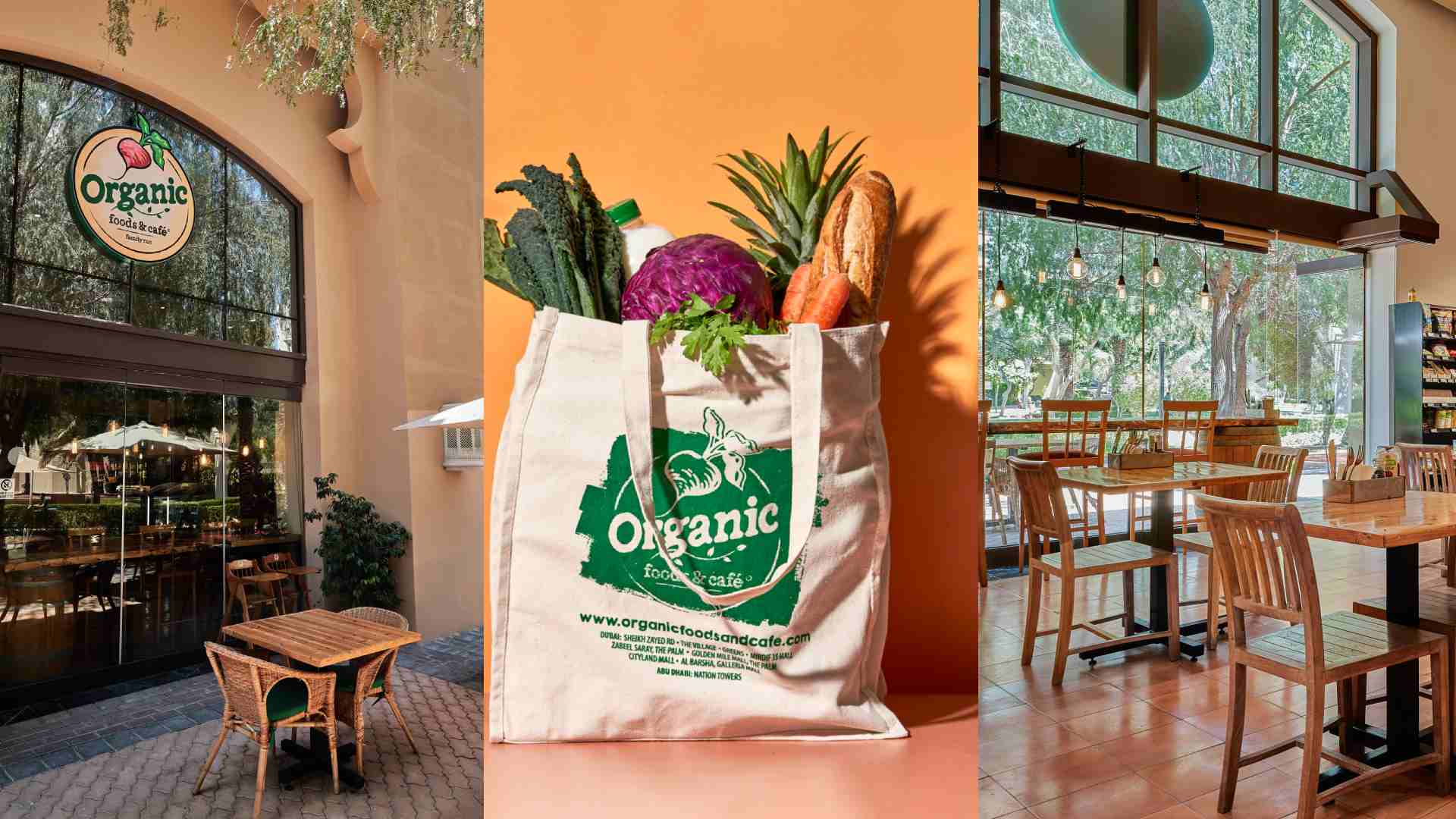
Words by Firas Nasir, CEO of Organic Foods & Café and Co-CIO of the Gulf Japan Food Fund
The most consequential changes in business rarely announce themselves. They accumulate quietly in procurement decisions, in vendor reviews, and in sourcing conversations held far from the shop floor. What is happening inside UAE retail supply chains at the moment is exactly that kind of change. In the past, retailers across all formats built their vendor lists around established global suppliers who could deliver volume, compliance maturity, and operational consistency at scale. Local producers, by contrast, sometimes struggled to meet the benchmarks that major buyers required: reliable cold chain infrastructure, internationally recognised food safety certification, and the capacity to scale supply without compromising on delivery windows.
That gap has narrowed considerably, and the timing matters. Investment in UAE logistics infrastructure, including temperature-controlled warehousing, last-mile refrigerated delivery, and the development of alternative trade corridors, such as the Oman-UAE Green Corridor and the east coast ports of Khorfakkan and Fujairah, has given domestic suppliers a credible and sustainable path to retail shelves that simply did not exist half a decade ago.
The impact is most visible at retailers who made early commitments to domestic sourcing. For instance, Organic Foods and Cafe, which works with over 400 vendor partners across local and global supply chains, has tracked the evolution closely. Over the past four years, the composition of its vendor list has shifted meaningfully, with a clear move toward sourcing from closer geographies. This has improved product availability, reduced transit times, and meaningfully lowered the carbon footprint across key categories. The transitions have been most pronounced in beverages, fresh produce, and dairy, categories where domestic producers have invested seriously in quality and consistency. The products now earning space on shelves reflect genuine operational maturity, not simply a preference for local origin. Organic eggs from Risha Farms in Fujairah and fresh organic milk from Organiliciouz in Sharjah, both now stocked consistently, represent a generation of domestic suppliers that would not have met major retailer requirements a few years ago. Alongside them, homegrown brands, including ME Kombucha, Pure Harvest, Humantra, Nothing Silly, and Shake Your Plants, are finding sustained footing in channels that once defaulted to international names as a matter of course.
The broader retail sector is also responding. The Make it in the Emirates initiative, a government-led effort to boost domestic manufacturing and industrial investment initiative, has added meaningful policy weight to what was already becoming commercial common sense, with approved vendor lists across the industry being reviewed through a lens of supply chain resilience rather than simple cost optimisation. That recalibration has been sharpened further by recent events. Retailers who have already embedded local sourcing into their models have proved markedly better positioned to absorb the shock. Alternative freight channels were activated where necessary, but the businesses least exposed were those that had built domestic supplier relationships before disruption made it urgent.
Of course, challenges still remain. The shortage of organically certified local producers is a persistent gap, and the expectation from retailers has not softened, with domestic suppliers held to the same delivery, safety, and scalability standards as their international counterparts. But the pipeline of producers meeting that bar is growing, and the commercial argument has become difficult to dismiss. Faster turnaround, extended shelf life on domestic fresh goods, and meaningful resilience against freight volatility now outweigh the scale advantages that international suppliers once held unchallenged.
The restructuring of UAE retail around homegrown brands was already underway but the current geopolitical situation has expedited it to a new level. It is now being driven by hard commercial experience, enabled by maturing infrastructure, and supported by national policy. And the businesses that recognise it for what it is – a fundamental supply chain shift, not a sourcing trend – will be the ones who shape what UAE retail looks like in the decade ahead.

A Flavour-Packed International Burger Week at List Bar
THE GCC IS SHAPING DEPLOYMENT OF MOBILITY TECHNOLOGY AT SCALE

FROM FARM TO SHELF: THE CASE FOR SOURCING CLOSER TO HOME



-
News11 years ago
SENDQUICK (TALARIAX) INTRODUCES SQOOPE – THE BREAKTHROUGH IN MOBILE MESSAGING
-

 Tech News2 years ago
Denodo Bolsters Executive Team by Hiring Christophe Culine as its Chief Revenue Officer
-

 Trending7 months ago
OPPO A6 Pro 5G Review: Reliable Daily Driver
-
 VAR1 year ago
Microsoft Launches New Surface Copilot+ PCs for Business
-
Tech Interviews2 years ago
Navigating the Cybersecurity Landscape in Hybrid Work Environments
-

 Automotive2 years ago
AGMC Launches the RIDDARA RD6 High Performance Fully Electric 4×4 Pickup
-

 Tech News11 months ago
Nothing Launches flagship Nothing Phone (3) and Headphone (1) in theme with the Iconic Museum of the Future in Dubai
-

 VAR2 years ago
Samsung Galaxy Z Fold6 vs Google Pixel 9 Pro Fold: Clash Of The Folding Phenoms