
 Have a question? +971 56 404 0503




Tech News
Cisco Reimagines Security for Data Centers and Clouds in Era of AI


News Summary:
Cisco powers and secures AI-scale data centers and clouds, safeguarding every application and device regardless of distribution or connectivity.
- In today’s highly distributed landscape, the window from vulnerability to exploitation is shrinking rapidly.
- Defending against this complex threat environment is beyond human scale.
- Cisco Hypershield enables customers to deploy security wherever needed: in the cloud, data center, factory floor, or hospital imaging room.
- With AI-native security, customers can autonomously segment networks, enjoy distributed and instant exploit protection without patches, and experience self-qualifying software upgrades with zero downtime.
News in Detail:
Cisco, the leader in security and networking, today unveiled a radically new approach to securing data centers and clouds in response to the increasing demands the AI revolution has put on IT infrastructure. Cisco is rearchitecting how we harness and protect AI and other modern workloads with industry-first, Cisco Hypershield. With this unprecedented innovation, Cisco is tipping the scales in favor of defenders, building on its recent announcements to accelerate AI infrastructure with Cisco’s ethernet switching, silicon and compute portfolio.
Cisco Hypershield protects applications, devices and data across public and private data centers, clouds and physical locations – anywhere customers need it. Designed and built with AI in mind from the start, Hypershield enables organizations to achieve security outcomes beyond what has been possible with humans alone.
“Cisco Hypershield is one of the most significant security innovations in our history,” said Chuck Robbins, Cisco Chair and CEO. “With our data advantage and strength in security, infrastructure and observability platforms, Cisco is uniquely positioned to help our customers harness the power of AI.”
Hypershield is a revolutionary new security architecture. It’s built with technology originally developed for hyperscale public clouds and is now available for enterprise IT teams of all sizes. More a fabric than a fence, Hypershield enables security enforcement to be placed everywhere it needs to be. Every application service in the datacenter. Every Kubernetes cluster in the public cloud. Every container and virtual machine (VM). It can even turn every network port into a high-performance security enforcement point, bringing completely new security capabilities not just to clouds, but to the data center, on a factory floor, or a hospital imaging room. This new technology blocks application exploits in minutes and stops lateral movement in its tracks.
“AI has the potential to empower the world’s 8 billion people to have the same impact as 80 billion. With this abundance, we must reimagine the role of the data center – how data centers are connected, secured, operated and scaled,” said Jeetu Patel, Executive Vice President and General Manager for Security and Collaboration at Cisco.

“The power of Cisco Hypershield is that it can put security anywhere you need it – in software, in a server, or in the future even in a network switch. When you have a distributed system that could include hundreds of thousands of enforcement points, simplified management is mission critical. And we need to be orders-of-magnitude more autonomous, at an orders-of-magnitude lower cost.”
Security enforcement with Hypershield happens at three different layers: in software, in virtual machines, and in network and compute servers and appliances, leveraging the same powerful hardware accelerators that are used extensively in high-performance computing and hyperscale public clouds.
Hypershield was built on three key pillars:
• AI-Native: Built and designed from the start to be autonomous and predictive, Hypershield manages itself once it earns trust, making a hyper-distributed approach at scale possible.
• Cloud-Native: Hypershield is built on open source eBPF, the default mechanism for connecting and protecting cloud-native workloads in the hyperscale cloud. Cisco acquired the leading provider of eBPF for enterprises, Isovalent, earlier this month.
• Hyper-Distributed: Cisco is completely reimagining how traditional network security works by embedding advanced security controls into servers and the network fabric itself. Hypershield spans all clouds and leverages hardware acceleration like Data Processing Units (DPU) to analyze and respond to anomalies in application and network behavior. It shifts security closer to the workloads that need protection.
Cisco, with its industry-leading expertise in networking, security and extensive partner ecosystem, together with NVIDIA, is committed to building and optimizing AI-native security solutions to protect and scale the data centers of tomorrow. This collaboration includes leveraging the NVIDIA Morpheus cybersecurity AI framework for accelerated network anomaly detection, as well as NVIDIA NIM microservices for powering custom security AI assistants for the enterprise. NVIDIA’s class of converged accelerators combine the power of GPU and DPU computing, to augment Cisco Hypershield with robust security from cloud to edge.
“Enterprises across all industries are seeking the security that can protect them against ever expanding cyber threats,” said Kevin Deierling, Senior Vice President of Networking at NVIDIA. “Together, Cisco and NVIDIA are leveraging the power of AI to deliver powerful, incredibly secure data center infrastructure that will enable enterprises to transform their businesses and benefit customers everywhere.”
As a revolutionary new security architecture, Hypershield is solving three key customer challenges in defending against today’s sophisticated threat landscape:
• Distributed Exploit Protection: Attackers are adept at weaponizing newly published vulnerabilities faster than defenders can patch. With defenders seeing nearly 100 new vulnerabilities every day, according to Cisco Talos Threat Intelligence, this can lead to catastrophic results. Hypershield delivers protection in minutes by automatically testing and deploying compensating controls into the distributed fabric of enforcement points.
• Autonomous Segmentation: Once an attacker is in the network, segmentation is key to stopping their lateral movement. Hypershield perpetually observes, auto-reasons and re-evaluates existing policies to autonomously segment the network, solving this in large and complex environments.
• Self-qualifying Upgrades: Hypershield automates the incredibly laborious and time-consuming process of testing and deploying upgrades once they are ready, leveraging a dual data plane. This completely new software architecture allows software upgrades and policy changes to be placed in a digital twin that tests updates using the customer’s unique combination of traffic, policies and features, then applying those updates with zero downtime.
Built into the Security Cloud, Cisco’s unified, AI-driven, cross-domain security platform, Cisco Hypershield is expected to be Generally Available in August 2024. With Cisco’s recent acquisition of Splunk, customers will gain unparalleled visibility and insights across their entire digital footprint for unprecedented security protection.
“AI is not just a force for good but also a tool used for nefarious purposes, allowing hackers to reverse engineer patches and create exploits in record time. Cisco looks to address an AI enabled problem with an AI solution as Cisco Hypershield aims to tip the scales back in favor of the defender by shielding new vulnerabilities against exploit in minutes – rather than the days, weeks or even months as we wait for patches to actually get deployed,” said Frank Dickson, Group Vice President, Security & Trust at IDC. “With the number of vulnerabilities ever increasing and the time for attackers to exploit them at scale ever decreasing, it’s clear that patching alone can’t keep up. Tools like Hypershield are necessary to combat an increasingly clever malicious cyber adversary.”
“Cisco Hypershield takes aim at the complex security challenges of modern, AI-scale data centers. Cisco’s vision of a self-managing fabric that seamlessly integrates from the network to the endpoint will help redefine what’s possible for security at scale,” said Zeus Kerravala, Founder and Principal Analyst of ZK Research. “For instance, this level of visibility and control across a hyper-distributed environment prevents lateral movement of attackers, enabled through a unique approach to segmentation that’s autonomous and highly effective. While this may seem fantastical, the time is right given recent AI advances combined with the maturity of cloud-native technologies like eBPF.”
“At AHEAD we believe cybersecurity should be integrated into everything we do. Bolted-on security is more expensive and less effective,” said Steven Aiello, Field Chief Information Security Officer at AHEAD. “Cisco Hypershield ensures that cyber protections are included into the fabric of the enterprise. Distributed Exploit Protection will be a massive win for blue teams – legacy synthetic patching was primarily limited to edge devices, allowing lateral movement once an attacker breached the perimeter. It’s a great day for cyber-defenders!”
Tech News
Beyond the Finish Line: What HONOR Robotics Can Teach Us About the Future of Intelligent Devices
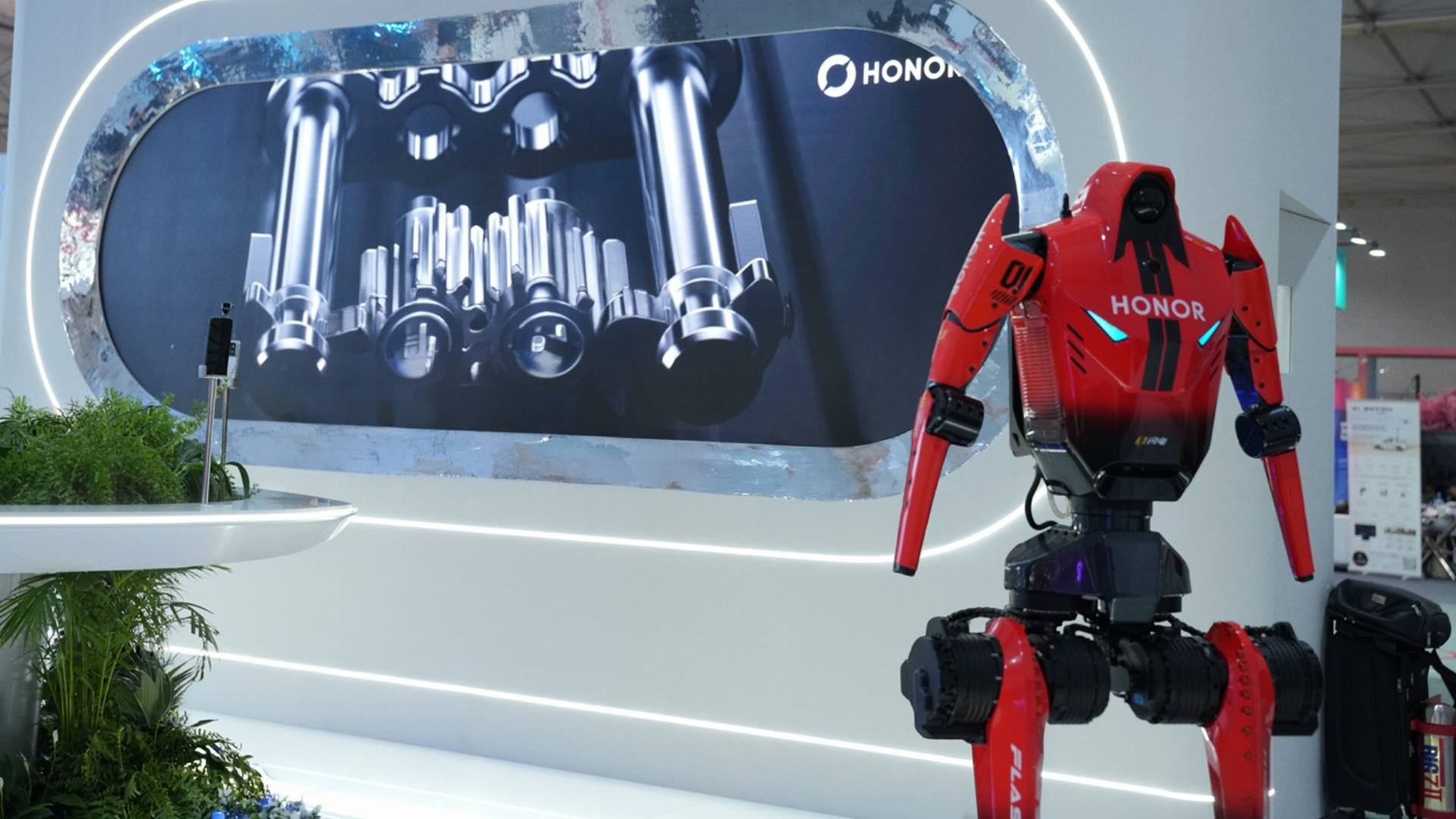
A Record-Breaking Moment for Robotics
When HONOR’s Lightning humanoid robot captured global attention with a series of record-breaking performances, the headlines understandably focused on speed. HONOR Robotics D1 broke five human world records, completing a half marathon in 50 minutes and 26 seconds, 1,500 meters in 2 minutes and 30 seconds, and 100 meters in just 9.32 seconds, while reaching a peak speed of 14.5 meters per second.
The performances demonstrated a level of athletic capability previously considered out of reach for humanoid machines, sparking widespread discussion about just how quickly robotics technology is advancing.
Yet the real story extends far beyond the stopwatch.
The Rise of Embodied AI
While achievements on the track demonstrate remarkable engineering progress, they also point to a broader shift taking place across the technology industry. Artificial intelligence is no longer confined to analysing information on a screen. It is increasingly being designed to understand, interpret and respond to the physical world around it. From navigating complex environments to making decisions in real time, the next era of AI will be defined not only by what it knows, but by how effectively it can interact with the world.
This evolution is often referred to as embodied AI, where intelligence is paired with movement, perception and action. In a race, a humanoid robot must do far more than run quickly. It must continuously process information from its surroundings, maintain balance, adapt to changing conditions and make split-second adjustments throughout its movement. Such capabilities demonstrate how AI is moving beyond digital commands towards real-world understanding.
Why Robotics Matters Beyond the Race Track
The significance of this trend extends well beyond robotics itself. As AI systems become increasingly capable of understanding context and responding intelligently, the lessons learned from these advancements have the potential to influence a wide range of everyday technologies.
For consumers, this shift is particularly relevant. People increasingly expect their devices to be proactive, intuitive and personalised. Technology is no longer judged solely by processing power or specifications. Instead, users value experiences that feel intelligent, seamless and capable of adapting to their needs.
Achieving this vision requires AI systems that can process information quickly, understand intent and respond meaningfully in real time.
The Future of Intelligent Devices
The same principles driving the next generation of robotics are also shaping the evolution of personal technology. Advances in perception, contextual understanding and intelligent decision-making are helping create devices that feel more aware of both users and their surroundings.
As AI capabilities continue to mature, devices will become increasingly capable of anticipating needs, simplifying tasks and offering more personalised experiences. The result is a more natural relationship between people and technology, where interactions feel less like commands and more like collaboration.
Rather than simply responding to requests, future intelligent devices will be expected to understand context, recognise patterns and support users in increasingly proactive ways.
Where Robotics and Consumer Technology Converge
This is where the convergence of robotics and consumer technology becomes particularly exciting.
For many years, robotics and personal devices have been treated as distinct categories. Today, however, both industries are being shaped by the same fundamental goal: creating technology that can better understand and interact with the world around it.
The pursuit of faster processing, enhanced perception and smarter decision-making continues to drive innovation across the entire AI ecosystem. As advancements in one area accelerate, they often inspire new possibilities in another.
From intelligent assistants and advanced imaging capabilities to increasingly personalised user experiences, the impact of AI innovation is already being felt across everyday technology.
Building an AI-Powered Future
Looking ahead, the future of technology will not be defined by a single breakthrough device. Instead, it will be shaped by connected ecosystems of intelligent technologies working together seamlessly.
As AI becomes more capable, users can expect more natural interactions, greater personalisation and experiences that adapt more effectively to individual needs. The focus will move beyond standalone features towards intelligent ecosystems that support people throughout their daily lives.
The recent achievements in robotics offer a glimpse into that future. While record-breaking performances may capture attention, they also demonstrate the pace at which intelligent systems are evolving and how rapidly the boundaries of what technology can achieve continue to expand.
Beyond the Finish Line
Ultimately, the significance of innovation is not measured solely by how fast a robot can run. It is measured by how those advancements help create smarter, more intuitive experiences that improve the way people interact with technology every day.
As AI continues to evolve, robotics will serve as an important testbed for what comes next. The finish line, it turns out, may be just the beginning.
Tech News
Paramount and SecurityBridge partner to close the SAP security blind spot for GCC enterprises
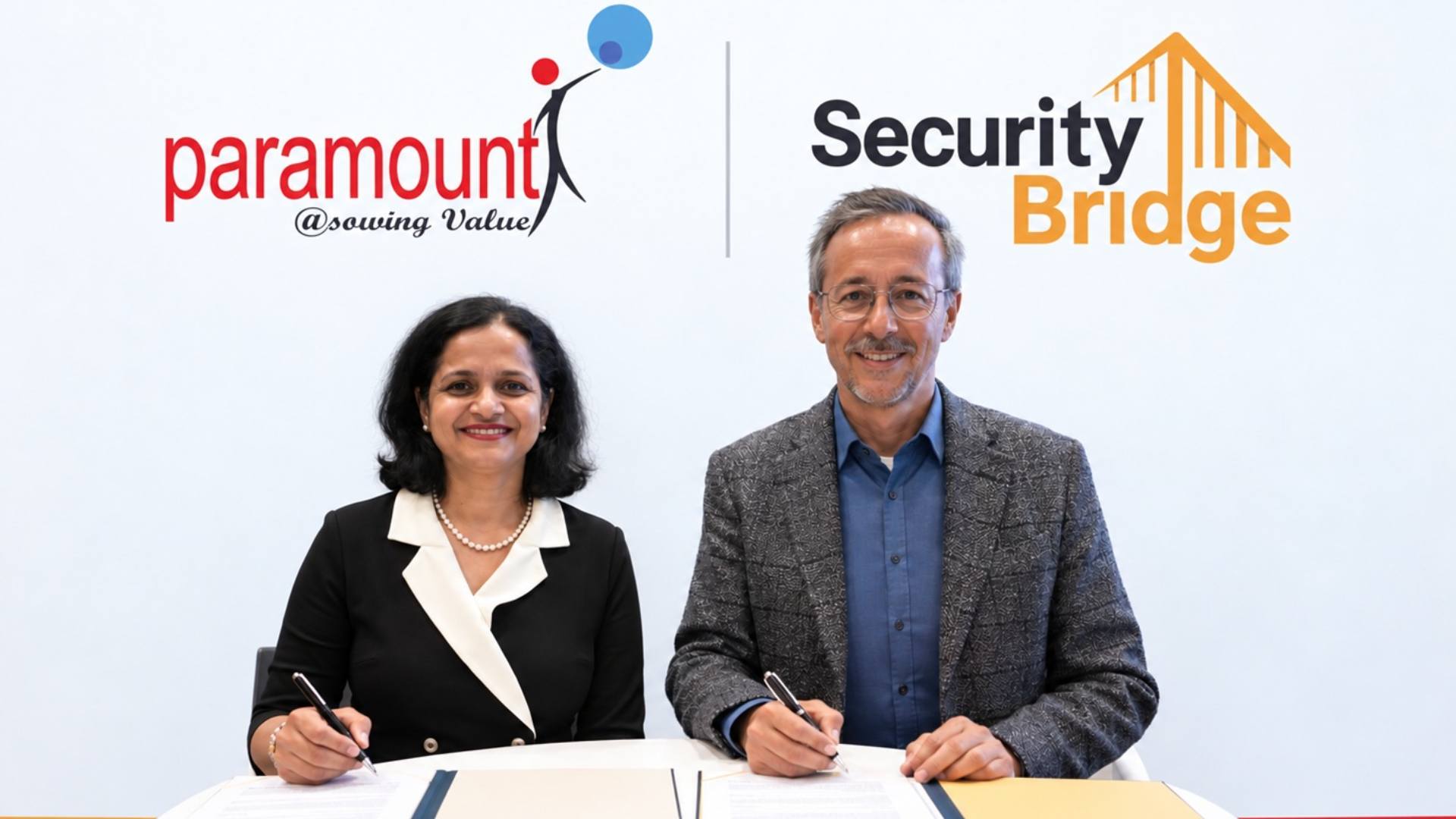
Paramount Assure, a UAE-headquartered cybersecurity company, today announced a partnership with SecurityBridge, a specialist in SAP cybersecurity, to help organisations across the GCC strengthen protection of their SAP environments and bring SAP security intelligence into their wider cyber defence operations. The partnership was signed at GISEC 2026 in Hall 3 at SecurityBridge’s stand by Neeti Rodrigues, Chief of International Sales at Paramount Assure, and Christoph Nagy, Co-founder of SecurityBridge.
The collaboration comes as enterprises face growing pressure to protect the systems behind their most critical operations. IBM’s 2026 Report found that the average cost of a data breach for organisations in the Middle East reached $8 million, with excessive privileges, poor role management and difficulty prioritising threats among the leading factors increasing breach costs. For many organisations, SAP remains one of the most business-critical systems in their technology environment, but it is not always visible enough within day-to-day cybersecurity operations.
Many enterprises already have security teams, monitoring platforms and access controls in place, but these tools do not always show whether critical SAP patches are missing, custom code introduces risk, configurations are secure, or suspicious activity is part of a wider attack. This creates a gap between SAP teams and cybersecurity teams at a time when attackers are moving faster, and business systems are more connected.
Through the partnership, SecurityBridge will provide real-time visibility and contextual SAP security intelligence, while Paramount will bring its cybersecurity expertise, SOC capabilities, regional implementation experience and local customer support. Together, the companies will help customers identify SAP vulnerabilities, monitor risk, investigate suspicious activity and connect SAP security insights with their wider cybersecurity programme.
Premchand Kurup, CEO of Paramount Assure, said: “The Gulf cybersecurity industry has grown over 27 years into a US$20 billion market built around enterprise systems such as SAP, Oracle and Microsoft ERPs. Yet ERP telemetry still does not reach the SOC with the same consistency as other security data. This leaves teams vulnerable to risks inside systems that carry financial transactions, supply chains and government services. With UAE IA Standard v2.1 and Saudi NCA ECC placing greater focus on monitoring, patching and access governance, the next frontier is clear: real-time ERP telemetry in the SOC. Our partnership with SecurityBridge brings that visibility to SAP environments, giving CISOs across the GCC stronger control over the systems they are responsible for protecting.”
For customers, the combined offering makes SAP security more operational and easier to act on. Security teams can identify missing patches, risky custom code, weak configurations, unusual user behaviour, and misuse of privileged access within SAP environments. These insights can then support faster investigation, better coordination between SAP and cybersecurity teams, and more informed decisions on how to contain risk before it affects wider business operations.
Christoph Nagy, Co-founder, SecurityBridge, said: “The Middle East is a strategic growth market for SecurityBridge, as organisations increasingly recognise that SAP can no longer remain a blind spot in their cybersecurity operations. SecurityBridge closes this gap by bringing real-time, contextualised SAP security intelligence into the enterprise SOC. Expanding our regional footprint requires strong local expertise, trusted customer relationships and deep cybersecurity knowledge. Paramount brings exactly that. Together, we can help organisations across the GCC make SAP an integral part of their security operations and continuously protect their most critical business systems.”
Organisations across the GCC can engage Paramount to assess their SAP security posture, understand visibility gaps and explore how SecurityBridge can integrate into their existing cybersecurity operations. The companies will support customers through consultation, implementation and ongoing security operations support, helping them build stronger protection around SAP without treating it as a separate or isolated security function.
Paramount and SecurityBridge will continue working together to expand customer access across the region and support new SAP cybersecurity use cases as enterprises modernise their technology environments. The collaboration reinforces Paramount’s focus on helping regional organisations protect the systems that carry their most critical business processes, data and decisions.

NETSCOUT® SYSTEMS, INC. (NASDAQ: NTCT), a leading provider of observability, AIOps, cybersecurity, and DDoS attack protection solutions, expands its data platform to provide the trusted operational context required to build the foundation for enterprise AI. The NETSCOUT data platform observes digital interactions, converts packets into high-fidelity, compact, contextualized evidence in real time, and curates that evidence at scale for observability, service assurance, cybersecurity, and AI.
This addresses a growing barrier to enterprise AI adoption: increasingly capable models still cannot deliver reliable operational decisions when the data supplied to them is incomplete, noisy, fragmented, or stripped of context. Traditional metrics, events, logs, and traces (MELT data) remain important, but often require AI systems to reconstruct what happened after telemetry has been sampled, aggregated, or separated across tools. That increases inference, compute requirements, token consumption, and the risk of an inaccurate recommendation.
Gartner predicts that by 2027, organizations that prioritize semantics in AI-ready data will increase their agentic AI accuracy by up to 80% and reduce costs by up to 60%. Agentic AI outcomes depend on context, including semantic representations of data. The need for trusted context becomes even more consequential as AI agents progress from advising operators to taking autonomous action.
“Unlocking the benefits of AI across the enterprise will not be achieved by adding another model. It will succeed through context engineering: giving AI the right operational context before reasoning begins,” said Sanjay Munshi, chief operating officer, NETSCOUT. “NETSCOUT turns observed digital interactions into grounded-truth evidence. Through our own internal testing we experienced more than a 25% reduction in AI token consumption compared with MELT only data, and more than a 75% reduction in MTTK. Compact, context-rich operational intelligence helps our customers improve decision confidence, lower the cost of AI-driven analysis, and establish the control required to move from AIOps recommendations toward safe, autonomous operations.”
Architecture Designed for the AI Era
IDC expects 80% of agentic AI use cases will require real time, contextual, and widely accessible data and states that the goal is to create a trusted, real time data environment where AI can reason, decide, and act with the right context and guardrails. NETSCOUT produces Smart Data via a unique architectural approach, bringing together two complementary capabilities that improve context engineering:
- Early semantic extraction: NETSCOUT derives operational meaning from packets at the point of observation, preserving evidence that can disappear in conventional datasets.
- Context optimization at source: NETSCOUT delivers higher-density, relevant context so AI systems can spend less of their context window and compute budget.
Together, these capabilities deliver an AI-ready operational evidence layer that complements existing observability investments and can support human operators, analytics platforms, large language models, copilots, and AI agents. Smart Data is embedded across NETSCOUT solutions and can be integrated into enterprise data and AI workflows, enabling customers to use the operational intelligence within their chosen technology ecosystems.
Value Across the AI Maturity Curve
By meeting organizations wherever they are in their operational and AI transformation, NETSCOUT’s data platform helps customers:
- Operate more productively: Equip NetOps, SecOps, DevOps, SRE, and service teams with natural-language access to detailed operational evidence, accelerating investigation and helping resolve issues faster.
- Optimize token cost: Reduce the volume of low-value data AI must process by increasing signal density, helping organizations manage telemetry, storage, token, and compute costs without sacrificing the context required to understand service behavior.
- Automate with greater confidence: Provide AI systems with independently observed, explainable evidence to support recommendations, governance, auditability, and the controlled progression from assisted operations to agentic action.
This common foundation provides AI systems with evidence-based operational context suitable for governed automation and agentic workflows, and supports observability, cybersecurity, service assurance, cloud and data center transformation, and business-service resilience. It can help teams and agents expose hidden dependencies, distinguish infrastructure failures from application issues, identify protocol and security exposures, and understand the operational impact of an event across hybrid, multi-cloud, containerized, virtual, and physical environments.
Strategic Relevance for a Rapidly Evolving Market
As access to AI models broadens and model capabilities converge, the quality, completeness, and token efficiency of the context supplied to those models becomes a more lasting source of differentiation. NETSCOUT extends the value of its core deep packet inspection-at-scale technology into a new growth arena: providing the trusted operational intelligence layer for enterprise AI and automation.
For customers, this means a path to adopt AI without abandoning existing workflows or compromising visibility. For technology partners, it creates a source of curated, network-derived intelligence that can strengthen analytics and automation. For others, it demonstrates how NETSCOUT can apply its differentiated data foundation across observability, cybersecurity, AIOps, and AgenticOps.
Resources and Attributions:
- Learn more about NETSCOUT’s data platform at https://www.netscout.com/platform
- What Is AI-Ready Data? And How to Get Yours There, Rita Sallam. https://www.gartner.com/en/articles/ai-ready-data
- Gartner Press Release, “Gartner Says Lack of Semantics Causes Inaccurate AI Agents and Wasted Spending,” May 11, 2026. https://www.gartner.com/en/newsroom/press-releases/2026-05-11-gartner-says-lack-of-semantics-causes-inaccurate-artificial-intelligence-agents-and-wasted-spending
- AI can’t run on stale data: Why enterprises are rethinking their architecture, March 24, 2026, Devin Pratt. https://www.idc.com/resource-center/blog/ai-cant-run-on-stale-data-why-enterprises-are-rethinking-their-architecture/


Strong Tile of Spain presence at CERSAIE 2026
RAW Coffee Company Launches PROOF Bakery, Bringing Fresh Baking to Its Specialty Coffee Experience
Moonrise Takes Dubai Cuisine to Almaty with AUYL Collaboration



-
News11 years ago
SENDQUICK (TALARIAX) INTRODUCES SQOOPE – THE BREAKTHROUGH IN MOBILE MESSAGING
-

 Trending11 months ago
OPPO A6 Pro 5G Review: Reliable Daily Driver
-

 Tech News2 years ago
Denodo Bolsters Executive Team by Hiring Christophe Culine as its Chief Revenue Officer
-
 VAR1 year ago
Microsoft Launches New Surface Copilot+ PCs for Business
-

 Automotive2 years ago
AGMC Launches the RIDDARA RD6 High Performance Fully Electric 4×4 Pickup
-
Tech Interviews3 years ago
Navigating the Cybersecurity Landscape in Hybrid Work Environments
-

 Tech News1 year ago
Nothing Launches flagship Nothing Phone (3) and Headphone (1) in theme with the Iconic Museum of the Future in Dubai
-
 Tech News2 years ago
Toshiba Announces MG10-D Series of Enterprise HDDs with Capacities up to 10TB