
 Have a question? +971 56 404 0503




Hospitality
A Deep Dive into the Future Applications and Implications of Artificial Intelligence in Hospitality


The continual advancements in technology and Artificial Intelligence (AI) are not just reshaping, but fundamentally transforming the hospitality industry, driving exponential value for sales, marketing, and revenue management, today and tomorrow.
A hot topic for the industry, AI is one of the key areas of focus at this year’s HSMAI Middle East & Africa Commercial Strategy Conference, taking place on 26-27 November at the Conrad Dubai. Tackling the most pressing trends facing hotel executives, the annual conference brings together the region’s hospitality sales, marketing, distribution and revenue management community for unmatched industry insights and inspiration.
The event will take a 360- degree look at AI in hospitality, covering it from inspiration and theory to practical applications across sales, marketing, distribution and revenue management. In the lead up to the conference, we asked four industry leaders for their insights into the future applications and implications of technology and AI in hospitality.
With input from John Sanei, Global Futurist, 5x bestselling author and 2x award-winning podcast co-host; Michael J. Goldrich, Founder & Chief Advisor, Vivander Advisors LLC; Leo Barrit, Vice President of Sales, FLYR Hospitality; CS Ramachandran, CRME, VP, Hotel Revenue Optimization, Preferred Hotels & Resorts, and Michael McCartan, Area Vice President EMEA, IDeaS.
How do you see AI be(come) a real work partner to sales, marketing, revenue management and distribution professionals?
All five industry leaders agree that AI is rapidly evolving from just a tool to a powerful work partner. By automating routine and data-intensive tasks and facilitating data-driven decision making, AI significantly increases productivity and impact as it frees teams to focus on strategy, creativity, customer relationships, and revenue growth.
“From a revenue manager standpoint, there are a dozen or more tasks they have to do on a weekly basis, from daily pickups and forecasting, to reporting, analysis etc. There are a lot of disparate tasks that make up their 40+ hour work week. AI is going to cut down dramatically on many of those tasks by creating the initial reports and analyses for them, and now they’ll just have to manage by exception. Revenue managers and their teams will provide guardrails for AI to operate within, and then managers can perform any tasks outside those guardrails,” said Leo Barrit.
“AI is a force multiplier,” said Michael Goldrich. “In revenue management, AI analyzes real-time market trends, enabling dynamic pricing and demand forecasting. For marketing, it personalizes guest communications and optimizes campaigns based on granular data insights.”
Michael McCartan echoes this sentiment, “Applied in revenue management solutions specifically, AI and automation play a critical role in processing forecasting-related data to detect shifts in demand and quickly responding with recommended pricing and inventory management decisions.”
CS Ramachandran added, “In sales, AI’s predictive analytics and automation lead to better performance and higher deal closures. Overall, AI reduces workload and stress, contributing to higher job satisfaction and employee retention.”
Looking beyond what AI can do today, John Sanei commented: “The real question is how we are using AI in preparation for the future. This is what I call the ‘AI opportunity radar’ which has four quadrants: the internal and external realms of AI application as well as the differentiation between today and tomorrow. Many organizations focus on just the internal applications of AI for today, without planting the seeds for tomorrow’s work. In fact, that’s just 25 percent of the opportunity that exists. We need to move from a focus on AI as a tool to AI as an unprecedented partner to transform an organization’s core offering, to revolutionize the industry, or even establish a new one.”
If everyone is going to be using AI, how can hotels and brands still differentiate themselves? How can we balance automation with the need for personalized guest experiences?
The interviewees agree that true differentiation hinges on how seamlessly hotels integrate AI with the human touch to provide the unique and authentic experience travelers expect today. Also, a critical component is the training of teams to discern when to rely on AI and when to step in with genuine human empathy. The combination of guest engagement training with the right technology and established feedback mechanisms will be crucial for continuous service improvement.
Michael Goldrich said, “Leading brands will leverage AI to anticipate guest needs and personalize at scale, while still delivering warmth and authenticity through frontline staff. Ultimately, successful hotels will make the human-AI collaboration invisible, leaving guests with the impression of superior, attentive service.”
John Sanei commented, “Like many other technologies AI will become democratized, and to some extent it already has. It’s not about which AI tools you use, it’s what the teams do with the technology to enhance the customer experience and transform the curation, creation, and delivery of the hotel or brand’s core offering. We need to think about how AI can help organizations build new capacity and give them the ability to behave towards the future. Asking existing teams to innovate – let alone disrupt – doesn’t work. We need to build ‘tomorrow teams’ that work alongside the today team to make this happen.”
From CS Ramachandran’s perspective, “HI (Human Interaction) will trump AI (Artificial Intelligence) in the fast-evolving landscape of AI especially in hospitality. Hotels must differentiate by blending automation alongside personalized guest experiences. Some steps in this direction include creating a unique brand identity, ensuring exceptional human interaction, while utilising innovative technology to enhance services.”
“In the hotel industry, we of course already have different classes ranging from luxury to economy, but AI is going to help personalize the offer for you even more precisely,” commented Leo Barrit. “With AI, the hotel will know the individual customer or guest, know your likes and dislikes, your buying propensity and timing, and provide you with a personalized offer that will resonate with you. The industry will evolve to that quickly. Pricing is a component of that, but as AI learns more from customer data that will be a part of providing those very personalized offers.”
Michael McCartan said, “A strong brand identity is key. If using AI-enabled tools like an online chatbot or a voice-activated virtual assistant to interact with guests, ensure that they reflect your brand’s personality and tone of voice. This consistency across all touchpoints, from online to in-person, creates a more seamless and memorable guest experience. One thing that will go a long way with guests is to ensure you are being transparent about how you use AI and prioritize data privacy. This builds trust with guests and positions your brand as a responsible and ethical leader.”
What jobs do you think AI could make redundant in hospitality and what new roles could it create, especially when it comes to sales, marketing, revenue management and distribution?
John Sanei said, “Every job that is repetitive in its activities will be the first to become redundant and to be replaced by AI. Although it will be impossible to say which jobs we will have and need in the future, we will see a profound shift in the relationship between humans and machines. We will see two types of businesses: those driven by AI and robots and organic businesses engineered by humans. The currency of the future is human connection, which will become the highest form of luxury and present a great opportunity to the hospitality industry for purposeful, transformational travel and tourism.”
Michael McCartan commented “While AI won’t entirely replace human roles, it will undoubtedly reshape the nature of these jobs. As the economist Richard Baldwin famously said at 2023 World Economic Forum’s Growth Summit, “AI won’t take your job, it’s somebody using AI that will take your job”. As AI becomes more sophisticated, new roles will emerge. AI Specialists, Data Analysts, and AI Ethics Officers will be in high demand to develop, implement, and manage AI systems ethically. Additionally, human-centred Design Specialists will be crucial to ensure seamless human-AI collaboration.”
Michael Goldrich said, “AI will likely redefine roles such as data entry, basic customer service, and routine reporting in hospitality. However, this shift will open the door to new, specialized positions: AI Strategy Managers to oversee ethical deployment, Experience Design Architects to create hybrid digital-human guest journeys, and Revenue Intelligence Officers to merge AI insights with industry acumen. AI in hospitality isn’t about eliminating jobs; it’s about evolving them. The future belongs to those who can synergize AI’s capabilities with human creativity, transforming service delivery into a refined art.”
CS Ramachandran added, “As with every other decade, when there is a change in technology, the industry adapts with new roles. We have seen Sustainability Specialists, Guest Experience Managers and DEI focused roles emerge, and now existing roles will evolve and adapt to include technology expertise. The most successful professionals will be those who can effectively collaborate with AI, oversee the work, and identify opportunities for AI implementation.”
Leo Barrit thinks the headcount will likely stay neutral. “The productivity of your managers will increase, but their skillsets will need to continually be enhanced. We’re still in the early days with natural language prompts, where the key is still making sure you’re using the right prompts. I believe that eventually as machine learning improves, we’ll arrive to the point where you don’t have to be quite as good in writing prompts within a few years.”
What safeguards should be in place to maintain brand authenticity when it comes to using AI?
CS Ramachandran said, “There are a lot of guidelines being developed around this especially given the exponential use of AI tools. Transparency in AI usage is key, this includes how we collect data and how we avoid the stereotyping of the same. High-quality, diverse datasets are key to train AI models as poor data will not only lead to inaccurate results but also further ‘AI Hallucinations’. AI tools for real-time sentiment analysis helps to align brand messaging with consumer perceptions. By implementing these measures, brands can harness AI’s power while preserving authenticity and fostering customer trust.”
“Now more than ever, ethical guidelines and data privacy are paramount,” commented Michael McCartan. “Transparency about AI usage, rigorous data privacy and security measures, and adherence to ethical AI practices, including eliminating bias in AI algorithms, are crucial not only to build trust with customers, but also to ensure accuracy. AI tools must also be ‘trained’ to align with a hotel’s brand voice and personality. Comprehensive brand guidelines, AI training on high-quality, brand-aligned content, and human review of AI-generated content ensures consistency – and must be regularly monitored and fine-tuned.”
Leo Barrit said: “The hotel brand will need to apply proper guardrails and parameters on how AI is being used. If you’re applying the right parameters on pricing and the structure of your brand should be portrayed, the AI will operate within those. For a large hotel brand, they may not be able to centralize the efforts of thousands of hotels, but they can create a set of guidelines that speak to their global brand, and then more specific sales and marketing guidelines for individual properties or regions.”
Michael Goldrich commented, “To maintain brand authenticity with AI, hotels must establish rigorous standards and oversight. Clear guidelines for AI-generated content, structured human reviews for customer-facing outputs, and AI governance frameworks are essential. Training teams on AI’s limitations, setting up authentication protocols, and conducting regular audits ensure AI aligns with brand voice and values. Equally crucial is transparency around AI’s role in guest interactions. Authenticity is built by candidly integrating AI, enhancing the guest experience without overshadowing the human essence of hospitality.”
John Sanei concluded, “The highest form of technology is authenticity. With the democratization of AI tools, these will no longer be a differentiator. Brand authenticity will be driven by how companies are using technology, including AI, to give guests the authentic experience they are looking for.”










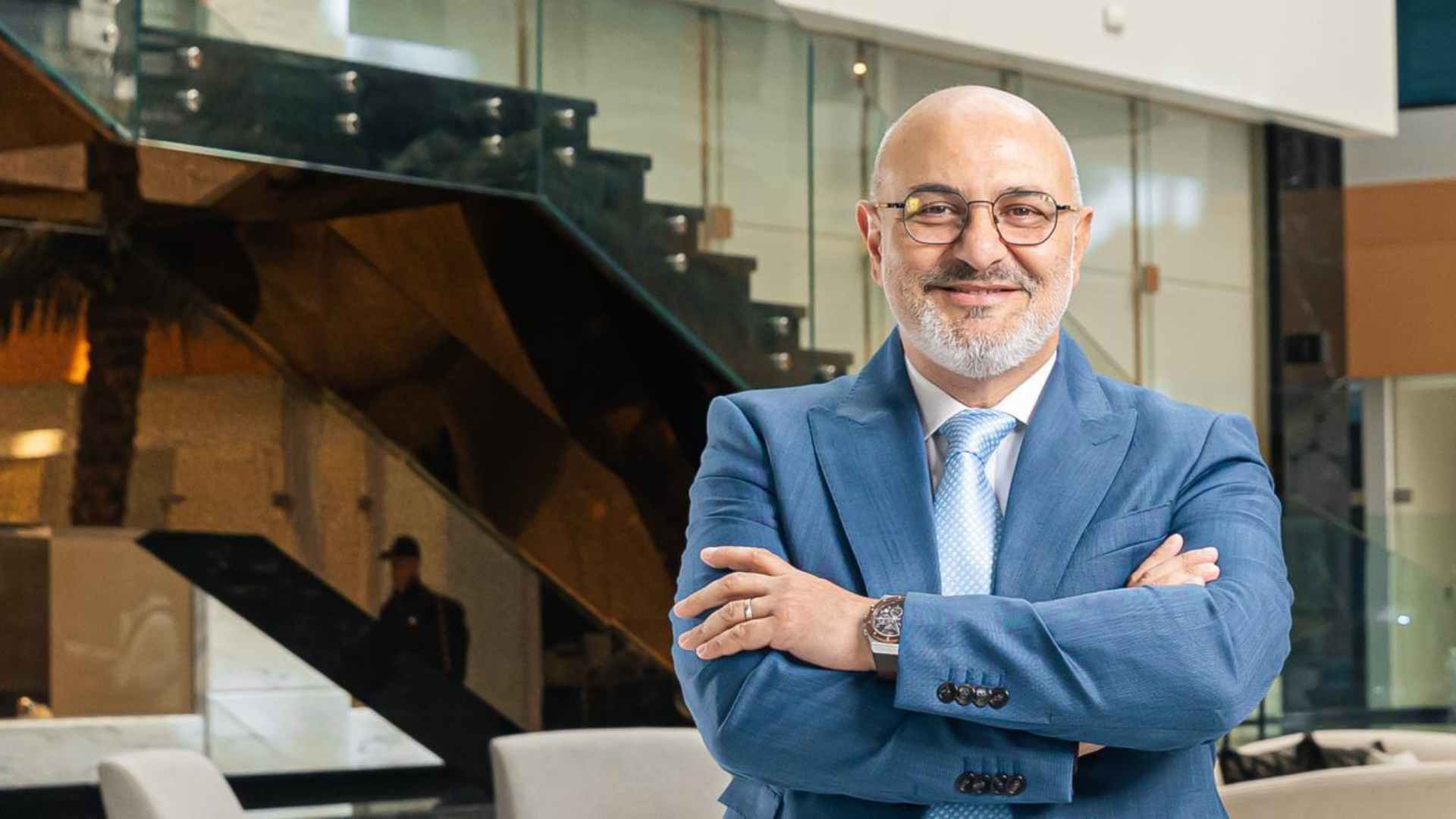
Exclusive interview with Andre Adel Saade, General Manager of Radisson Blu Hotel & Convention Centre, Riyadh
You have led hotels across Saudi Arabia, the UAE, Lebanon and Algeria. What has working across different markets taught you about hospitality leadership?
Working across different markets has taught me that there is no single formula for hospitality leadership. Every market has its own culture, expectations and way of doing business. A good leader needs to understand that context, respect it and adapt accordingly.
However, I believe the fundamentals of hospitality remain the same wherever you are. People want to feel valued, whether they are guests or colleagues. They want to be treated with respect, honesty and genuine care.
I have always believed that hospitality is much more than the physical product we offer. Every hotel has rooms, restaurants and facilities, and these must meet the right standards. What ultimately distinguishes one hotel from another, however, is its people, the relationships they build with guests and how they make them feel.
For me, this starts with getting the basics right: clean, well-maintained rooms and bathrooms, good food, an excellent breakfast with plenty of choice, from healthy options to food that reminds people of home, and, above all, a sincere approach to service. We may not always get everything right, and I do not believe any hotel can promise that. What matters is how we respond when something goes wrong. We should acknowledge our mistakes, apologise sincerely and find a solution. Guests should never feel that we are more concerned with defending ourselves than taking care of them.
I also believe in building relationships with guests that feel almost like family, while always maintaining the right professional boundaries and standards. It is about remembering people, understanding their preferences and making them feel that their presence genuinely matters.
From an operational perspective, I look at the business through what I call the five Ps: People, Product, Price, Processes and Presentation. People will always come first because hospitality is ultimately delivered by people. Product defines the experience we offer, Price ensures we position it correctly, Processes provide consistency and discipline, and Presentation elevates the perceived value of that experience. I have also always believed in leaving something behind wherever I work, whether it is a better process, a service detail, a commercial idea or a stronger team. One of the most rewarding things is returning to a hotel years later and seeing that something you introduced is still being practised.
Ultimately, my experience across different markets has taught me that standards can be global, but hospitality must always feel local, personal and genuine. The challenge, and the opportunity, is to adapt to different cultures while maintaining high standards and creating an experience that makes every guest feel valued and at home.
You have been recognised as Best General Manager in KSA twice. What do those recognitions mean to you, particularly from a leadership perspective?
It is certainly an honour to receive such recognition, particularly in a market as competitive and dynamic as Saudi Arabia. I am grateful for it, but I have never looked at a General Manager award as an individual achievement. A hotel is far too complex for one person to take credit for its success.
Every guest experience is the result of many people doing their jobs properly, often behind the scenes and without recognition. From Housekeeping and Engineering to Front Office, Food & Beverage, Sales, Finance and Human Resources, every department contributes to what the guest ultimately experiences.
For me, leadership is not about standing above people or expecting others to do things that you would not do yourself. It is about leading by example, being present, listening, taking responsibility and treating people fairly. Respect is earned through actions and consistency, not simply through position or title. Humility is equally important. You never stop learning, and you should never consider yourself above the people you work with. Some of the best ideas and most valuable lessons come from colleagues at every level of the organisation. A good leader must be willing to listen and recognise that he does not have all the answers.
My responsibility is to set the direction, establish clear expectations, support people, develop their capabilities and give them the confidence to take ownership. Accountability is essential, too, but it should always be applied fairly and with the intention of improving performance. The awards are meaningful because they recognise the collective effort behind the results.
Yet one of the things I value most is seeing people I have worked with grow in confidence, take on greater responsibilities and progress in their careers. For me, one of the greatest measures of leadership is not simply what we achieve, but how much stronger our people and our organization become along the way.
Having returned to Saudi Arabia in a leadership role, what changes in the Kingdom’s hospitality landscape have stood out to you most?
Having worked in Riyadh from 2002 to 2005, before moving to Al Khobar to open a five-star property, I left Saudi Arabia at the end of 2008 and returned in 2019. Coming back after more than a decade gave me a valuable perspective on the Kingdom’s evolving hospitality landscape.
The pace of development has been remarkable, but what stands out to me most is the growing focus not only on building new hotels and destinations, but also on developing talent, enhancing operational performance, creating distinctive guest experiences and giving visitors compelling reasons to return.
Riyadh, in particular, has developed into a much more diverse business and lifestyle destination. The growth of international business, major conferences, sporting events, entertainment and dining has broadened the reasons people visit the city, creating new opportunities for hotels to serve a wider range of guests.
For us as hoteliers, this growth brings both opportunity and responsibility. With more hotels entering the market, the physical product alone will not be enough to set one hotel apart. The real difference lies in how well we operate, how consistently we deliver and how effectively we understand and respond to our guests.
Saudi Arabia has a strong tradition of welcoming guests, and I believe our industry has a real opportunity to reflect that spirit. For me, genuine hospitality is about making people feel valued and at ease, almost as though they are being welcomed into a home, while maintaining the professionalism and standards expected of an international hotel. As the market continues to grow, I believe the hotels that distinguish themselves will be those that combine a strong product and capable teams with consistent standards and a genuine understanding of what guests value. That is what turns a good hotel experience into one that people remember and want to return to.
What opportunities do you see for convention and business hotels as Riyadh continues to attract international events and corporate activity?
I believe the opportunity is significant because Riyadh’s growth is creating demand at several levels simultaneously. We are seeing corporate travel, government and private-sector activity, exhibitions and conferences, major international events and an important market for social occasions. At the same time, the city’s expanding entertainment offering and growing interest in Saudi culture and heritage are attracting more leisure travellers.
The profile of the business traveller is also changing. A trip that may once have been purely corporate can now extend into a leisure stay, with guests choosing to experience the city’s restaurants, entertainment, cultural attractions and heritage destinations. This creates an important opportunity for hotels to serve both business and leisure needs.
For convention hotels, the opportunity goes well beyond providing meeting rooms. Organizers need an integrated solution that brings together accommodation, meeting and exhibition facilities, technology, catering, transportation and experienced teams capable of managing the entire event. At Radisson Blu Riyadh Minhal, our hotel and convention centre allow us to offer these services under one roof. With event spaces capable of hosting up to 2,334 guests, we can cater to a wide range of meetings, conferences and social occasions.
However, facilities alone do not guarantee success. The quality of the experience depends on how well our teams work together. An event organiser needs to feel confident that we understand the requirements, communicate clearly, anticipate challenges and deliver what we promise. When something does not go according to plan, we need to respond quickly, take responsibility and find a solution.
In this business, responsiveness is critical. Organisers need partners who can make decisions, accommodate last-minute changes and find practical solutions without compromising service or execution. Our role goes beyond providing an event space; it is about being proactive, adaptable and solution-oriented, so that even when plans change at short notice, the event runs smoothly and the organiser can focus on its success.
Radisson Blu Riyadh Minhal recently marked Saudi National Day through its collaboration with Nutq Association. How does community engagement fit into the hotel’s approach to hospitality today?
In my opinion, hospitality should extend beyond the guests who walk through our doors. A hotel is part of its community, and we have a responsibility to contribute positively to the people and society around us.
Our collaboration with Nutq Association around Saudi National Day was particularly meaningful because it allowed us to celebrate an important national occasion through engagement and inclusion, rather than treating it simply as another event on the calendar. What made the occasion especially memorable for me was seeing the orphaned children who joined us through Nutq Association and the smiles on their faces. Their happiness genuinely touched me. It was a simple but powerful reminder that sometimes, the most meaningful thing we can offer is not something material, but a moment of joy, a sense of belonging and the feeling of being cared for. That, to me, is at the heart of hospitality.
I strongly believe that genuine hospitality begins with how we treat people. We welcome guests from different nationalities, backgrounds and generations every day, and we have an opportunity to make people feel respected, valued and included. The same principle should apply beyond the hotel itself.
Community engagement does not always need to be a large initiative. What matters is that it is sincere, meaningful and reflects a genuine willingness to contribute. When we use our facilities, our teams and our position within the community to support worthwhile causes, hospitality becomes more than a business; it becomes a way to make a positive difference in people’s lives.
For us, community engagement is a natural extension of hospitality. Seeing the smiles on those children’s faces was a reminder that sometimes, the simplest moments can leave the most lasting impression.
With the convention centre able to host up to 2,334 guests across its event spaces, how are you seeing demand for business events, conferences and social occasions evolve in Riyadh?
We are seeing both the volume and sophistication of demand increase. Riyadh is attracting more corporate meetings, conferences, government and international events, while the social-events market, particularly weddings and large celebrations, continues to be an important source of business.
Being both a hotel and a convention centre gives us a distinct advantage. We can offer organisers an integrated experience combining accommodation, meeting and exhibition spaces, food and beverage, technology and the wider services of a full-service hotel.
However, the larger and more complex the event, the more important teamwork and attention to detail become. Sales, Banqueting, Culinary, Rooms, Engineering, IT, Security and Front Office must operate as one team. Hundreds of delegates may arrive within a short period, several sessions may run simultaneously, and catering, accommodation and technical requirements must all be coordinated while the hotel continues to serve its other guests.
This requires strong processes, clear communication and people who understand both their responsibilities and the importance of supporting one another. As a General Manager, my role is to ensure that our teams have the direction, resources and support they need to deliver.
I also believe that, regardless of the size of the event, we must never lose sight of the individual guest. Behind every conference delegate, wedding guest or corporate traveller is a person with expectations. They may remember the quality of the facilities, but they will also remember whether they were welcomed warmly, whether their needs were understood and how we treated them when they needed assistance.
That is why operational excellence and genuine hospitality must go hand in hand. Our processes should be strong enough to make the operation run smoothly, but our service should never feel mechanical or impersonal. As Riyadh continues to establish itself as an international destination for business and events, hotels with genuine convention capability will have an important role to play. Our opportunity is to deliver the facilities, expertise and consistency that organisers expect, while ensuring that every event is supported by a team that understands the importance of getting the details right and making the experience personal.
This Halloween, Nalu is adding a spooky twist to its award-winning Saturday brunch with Boo & Brunch, a family- and pet-friendly afternoon filled with delicious food, lively entertainment and just the right amount of mischief!
Taking place on Saturday 31 October from 1:00 PM to 4:00 PM, the waterfront venue will be transformed with Halloween décor and playful touches for the occasion. Families can bring their little monsters along for face painting, a treat station and dedicated children’s activities, while furry companions are welcome to join the fun on Nalu’s outdoor deck.
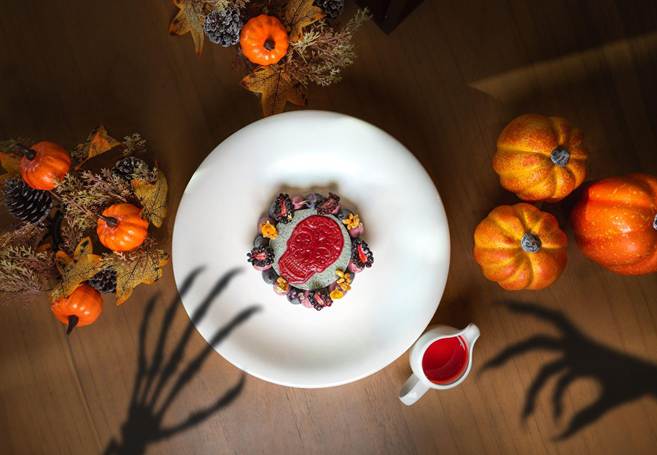
Guests can settle in for Nalu’s signature Surf Brunch, featuring coastal-inspired favourites including Tuna Tostadas, crispy Coconut Prawns and the Nalu Island Platter, followed by the special Halloween dessert, La Calavera – a blood orange and raspberry gel with black sesame parfait, blackberries and red sauce.
DJ Nicholas Hillman and Lobbo will keep the energy flowing throughout the afternoon with an upbeat soundtrack, while costumes, treats and spooky surprises bring the spirit of the season to Nalu’s laid-back waterfront setting. Guests of all ages are encouraged to dress up and embrace the Halloween spirit, adding even more colour and character to the afternoon.
Brunch packages are priced at AED 235 per person, including unlimited soft drinks for three hours and a food set menu, or AED 299 per person, including an unlimited selection of drinks for three hours and a food set menu.
Guests are invited to gather their favourite people, dress for the occasion and bring their furry sidekicks along for an afternoon of good food, great company and a little light-hearted Halloween chaos by the water.
Hospitality
TWG Tea Unveils the TWG Tea Gallery, Its Largest Flagship and First-Ever TWG Tea Museum at Singapore Changi Airport
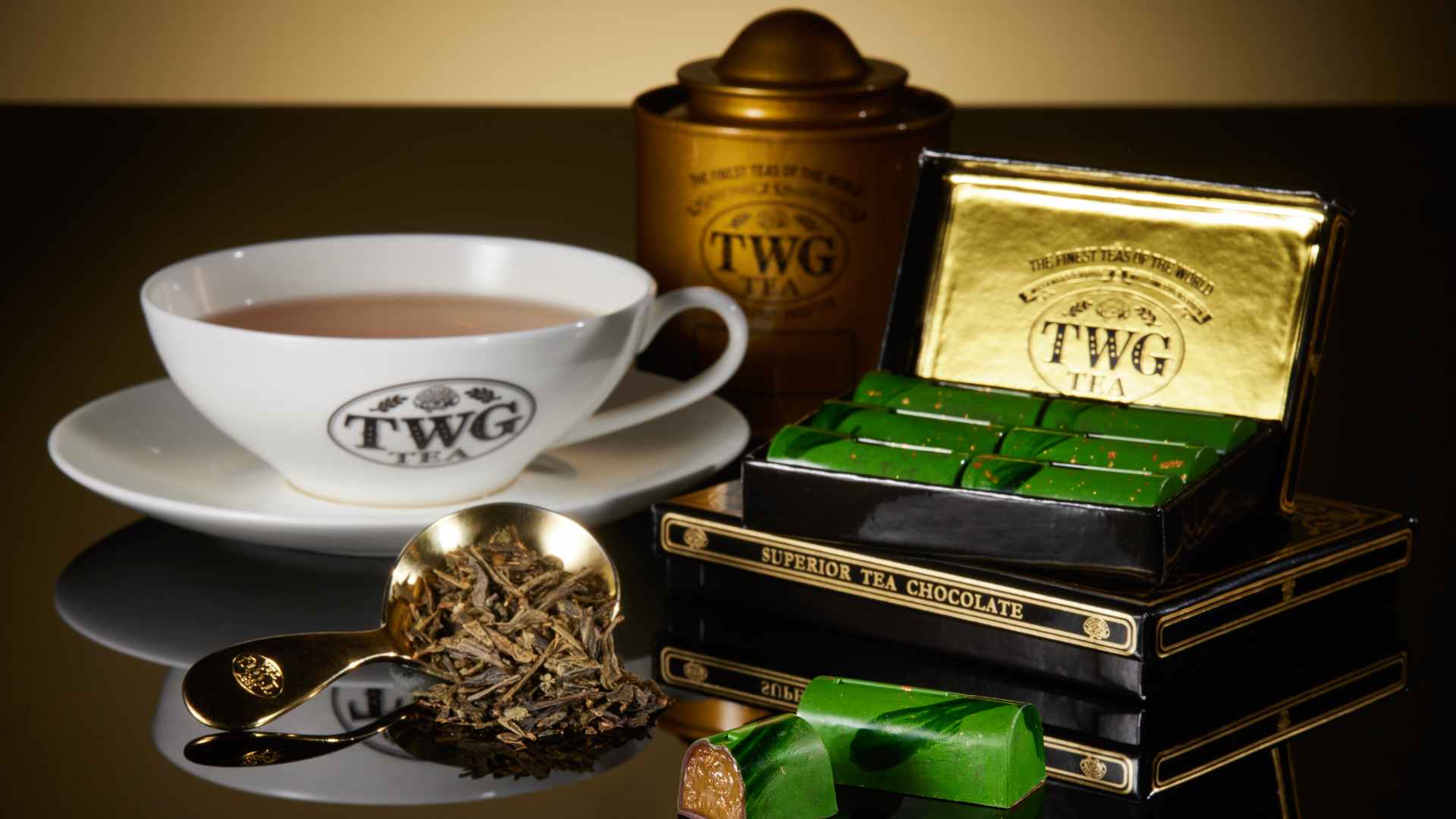
TWG Tea, the finest luxury tea brand in the world, unveils its largest global flagship, TWG Tea Gallery, at Singapore Changi Airport Terminal 3, marking a significant milestone in the brand’s international growth. Welcoming travellers around the clock, the TWG Tea Gallery is strategically located within one of the world’s leading aviation hubs, underscoring TWG Tea’s continued investment in travel retail as a key pillar of its global expansion strategy. Spanning 2,700 square feet beneath a soaring 23-foot-high ceiling, the new flagship represents the brand’s most ambitious retail expression to date, setting a new benchmark for luxury tea in the global travel retail landscape.
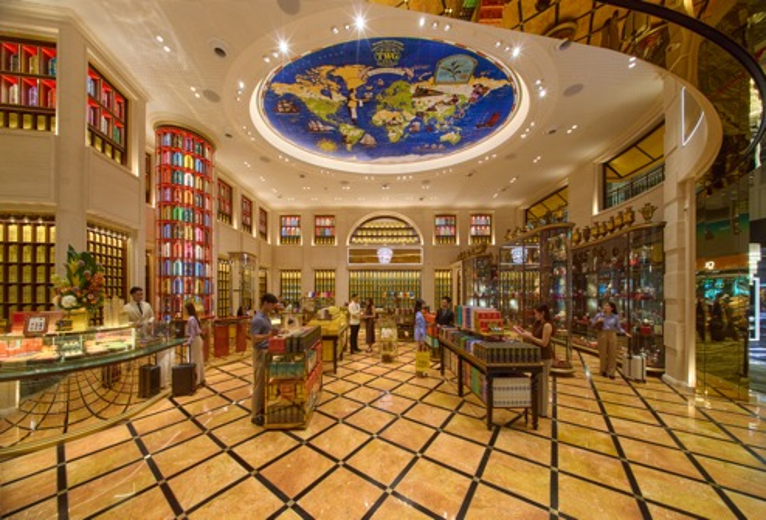
Envisioned as an immersive expression of TWG Tea’s craftsmanship and savoir-faire, this destination invites discerning travellers into a luminous world where rare harvests, exquisite blends and timeless rituals converge. Its landmark TWG Tea Museum showcases more than 170 antique tea wares and over 50 antique Russian samovars from the 17th to 20th centuries, personally curated by the brand over the past 15 years from around the world. TWG Tea Gallery also introduces a selection of exclusive creations, including the Grand Voyage Tea from the Grand Mode Tea Collection, the Singapore Surprise Gift Set, and specially created tea-infused macarons, ice cream and sorbet.
Bringing together the Tea Boutique, curated tea accessories, bespoke gifting and a Takeaway experience, this flagship also introduces Singapore’s only Tea-Infused Ice Cream & Sorbet concept, designed for travellers on the go. An impressive tea wall displaying more than 1,200 tea tins anchors the space, transforming the space into a compelling new expression of TWG Tea for today’s global traveller.
“The TWG Tea Gallery represents the most definitive expression of TWG Tea to date. More than a Tea Boutique, the flagship brings the past, present and future of tea into one immersive experience, celebrating the stories, traditions and artistry that have shaped tea over the centuries, brought to life through its landmark TWG Tea Museum. Singapore has remained central to TWG Tea since its founding, and we are honoured to present our largest global flagship at Changi Airport, an icon of aviation excellence and an extraordinary platform to bring the world of TWG Tea to travellers from around the world.”
—Taha Bouqdib, President & CEO of V3 Gourmet and Co-Founder of TWG Tea
“Changi Airport is proud to be home to TWG Tea’s largest flagship store in the world and its first-ever TWG Tea Museum. As one of Singapore’s most recognised brands, TWG Tea offers travellers a uniquely Singapore experience. Together with TWG Tea, we are delighted to introduce a collection of exclusives created specially for Changi Airport, including Singapore’s only tea-infused ice cream and sorbet concept. This new flagship transforms a retail visit into an immersive journey through the heritage, artistry and culture of tea, reflecting the innovation and hospitality that define both TWG Tea and Changi.”
— Hung Jean, Managing Director of Airside Concessions at Changi Airport Group
A Voyage Through Design
This location within Changi Airport was chosen to house TWG Tea Museum to form a defining part of the flagship experience, showcasing more than 170 antique tea wares and decorative objects spanning cultures and eras. The collection offers a compelling window into the artistry and cultures that have shaped tea over the centuries, adding a rich traditional dimension to the contemporary travel retail experience.
Among its highlights are Yixing clay teapots, traditionally marked by their makers and prized for their craftsmanship and provenance, alongside Chinese and Western tea wares tracing evolving traditions of form and decoration from the 18th century to the present day. Blue-and-white ceramics shaped by Chinese-Islamic artistic exchange sit alongside porcelain once prized in Europe as “white gold,” revealing the movement of ideas and aesthetics across cultures through the rituals of tea.
The collection also includes more than 50 antique samovars from Russia, with notable 19th- and early-20th-century examples from the celebrated workshops of Tula and beyond. Works by makers such as the Batashev and Shemarin brothers bear distinctive hallmarks attesting to their provenance and craftsmanship, offering a further perspective on the decorative traditions surrounding tea.
This dialogue between cultures continues in the flagship’s design, crowned by a hand-painted ceiling depicting a luminous world tea map. As its defining architectural feature, the composition traces the global journey of tea through intricate motifs and rich colour, extending the museum’s narrative of cultural exchange into the contemporary setting of Changi Airport Terminal 3.


A LEADERSHIP PHILOSOPHY FOR MODERN HOSPITALITY
A Little Boo with Your Brunch: Halloween Takes Over Nalu

Deyaar builds on its 2026 handover momentum with 711 new homes at Tria in Dubai Silicon Oasis



-

 Trending12 months ago
OPPO A6 Pro 5G Review: Reliable Daily Driver
-

 Tech News2 years ago
Denodo Bolsters Executive Team by Hiring Christophe Culine as its Chief Revenue Officer
-
 VAR1 year ago
Microsoft Launches New Surface Copilot+ PCs for Business
-

 Automotive2 years ago
AGMC Launches the RIDDARA RD6 High Performance Fully Electric 4×4 Pickup
-
Tech Interviews3 years ago
Navigating the Cybersecurity Landscape in Hybrid Work Environments
-

 Hospitality2 years ago
Gulfood 2025 30th Edition Kicks Off Today, Setting New Benchmarks in F&B Growth and Innovation
-

 Tech News1 year ago
Nothing Launches flagship Nothing Phone (3) and Headphone (1) in theme with the Iconic Museum of the Future in Dubai
-

 VAR2 years ago
Samsung Galaxy Z Fold6 vs Google Pixel 9 Pro Fold: Clash Of The Folding Phenoms