
 Have a question? +971 56 404 0503




Financial
Men Receive More Monetary Benefits, Women Report Better Work-life Balance


Reveals a Bayt.com and Markelytics Solutions MENA Study
Study unveils a higher tendency amongst men to switch jobs than women with both genders expecting increased salaries by 20% in 2025.
Bayt.com, the Middle East’s leading job site, and Markelytics Solutions have collaborated on a new research and unveiled the results of their first study together, named the Salary Survey in the MENA region. The initiative delves into core aspects of employee satisfaction, including compensation, work-life balance, job security, and professional growth. Drawing on responses from over 1,200 employed individuals across the GCC, North Africa, and the Levant, the research identifies opportunities for employers to enhance compensation structures, retain talent, and better understand the evolving needs of today’s workforce.
The survey highlights notable patterns in job mobility among MENA professionals. Men exhibit a higher tendency to switch jobs compared to women (65% vs. 50%), often driven by the pursuit of better compensation or career progression. Younger respondents (18–25) display particularly high turnover rates with over 40% having a tendency to switch jobs with many having held three or more roles early in their careers. In contrast, employees aged 36 and above often report having five or more past roles, reflecting career stability and growth. Additionally, 81% of respondents have spent no more than two years with their current employer, indicating widespread job transitions across the region. Regionally, employees in North Africa and the Levant tend to have longer tenures due to local workforce participation and union protections. In the GCC, which includes a large expatriate workforce, contractual limitations set by employers result in shorter tenures, as 48% of respondents have been with their current employer for only 1–2 years.
The survey also highlighted benefits of employees, ranging from monetary and work-life balance to professional development. The results revealed that 77% of respondents receive monetary benefits, such as bonuses or overtime pay, with men more likely to access these financial perks. Women, meanwhile, benefit more from policies supporting work-life balance. Healthcare coverage is most prevalent in GCC countries, where nearly half of employees receive medical insurance, while employees in the Levant receive the least healthcare coverage. In terms of benefits related to professional and personal development, opportunities are limited, with North Africa showing relatively better engagement in training programs. Flexible working hours are reported by 25% of respondents, but family-oriented benefits like educational allowances or travel support remain scarce.
The study also highlighted that employees (36+) report higher satisfaction levels regarding salary and overall work experience, compared to younger groups. However, dissatisfaction with compensation persists, with 28% of men and 38% of women describing themselves as “not at all satisfied” with their salaries. North Africa leads in satisfaction levels related to management and organizational culture, whereas GCC and Levant respondents cite stagnant wages and limited benefits as key concerns. Workplace proximity, strong leadership, and a reputable company name, significantly influence employee loyalty across all regions.
In terms of compensation trends, a majority of respondents (66%) did not receive raises in 2024, with 46% of women and 34% of men currently expecting salary increases of 20% or more in 2025. One in five plans to request a raise in 2025, reflecting elevated wage expectations. North Africa leads the region in 2024 salary increments, while the Levant shows minimal optimism for future raises, likely due to economic challenges. Employees in the GCC indicated benefits from employer-provided housing and allowances. In terms of earning dynamics, around three quarters of men who took part in the study claim to be sole earners, while only 31% of women participants claim to receive support from and rely on spouse or family income.
High job mobility remains a defining feature of the MENA workforce, with 59% of respondents planning to leave their current positions in the near future. Younger professionals (18–25) lead this trend, citing inadequate salaries, burnout, and limited recognition as primary motivators. Toxic workplace environments, including office politics and favoritism, further contribute to dissatisfaction. Overall, 87% of respondents report switching jobs at least once in the past year, emphasizing the urgent need for employers to address retention challenges.
Jasal Shah, CEO of Markelytics Solutions, commented: “These findings reflect the evolving priorities of a diverse workforce, where employees expect more than just competitive salaries; they also seek personal growth, stability, and supportive work cultures. The comprehensive study is a direct result of our new partnership with Bayt.com, which can enable organizations in the MENA region to make informed decisions that not only align with employee needs but also bolster long-term business success.”
Dina Tawfik, Vice President of Growth at Bayt.com, said: “We’re thrilled to collaborate with Markelytics Solutions on this survey, which shines a spotlight on critical aspects of employee satisfaction in the MENA region. Through insights on compensation, benefits, and mobility, we aim to help employers optimize their people strategies and empower employees to find workplaces that truly meet their aspirations.”
The Salary Survey underscores several critical gaps within compensation, benefits, and career advancement structures, particularly for younger employees and women. By addressing these areas, organizations can more effectively engage their talent, reduce turnover, and build a resilient workforce. Conducted online in the month of December 2024, the survey included more than 1,200 employed respondents from GCC countries, North Africa, and the Levant. With 87.9% participation from GCC and North Africa, the data provides actionable insights to guide future workforce strategies.













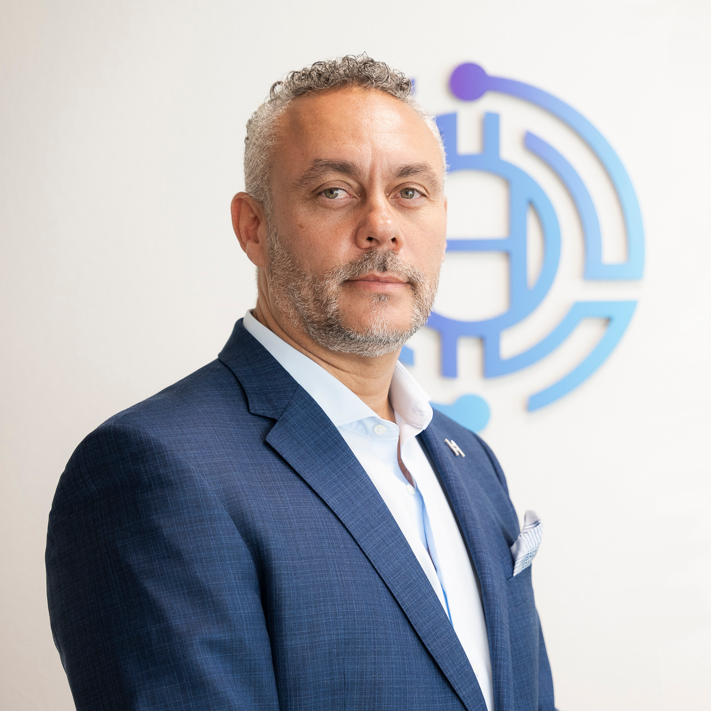
Stefan Deiss, CEO and Co-Founder, The Hashgraph Group
The Middle East has moved faster on digital identity than almost any other region in the world. The UAE Pass now connects residents to more than 5,000 government and private services. Saudi Arabia’s Absher platform has issued over 28 million unified digital IDs. Dubai has gone fully paperless across 45 government entities.
But these systems were built for a world where the main challenge was convenience: getting citizens online, reducing paperwork, speeding up access to services. The threats they were designed to handle were stolen passwords, forged documents and basic impersonation.
What they were not built for is an environment where artificial intelligence can generate a convincing human face in seconds, clone a voice from a few minutes of audio, and inject a synthetic video feed into a verification check in real time.
What distributed ledger technology actually adds
Most digital identity systems today are centralised. Your credentials sit in a government or enterprise database, and every time your identity needs to be checked, the system queries that database. Sometimes that means scanning your face against a stored biometric template. Sometimes it means pulling up your document records and cross-referencing them. Either way, the process depends on one central store of information being secure, accurate and available.
The model works until it doesn’t. A single database holding millions of identities is a high-value target. An attacker who gets in does not compromise one person. They compromise everyone. And the tools available to attackers are improving fast.
The GCC fraud detection market has reached $1.2 billion. Deepfake attacks on identity systems are surging globally. In May, the Saudi Data and Artificial Intelligence Authority published updated deepfake guidelines that explicitly recommend blockchain-based provenance systems to establish traceable records of original content. The guidelines identify identity impersonation through cloned voices and facial simulations as a major risk, and single out finance, politics and identity verification as sectors requiring priority monitoring.
This is the context in which distributed ledger technology becomes relevant. Decentralised identity flips the conventional model. Instead of credentials sitting in someone else’s database, you hold them yourself, in a digital wallet on your device. When you need to prove something, you present only the specific credential required. The verification is recorded on a distributed ledger, a shared record maintained across a network of independent computers rather than controlled by any single organisation. Nobody owns it, can alter it, and shut it down.
Then there are zero-knowledge proofs. This is a way of proving something is true without revealing the underlying information. You could prove you are over 18 without showing your date of birth. You could prove you hold a valid professional licence without disclosing your name or address. The verifier gets the confirmation they need. You keep everything else private.
There is no single database to breach. The individual controls what information is shared and with whom. And every verification event is recorded permanently, creating an audit trail that regulators, enterprises and individuals can each trust independently.
In Sharjah, decentralised identity infrastructure has been integrated across a smart city ecosystem, making it one of the first urban environments in the world where residents, buildings and services interact through digital credentials rather than centralised databases.
The physical presence problem
There is a further gap that even well-designed digital identity systems do not currently address: physical presence.
Identity verification today confirms who someone claims to be remotely. It checks documents, runs facial recognition, performs biometric matching. What it cannot confirm is that a real human being is actually sitting in front of the screen. A synthetic face, a cloned voice and an injected video feed can sail through remote checks that were designed for an era when faking a human was genuinely difficult. That era is over.
The technology to close this gap exists. Ultra-wideband radar, the same short-range spatial sensing found in consumer devices, can detect physical presence with sub-10-centimetre accuracy. It can pick up vital signs such as breathing and heartbeat as a liveness check. When that presence event is cryptographically bound to a decentralised identity credential and recorded on a distributed ledger, the result is a tamperproof record proving a specific individual was physically present at a given location at a given time, verifiable by any authorised party without exposing personal data.
The applications stretch across sectors. In transport, a traveller approaching a gate at an airport or train station could be verified instantly: identity confirmed, physical presence proven, the event recorded permanently. The same logic applies to stadiums, conferences, concert venues and any gated environment where ticket fraud is a problem.
Why the Middle East is the right place for this conversation
The UAE government has announced its intention to transition 50 per cent of federal sectors and services to agentic AI within two years. When AI agents begin autonomously processing licences, permits, compliance checks and cross-border transactions, the question of who authorised what, and whether a human was genuinely involved at the point of decision, becomes critical. Without a verifiable link between a physical person and a digital action, agentic AI systems become vulnerable to impersonation at a scale that manual fraud teams cannot monitor.
The region also has structural advantages that most other markets do not. Governments in the Gulf are bringing policy, investment and technology deployment together under unified national strategies. Saudi Arabia’s Vision 2030, the UAE’s digital economy strategy targeting 20 per cent of non-oil GDP by 2030, and the broader push toward smart city infrastructure all create an environment where new identity infrastructure can move from concept to deployment far faster than in markets weighed down by legacy systems and fragmented regulation.
What comes next
The digital identity systems the Middle East has built over the past decade are genuine achievements. But they were designed for a world where the person on the other end of a verification check was assumed to be real. That assumption is becoming less reliable every quarter.
The next generation of identity infrastructure needs to do three things. It needs to remove single points of compromise by decentralising how credentials are stored and verified. It needs to give individuals control over their own data through zero-knowledge proofs and selective disclosure. And it needs to prove physical presence at the moment of verification, closing the gap that synthetic media is already exploiting.
About the Author:
Stefan Deiss is Co-Founder and CEO of The Hashgraph Group (THG), a Swiss-based Web3 and AI technology engineering company specialising in enterprise solutions built on the Hedera network.
Stefan brings over two decades of experience in technology and business transformation. He spent 11 years at Orange Business Services before moving to Zurich Insurance Group, and went on to found his own consulting firm in 2013. In 2016, he co-founded The Hashgraph Group, which today operates globally with offices across Switzerland, Abu Dhabi, Hong Kong, and beyond.
Under his leadership, THG has developed a suite of enterprise products including TrackTrace for EU Digital Product Passport compliance, IDTrust for decentralised digital identity, and EcoGuard for sustainability and carbon markets. He is also co-inventor of CITI (Continuous Identity Trust Infrastructure), a patent-pending cryptographic framework that binds physical presence to digital identity.
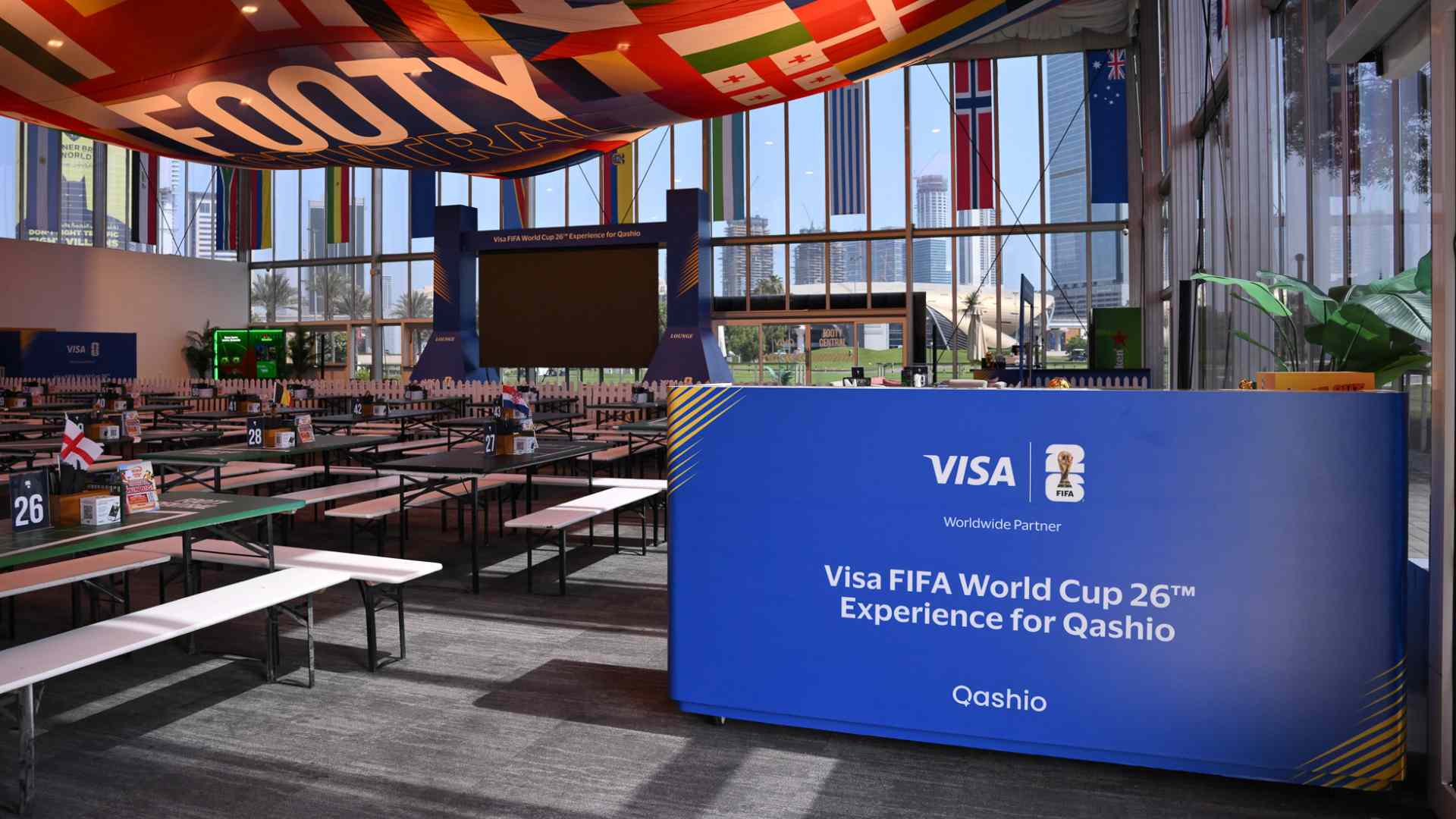
Qashio, the MENA region’s leading spend management solution, is rewarding its UAE customers with exclusive FIFA World Cup 2026™ fan experiences, including premium viewing access, interactive competitions, and hospitality benefits at Emirates Golf Club’s Footy Central in Dubai. The initiative gives customers the opportunity to experience a dedicated football watch party destination during the world’s biggest football tournament.
Running from 11 June to 19 July 2026, Footy Central will screen live matches alongside themed F&B, interactive games, family-friendly activities, competitions, and matchday entertainment. The programme builds on the global appeal of football’s premier event, which reached more than five billion viewers across all platforms during its previous edition, and reflects Qashio’s value proposition beyond spend management by turning client loyalty into tangible rewards and premium benefits.
The campaign will unlock exclusive access to selected matchday rewards and fan activations for Qashio customers, including F&B vouchers, matchday credits, Viya Points, gaming rewards, and VIP hospitality experiences. Viya Points, the digital reward currency within the Viya App ecosystem, can be redeemed across a premium lifestyle network of 400 venues, extending the value of the campaign beyond the matchday.
Guests can participate in the Ronaldo Header Challenge, where they can test their heading accuracy, while the FIFA Console Zone will host the PS5 FIFA Esports Challenge: Road to the Cup, with guests competing in head-to-head matches for leaderboard positions and daily rewards. Half-time engagement will include lucky draws during key matches, alongside Predict & Win competitions that reward guests for accurate match predictions.
Armin Moradi, CEO and Founder of Qashio, said: “Football is the most popular sport in the UAE among both Emiratis and the broader expat population, which makes the FIFA World Cup 2026™ a powerful moment to celebrate with our customers. Qashio was built to help businesses manage spend with more control and value, and this campaign extends that promise by turning loyalty into memorable experiences for finance leaders and teams across the country.”*
The FIFA World Cup 2026™ customer rewards campaign reflects Qashio’s broader approach to building a spend management platform that combines financial control with meaningful customer engagement. Through rewards, activations, competitions, and hospitality benefits, Qashio is continuing to create value for businesses beyond transactions, while giving customers new ways to engage with one of the most anticipated sporting events in the world.
For more information on the Footy Central experience and partnership opportunities, visit the link.

As geopolitical uncertainty, tighter liquidity and digital disruption converge, the CRO role is evolving from compliance gatekeeper to strategic business leader.
For much of the past decade, GCC banks operated in an environment defined by strong liquidity, rapid credit expansion and relatively stable macroeconomic conditions. Supported by high oil revenues and ambitious national growth agendas, the region’s banking sector became synonymous with resilience, scale and sustained growth.
That resilience has been tested in recent months and, so far, the sector has responded well. Recent banking data published by the Central Bank of the UAE (CBUAE) and the Saudi Central Bank (SAMA) suggests that customer deposits have continued to grow despite heightened regional uncertainty.

Customer deposits increased by 17% year-on-year as of April 2026, and 2% from February to April 2026 in the UAE, while in Saudi Arabia, the growth in deposits was 11% year-on-year as of April 2026 and 2% from February to April 2026 , reinforcing both markets’ positions as regional safe havens for capital. Growth in monetary aggregates and non-resident deposits further suggests that regional and international investors continue to view GCC banking systems as stable, well-capitalized and resilient.
Importantly, there is little evidence so far of the capital flight or systemic liquidity pressures that some observers initially feared. Instead, the data suggests that the UAE and Saudi Arabia continue to play an important role as regional safe havens for capital, supported by strong banking fundamentals, prudent regulation and proactive central bank intervention.
Central banks have also played an important role. Proactive interventions helped preserve liquidity, support credit expansion and provide targeted relief to sectors facing short-term disruption. In the UAE, banks were able to extend working capital facilities and restructure short-term obligations for fundamentally healthy businesses, helping bridge temporary cash-flow pressures while maintaining confidence across the financial system.
As a result, resilience is no longer simply a measure of capital strength. It has become a strategic capability that underpins the sector’s ability to navigate an increasingly complex operating environment.
However, what is clearer than ever before is that the operating environment around banks is changing rapidly—and as a result, so is the role of the CRO.
The recent regional conflict accelerated that realization. Traditional stress-testing models were largely designed around financial shocks such as market volatility, liquidity tightening, and credit deterioration. What many institutions are now confronting is a far broader challenge, where geopolitical tensions, cyber threats, operational resilience, and credit risk can all influence one another simultaneously.
Across the GCC, this has prompted some banks to reassess whether existing business continuity and resilience frameworks are sufficiently equipped for a far more interconnected risk landscape.
This is particularly relevant in a region where regulatory frameworks have prioritized sovereignty, local data residency, and operational control. Recent events have also created an opportunity for institutions to reassess how these strengths can be balanced with greater operational flexibility and diversification, e.g., for digital data storage.
At the same time, a second structural shift is unfolding more quietly beneath the surface.
According to analysis from FTI Consulting, GCC banks originated close to $1 trillion in new lending between 2020 and 2025 across Saudi Arabia, the UAE and Qatar. Much of this growth took place during a prolonged low-interest rate environment and elevated liquidity conditions, meaning many portfolios, particularly across real estate and mortgage lending, have not yet been tested through a full economic stress cycle.
That could create a more complex operating backdrop for the years ahead.
For banks, the longer-term risk is not simply operational disruption. While business continuity and cybersecurity remain critical priorities, credit risk remains equally important. If short-term disruption were to evolve into a prolonged economic slowdown, pressure could emerge across borrower segments and asset classes, particularly in sectors that have benefited from strong credit expansion in recent years. In certain scenarios, a meaningful correction in real estate markets would have implications not only for borrowers but also for portfolio performance and risk provisioning across the banking sector.
This is precisely the type of forward-looking scenario that CROs must now anticipate, rather than simply respond to.
Modern CROs are increasingly expected to balance resilience, growth, operational continuity and profitability simultaneously, while helping institutions navigate a far more dynamic and interconnected operating environment. More importantly, the CRO can no longer afford to be purely backward-looking.
The institutions likely to outperform over the next decade will be those capable of identifying disruption early, adapting faster and embedding risk intelligence directly into strategic decision-making.
That requires a fundamentally different approach to risk management. One built around predictive intelligence, integrated scenario planning, dynamic stress testing and real-time decision-making.
Artificial intelligence and advanced analytics are becoming increasingly important in that transition.
Some leading regional banks are already investing in AI-enabled underwriting, early-warning systems and advanced collections capabilities that allow them to identify stress signals earlier and make more sophisticated portfolio decisions in real time. Others, however, continue to rely on fragmented legacy systems, manual workflows and reactive operating models.
That gap may become increasingly important during periods of disruption. Institutions that can identify emerging stress earlier, underwrite more effectively and anticipate portfolio deterioration before competitors will inevitably benefit from lower risk costs and stronger resilience outcomes.
Because in this new environment, resilience itself is becoming a competitive advantage.
The banks most likely to succeed will not necessarily be the largest or most conservative institutions. They will be the organizations capable of integrating risk more directly into strategic decision-making, modernizing operational infrastructure and responding dynamically to an increasingly volatile external environment.
The broader lesson for the sector is clear.
The GCC banking industry is entering a new era where resilience can no longer be measured purely through capital strength or regulatory compliance. Increasingly, resilience will be defined by adaptability and the ability to proactively anticipate interconnected geopolitical, operational, technological and economic disruption in real time.
And that shift is fundamentally redefining the CRO mandate across the region.
The institutions that recognize this early and empower their risk functions accordingly will likely be best positioned for the next phase of growth across GCC banking.


PHRMAG AND THE AUTHORITY OF SOCIAL CONTRIBUTION – MA’AN PARTNER TO ENHANCE ONCOLOGY AND RARE DISEASE CARE IN ABU DHABI

GODIVA CELEBRATES 100 YEARS OF CHOCOLATE ARTISTRY WITH A NEW ERA

Radisson Hotel Group expands French Riviera footprint with Cannes Seaside opening


-
News11 years ago
SENDQUICK (TALARIAX) INTRODUCES SQOOPE – THE BREAKTHROUGH IN MOBILE MESSAGING
-

 Trending9 months ago
OPPO A6 Pro 5G Review: Reliable Daily Driver
-

 Tech News2 years ago
Denodo Bolsters Executive Team by Hiring Christophe Culine as its Chief Revenue Officer
-
 VAR1 year ago
Microsoft Launches New Surface Copilot+ PCs for Business
-

 Automotive2 years ago
AGMC Launches the RIDDARA RD6 High Performance Fully Electric 4×4 Pickup
-
Tech Interviews2 years ago
Navigating the Cybersecurity Landscape in Hybrid Work Environments
-

 Tech News12 months ago
Nothing Launches flagship Nothing Phone (3) and Headphone (1) in theme with the Iconic Museum of the Future in Dubai
-

 VAR2 years ago
Samsung Galaxy Z Fold6 vs Google Pixel 9 Pro Fold: Clash Of The Folding Phenoms