
 Have a question? +971 56 404 0503




Home Integrator
SOURCE OF FATE COMMENCES CONSTRUCTION ON MIRAGGIO, CONTRIBUTING TO AL MARJAN ISLAND’S DEVELOPMENT MOMENTUM

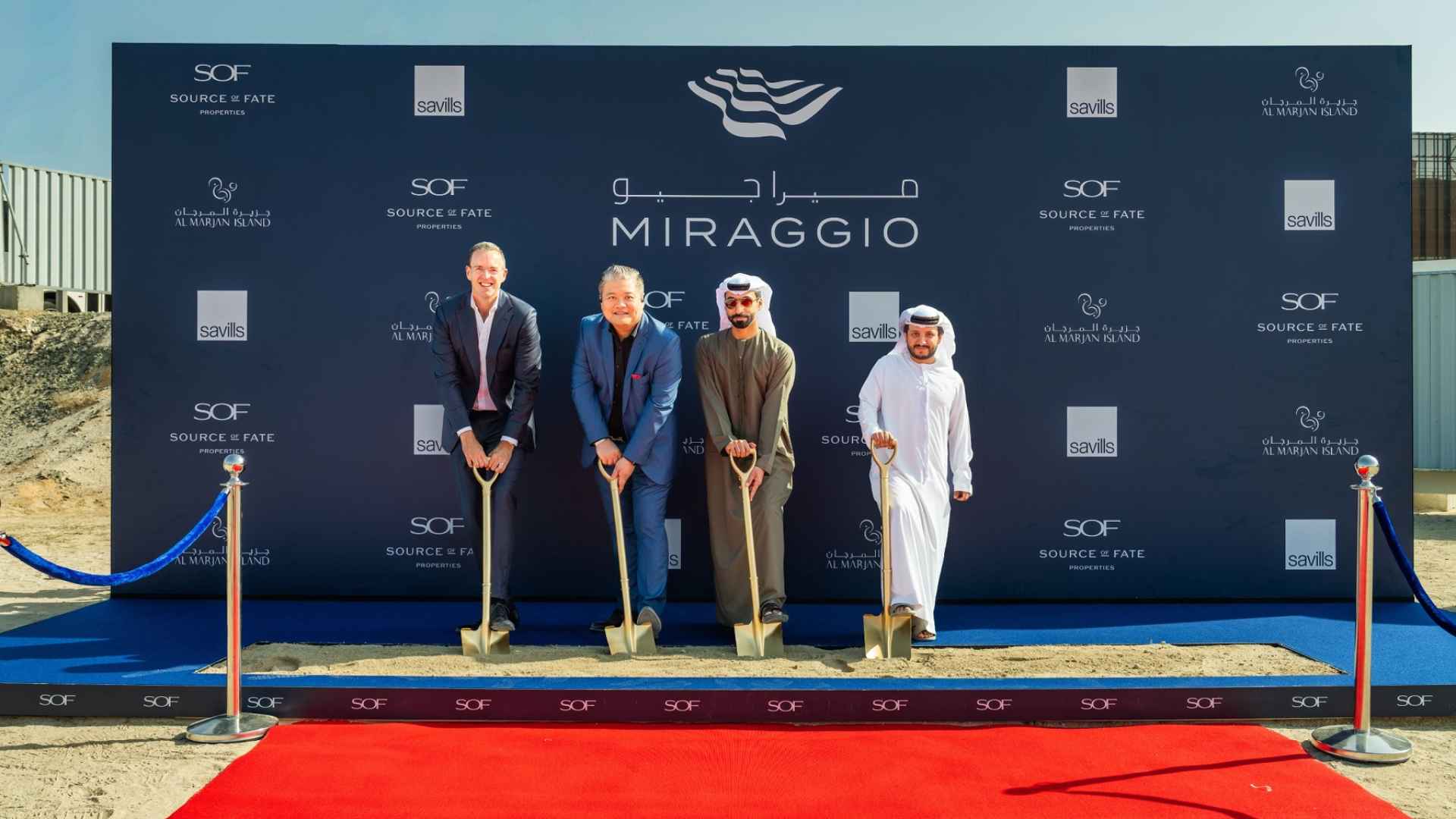
Source of Fate (SOF), the high-end luxury real estate developer under the Wheel of Fate Group, has commenced construction on Miraggio, its flagship luxury waterfront development on Al Marjan Island, marking a major milestone for the company and the Emirate’s fast-growing real estate sector.
The start of construction follows the successful completion of key design milestones, including Concept Design (CD) approval and the completion of Schematic and Preliminary Design (SD & PD). The project has already recorded sales exceeding 1 billion, with 50 per cent of units secured through off-plan bookings ahead of construction, underscoring robust buyer confidence and sustained demand for premium waterfront living in Ras Al Khaimah.
This higher demand is underpinned by Ras Al Khaimah’s strong real estate performance in 2025. According to recent market data, residential capital values recorded robust growth, with overall prices rising 14.9 per cent year-on-year. Apartments saw increases of 15.5 per cent year-on-year, while villa values grew by 13.8 per cent. Al Marjan Island has led this upward trajectory, with its capital values climbing 16.8 per cent year-on-year, reinforcing its position as one of the Emirate’s most sought-after waterfront residential destinations.
Commenting on the milestone, Dr. Majid Jack Hsiung, General Manager at Source of Fate, said: “Reaching 50 per cent off-plan bookings ahead of construction underscores a fundamental shift in buyer expectations. Homeowners and investors today are seeking more than premium finishes. They are seeking environments that support wellbeing, balance, and a meaningful connection with nature. Miraggio was conceived with this philosophy at its core, and as construction commences, our focus is to deliver that vision through uncompromising quality, disciplined timelines, and operational excellence at every stage.”
Reflecting its commitment to excellence, Source of Fate has appointed a consortium of world-class partners to deliver Miraggio to the highest levels of quality, safety, and performance. VX Studio leads as Project Consultant, bringing award-winning architectural expertise, while HQS Cost Management Consultant oversees cost planning and financial governance. NEXT Engineering Consultant, with more than three decades of experience, is responsible for ensuring sustainable, efficient, and technically robust construction practices.
Construction of Miraggio will adhere to UAE construction standards and international best practices, including the UAE Fire and Life Safety Code, Energy Efficiency Standards, Accessibility Code, Seismic Design Code, and Environmental Building Standards. Global benchmarks such as IBC, IFC, ASHRAE, NFPA, and ASTM will further guide the project, ensuring the highest levels of safety, sustainability, and innovation.
Sustainability is embedded throughout the development, with measures including solar-ready infrastructure, greywater irrigation, and a central water filtration system designed to reduce plastic use by up to 90 per cent, seamlessly integrating responsible living into everyday life.
The project is fully funded, with investments to date supporting key pre-construction and early works. Upcoming milestones include the completion of enabling works, commencement of main construction, and a structured timeline of progressive handovers.
Set to redefine luxury living in Ras Al Khaimah, Miraggio reflects Source of Fate’s vision of creating human-centric, environmentally responsible, and meticulously crafted communities, reinforcing Al Marjan Island’s status as one of the UAE’s most sought-after waterfront destinations.
Home Integrator
SOBHA GROUP JOINS HANDS WITH 10 UNIVERSITIES TO POWER NEXT-GENERATION LEADERSHIP IN THE UAE

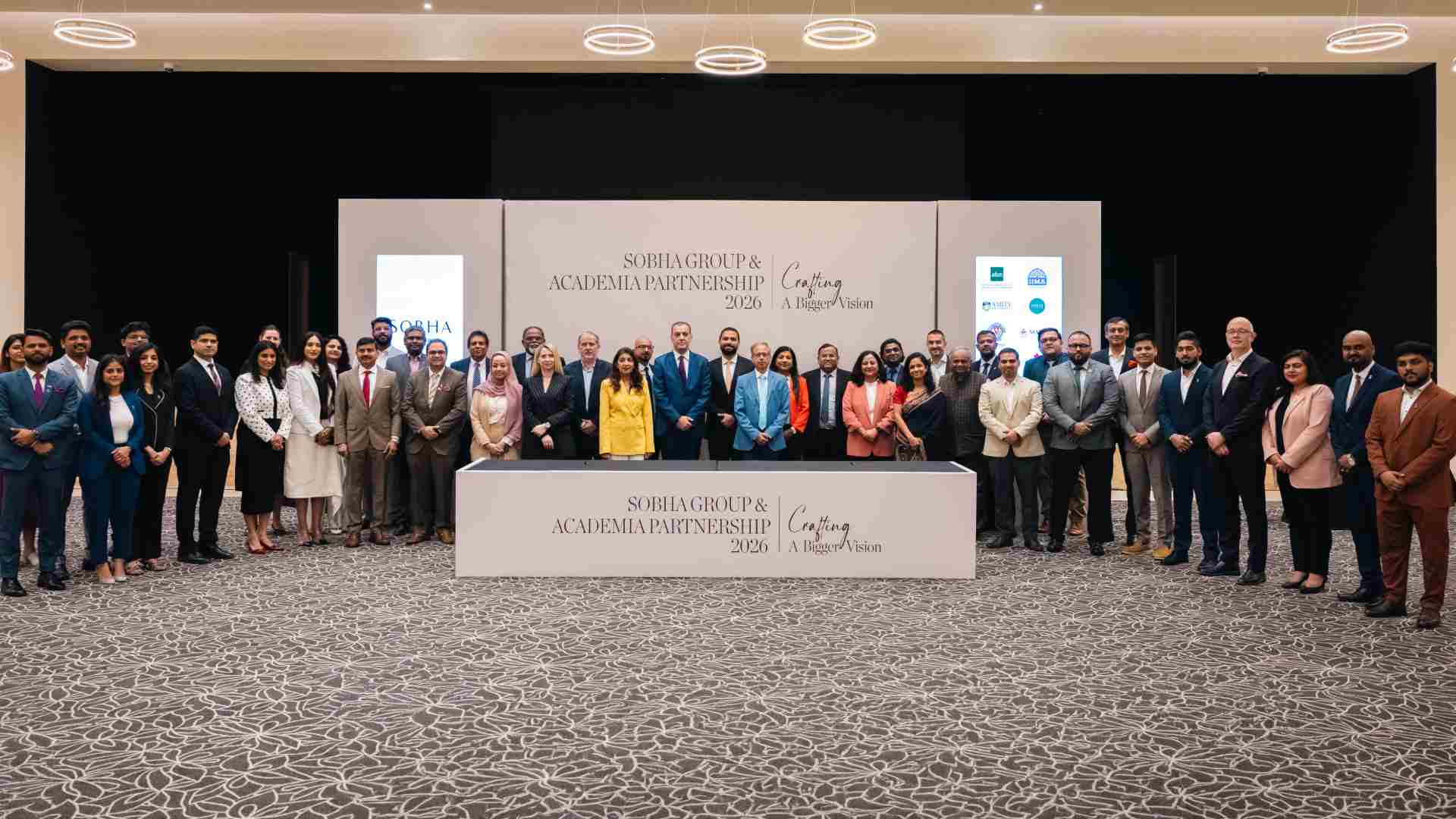
Sobha Group has entered strategic Memorandums of Understanding (MoU) with 10 leading global and regional universities, reinforcing its long-term commitment to building future-ready leadership talent and strengthening its position as a people-first organization that invests as deeply in its people as it does in its projects.
Aligned with the UAE’s vision of becoming a global hub for innovation, higher education, and advanced talent development, the initiative represents a long-term investment in leadership capability, continuous upskilling, and future talent pipelines amid rapid business transformation and regional expansion.
At the core of the programme is Sobha Group’s People Development Team, which drives leadership development through bespoke workshops, executive coaching, capstone projects, and strategic learning interventions designed to enhance enterprise-wide capability building for Talent readiness for meeting the Global expansion plans of Sobha Group. The university partnerships will further expand the scale, depth, and global exposure of these initiatives.
The partner institutions include globally respected universities such as BITS Pilani, INSEAD, Indian Institute of Management Ahmedabad, Manipal Academy of Higher Education, Amity University, Symbiosis Institute, Heriot Watt, Canadian University, Abudhabi School of Management and Northwood University, alongside other leading academic institutions operating across the UAE and internationally.
Speaking on the initiative, Mr. Ravi Menon, Chairman, Sobha Group, said, “As industries evolve and business environments become increasingly dynamic, organizations must equally evolve in how they nurture talent and leadership. Our partnerships with leading universities represent a long-term investment in building future leaders equipped with global perspectives, stronger capabilities, and the agility to navigate a rapidly changing world. This initiative also reflects our confidence in the UAE’s vision to become a global center for knowledge, innovation, and advanced talent development.”
Mr. Francis Alfred, Managing Director, Sobha Realty, said, “Our growth has always been powered by our people – Sobha family, and this collaboration with leading universities strengthens that foundation further. We are creating structured access to global knowledge, research, and leadership development opportunities to help our people grow into future-ready leaders while embedding continuous learning deeper into our culture.”
Reflecting the growing role of the private sector in strengthening academia-industry collaboration in the UAE, the programme also positions the country as an emerging crossroads for global academia and enterprise collaboration. With several partner institutions operating internationally, the programme brings together global faculty, research ecosystems, and industry leadership under a unified talent development framework.
The collaboration also highlights strengthening India-UAE education and business corridor, with institutions such as BITS Pilani, IIM Ahmedabad, and Manipal Academy (Bcz Manipal is name of a place) playing an increasing role in cross-border executive education, leadership development, and talent exchange between the two countries.
The MoUs have been formally endorsed by all participating universities and mark the commencement of a long-term collaboration focused on leadership development, innovation, and sustainable growth.
Home Integrator
RECHITTA HOSTS ITS FIRST — AND LAST — IN-PERSON BRIEFING AS IT LAUNCHES TO TRANSFORM HOW DUBAI REAL ESTATE IS DISCOVERED AND SOLD GLOBALLY
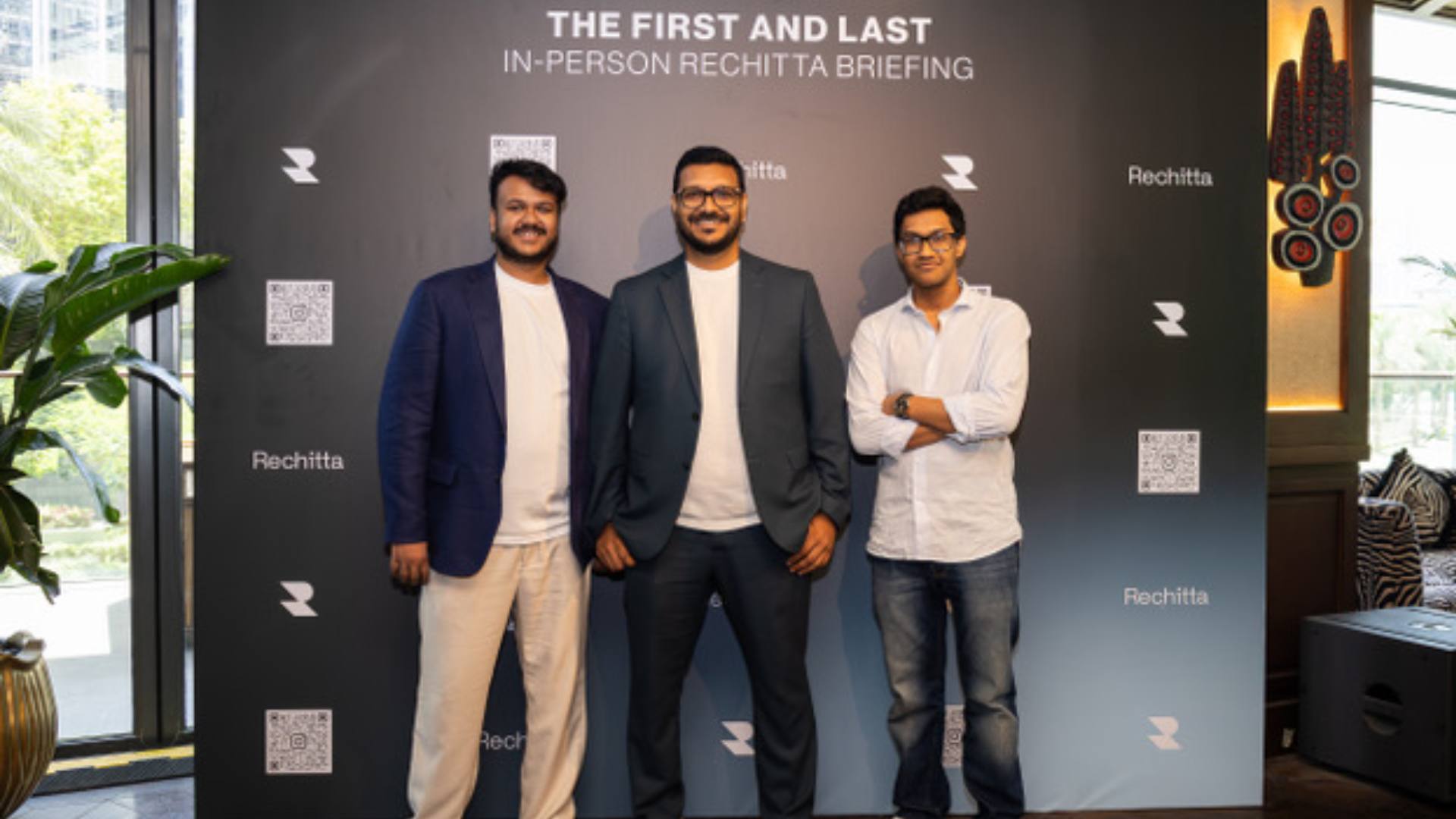
At its first — and last — in-person press briefing, Rechitta was unveiled as a new AI-powered communication layer for Dubai’s real estate market. Built specifically for developers, brokers and buyers, Rechitta aims to help the industry manage increasing demand with greater speed, consistency, transparency, and accuracy.
Rechitta is designed to provide real-time responses on pricing, inventory, payment plans, amenities, and project updates, while also giving developers visibility into engagement trends, investor interests, and market demand patterns. By removing delays caused by fragmented communication and manual follow-ups, Rechitta aims to help developers and brokers respond to global market demand more effectively. The system supports streamlined engagement, faster transaction workflows, and more consistent communication across the sales process through a real-time environment powered by verified developer data and distributed across their networks.
“Dubai’s real estate market continues to grow at a rapid pace, but the systems supporting developer and broker engagement have remained largely fragmented and manual. We saw how AI can help build infrastructure that supports global demand more efficiently while improving transparency, responsiveness, and consistency across markets. Rechitta was created to support that next phase of growth for the sector. We expect developers using Rechitta to be able to reach up to 20x more brokers and respond to global market demand far more effectively, without compromising accuracy or consistency,” said Ashirwad Somani, Co-Founder of Rechitta.
“What makes Rechitta different is that it transforms communication into actionable market intelligence,” said Aryaman Maheshwari, Co-Founder, Rechitta. “Every interaction helps developers and brokers better understand what the market is looking for in real time, from pricing expectations to investment preferences and emerging demand trends. The ability to combine instant response capability with highly accurate verified data creates a more transparent, responsive, and scalable sales ecosystem.”
For brokers, Rechitta functions as a real-time intelligence and communication layer, providing instant access to accurate information and helping teams manage enquiries more effectively across international markets. Rather than replacing traditional broker relationships, Rechitta is designed to enhance efficiency, accelerate response times, and improve conversion potential through faster, more reliable communication.
“For developers, the challenge today is not demand, it’s managing demand accurately and efficiently across markets,” said Atiksh Mittal, Co-Founder, Rechitta. “Rechitta is designed as a controlled, intelligent communication layer where verified information can be distributed instantly and consistently through broker networks worldwide. One of the biggest advantages is the removal of human error, inconsistency, and subjective interpretation from the information chain, allowing developers to maintain complete accuracy and message control at scale.”
“The launch event was an incredible experience to bring Rechitta to life in front of a live audience, and it carries a special meaning for us as both the first and last in-person briefing we will ever host. It was great to see Rechitta doing what it was built for, connecting, responding, and engaging in real time. We’re proud and genuinely excited to now hand the reins over to Rechitta. What we’ve built is no longer something that lives in a room or an event, it’s a living system that responds, learns, and engages continuously in real time,” he added.
As Dubai strengthens its position as a global real estate hub, Rechitta aims to redefine how developers and brokers manage international engagement by making real estate communication faster, smarter, and more scalable. Looking ahead, the company plans to expand beyond Dubai, building broader AI infrastructure for real estate markets globally.
Home Integrator
LAST OF THE BEACHFRONT: ELEVATE ANNOUNCES AED 127.5M TRANSACTION AT MONDRIAN AL MARJAN ISLAND AS SUPPLY TIGHTENS
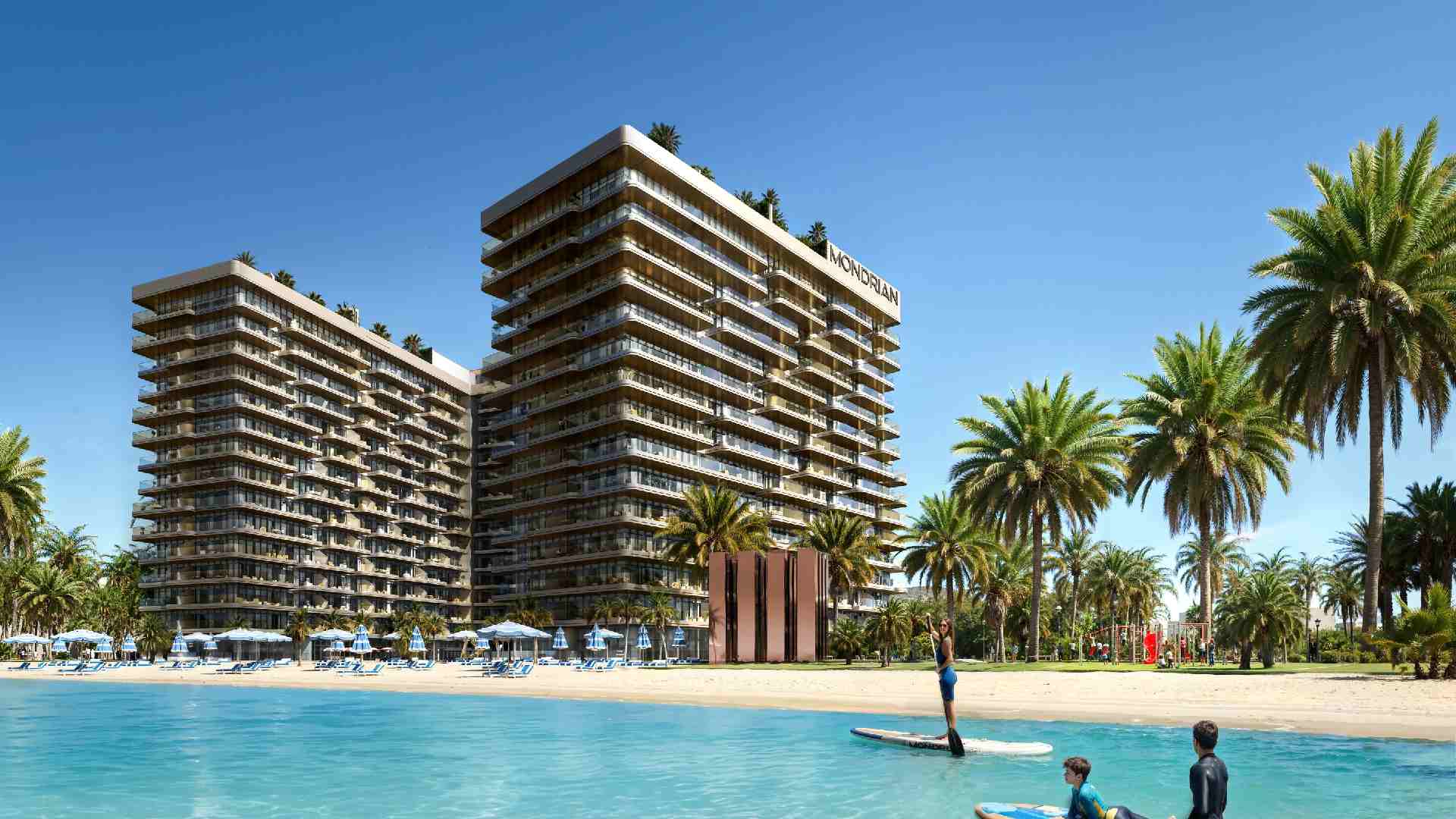
ELEVATE, the visionary lifestyle real estate brand behind Mondrian Al Marjan Island Beach Residences, developed in partnership with globally recognised lifestyle hospitality company Ennismore, has announced a landmark transaction exceeding AED 127.5 million at the project, underscoring the extraordinary demand for premium branded beachfront residences on Al Marjan Island.
The transaction was made by THRIVESTATE Square Real Estate, reflecting growing investor confidence in Ras Al Khaimah’s evolving luxury residential landscape and the increasing global appetite for design-led waterfront living experiences in the emirate.
The deal underscores sustained momentum within Al Marjan Island, where demand continues to accelerate for premium beachfront residences that combine lifestyle, design, hospitality, and long-term value. With beachfront inventory on the island becoming increasingly constrained by geography, buyers are showing heightened interest in developments that offer both scarcity and cultural relevance.
Zeeshaan Shah, Founder & CEO of ELEVATE, said: “The market response has been nothing short of phenomenal, and we are honoured to have built this momentum alongside an exceptional community of broker partners and buyers who share our vision.
“This also marks the arrival of Ras Al Khaimah on the global stage. After the Burj Al Arab, the Burj Khalifa, and the Louvre Abu Dhabi, the Wynn Al Marjan is the UAE’s next global icon, and its opening next year will be a headline event felt around the world. At the heart of this transformation is Mondrian Al Marjan Island Beach Residences: a living destination for those who seek art, culture, beauty, and a deeper, more intentional way of life. Prime beachfront real estate here is now extremely limited, very soon, we will be speaking of it only in hindsight.”
Reflecting the project’s strong market momentum, ELEVATE recently hosted an exclusive gathering for leading UAE brokers at Delano Dubai, celebrating the broker community whose support and market conviction have contributed to the project’s continued success. The development has now achieved close to 200 residences sold, reinforcing the growing demand for branded beachfront living on Al Marjan Island and the broader momentum currently shaping Ras Al Khaimah’s luxury real estate market.
Lior Poly, CEO of THRIVESTATE Square Real Estate, added “Mondrian Al Marjan Island Beach Residences stood out for its strong lifestyle positioning, iconic branding, and clear appeal to both primary and second-home buyers. The project captures the essence of modern beachfront living by combining design excellence with a compelling cultural and hospitality offering.”
Following the strong uptake of its residential offerings, the project is preparing to introduce a limited collection of exclusive townhouses and sky villas, presenting buyers with a rare opportunity to own highly curated, design-led homes within one of the UAE’s most anticipated beachfront developments.
Construction continues to progress steadily on site, with shoring now 100% complete, anchor installation at 80%, and excavation progressing at 50%. Handover remains targeted for 2029.
Mondrian Al Marjan Island Beach Residences has emerged as one of the standout developments within this evolving market. Following its Q4 2025 launch, residences were reserved within hours, highlighting strong demand from both regional and international buyers seeking a more experience-led approach to luxury living.

A Flavour-Packed International Burger Week at List Bar
THE GCC IS SHAPING DEPLOYMENT OF MOBILITY TECHNOLOGY AT SCALE

FROM FARM TO SHELF: THE CASE FOR SOURCING CLOSER TO HOME



-
News11 years ago
SENDQUICK (TALARIAX) INTRODUCES SQOOPE – THE BREAKTHROUGH IN MOBILE MESSAGING
-

 Tech News2 years ago
Denodo Bolsters Executive Team by Hiring Christophe Culine as its Chief Revenue Officer
-

 Trending7 months ago
OPPO A6 Pro 5G Review: Reliable Daily Driver
-
 VAR1 year ago
Microsoft Launches New Surface Copilot+ PCs for Business
-
Tech Interviews2 years ago
Navigating the Cybersecurity Landscape in Hybrid Work Environments
-

 Automotive2 years ago
AGMC Launches the RIDDARA RD6 High Performance Fully Electric 4×4 Pickup
-

 Tech News10 months ago
Nothing Launches flagship Nothing Phone (3) and Headphone (1) in theme with the Iconic Museum of the Future in Dubai
-

 VAR2 years ago
Samsung Galaxy Z Fold6 vs Google Pixel 9 Pro Fold: Clash Of The Folding Phenoms