
 Have a question? +971 56 404 0503




Financial
Mashreq led a record $3.25 billion sustainability-linked financing for GEMS Education


Mashreq led a groundbreaking $3.25 billion Leverage Buyout Sustainability-linked financing for GEMS Education.
Serving as the Lead Sustainability Coordinator, Initial Mandated Lead Arranger and Bookrunner, Account Bank, Global Agent, and Conventional Facility Agent, Mashreq has spearheaded this initiative. The banking consortium also included prominent regional banks such as Dubai Islamic Bank (DIB), Abu Dhabi Commercial Bank (ADCB), and First Abu Dhabi Bank (FAB).
This financing package is poised to act as a significant catalyst for ongoing advancements in integrating sustainability within the education sector. Through this inaugural Sustainability-linked facility, Mashreq supports GEMS Education in its strategic journey towards enhanced sustainability and educational excellence.
Sunny Varkey, Founder Chairman of GEMS Education, said: “At GEMS, sustainability is more than a core value, it is an integral part of our strategic vision. By partnering with Mashreq to secure this innovative financing structure, we can advance our sustainability objectives and align our educational offerings with global environmental standards. This collaboration enables us to provide high-quality, inclusive, and environmentally conscious education, ensuring we meet our long-term sustainability goals.”
Ahmed Abdelaal, Group CEO of Mashreq, added: “This landmark transaction not only underscores Mashreq’s leadership in Sustainable Finance but also sets a new standard for the education sector. By linking financial incentives to sustainability performance, we are supporting GEMS in its commitment towards environmental and societal advancements. This strategic partnership exemplifies our commitment to fostering sustainable growth and enabling our clients in achieving their broader impact objectives.”
The facilities include key performance indicators (KPIs) to track ambitious sustainability performance targets (SPTs), centered around Sustainable Development Goals 4 and 7. These KPIs focus on increasing the share of renewable energy in school operations, certifying teachers in climate and environmental-related topics through the United Nations Climate Change (UNCC) program, and developing a scholarship program to ensure diversity and inclusion across schools. In addition, GEMS has committed to a long-term improvement plan targeting resource management and reporting, aligning with its goals of promoting quality and inclusive education.
On June 18, 2024, the local bank consortium, including Mashreq, provided underwriting and pre-funded the multi-billion dollar facility. In partnership with Brookfield, the syndication of banks facilitated the exit of the majority position held by existing shareholders, including CVC Capital Partners, and refinanced GEMS’ existing indebtedness. The bank facility will subsequently be syndicated in the primary loan market.
Mashreq’s commitment to sustainable financing is evident in its ambitious target to finance and facilitate $30 billion in sustainable financing by 2030.










Financial
Al Ansari Exchange and Dubai Municipality mark decade-long partnership as annual collections rise 710%
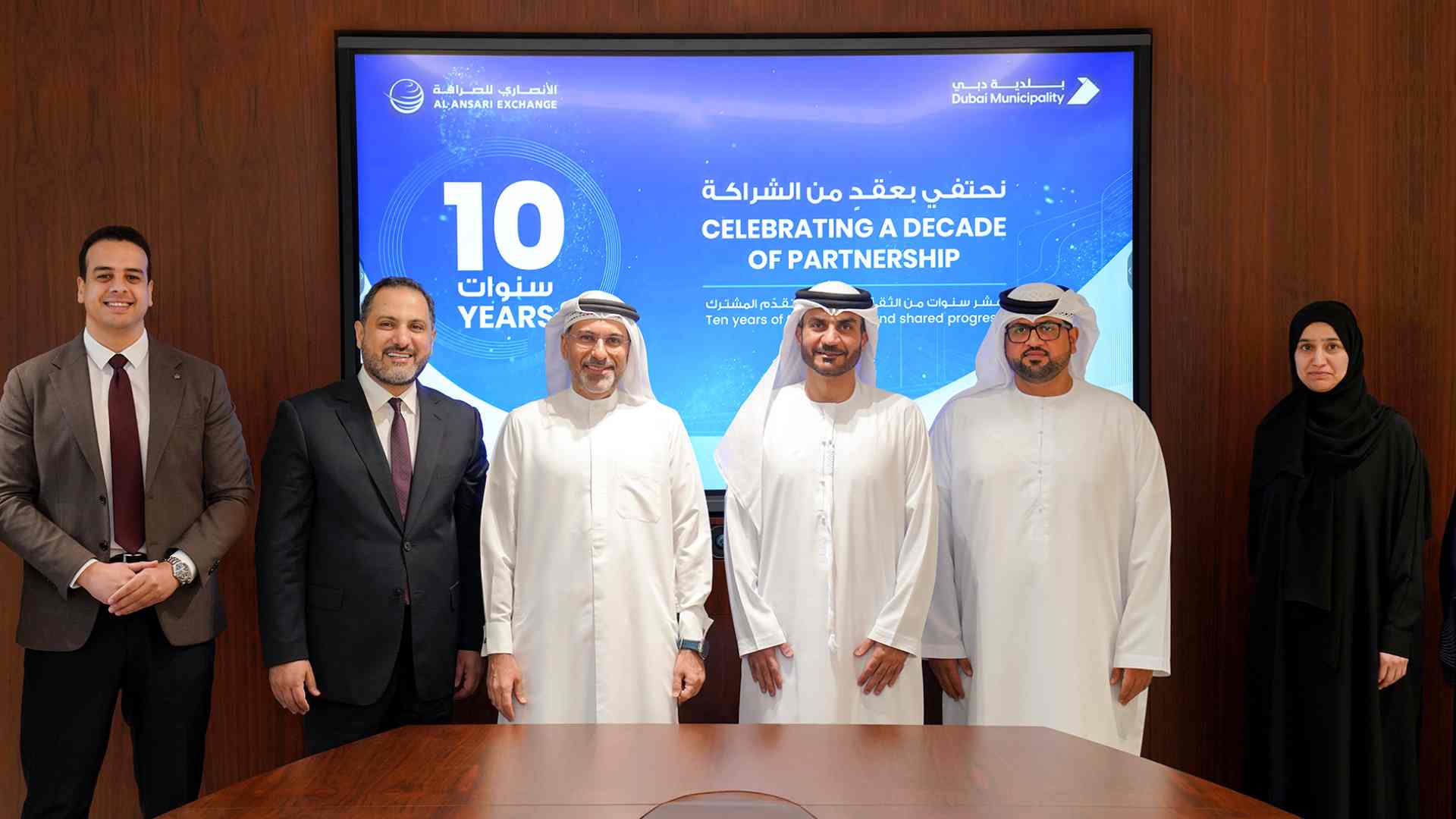
Al Ansari Exchange, the UAE’s leading remittance and foreign exchange company and a subsidiary of Al Ansari Financial Services PJSC (DFM: ALANSARI), and Dubai Municipality are celebrating a decade-long partnership that has enhanced access to government payment services, with annual collections rising by approximately 710% over the course of 10 years.
Established in 2016, the partnership enables individual and corporate customers to pay for Dubai Municipality services through Al Ansari’s extensive branch network across the UAE, expanding the availability of government services.
This growth reflects strong customer adoption, the service’s operational reliability, and rising demand for convenient payment channels. The collaboration also supports Dubai’s vision for customer-centric, digitally enabled government services by connecting public services with trusted private-sector payment infrastructure.
Marking the tenth anniversary of the partnership, Sayed Ismail Al Hashemi, Acting CEO of the Corporate Support Services Sector at Dubai Municipality, said: “We highly value our decade-long partnership with Al Ansari Exchange. This collaboration has contributed to enhancing service delivery efficiency and simplifying the customer journey for the payment of Dubai Municipality fees.”
Al Hashemi added: “The partnership has had a tangible impact by improving payment collection efficiency and expanding the range of available payment channels, making our services more accessible and enhancing customer satisfaction. At Dubai Municipality, we remain committed to leveraging digital transformation to deliver smart and efficient services that enhance the quality of life and wellbeing of our customers.”
Rashed A. Al Ansari, Group Chief Executive Officer of Al Ansari Financial Services, added: “Our ten-year partnership with Dubai Municipality reflects a shared commitment to making essential services more convenient and accessible. Over the past decade, we have combined Dubai Municipality’s service excellence with our extensive network and payment capabilities to provide customers with a reliable and efficient channel for completing their transactions. We look forward to building on this strong foundation and continuing to support Dubai’s evolving smart service ecosystem.”
Building on these foundations, both organisations will explore new opportunities to strengthen the partnership and support the continued evolution of Dubai’s smart service ecosystem.


By Máire (Mo) Morris, Founder & CEO of Morris Global Consulting
International expansion has long been seen as a milestone that signals a brand has ‘made it’. I believe that view is outdated, as behind the scenes often tells a different story. Today, expanding into new markets is not simply about increasing a company’s footprint. It needs to be done well, which in turn leads to an effective way to diversify revenue, build resilience and increase long-term enterprise value.
Across the GCC, we are seeing a new generation of founders creating businesses with global potential. The region has evolved into one of the world’s most dynamic business environments, producing brands with stronger operational foundations, more sophisticated leadership teams and products that are increasingly attracting international attention. As a result, the conversation has shifted. It is no longer about whether businesses should expand internationally, but when they should do it and how they can maximise their chances of success.
Several structural changes are driving this trend. Digital commerce has lowered many of the traditional barriers to international growth. Brands can now test demand, build communities and generate sales in overseas markets before committing to physical retail or local operations. Investor expectations have also evolved. Sustainable, well-planned growth is now valued far more highly than expansion for expansion’s sake. Investors want evidence that a business can replicate its success across multiple markets through strong financial discipline, scalable operations and a clear commercial strategy.
At the same time, recent supply chain disruptions have encouraged businesses to diversify production and reduce dependence on a single sourcing region. Many founders are therefore designing their businesses with international growth in mind from the outset, creating brands that can adapt to different markets over time.
However, opportunity should never be confused with readiness. One of the biggest mistakes I see is founders allowing ambition, and sometimes quite frankly ego, to outweigh evidence. Success in one market does not automatically translate into another. Every country has its own consumer behaviours, pricing expectations, regulations and routes to market. Assuming customers will respond in exactly the same way can become an expensive lesson.
Strong domestic performance is only one part of the equation. True readiness means having a scalable business model, healthy cash flow, resilient operations and a product that genuinely meets the needs of the target market. It also requires robust financial planning, legal and intellectual property protection, and a clear strategy for market entry.
Just as importantly, businesses need the right people around them. Local partners, distributors and experienced advisors bring invaluable market knowledge, established networks and cultural understanding. They help brands navigate complexity, avoid costly mistakes and accelerate growth. Even the strongest business can struggle if it enters a market without the right expertise on the ground.
Choosing where to expand is equally important. Too often, founders are drawn to markets that appear exciting or fashionable rather than those offering the strongest commercial opportunity. The first international market should always be selected using data, not instinct. Customer demand, competitive positioning, operational feasibility, acquisition costs and available resources should all inform the decision.
The largest market is not necessarily the best one. If competition is saturated or customer acquisition costs are too high, a smaller market with stronger commercial fundamentals may deliver far better returns. In most cases, I encourage businesses to take a phased approach, establishing success in one market before expanding further. International growth is a long-term strategy, not a race.
For design-led brands, another challenge is maintaining a consistent identity while remaining relevant to local audiences. The strongest brands never lose sight of who they are. Their purpose, quality and positioning remain consistent, while elements such as marketing, product assortment, pricing and customer experience are adapted to reflect local consumer preferences. When approached strategically, localisation strengthens relevance without compromising the essence of the brand. Authenticity, quality and consistency resonate across cultures. Those are the qualities that build trust, regardless of geography.
Digital-first expansion is also changing the way emerging brands enter new markets. For many businesses, e-commerce provides an opportunity to validate demand, build awareness and gather customer insights before making significant investments in physical retail. This reduces risk and allows founders to make decisions based on real customer behaviour rather than assumptions.
Of course, international expansion requires investment before it delivers meaningful returns. Market research, regulatory compliance, intellectual property protection, distribution, marketing, local partnerships and working capital all require careful financial planning. It is common for profitability to soften in the short term while these investments are made.
The businesses that generate the strongest long-term returns are those that enter new markets with realistic expectations, sufficient capital and a clear path to sustainable revenue. This is also where international expansion begins to influence enterprise value. Investors place significant importance on geographic diversification because it reduces risk. Businesses that rely on a single market are naturally more exposed to economic cycles, regulatory changes, geopolitical uncertainty and shifts in consumer demand. Companies that have demonstrated they can replicate success across multiple markets are viewed as more resilient and more scalable.
This is not simply about operating in several countries. Investors want evidence that growth can be repeated through disciplined execution, sound financial performance and a scalable operating model. Successfully establishing one or two international markets often provides that confidence and can materially strengthen investor interest.
It is important to also note that international expansion is not the right strategy for every business. A highly profitable company with a loyal customer base and a dominant regional position can still create exceptional enterprise value. This is particularly true for brands built around local craftsmanship, heritage or provenance, where regional focus strengthens the overall proposition. Expansion should only be pursued when it supports the long-term vision of the business and creates sustainable value.
As we look ahead, international expansion needs to become increasingly strategic and data-driven. Artificial intelligence, digital commerce and more sophisticated market intelligence will help businesses identify opportunities and validate demand before committing significant investment. At the same time, geopolitical uncertainty and supply chain resilience will remain key considerations, making thoughtful planning more important than ever.
Through my work at Morris Global Consulting, supporting hundreds of businesses entering new markets across multiple regions, one lesson remains constant. The companies that succeed internationally are rarely the ones that move the fastest. They are the ones that prepare thoroughly, make decisions based on evidence rather than assumptions, and invest in the right partnerships before taking the next step.
International expansion is not about being present in as many countries as possible. It is about building a stronger, more resilient business that is equipped for sustainable growth over the long term. When approached strategically, crossing borders does far more than open new markets. It creates lasting value.
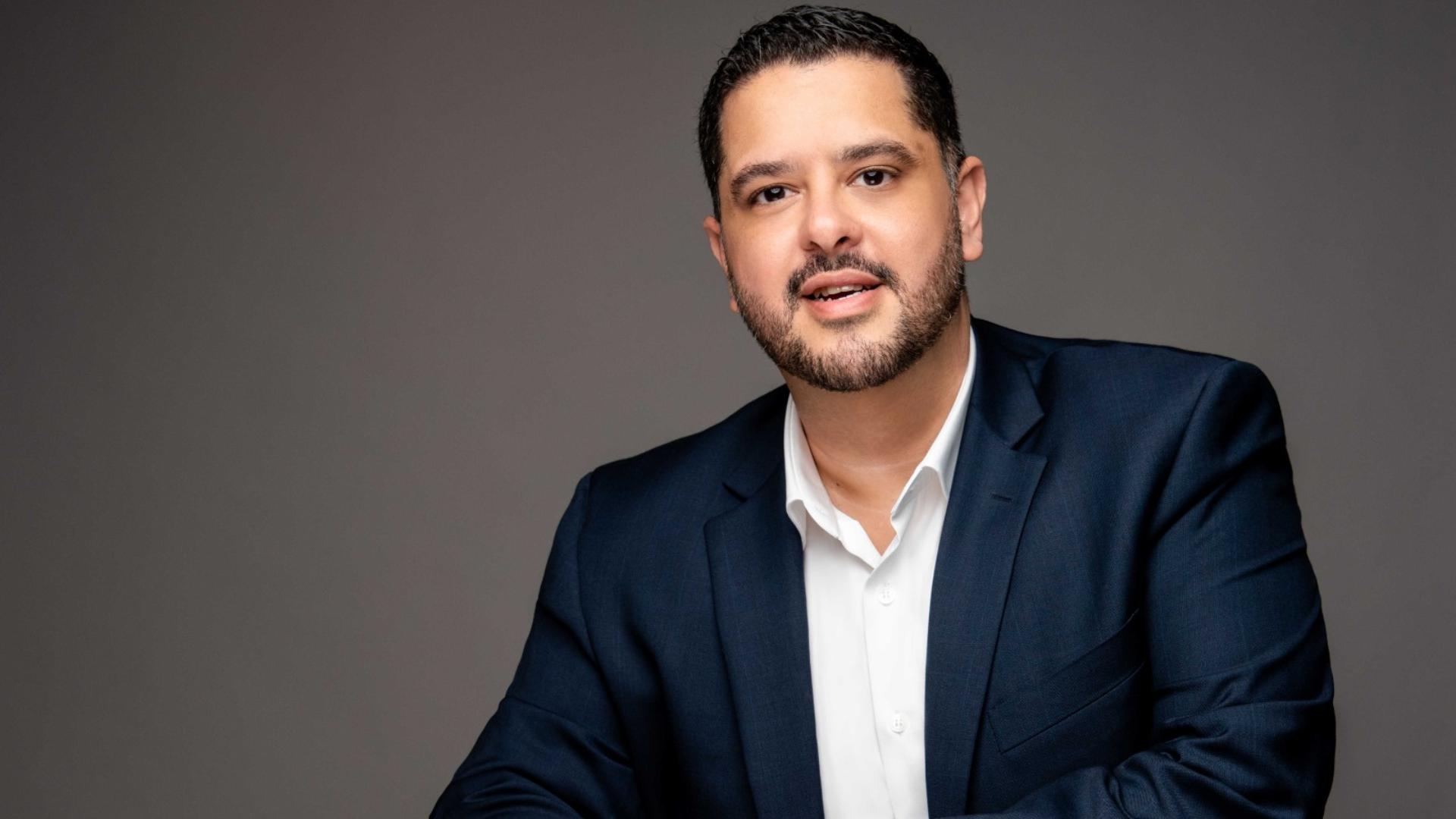
Armin Moradi, the CEO and Founder of Qashio
For centuries, financial institutions relied on one advantage. Whether it was the range of their products, their pricing, or how far their services could reach. Today, those advantages are easy to replicate. Digital infrastructure is widely available, capital moves quickly across borders, and acquiring customers is increasingly automated. What now sets institutions apart is not the breadth of their offerings or the cost of their services. It is the confidence they inspire.
In a world that is increasingly more fragmented, turbulent, and cautious, trust has become one of the few advantages that cannot be replicated. Global investment patterns illustrate this shift. According to the UNCTAD World Investment Report 2025, foreign direct investment (FDI) remains far below its early 2010s peak, reflecting a world that is more risk-aware and geopolitically sensitive. The World Bank’s Global Economic Prospects also highlights uneven growth and rising uncertainty across regions. This means capital is no longer chasing the highest return; instead it is seeking predictability. And institutions that inspire trust are the ones most likely to attract it.
Capital Moves Toward Certainty
The UAE offers a compelling example. The EMIR report, supported by Qashio, Flows of Capital: Mapping the UAE’s Role as a Global Financial Gateway, shows that FDI into the country reached $40 billion, doubling from 2019 levels, and accounting for 40% of gross capital formation compared to a developed economy average of 4.3%. That differential cannot be explained by tax efficiency alone. It reflects regulatory clarity, institutional stability, and operational reliability, all of which underpin trust
The same principle is playing out at the company level.
UAE banks are increasingly pushing for founders and business owners to separate personal and corporate spending. On paper, that is a compliance issue. In reality, it signals a structural shift. Poor accounting discipline creates risk. Blurred financial lines complicate audits, funding discussions, and cross-border expansion. When investors and regulators examine financial behaviour, governance becomes visible immediately, highlighting that trust begins with discipline.
Designing Trust: Transparency, Control, Reliability
As finance becomes more digital, trust is becoming more measurable. It rests on three interlocking foundations: transparency, control, and reliability.
Transparency is now a baseline expectation. Customers want to know what they are paying, when transactions settle, and how fees are calculated. The scale of global financial flows reinforces this demand. The World Bank estimates that remittance flows to low- and middle-income countries reached $685 billion in 2024. That figure exceeds FDI and official development assistance combined for those economies. When volumes are that significant, even marginal opacity in pricing or settlement becomes economically material, making clarity a matter of cost efficiency at the system level rather than a branding exercise.
Control is equally critical. Modern finance teams operate across distributed workforces, multi-entity structures, and global vendor networks. Organisations lose an estimated 5% of revenue annually to fraud. While fraud has multiple sources, weak internal controls and policy bypass increase exposure. Giving customers direct control of their funds, through stronger controls and policies, helps reinforce trust in financial institutions.
The most resilient organisations design policy directly into their payment infrastructure. Approval hierarchies, spend limits, and permission layers are embedded into the system itself. This allows companies to move quickly without sacrificing oversight. The distinction between proactive and reactive governance is not philosophical. It determines speed, cost of capital, and investor confidence.
Reliability completes the triad. Finance is ultimately about certainty. Platforms must perform consistently. Settlements must arrive when expected. Liquidity windows must be predictable. Inconsistent infrastructure creates friction not just for finance teams, but for suppliers and partners across the value chain.
The Economics of “Free”
Digital finance has conditioned customers to expect “free” services: zero-fee accounts, no-cost cards, complimentary transfers. Yet compliance, fraud monitoring, capital provisioning, cybersecurity, and regulatory reporting all carry measurable costs. If a core financial service is offered at no charge, the obvious question becomes: how is it funded?
Revenue may come from interchange, cross-selling, float income, or data monetisation. None of these are inherently problematic. But misalignment between a provider’s revenue model and a customer’s long-term interests can erode confidence over time.
The question “How good can it be if it’s free?” is not rhetorical. It is structural. Sustainable economics enables sustained investment in compliance, uptime, and risk management. Underinvestment may not be visible immediately, but in financial services, weaknesses surface under stress.
From Compliance to Competitive Moat
Trust can no longer be viewed as a soft metric. It is measurable in capital inflows, in regulatory endorsements, in uptime statistics, and in audit outcomes. It influences valuation multiples and partnership decisions.
Institutions that deliberately design for transparency, embed control within infrastructure, and invest consistently in reliability will compound confidence over time. Those that rely primarily on aggressive pricing or superficial features may gain short-term adoption, but long-term retention is built on predictability.
In a more volatile global environment, the question facing financial leaders is shifting. It is no longer simply about how fast a product can scale or how cheaply it can be distributed. It now depends on the system’s ability to remain reliable under pressure.


How to Make Data Work for Agentic AI in the GCC

HONOR X7e Plus 5G Review: Big Battery, Tough Build and Everyday Practicality

Rentify Introduces the First AI Workforce for Property Managers, Expanding Earn AI with Renewal Command Center



-
News11 years ago
SENDQUICK (TALARIAX) INTRODUCES SQOOPE – THE BREAKTHROUGH IN MOBILE MESSAGING
-

 Trending10 months ago
OPPO A6 Pro 5G Review: Reliable Daily Driver
-

 Tech News2 years ago
Denodo Bolsters Executive Team by Hiring Christophe Culine as its Chief Revenue Officer
-
 VAR1 year ago
Microsoft Launches New Surface Copilot+ PCs for Business
-

 Automotive2 years ago
AGMC Launches the RIDDARA RD6 High Performance Fully Electric 4×4 Pickup
-
Tech Interviews2 years ago
Navigating the Cybersecurity Landscape in Hybrid Work Environments
-

 Tech News1 year ago
Nothing Launches flagship Nothing Phone (3) and Headphone (1) in theme with the Iconic Museum of the Future in Dubai
-

 VAR2 years ago
Samsung Galaxy Z Fold6 vs Google Pixel 9 Pro Fold: Clash Of The Folding Phenoms