
 Have a question? +971 56 404 0503




Tech News
DDoS Attacks Surge in the Middle East, Critical Infrastructure at Risk


By Emad Fahmy, Director of Systems Engineering, NETSCOUT
The recent NETSCOUT 1H2024 Threat Intelligence Report reveals alarming trends in Distributed Denial of Service (DDoS) attacks: a dramatic 43% rise in application-layer attacks and a 30% increase in volumetric attacks globally. Across Europe and the Middle East and Africa, attacks are up 25% from last year and Saudi Arabia is listed as one of the top five countries in EMEA targeted by hackers. This surge particularly impacts critical sectors such as banking, government, and utilities, posing significant threats to vital services that underpin the stability of society.
In the Middle East, while attacks are brief in duration – in Saudi Arabia, for example, the average attack lasts for just over 12 minutes and attacks in the UAE last an average of 18.53 minutes – these short-lived disruptions can have lasting consequences, crippling essential services and causing widespread economic impacts. The frequency and intensity of these assaults suggest a growing sophistication among attackers, who are employing increasingly coordinated multi-vector strategies.
The Hacktivist Landscape and their Evolving Tactics
Among the notable trends highlighted in the report is the rise of hacktivist groups, particularly NoName057(16), which has shifted its focus toward more sophisticated application-layer attacks. The group has notably utilised HTTP/S GET and POST floods to amplify its impact, underscoring a shift towards more targeted strategies that challenge traditional defences.
The emergence of new botnets, such as Zergeca, alongside the continued evolution of existing networks like DDoSia, illustrates the growing complexity of the threat landscape. These botnets employ advanced technologies, including DNS over HTTPS (DoH), complicating detection and mitigation efforts. This evolution of tactics reflects a wider trend where attackers leverage decentralised infrastructures to launch more resilient and robust assaults on critical networks.
Implications for Network Security
The findings indicate that over 75% of newly established networks are implicated in DDoS activities within a mere 42 days of coming online. This alarming statistic emphasises the need for proactive security measures as organisations expand their digital infrastructure. Companies must rethink their approach to DDoS protection, recognising that new networks do not automatically come equipped with the necessary defences.
As attackers exploit vulnerable networks and utilise “bulletproof” hosting providers, organisations must adopt comprehensive strategies that include advanced detection and rapid response capabilities. Failure to adapt could leave vital sectors exposed to damaging disruptions.
The implications of these findings are clear: as threat actors become increasingly adept at exploiting weaknesses in network architecture, the necessity for enhanced cybersecurity measures becomes paramount. In a global landscape where economies are heavily reliant on digital infrastructures, the cost of complacency could be catastrophic.
The 1H2024 Threat Intelligence Report serves as a vital resource for network operations teams, offering insights that can inform and refine their security strategies. It is imperative that organisations worldwide take heed of these trends and act decisively to bolster their defences against the evolving landscape of DDoS threats.











Tech News
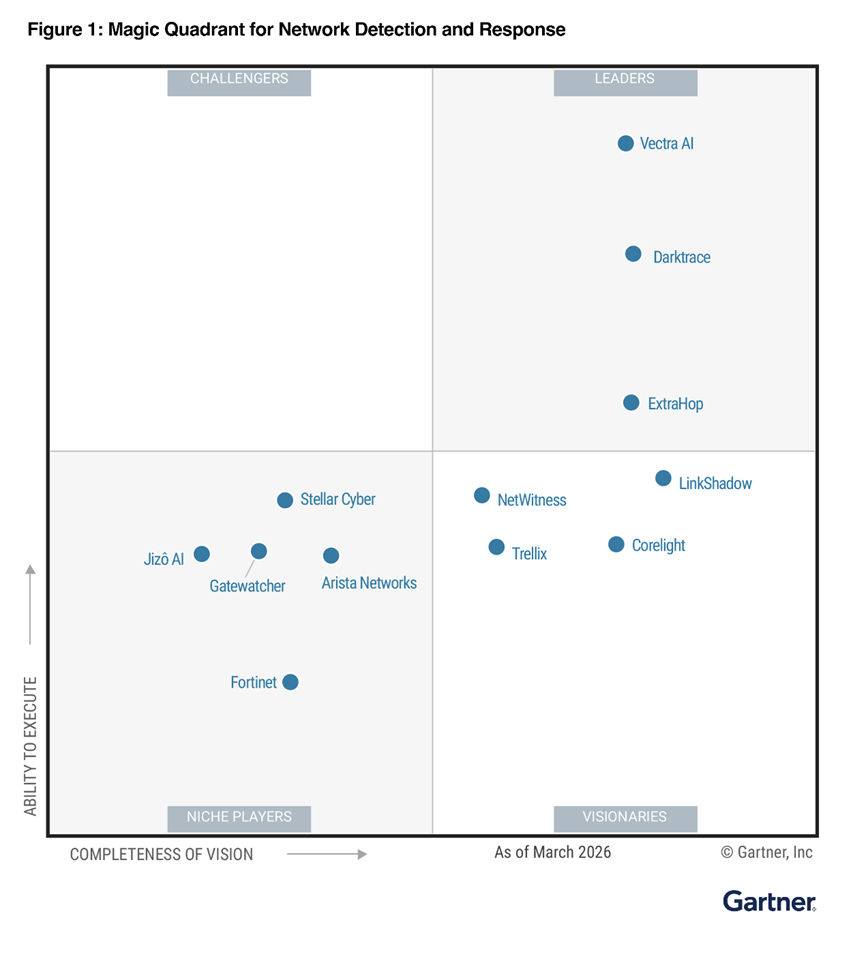
LinkShadow is positioned in the Visionaries Quadrant in the 2026 Gartner® Magic Quadrant™ for Network Detection and Response (NDR).

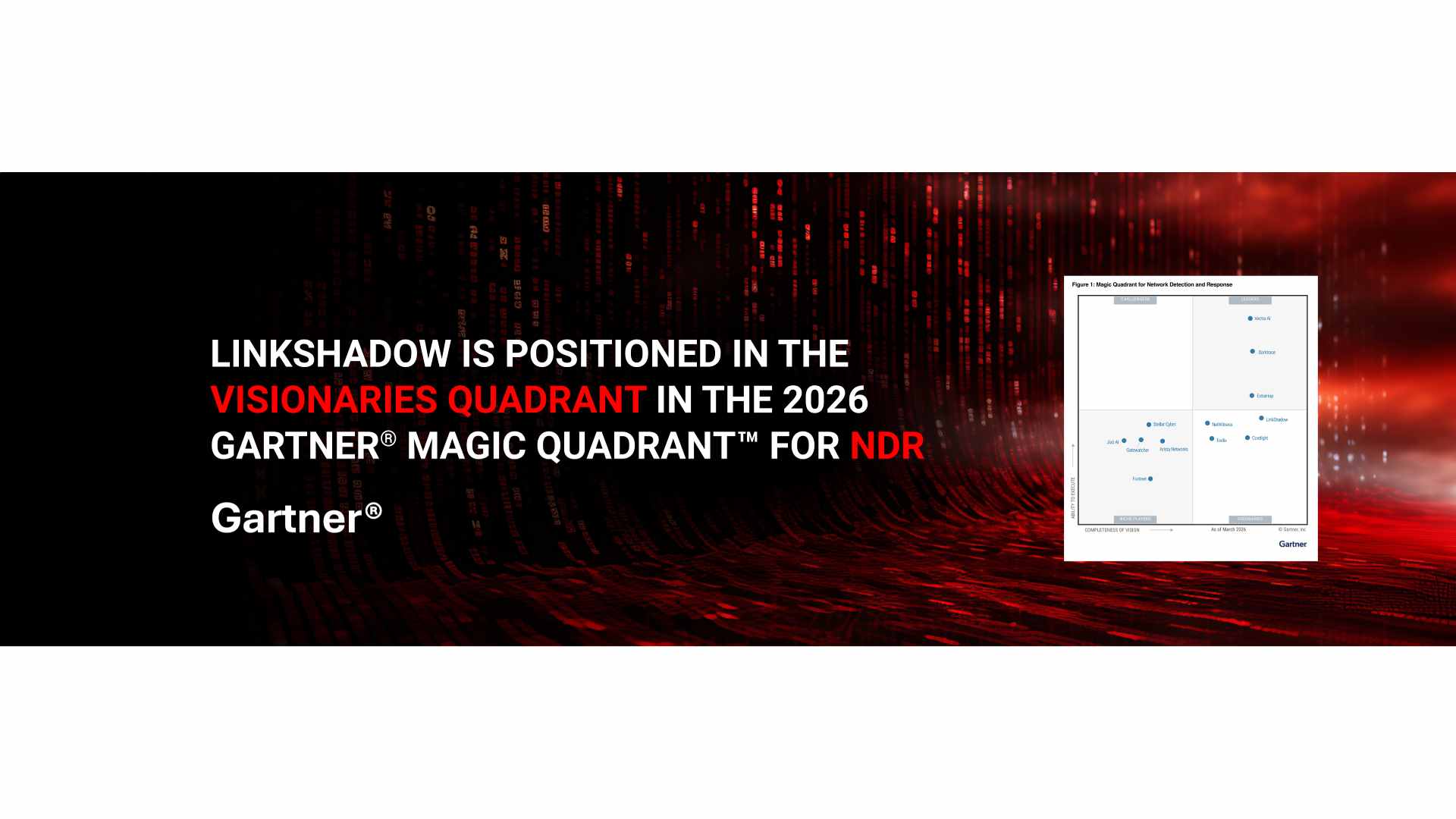
LinkShadow has been positioned in the Visionaries Quadrant of the 2026 Gartner® Magic Quadrant™ for Network Detection and Response. We are recognized for our completeness of vision and ability to execute. We believe this recognition highlights a differentiated approach to NDR that is redefining how organizations detect and respond to modern network threats.
As cyber threats grow more sophisticated and fast moving, security teams are challenged by fragmented visibility, overwhelming alert volumes, and limited context. LinkShadow addresses these challenges through a distinct strategy that combines AI driven analytics with deep contextual awareness and real time correlation across network activity. This enables organizations to move beyond isolated alerts and toward a more unified, intelligence led approach to security.
What sets LinkShadow apart is its evolution beyond traditional NDR into what it defines as Intelligent NDR. Rather than focusing solely on detection and visibility, the platform continuously enriches network data with context, correlates activity in real time, and applies adaptive intelligence to uncover hidden threats. This intelligence layer transforms raw telemetry into meaningful insights, enabling security teams not only to detect anomalies but to understand their relevance, impact, and urgency.
Unlike conventional solutions that rely heavily on retrospective analysis, LinkShadow transforms dispersed network signals into connected, actionable intelligence. By delivering clarity around what matters most, the platform enables security teams to detect threats earlier, prioritize effectively, and respond with greater precision.
“In our opinion, being recognized as a Visionary reflects our commitment to shaping the future of NDR,” said Mehfooz Khan, Chief Product Officer at LinkShadow. “We believe organizations need more than visibility. They need intelligence that can interpret complex environments in real time and guide action. That is the foundation of what we call Intelligent NDR.”
At the core of LinkShadow’s platform is a unified detection framework that brings together network telemetry, behavioral analytics, and threat intelligence into a single system. The platform surfaces high fidelity alerts while significantly reducing noise, helping security teams focus on what is critical.
We feel our recognition underscore LinkShadow’s forward looking strategy and continued innovation in the NDR space. By leveraging advanced AI and contextual intelligence, the company is enabling organizations to adopt more adaptive and resilient security postures.
As the NDR market continues to evolve, LinkShadow stands out as a company helping define its future. In our opinion, its recognition in the Visionaries Quadrant reflects a clear focus on innovation, intelligence, and real world impact, setting a new benchmark for what network detection and response should deliver.
View Report: https://www.linkshadow.com/recognition/gartner/
Gartner Disclaimer
Gartner does not endorse any company, vendor, product or service depicted in its publications, and does not advise technology users to select only those vendors with the highest ratings or other designation. Gartner publications consist of the opinions of Gartner’s business and technology insights organization and should not be construed as statements of fact. Gartner disclaims all warranties, expressed or implied, with respect to this publication, including any warranties of merchantability or fitness for a particular purpose.
This graphic was published by Gartner, Inc. as part of a larger research document and should be evaluated in the context of the entire document. The Gartner document is available upon request from Linkshadow. Gartner and Magic Quadrant are a trademark of Gartner, Inc., and/or its affiliates.

Christopher Hill, Chairperson & CEO of SindyXR, discusses loneliness, continuous care, AI-driven wellness communities, and why healthcare systems must rethink what happens between clinical appointments.
Christopher, before we talk about the technology, tell us about the moment you realised the healthcare system had a structural problem that nobody was building for. What did you see that others missed?
My “aha” moment was something I neither expected nor actively sought out.
As part of an angel investor group I participated in, I was introduced to SindyXR. Initially, I was absolutely not interested in healthcare. But during that same period, my mother was suffering from kidney failure and eventually passed away.

After her passing, my family discovered that she had been quietly leaning on friends in her age group who were dealing with similar illnesses. We were a close family, but in an effort to protect my father and siblings from her fears, she often turned to peers for emotional support between doctor visits.
What struck me was that people like my mother were doing everything the healthcare system asked of them — attending appointments, following treatments, and completing follow-ups — yet something critical was still missing.
They needed a support system to talk about loneliness, habits, fear, emotional wellbeing, and the realities of daily life between medical visits. None of that was being tracked, supported, or meaningfully understood within traditional healthcare systems.
That was the moment I understood what healthcare was missing, and ultimately why we built SindyXR’s Group Health Support System.
The WHO declared loneliness a global health epidemic in 2023. But SindyXR was already being built before that declaration. Were you solving for loneliness before it had that name?
As the WHO later acknowledged, loneliness directly affects health outcomes. After my mother passed away and I joined SindyXR, I quickly realised her situation was far from unique.
I watched people repeatedly engage with wellness apps and digital health platforms, only to abandon them within weeks. The reason was often the same: it felt like talking to a wall. There was no reciprocity, no sense of belonging, and no feeling that anyone else was walking the journey alongside them.
At SindyXR, we built for human connection from the very beginning — not as a feature, but as the core outcome.
One of the most revealing moments came through our partnerships with medical professionals such as Dr. Charles Cavo, Co-Founder and Chief Medical Officer of Pounds Transformation. Through our platform, patients were able to participate in guided peer support sessions between medical appointments, led by trusted healthcare professionals.
What surprised us most was not only how much patients benefited from speaking with one another, but how much doctors themselves learned simply by listening. Medical professionals gained deeper insight into how loneliness, stress, isolation, and emotional wellbeing directly shaped recovery and long-term outcomes in ways traditional clinical appointments rarely capture.
Most healthcare technology still focuses on appointments, diagnosis, prescriptions, and procedures. Why has the industry largely ignored what happens between those moments?
Healthcare has largely followed the money, and the money has traditionally been concentrated around clinical intervention.
The fifteen-minute appointment became the centre of the system because it was measurable, billable, and operationally structured. But the irony is that what happens between appointments often determines what happens at the next one.
The industry has spent decades studying outcomes while ignoring many of the underlying conditions that produce them.
That is the structural gap SindyXR was built to address.
Tell us about the name SindyXR, and the philosophy behind the tagline ‘Healthier Together. Wherever.’
Traditional one-to-one telehealth systems have proven limited over time. Research consistently shows that group-based, socially connected approaches often produce stronger long-term outcomes.
SindyXR represents connected community experiences delivered across multiple environments and technologies. “Healthier Together. Wherever.” reflects that philosophy directly.
Sometimes that experience happens in person. Sometimes through laptops or smartphones via telehealth. Increasingly, we are also seeing growing demand for augmented and virtual reality environments that emerged during and after the pandemic. We support those experiences as well.
The core idea is simple: healthcare should not feel isolated simply because it is delivered digitally.
You often talk about ‘relationship play’ as a design philosophy. How do you engineer human connection into a technology platform without making it feel artificial?
Relationship play means designing for reciprocity — creating environments where people both give and receive support in meaningful ways.
It is about building shared identity, shared context, and shared progress within communities.
What becomes particularly interesting in the AI era is that every interaction creates valuable experiential learning. While fully respecting HIPAA privacy and confidentiality standards, our AI systems learn how people cope, communicate, support one another, and respond emotionally during wellness interactions.
Over time, this creates contextual understanding that traditional healthcare systems rarely capture. It allows medical professionals to better understand behavioural and emotional patterns surrounding recovery, chronic illness, and long-term care across different demographics and conditions.
That kind of human-centred insight is incredibly difficult for isolated healthcare systems or standalone AI tools to generate independently.
If you could say one thing directly to healthcare leaders, digital health investors, and policymakers about what must change in continuous care, what would it be?
If you want to reduce hospitalizations, extend healthy years, and lower long-term pressure on healthcare systems, then you have to invest in what happens every day—not just at the edge of crisis.
The populations requiring continuous care most urgently—the aging, chronically ill, mentally vulnerable, and those recovering from trauma or loss—are often also the most socially isolated.
That is not a coincidence. In many cases, it is the mechanism through which conditions worsen.
Today, the technology finally exists to support continuous, community-driven care at scale, across geographies, and at a fraction of the cost of downstream intervention.
The real question is whether healthcare systems are ready to rethink what care actually means beyond the clinical environment itself.
Tech News
65% OF ANALYSTS SAY AI WORKS BEST WHEN THE LOGIC IS MANAGED AT THE BUSINESS LEVEL, ALTERYX RESEARCH FINDS
Alteryx, Inc., an AI-ready data and analytics company, today released its “2026 State of Data Analysts in the Age of AI” report, revealing that while AI is becoming central to business decision-making, human oversight remains critical to ensuring AI-generated outcomes are trusted and actionable. The research found that analysts spend nearly four hours per week validating and correcting AI-generated outputs, while poor data quality and governance continue to undermine AI and analytics initiatives. The findings also show that AI works best when the people closest to the business stay involved, with 65% of analysts saying AI and agent-based systems are most productive when the logic is managed at the business level. As organizations accelerate toward more agentic AI systems, the need for trusted data, governed logic and workflows, and human oversight continues to grow.
Key Findings at a Glance:
- 96% of data analysts are actively using AI tools in their roles
- 47% of failed AI and analytics projects are attributed to poor data quality or governance
- 65% of analysts say AI and agent-based systems are most productive when the logic is managed at the business level
- Data analysts spend an average of 5.7 hours per week preparing and cleaning data, and an additional 3.7 hours per week checking and correcting AI outputs
- Only 3% prefer fully autonomous AI without routine human involvement, while 46% favor a human-in-the-loop approach
The findings point to a broader shift in how organizations are operationalizing AI. As businesses move from experimentation to deploying AI in core workflows and decision-making, trust increasingly depends on more than model performance alone. Analysts and operations teams play a critical role because they maintain business logic, governance standards, and operational context that help AI systems produce reliable and actionable outcomes.
Human Oversight Still Remains Central in the Age of Agentic AI
As AI becomes a bigger part of an analyst’s day-to-day work, the impact goes beyond simple productivity gains. Businesses are quickly adopting more advanced AI capabilities, like agentic AI, but, on the contrary, analysts are now spending more time reviewing, validating, and guiding AI-generated work. Over half (59%) expect to use AI agents to generate insights within the next year, and many are already using them to draft communications (59%) and manage workflows (54%).
Even as AI takes on a larger role in data-to-insight workflows, analysts remain closely involved because they are ultimately accountable for the quality, accuracy, and reliability of the outcomes. Nearly half (46%) prefer a human-in-the-loop approach where AI systems require human approval before taking action, while only 3% are comfortable with fully autonomous AI. The findings suggest that as AI becomes more embedded in business processes, trust, oversight, and human judgment remain essential to ensuring outputs are accurate, explainable, and aligned with business needs.
“AI is already influencing how businesses make decisions every day, but our research highlights a reality many organizations are now confronting: trust matters just as much as speed,” said Andy MacMillan, CEO at Alteryx. “The people closest to the business play a critical role because they understand the logic, rules, and operational context behind decisions, whether that’s pricing models, compliance requirements, or operational thresholds, and that business logic is constantly evolving. AI can accelerate work, but organizations still need governed workflows and human oversight to ensure outcomes are visible, understandable, repeatable, and auditable across the organization.”
Data Challenges Continue to Limit AI Success
Behind every successful AI initiative is a strong data foundation, and many organizations are still struggling to get there. Even as AI adoption grows, ongoing issues with data quality, access, and governance continue to slow progress and limit AI effectiveness. Analysts say either poor data quality or governance is responsible for nearly half (47%) of failed AI and analytics projects, making it the biggest barrier to AI success.
Most (79%) analysts believe their data is ready for AI at scale, yet the day-to-day reality looks much different. Analysts still spend an average of nearly 6 hours each week preparing and cleaning data, plus nearly another 4 hours reviewing and correcting AI-generated outputs, checking for issues such as incorrect calculations, inconsistent metrics, or responses that don’t align with company policies and definitions. Governance concerns are also rising, with access control and data exposure (42%) ranking as the top issue, followed closely by regulatory compliance (41%). These findings show that as companies push AI deeper into business operations, the people closest to the business increasingly need to provide the context AI relies on, including not just clean data, but also the business logic, workflows, policies, and governance that shape how decisions are made and acted on.
AI Becomes Core to Business Decision-Making
AI is quickly becoming part of everyday business decision-making. Nearly all analysts surveyed (96%) say they use AI tools in their work every day, and organizations are already seeing the impact. Among IT leaders, 85% report noticeable gains in employee productivity, while 79% say AI is helping teams make decisions faster.
As AI adoption grows, AI-generated insights are carrying more weight across the business. Half (50%) of analysts and 62% of IT leaders say that most or almost all business-critical decisions are now influenced by AI insights.
But generating insights faster doesn’t always make decisions easier. The biggest challenge organizations face is helping business leaders understand and trust AI-generated outputs, with 43% saying interpreting and explaining AI insights remains a key barrier. At the same time, companies continue embedding AI into core technologies like cloud data warehouses (40%) and business intelligence tools (39%), making AI an increasingly central part of how businesses operate.
The Evolving Role of the Data Analyst
Analysts increasingly see AI as a collaborator that changes how work gets done, not a replacement for human expertise. In fact, 82% say automation is making them more effective by helping them work faster and focus on higher-value tasks.
As AI becomes more embedded in everyday operations, the role of the analyst is evolving from producing insights to guiding how AI systems operate. Over the next five years, 40% believe changing skill requirements will have the biggest impact on their responsibilities, while 36% point to the growing importance of real-time analytics. The findings suggest that analysts and operational teams will play an increasingly important role in defining, validating, and evolving the business logic AI systems rely on to deliver trusted, repeatable outcomes. This includes the rules, calculations, and operational processes that determine how the business actually runs, whether it’s updating tax rules in different countries, changing sales commission structures, adjusting supply chain thresholds, or applying compliance and pricing policies as conditions evolve.

A Flavour-Packed International Burger Week at List Bar
THE GCC IS SHAPING DEPLOYMENT OF MOBILITY TECHNOLOGY AT SCALE

FROM FARM TO SHELF: THE CASE FOR SOURCING CLOSER TO HOME


-
News11 years ago
SENDQUICK (TALARIAX) INTRODUCES SQOOPE – THE BREAKTHROUGH IN MOBILE MESSAGING
-

 Tech News2 years ago
Denodo Bolsters Executive Team by Hiring Christophe Culine as its Chief Revenue Officer
-

 Trending7 months ago
OPPO A6 Pro 5G Review: Reliable Daily Driver
-
 VAR1 year ago
Microsoft Launches New Surface Copilot+ PCs for Business
-
Tech Interviews2 years ago
Navigating the Cybersecurity Landscape in Hybrid Work Environments
-

 Automotive2 years ago
AGMC Launches the RIDDARA RD6 High Performance Fully Electric 4×4 Pickup
-

 Tech News10 months ago
Nothing Launches flagship Nothing Phone (3) and Headphone (1) in theme with the Iconic Museum of the Future in Dubai
-

 VAR2 years ago
Samsung Galaxy Z Fold6 vs Google Pixel 9 Pro Fold: Clash Of The Folding Phenoms