
 Have a question? +971 56 404 0503




Tech News
Quantum AI Synergy: Unlocking Next-Gen Machine Learning


By Dr. Muhammad Khan, Founder & CEO, Staque
The convergence of quantum computing and artificial intelligence is setting the stage for unprecedented transformations, equipping industries with the capability to address complex, large-scale problems previously beyond reach. Quantum computing, with its capacity to perform intricate computations at unprecedented speeds, is enhancing machine learning’s potential to process and interpret massive datasets and optimize complex models. This powerful synergy has implications across various sectors, from healthcare and finance to logistics, promising a new era of decision-making and innovation.
Quantum Computing as a Catalyst for Machine Learning Advancements
Quantum computing harnesses quantum mechanics to process information in ways that traditional computers cannot. Unlike classical bits, quantum bits (or qubits) can exist in multiple states simultaneously, enabling quantum systems to handle vast amounts of information in parallel. This capability is especially transformative for machine learning, where optimizing algorithms and managing large datasets are crucial. Quantum technology allows for deeper and more efficient analysis of complex data, making it possible to solve intricate challenges with precision and speed.
In particular, quantum computing offers revolutionary improvements in feature selection, a fundamental process in machine learning that identifies the most relevant variables in a dataset to build accurate and efficient models. For traditional computing methods, selecting features within high-dimensional data often becomes computationally expensive and risks model overfitting. However, quantum algorithms like quantum annealing and the Quantum Approximate Optimization Algorithm (QAOA) are adept at solving combinatorial optimization problems, enabling them to evaluate numerous feature combinations simultaneously and identify optimal subsets more effectively. With quantum-augmented feature selection, the development of robust, scalable machine learning models is accelerated, reducing computational costs and enhancing model accuracy.
Enabling Breakthroughs in Healthcare and Material Science
Sectors like drug discovery and material synthesis stand to benefit immensely from the accelerated data processing capabilities quantum computing offers. In drug development, for example, quantum systems simulate molecular structures and predict interactions with unparalleled accuracy, providing insights essential for designing effective, targeted medications. Quantum algorithms further enhance these capabilities by identifying optimal reaction pathways, streamlining the development process, and cutting down on experimental costs in both drug discovery and materials science.
These advancements extend to other applied sciences, allowing researchers to predict molecular behaviors and optimize chemical reactions in ways previously impossible. As quantum computing becomes more accessible, industries across healthcare and production are better equipped to develop safe and sustainable products faster and more efficiently than before. This level of precision could redefine research and development standards across industries, driving forward innovation at an accelerated pace.
Quantum-Enhanced Neural Networks and Their Potential
The impact of quantum computing extends to the neural networks underpinning many machine learning applications. Restricted Boltzmann Machines (RBMs), which are commonly used in generative models and for dimensionality reduction, are already integral to large-scale models that power everything from language processing to autonomous decision-making. When quantum computing is incorporated, as seen in Quantum Restricted Boltzmann Machines (QRBMs), the training process becomes more efficient and the neural networks’ ability to recognize complex patterns is amplified.
Through a process known as quantum parallelism, QRBMs are able to explore multiple states simultaneously, achieving faster convergence and higher efficiency in training. This improvement significantly enhances machine learning’s performance in areas like image recognition, language interpretation, and sophisticated decision-making. As a result, QRBMs not only streamline traditional neural networks but also create new opportunities for applications requiring high-level pattern recognition and data processing. With QRBMs, quantum technology continues to push the limits of what advanced machine learning systems can achieve.
The Emergence of Que: A Benchmark in Quantum-Driven Applications
Staque’s development of Que exemplifies how integrating quantum power with machine learning techniques can set new standards in innovation. By employing quantum-enhanced feature selection, the platform optimizes data models for better accuracy and efficiency, demonstrating how quantum algorithms can refine the processes central to intelligent systems. Additionally, Que’s incorporation of QRBMs boosts decision-making capabilities, a feature especially valuable in fields like healthcare and finance, where precision is paramount.
Que is designed with adaptability in mind, tailored to support applications across diverse sectors. In healthcare, it can aid clinicians by analyzing vast datasets to provide diagnostic insights and treatment recommendations with exceptional accuracy. In finance, it enables enhanced predictive modeling for market analysis, risk assessment, and portfolio optimization, processing complex financial data at quantum-level speed and precision. And in logistics, the platform improves supply chain management, streamlining routing, inventory control, and demand forecasting. These applications showcase the versatility of Que and its potential to influence efficiency and productivity across a range of industries.
Positioning the Middle East as a Quantum-Driven Innovation Hub
As quantum-powered solutions advance, regions investing in these technologies are positioning themselves as leaders in global innovation. Staque’s initiatives, including Que, aim to establish the Middle East as a burgeoning center for quantum technology and data-driven applications. Building local expertise and infrastructure helps foster an environment conducive to the adoption of these advanced technologies, putting the Middle East at the forefront of the global shift toward quantum-augmented machine learning.
The integration of quantum systems with intelligent processing frameworks signifies a paradigm shift, offering solutions that promise unprecedented precision and efficiency. The fusion of quantum mechanics with machine learning presents possibilities that redefine current limitations, potentially transforming the way industries address and solve intricate challenges. By leading in the quantum-machine learning domain, regions like the Middle East are not only shaping their future but also contributing to a global landscape that increasingly values technological advancement and complex problem-solving.












In a fast-paced world defined by limited time and endless to-do lists, simplicity is much needed. Across the UAE, consumers are increasingly looking for faster, smarter ways to declutter, upgrade, and sell, without the friction of traditional listing processes.
This shift in behaviour is exactly where dubizzle’s Sell with AI has made its mark.
Since its launch in 2025, the feature has seen strong and sustained adoption, with over 231,500 users leveraging Sell with AI to create listings effortlessly. In total, the tool has already generated approximately 1.2 million new listings on the platform, reflecting both scale and consistent user value.
Momentum continues to build month over month, with an average of 25,600 monthly active users using Sell with AI to generate listings faster and more efficiently. This demonstrates not only strong adoption, but also repeat, habitual usage, an important signal of product-market fit in everyday consumer behaviour.
Rather than replacing user input, Sell with AI works with it and enhances it.
The concept is simple: users upload a few photos, and the AI handles the rest; writing descriptions, categorising items, and generating complete, high-quality listings in seconds. What once required manual effort and time is now reduced to a seamless, intuitive experience.
Usage patterns show particularly strong traction in high-frequency household categories where speed and convenience matter most. The Furniture category leads in terms of adoption, followed by Large Appliances such as refrigerators and ovens, with strong activity also seen in mobile phones, home accessories, and clothing. This highlights how AI is being embedded into everyday resale behaviour rather than niche use cases.
Commenting on the trend, Matthew Gregory, Senior Director of Strategy at dubizzle, said:
“People want to sell effortlessly, without having to overthink the details. Sell with AI was designed to give users back their time. It’s intuitive, fast, and aligned with the way people live and transact today.”
Beyond efficiency, adoption trends also point to a broader behavioural shift in how consumers engage with AI. Users are no longer treating it as an experimental feature, but as a practical, everyday utility, particularly in home and lifestyle categories where turnover is high and convenience is critical.
“Technology should adapt to people, not the other way around,” Matthew Gregory added. “Sell with AI does exactly that, it meets users where they are, making selling as simple as sending a message.”
As the UAE continues to evolve into a highly connected, digital-first economy, dubizzle remains focused on simplifying real-world interactions through meaningful innovation. Sell with AI is not just a feature enhancement, it represents a fundamental shift in how people list, sell, and transact online.
With over a million listings generated and hundreds of thousands of users already engaging with the tool, Sell with AI is helping transform online selling from a manual, time-consuming process into a faster, more intelligent, and more intuitive experience.
By embedding AI into one of the most frequent consumer behaviours, dubizzle continues to move closer to its core mission: helping people live smarter, move faster, and sell with ease.
Tech News
LinkShadow is positioned in the Visionaries Quadrant in the 2026 Gartner® Magic Quadrant™ for Network Detection and Response (NDR).


LinkShadow has been positioned in the Visionaries Quadrant of the 2026 Gartner® Magic Quadrant™ for Network Detection and Response. We are recognized for our completeness of vision and ability to execute. We believe this recognition highlights a differentiated approach to NDR that is redefining how organizations detect and respond to modern network threats.
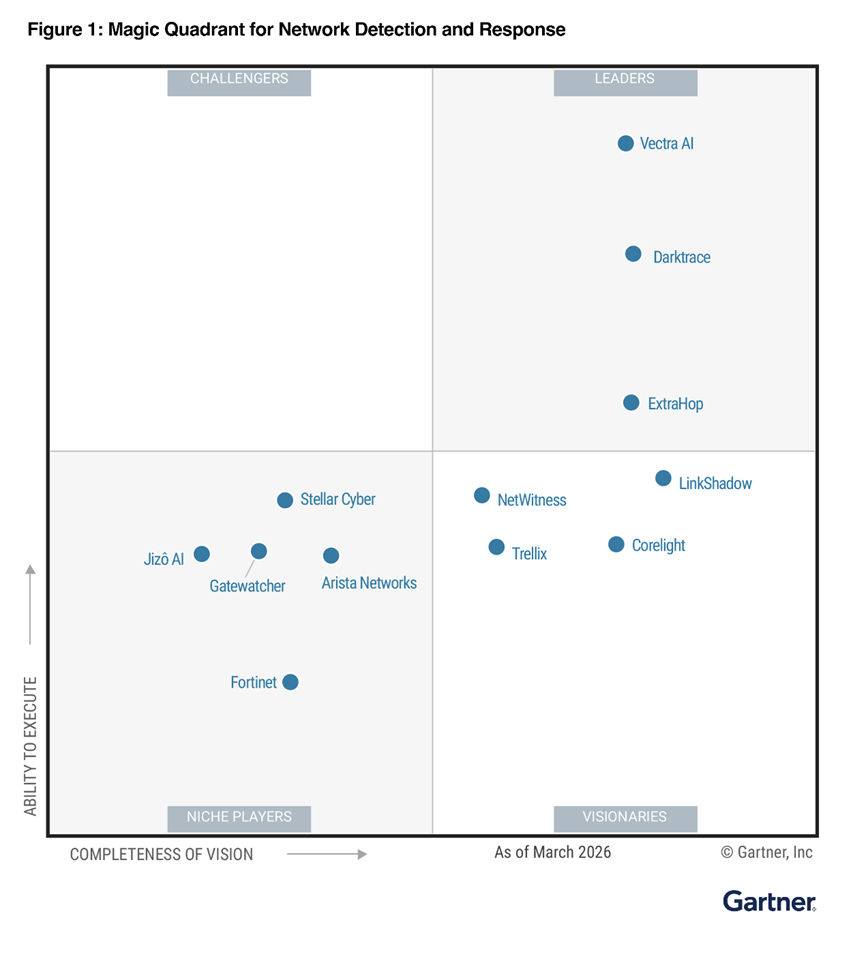
As cyber threats grow more sophisticated and fast moving, security teams are challenged by fragmented visibility, overwhelming alert volumes, and limited context. LinkShadow addresses these challenges through a distinct strategy that combines AI driven analytics with deep contextual awareness and real time correlation across network activity. This enables organizations to move beyond isolated alerts and toward a more unified, intelligence led approach to security.
What sets LinkShadow apart is its evolution beyond traditional NDR into what it defines as Intelligent NDR. Rather than focusing solely on detection and visibility, the platform continuously enriches network data with context, correlates activity in real time, and applies adaptive intelligence to uncover hidden threats. This intelligence layer transforms raw telemetry into meaningful insights, enabling security teams not only to detect anomalies but to understand their relevance, impact, and urgency.
Unlike conventional solutions that rely heavily on retrospective analysis, LinkShadow transforms dispersed network signals into connected, actionable intelligence. By delivering clarity around what matters most, the platform enables security teams to detect threats earlier, prioritize effectively, and respond with greater precision.
“In our opinion, being recognized as a Visionary reflects our commitment to shaping the future of NDR,” said Mehfooz Khan, Chief Product Officer at LinkShadow. “We believe organizations need more than visibility. They need intelligence that can interpret complex environments in real time and guide action. That is the foundation of what we call Intelligent NDR.”
At the core of LinkShadow’s platform is a unified detection framework that brings together network telemetry, behavioral analytics, and threat intelligence into a single system. The platform surfaces high fidelity alerts while significantly reducing noise, helping security teams focus on what is critical.
We feel our recognition underscore LinkShadow’s forward looking strategy and continued innovation in the NDR space. By leveraging advanced AI and contextual intelligence, the company is enabling organizations to adopt more adaptive and resilient security postures.
As the NDR market continues to evolve, LinkShadow stands out as a company helping define its future. In our opinion, its recognition in the Visionaries Quadrant reflects a clear focus on innovation, intelligence, and real world impact, setting a new benchmark for what network detection and response should deliver.
View Report: https://www.linkshadow.com/recognition/gartner/
Gartner Disclaimer
Gartner does not endorse any company, vendor, product or service depicted in its publications, and does not advise technology users to select only those vendors with the highest ratings or other designation. Gartner publications consist of the opinions of Gartner’s business and technology insights organization and should not be construed as statements of fact. Gartner disclaims all warranties, expressed or implied, with respect to this publication, including any warranties of merchantability or fitness for a particular purpose.
This graphic was published by Gartner, Inc. as part of a larger research document and should be evaluated in the context of the entire document. The Gartner document is available upon request from Linkshadow. Gartner and Magic Quadrant are a trademark of Gartner, Inc., and/or its affiliates.

Christopher Hill, Chairperson & CEO of SindyXR, discusses loneliness, continuous care, AI-driven wellness communities, and why healthcare systems must rethink what happens between clinical appointments.
Christopher, before we talk about the technology, tell us about the moment you realised the healthcare system had a structural problem that nobody was building for. What did you see that others missed?
My “aha” moment was something I neither expected nor actively sought out.
As part of an angel investor group I participated in, I was introduced to SindyXR. Initially, I was absolutely not interested in healthcare. But during that same period, my mother was suffering from kidney failure and eventually passed away.

After her passing, my family discovered that she had been quietly leaning on friends in her age group who were dealing with similar illnesses. We were a close family, but in an effort to protect my father and siblings from her fears, she often turned to peers for emotional support between doctor visits.
What struck me was that people like my mother were doing everything the healthcare system asked of them — attending appointments, following treatments, and completing follow-ups — yet something critical was still missing.
They needed a support system to talk about loneliness, habits, fear, emotional wellbeing, and the realities of daily life between medical visits. None of that was being tracked, supported, or meaningfully understood within traditional healthcare systems.
That was the moment I understood what healthcare was missing, and ultimately why we built SindyXR’s Group Health Support System.
The WHO declared loneliness a global health epidemic in 2023. But SindyXR was already being built before that declaration. Were you solving for loneliness before it had that name?
As the WHO later acknowledged, loneliness directly affects health outcomes. After my mother passed away and I joined SindyXR, I quickly realised her situation was far from unique.
I watched people repeatedly engage with wellness apps and digital health platforms, only to abandon them within weeks. The reason was often the same: it felt like talking to a wall. There was no reciprocity, no sense of belonging, and no feeling that anyone else was walking the journey alongside them.
At SindyXR, we built for human connection from the very beginning — not as a feature, but as the core outcome.
One of the most revealing moments came through our partnerships with medical professionals such as Dr. Charles Cavo, Co-Founder and Chief Medical Officer of Pounds Transformation. Through our platform, patients were able to participate in guided peer support sessions between medical appointments, led by trusted healthcare professionals.
What surprised us most was not only how much patients benefited from speaking with one another, but how much doctors themselves learned simply by listening. Medical professionals gained deeper insight into how loneliness, stress, isolation, and emotional wellbeing directly shaped recovery and long-term outcomes in ways traditional clinical appointments rarely capture.
Most healthcare technology still focuses on appointments, diagnosis, prescriptions, and procedures. Why has the industry largely ignored what happens between those moments?
Healthcare has largely followed the money, and the money has traditionally been concentrated around clinical intervention.
The fifteen-minute appointment became the centre of the system because it was measurable, billable, and operationally structured. But the irony is that what happens between appointments often determines what happens at the next one.
The industry has spent decades studying outcomes while ignoring many of the underlying conditions that produce them.
That is the structural gap SindyXR was built to address.
Tell us about the name SindyXR, and the philosophy behind the tagline ‘Healthier Together. Wherever.’
Traditional one-to-one telehealth systems have proven limited over time. Research consistently shows that group-based, socially connected approaches often produce stronger long-term outcomes.
SindyXR represents connected community experiences delivered across multiple environments and technologies. “Healthier Together. Wherever.” reflects that philosophy directly.
Sometimes that experience happens in person. Sometimes through laptops or smartphones via telehealth. Increasingly, we are also seeing growing demand for augmented and virtual reality environments that emerged during and after the pandemic. We support those experiences as well.
The core idea is simple: healthcare should not feel isolated simply because it is delivered digitally.
You often talk about ‘relationship play’ as a design philosophy. How do you engineer human connection into a technology platform without making it feel artificial?
Relationship play means designing for reciprocity — creating environments where people both give and receive support in meaningful ways.
It is about building shared identity, shared context, and shared progress within communities.
What becomes particularly interesting in the AI era is that every interaction creates valuable experiential learning. While fully respecting HIPAA privacy and confidentiality standards, our AI systems learn how people cope, communicate, support one another, and respond emotionally during wellness interactions.
Over time, this creates contextual understanding that traditional healthcare systems rarely capture. It allows medical professionals to better understand behavioural and emotional patterns surrounding recovery, chronic illness, and long-term care across different demographics and conditions.
That kind of human-centred insight is incredibly difficult for isolated healthcare systems or standalone AI tools to generate independently.
If you could say one thing directly to healthcare leaders, digital health investors, and policymakers about what must change in continuous care, what would it be?
If you want to reduce hospitalizations, extend healthy years, and lower long-term pressure on healthcare systems, then you have to invest in what happens every day—not just at the edge of crisis.
The populations requiring continuous care most urgently—the aging, chronically ill, mentally vulnerable, and those recovering from trauma or loss—are often also the most socially isolated.
That is not a coincidence. In many cases, it is the mechanism through which conditions worsen.
Today, the technology finally exists to support continuous, community-driven care at scale, across geographies, and at a fraction of the cost of downstream intervention.
The real question is whether healthcare systems are ready to rethink what care actually means beyond the clinical environment itself.


STRENGTHENING CYBERSECURITY WITHOUT COMPLEXITY

OVER 25,000 MONTHLY USERS ON DUBIZZLE NOW SELL WITH AI!

GAME ON: THE CROFT LAUNCHES LIVE SPORTS EXPERIENCE WITH AED 17 DRINKS TO CELEBRATE 17 YEARS


-
News11 years ago
SENDQUICK (TALARIAX) INTRODUCES SQOOPE – THE BREAKTHROUGH IN MOBILE MESSAGING
-

 Tech News2 years ago
Denodo Bolsters Executive Team by Hiring Christophe Culine as its Chief Revenue Officer
-

 Trending7 months ago
OPPO A6 Pro 5G Review: Reliable Daily Driver
-
 VAR1 year ago
Microsoft Launches New Surface Copilot+ PCs for Business
-
Tech Interviews2 years ago
Navigating the Cybersecurity Landscape in Hybrid Work Environments
-

 Automotive2 years ago
AGMC Launches the RIDDARA RD6 High Performance Fully Electric 4×4 Pickup
-

 Tech News11 months ago
Nothing Launches flagship Nothing Phone (3) and Headphone (1) in theme with the Iconic Museum of the Future in Dubai
-

 VAR2 years ago
Samsung Galaxy Z Fold6 vs Google Pixel 9 Pro Fold: Clash Of The Folding Phenoms