
 Have a question? +971 56 404 0503




Home Integrator
Elevate & Ennismore Partner to Bring $500 Million Mondrian Beachfront Residence to Al Marjan Island


ELEVATE, the visionary lifestyle real estate brand launched in the UAE by global development firm One Group and Ennismore, the fastest-growing lifestyle and leisure hospitality company, has signed an agreement to introduce the region’s first-ever beachfront Mondrian residences in the UAE. The landmark $500 million project will be situated on the rapidly growing Al Marjan Island, marking a pivotal moment in the evolution of branded living experiences on the island and in the region. The grand opening is anticipated to be in Q4 2028.
The signing took place between Zeeshan Shah, Founder & Chairman, ELEVATE and Louis Abboud, Regional Head of Lifestyle Collective IMEAT, Ennismore, in the presence of Arch. Abdulla Al Abdouli, CEO of Marjan.
This partnership unites the strengths of two globally respected leaders, collaborating to champion bold design, authentic community experiences, and purposeful living. ELEVATE is setting new benchmarks for intentional and design-forward living, rooted in the UAE with a deep understanding of the region’s evolving cultural and lifestyle ambitions. It offers the perfect counterpart: local insight, real estate expertise, and a vision for redefining modern luxury. Ennismore is a powerhouse in luxury lifestyle hospitality, comprising a collective of 16 globally celebrated brands and two F&B groups—including Delano, SLS, 25hours Hotels, SO/, and Rikas—as well as over 500 restaurants and bars. Together, the two are set to create transformative destinations that resonate far beyond the traditional hospitality model.
Commenting on the signing, Arch. Abdulla Al Abdouli, CEO of Marjan said: “We are delighted to welcome the Mondrian Residences to Al Marjan Island as part of our ongoing commitment to elevating Marjan’s global stature, which is increasingly being famed as a lifestyle-led development. This collaboration between ELEVATE and Ennismore adds a new layer of depth and creativity to our growing portfolio of branded residences on the island. We are proud to welcome Mondrian Beach Residences to Al Marjan Island, which is slated to mark a global expansion for the hospitality giant, showcasing the draw and relevance of Marjan today”.
With this landmark project, ELEVATE reaffirms its long-term commitment to the UAE, supported by a $1 billion development pipeline scheduled for the next 12 months. As the newly launched lifestyle real estate brand from One Group, ELEVATE is setting out to redefine luxury living with its philosophy of living centered around five core pillars of Health, Wellness, Tribe, Purpose and Flowthat resonate with both modern residents and global investors.
Speaking on the collaboration, Zeeshaan Shah, Chairman of One Group and Founder & CEO of ELEVATE, shared his enthusiasm: “We’re very proud to be bringing the first-ever beachfront Mondrian residences to the UAE in collaboration with Ennismore. We carefully selected Mondrian for this location as the brand is the epitome of what Marjan Island is becoming. Renowned for being at the forefront of lifestyle, art and culture, Mondrian’s are icon’s in every city they’re in whether it’s Los Angeles, Cannes or Ibiza and this will undoubtedly be the icon of Marjan Island”.
The Mondrian Al Marjan Island Beach Residences will deliver a five star hospitality-infused residential experience, featuring private beach access, signature design elements, wellness-centric amenities, and curated cultural programming. Residents can expect hotel-grade services with the privacy and ownership benefits of a home, making it a compelling investment for both lifestyle buyers and discerning investors.
Known for its avant-garde design and cultural relevance, Mondrian is one of Ennismore’s most iconic brands, celebrated for its progressive edge in art, fashion, and urban living. With flagship properties in cities such as Los Angeles, Mexico, Ibiza, Doha, Singapore, and Seoul, Mondrian’s branded residential arrival in the UAE signals a new era for luxury beachfront living.
Louis Abboud, Regional Head of Lifestyle Collective IMEAT at Ennismore, said, “We are excited to introduce this new and exciting Mondrian residential project to the UAE in collaboration with ELEVATE. Mondrian is a symbol of creative expression, and Al Marjan Island provides the perfect canvas. This development will bring our signature energy to a thriving new destination and redefine what modern beachfront living can feel like.”
To ensure every detail of the project reflects its exceptional vision, a world-class team of consultants has been carefully curated. Leading the architectural narrative is Gensler – the world’s largest architecture and design firm, headquartered in San Francisco – bringing global expertise and innovative design-thinking to the forefront. Complementing this is the acclaimed London-based Bergman Interiors, celebrated for their award-winning work across luxury hospitality, branded residences, and superyachts, adding a layer of bespoke sophistication to the interiors. Together, they infuse the development with a level of design excellence rarely seen in the region.
Backed by a global real estate transaction record exceeding $2.5 billion, One Group’s expansion into the UAE via ELEVATE is not just strategic – it’s personal. Shah, who began his career in the UAE nearly two decades ago, sees the country as a natural extension of the Group’s lifestyle-driven ethos. For ELEVATE, this launch is only the beginning of the UAE chapter. With several projects in the pipeline across the UAE, the brand is poised to redefine success and luxury, not by excess, but through purposeful design, community, and well-being.
Concluding, Shah said, “This partnership marks our development debut in the region, and we are proud to start by setting a new benchmark in branded beachfront living. I’m deeply grateful to the trusted partners and supporters who stood by this vision from the start – your belief and commitment have been paramount in bringing it to life.”
Ennismore’s branded residential properties, including Mondrian Al Marjan Island Beach Residences, are supported by Accor One Living, an industry-first 360º platform focused on developing, designing, and operating mixed-use projects and branded homeowner communities. Through Accor One Living, homeowners, guests, and partners are connected to Accor’s diverse ecosystem of brands, expertise, and solutions, creating a constant flow of new opportunities to live, work, and play.










Home Integrator
AMAAL APPOINTS CITIC MIDDLE EAST CONTRACTING AS MAIN CONTRACTOR FOR AED 1.8 BILLION MANSORY RESIDENCES IN DUBAI

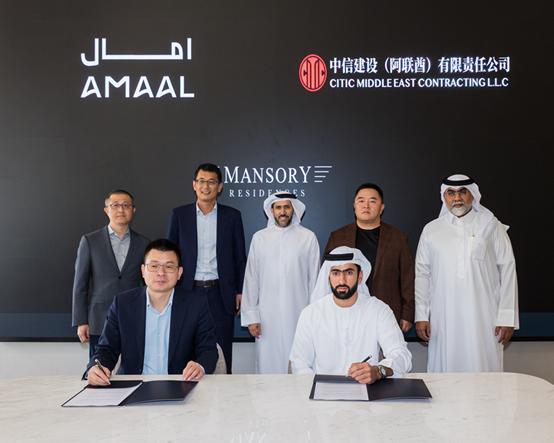
Amaal, the visionary Emirati-founded real estate developer, has appointed CITIC Middle East Contracting LLC as the main contractor for MANSORY Residences, the world’s first MANSORY-branded residential tower. Backed by CITIC Construction Co. Ltd, its China-based parent company and one of ENR’s Top 250 International Contractors, the firm will deliver the AED 1.8 billion project, which is scheduled for completion in Q4 2028 and set to define a new standard in design-led ultra-luxury living.
As the main contractor, CITIC Middle East Contracting LLC will oversee the full turnkey construction of MANSORY Residences, including structural works and all mechanical, electrical, and plumbing systems. Its scope also includes the integration of advanced smart home technologies, VIP automotive facilities, and the carbon-fibre-inspired design elements that define the MANSORY brand. Drawing on its experience in delivering landmark urban projects and large residential communities, the company will lead quality assurance, safety compliance, and coordination with VX Studio and Opaal’s design team to ensure the faithful execution of the project’s bespoke finishes.
Selected for its strong international track record in delivering large-scale and complex developments, CITIC Construction brings deep engineering, procurement, and construction expertise to the partnership. Operating across key markets in Africa, the Middle East, Latin America, Europe, and China, the company has delivered projects spanning infrastructure, high-end residential and mixed-use developments, industrial facilities, and urbanisation initiatives. Its integrated delivery model, supported by in-house engineering and project management capabilities, offers strong control over quality, timelines, and execution.
Abdulla Lahej, Chairman of Amaal, said: “Our goal has always been to collaborate with partners who share our ambition to push boundaries and redefine industry standards. CITIC Middle East Contracting’s proven global expertise, financial and engineering strength, and dedication to precision, safety, and innovation make them the right partner to bring MANSORY Residences to life. Their track record in delivering complex, high-end projects in major international markets aligns with our goal of creating spaces that merge design and lasting value. Through this partnership, we aim to deliver a world-class development that captures the sophistication Amaal and MANSORY are known for.”
Li Sheng, General Manager of CITIC Middle East Contracting commented: “We are delighted to be appointed as the main contractor for MANSORY Residences by Amaal, a truly pioneering project that reimagines ultra-luxury living in Dubai. Drawing on expertise and experience in delivering large-scale urban developments around the world, we are committed to setting benchmarks in construction quality, safety, and sustainable execution. This partnership reflects our vision of creating long-term value through engineering excellence, and we look forward to delivering a landmark that reflects the combined vision of MANSORY and Amaal, bringing an extraordinary standard of elegance and performance to the city.”
Hamid Kerayechian, CEO & Founding Partner of Ayana Holding, said: “Partnering with CITIC Middle East Contracting LLC as the main contractor for MANSORY Residences ensures that our vision for a design-led, ultra-luxury tower is realised with exceptional craftsmanship and meticulous attention to detail. Their experience in delivering complex, high-end developments globally, gives us confidence that this project will meet the exacting standards our investors and residents expect.”
With strong investor activity in Dubai’s property market in Q1 2026, demand for design-led, high-value developments remains robust, such as MANSORY Residences. Property sales reached Dh176.7 billion during the quarter, with transaction values rising 23.4% year on year, while off-plan demand and prices held firm. The momentum also aligns with stronger UAE-China economic relations, as both countries signed agreements to expand trade and investment cooperation, with non-oil trade surpassing $100 billion and the UAE remaining China’s leading trading partner across the MEA.
Part of the prestigious Meydan Horizon masterplan, MANSORY Residences is a 60-storey development that brings together high-performance design, refined residential comfort, and uncompromising quality. The tower will feature one- to four-bedroom residences and full-floor penthouses with world-class amenities. MANSORY’s distinctive design language will reflect throughout, from sculptural façades and bespoke architecture to automotive-inspired interiors.
The delivery of this highly detailed vision will be overseen by CITIC Middle East Contracting LLC, ensuring seamless execution, consistency, and uncompromising quality across every level of the project.
Muhammad Dawood, Chief Executive Officer, Operations & Strategic Partnerships, provided pivotal support that was instrumental in forging this landmark partnership between Amaal and CITIC Middle East Contracting, ensuring alignment on vision, execution, and delivery excellence for MANSORY Residences and future projects.
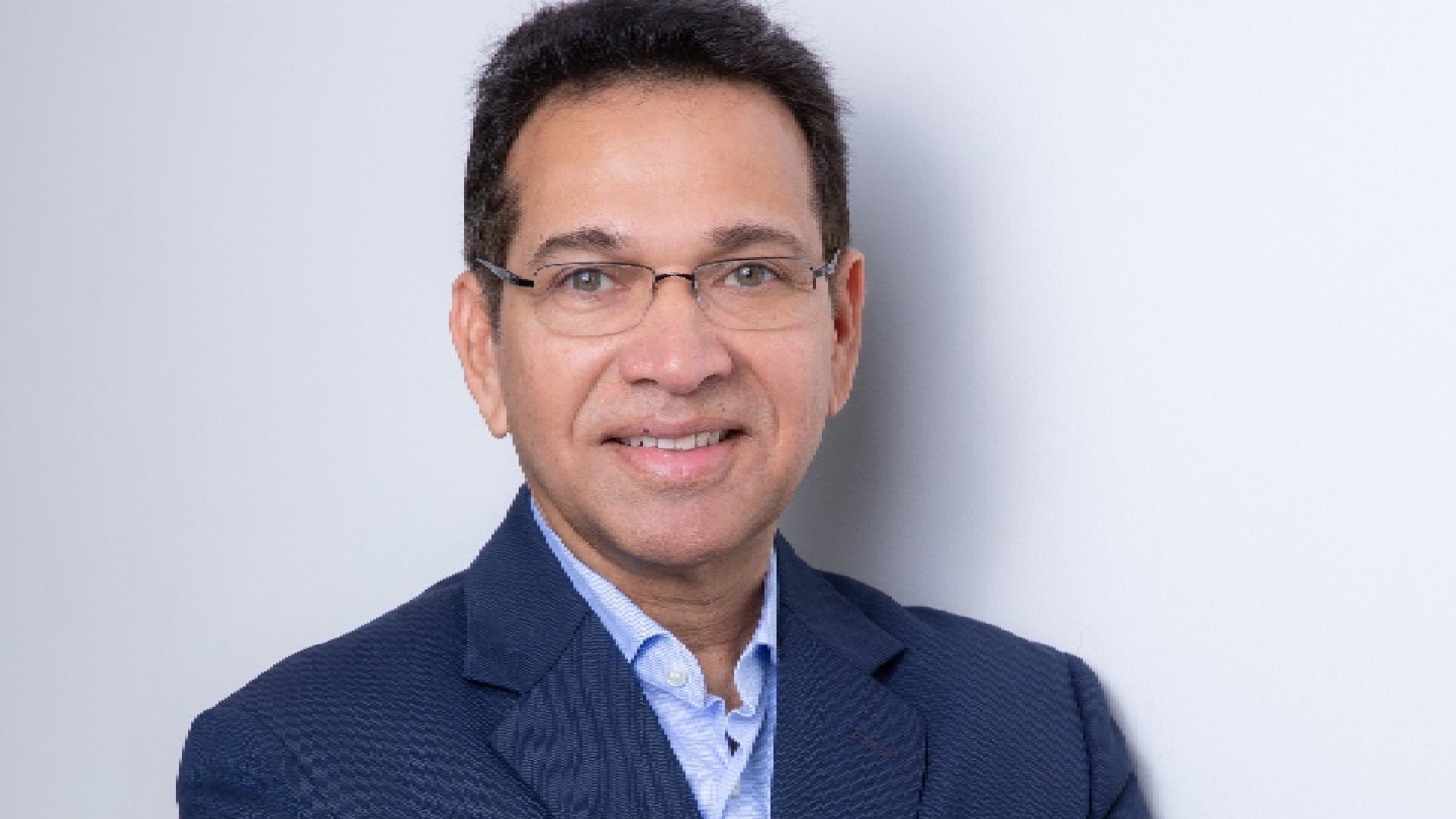
Mohamed Fiaz Khazi, Entrepreneur & Managing Director, Euro Systems
Architecture across the GCC is entering a more demanding phase, shaped by the realities of day-to-day operation. For much of the past decade, design ambition was defined by scale, visibility, and speed. Towers rose quickly, façades grew lighter, and skylines transformed almost overnight. In 2026, the focus has shifted to how buildings perform over time and the quality of experience they deliver to occupants.
This evolution reflects a more mature, performance-driven market while maintaining bold design. Questions around energy use, occupant comfort, maintenance, and durability are now central to architectural decision-making. In a region shaped by heat, dust, and intense solar exposure, design intent carries weight only when it is supported by systems capable of delivering consistent performance over time.
A changing regional approach
Façades illustrate this shift particularly clearly. Glass-heavy architecture remains integral to the region’s visual language, yet it is now approached with greater technical intent. Solar control, shading, acoustic performance, and automation are increasingly considered as parts of a unified strategy rather than isolated design features.
Industry studies consistently show that external shading devices, such as louvers and overhangs, can significantly reduce solar heat gain before it enters the building envelope, lowering cooling demand in the process. Fully shaded glazed areas further reduce thermal loads, easing pressure on mechanical systems while improving internal comfort.
While this performance-led direction is shared across the GCC, each market is responding in its own way.
In the UAE, architectural expression continues to take center stage. Landmark developments, hospitality projects, and mixed-use districts place strong emphasis on experience and identity. What has changed is the level of coordination behind the scenes. Façades are now expected to deliver daylight and transparency without introducing glare or thermal instability. Shading and glazing strategies are increasingly developed together, allowing design ambition to be preserved while meeting operational requirements.
Saudi Arabia presents a different dynamic. Here, scale and speed dominate, with large-scale developments and giga-projects compressing timelines and increasing complexity. In such an environment, fragmented decisions quickly translate into operational challenges. Architecture in the Kingdom is therefore being shaped by early integration, industrialized delivery, and lifecycle planning, where performance and repeatability become essential to building at scale. Research from McKinsey reinforces this approach, showing that large capital projects perform more reliably when coordination replaces siloed decision-making.
Qatar occupies a distinct position between these two models. Following a period of rapid delivery, focus has shifted toward longevity, sustainability, and adaptability. Buildings are expected to operate efficiently over decades and align closely with national sustainability frameworks. Façade performance, shading strategies, and acoustic control are increasingly specified for their contribution to long-term asset value and occupant well-being.
Technology integration
Technology underpins much of this evolution. Smart shading, responsive glazing, and integrated control systems are now practical tools for managing daylight, reducing glare, and stabilizing interior conditions. By reducing solar radiation before it reaches the glazing, external shading delivers measurable performance benefits in high-sun environments.
When façade strategies are developed early and embedded into the design process, materials, structure, and systems align more naturally. The result is architecture that feels deliberate in appearance and dependable in operation.
An operational view
The next wave of GCC projects will approach architecture as a dynamic system, ensuring long-term efficiency and reliability. Design ambition will remain high, but it will be matched by discipline in execution. Integration will increasingly define the process, particularly on complex and large-scale developments, with performance considered alongside form from the outset.
This shift represents meaningful progress. It reflects a region learning from experience and raising its own standards. The skyline will continue to evolve, but its true measure will lie in buildings that remain comfortable, efficient, and resilient long after the initial excitement has passed.
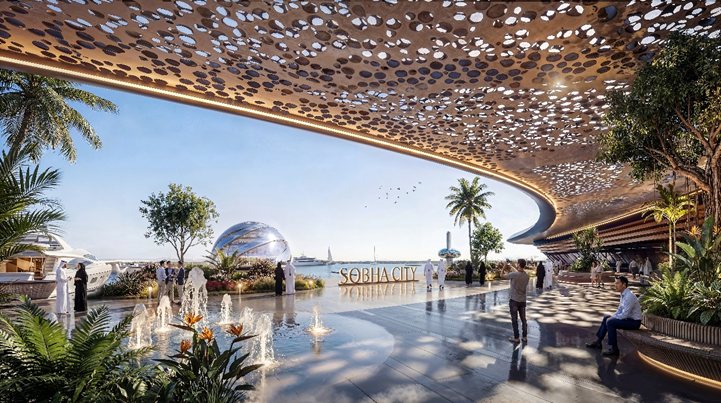
Leading luxury property developer Sobha Realty has announced its entry into Abu Dhabi with the unveiling of Sobha City, a master-planned community that reflects a deliberately quiet and serene approach to urban living in the UAE capital.
Marking the developer’s first large-scale residential development in Abu Dhabi, Sobha City represents a significant milestone rooted in a 50-year legacy of craftsmanship and a long-term commitment to shaping environments that prioritize wellbeing, design integrity, and enduring value. Long associated with refined, design-led communities across Dubai and Umm Al Quwain (UAQ), Sobha Realty’s move into the UAE capital aligns with Abu Dhabi’s continued evolution as a global destination defined by stability, cultural depth, and quality of life.
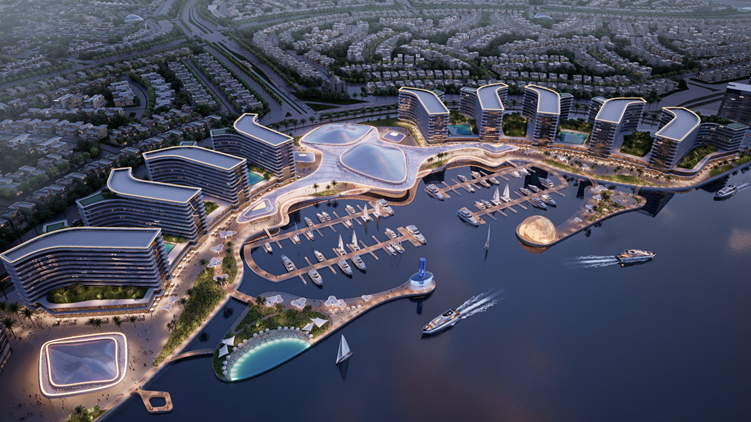
Set in Al Bahiya along the prime E10 and E12 corridor, close to Zayed International Airport and Yas Island, Sobha City unfolds as a low-density, nature-led Madinat designed around space, light, and movement. Spanning approximately 38 million square feet, with an initial phase of around 8 million sq. ft. of land area, the development is envisioned as a “city within a city” that will evolve into a fully integrated, self-sustained ecosystem. Designed for family-oriented living, the gated masterplan demonstrates a commitment to crafting complete communities, where everyday living is shaped by balancing privacy, connectivity, and wellbeing.
Designed with nature at its core, ~60% of the masterplan is dedicated to open and green spaces, with more than 50,000 trees, forest-inspired landscapes, and shaded walkways shaping a seamless sense of quiet continuity. An expansive wellness loop spanning over 18 km encourages a slower, more intentional pace of life, while pedestrian-first pathways reinforce a lifestyle centred on movement, health, and ease.
“Abu Dhabi holds a unique position as a city that balances cultural authenticity with forward-looking ambition, and our entry reflects a long-term belief in its evolution not just as a solid real estate market, but as a place where communities can grow with family-oriented intention,” said Ravi Menon, Chairman, Sobha Group. “Sobha City has been envisioned as a living environment that feels calm, enduring, and deeply connected to its surroundings, while being future-ready.”
A defining feature of Sobha City is its two-kilometre waterfront promenade and integrated marina destination, which brings together leisure, retail, and social spaces in a vibrant, yet considered, way. Schools, healthcare facilities, mosques, and an executive Par-3 golf course, masterfully designed by Greg Norman Golf Course Design. These are all thoughtfully embedded within the masterplan, ensuring essential elements of daily life remain within easy reach.
Drawing inspiration from Abu Dhabi’s coastal, natural landscapes, the City’s design reflects a contemporary interpretation of place where water, greenery, and architecture create an environment that feels both modern and rooted. The result is a ‘live-connect-restore’ ecosystem that is calm, refined, intuitively connected to its surroundings yet with future-ready infrastructure.
Sobha City will offer a diverse mix of residences, including waterfront apartments, estate and garden villas, and mansions catering to a wide spectrum of residents, from families seeking a sense of permanence to global investors looking for stability and long-term value.
Each residence will reflect Sobha Realty’s hallmark ‘The Art of Detail’, with high-quality finishes, open layouts, and technology-enabled living environments that prioritise comfort, functionality, and longevity. Globally recognised for its proprietary Backward Integration model, Sobha Realty maintains full control over design, engineering, and construction processes in an approach that has consistently delivered superior quality and above-market performance across its portfolio.
Mr Francis Alfred, Sobha Realty’s Managing Director, added: “As we expand our footprint into Abu Dhabi, Sobha City will be embodiment of our vertically integrated approach to development ensuring not only exceptional quality but also long-term resilience and value. This position us strongly within a market driven by sustained population growth, investor-friendly policies, and projected increased demand for integrated, lifestyle-oriented developments.”
The launch further strengthens Sobha Realty’s presence in the UAE, complementing its portfolio of developments across Dubai and Umm Al Quwain, including destinations such as Sobha Siniya Island and Downtown UAQ| Sobha Realty. Its entry into Abu Dhabi comes as the emirate reaffirms its commitment to economic diversification, infrastructure development, and a renewed focus on liveability and sustainability. The launch aligns with Abu Dhabi Vision 2030, which seeks to foster a knowledge-based economy supported by thoughtfully planned, high-quality communities.
As the UAE capital determines to evolve into a globally competitive hub, Sobha Realty’s entry with nature-led master community signals both confidence and commitment, positioning the developer at the forefront of the emirate’s next growth chapter.

AMAAL APPOINTS CITIC MIDDLE EAST CONTRACTING AS MAIN CONTRACTOR FOR AED 1.8 BILLION MANSORY RESIDENCES IN DUBAI
HOW GLOBAL SECURITY AND VALUABLES LOGISTICS PROVIDERS ARE ADAPTING OPERATIONS AMID RISING GEOPOLITICAL TENSIONS
DUBAI CORPORATION FOR CONSUMER PROTECTION AND FAIR TRADE SIGNS STRATEGIC COLLABORATION AGREEMENT WITH ENOC’S AUTOPRO TO ENHANCE VEHICLE MAINTENANCE STANDARDS IN DUBAI


-
News10 years ago
SENDQUICK (TALARIAX) INTRODUCES SQOOPE – THE BREAKTHROUGH IN MOBILE MESSAGING
-

 Tech News2 years ago
Denodo Bolsters Executive Team by Hiring Christophe Culine as its Chief Revenue Officer
-
 VAR12 months ago
Microsoft Launches New Surface Copilot+ PCs for Business
-

 Trending6 months ago
OPPO A6 Pro 5G Review: Reliable Daily Driver
-

 Tech Interviews2 years ago
Navigating the Cybersecurity Landscape in Hybrid Work Environments
-

 Tech News9 months ago
Nothing Launches flagship Nothing Phone (3) and Headphone (1) in theme with the Iconic Museum of the Future in Dubai
-

 Automotive2 years ago
AGMC Launches the RIDDARA RD6 High Performance Fully Electric 4×4 Pickup
-

 VAR2 years ago
Samsung Galaxy Z Fold6 vs Google Pixel 9 Pro Fold: Clash Of The Folding Phenoms