
 Have a question? +971 56 404 0503




Hospitality
Rasha Al Mubarak on Empowering UAE Creators: Redefining Music Rights in Hospitality and Beyond

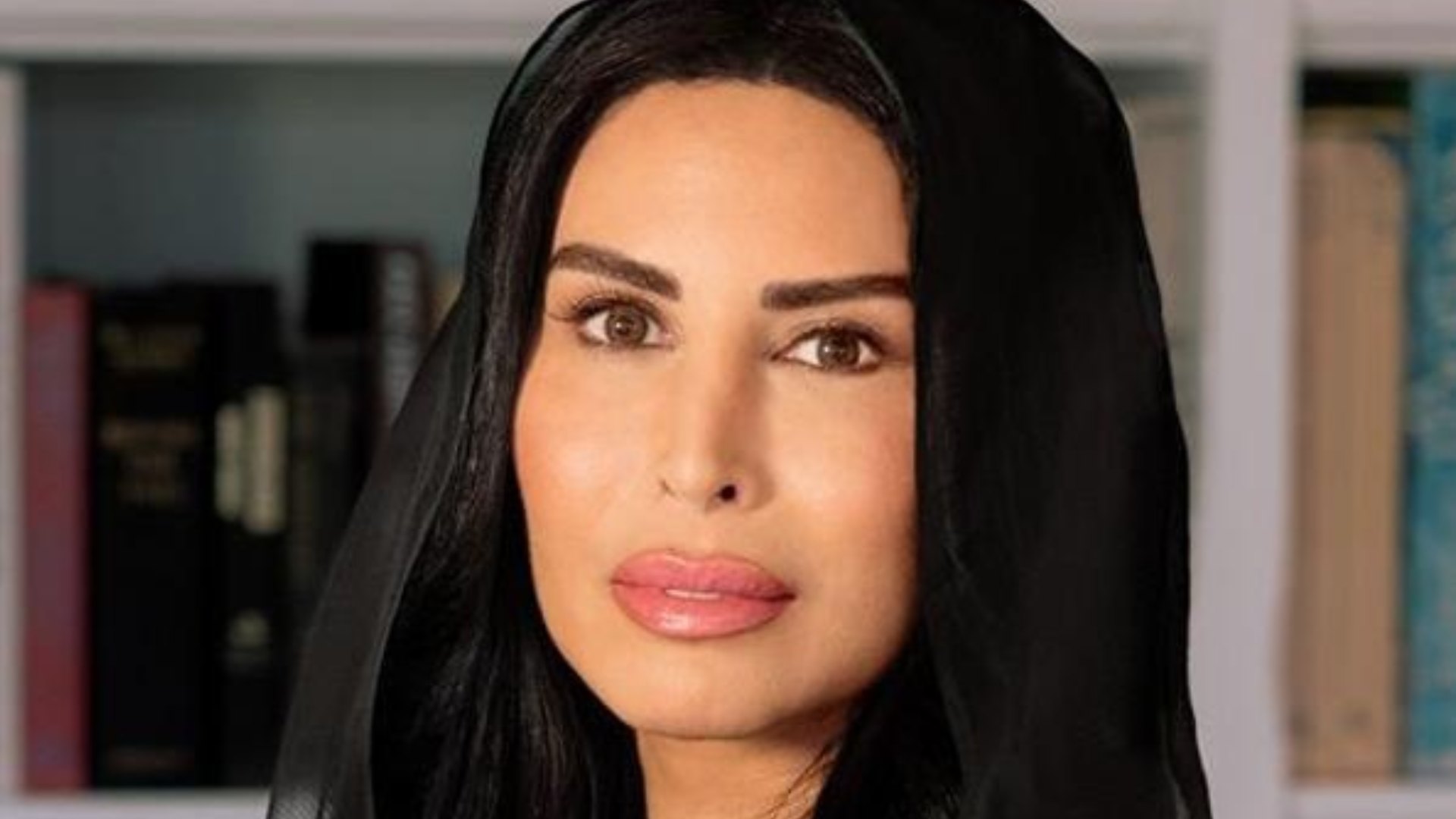
By: Rasha Al Mubarak, the visionary Founder & Chairwoman of Music Nation
- Can you tell us a bit about your background and what drew you to the world of music rights?
I was fortunate to grow up in a family that deeply valued culture, justice, and humanitarian work. At the same time, I have always been passionate about music, art and storytelling as powerful ways to share our heritage. The intersection of these influences: law, humanitarianism, and creativity, naturally drew me to music rights, where I saw an opportunity to protect creators, empower communities, and ensure that culture remains accessible and celebrated.
- How would you describe Music Nation’s mission and the role it plays in supporting artists and the creative economy as a whole?
Music Nation was founded with a clear and compelling mission: to support music creators and rightsholders within the UAE by protecting and licensing their copyrighted works to businesses that use music, but also offering guidance on their career development throughout the music industry. We empower creators to understand the business landscape, cultivate meaningful industry relationships, and effectively monetize their work.
- Congratulations on Music Nation’s Collective Management Organization (CMO) permit award by the Ministry of Economy and Tourism. What does this milestone mean for music creators as well as the hospitality sector, and why is such recognition so important for all parties?
For me, this historic milestone is about recognition. It means that music creators in the UAE, and from around the world, now have an official, trusted body that protects their rights and ensures they are fairly compensated whenever their music is played. That sense of security allows them to focus on their craft, knowing their work is valued and protected.
At the same time, hotels, restaurants, and other venues also benefit from this system. Instead of navigating a gray area, they now have a clear legal framework to play music, while respecting the creators behind it. This creates a healthier, more transparent ecosystem where everyone wins: artists are rewarded, businesses have peace of mind, and audiences get to enjoy music in spaces that honor creativity.
- Your collaboration with global entities BMI and SoundExchange is notable. How do these partnerships enhance Music Nation’s capacity to meet international standards in rights management?
I’m grateful for the opportunity to work alongside our partners BMI and SoundExchange; organizations with long-standing, global reputations. BMI helped us build the foundation for public performance licensing in the UAE years ago. Their expertise ensures that songwriters and publishers are properly supported and compensated through proven technology and systems.Our partnership with SoundExchange has taken things further in the neighboring rights space. Their advanced technology, data tools, and administration capabilities are the best in the business, and these systems allow us to collect and distribute royalties for performers and producers/labels with speed, accuracy and transparency.
What this means for our artists is that they’re getting world-class rights protection and royalty distribution. For me, it’s a source of pride to bring these advanced systems home to the UAE, so that artists here benefit from fairness, clarity, and credibility that matches what creators around the world expect and deserve.
- It can be problematic when it comes to businesses playing music because of the complexity and legal risks involved. How does Music Nation simplify this process for restaurants, hotels, and other F&B operators?
In the past, music licensing was cumbersome and essentially ambiguous. Today it is just the opposite. Our leadership recognizes the positive impact of the UAE’s creative and cultural industries and has introduced robust copyrights legislation to protect and nurture our creatives and provide them with the opportunity to build sustainable careers through royalty distribution. The ambiguity of the past has been resolved through regulation, and using music today without a license is considered copyright infringement, carrying significant risks. With Music Nation, we facilitate all of that licensing officially, seamlessly and throughout the UAE.
Music Nation was built for this purpose. In the world of music copyright law, we have authors rights that protect the authors and publishers of a song and we have neighboring rights (also known as related rights) that protect the performers and producers/labels of recorded music. In most other markets, a business would have to pay a license fee to one society for author/publisher rights and another fee to another society for neighboring rights. Music Nation is the one-stop solution for licensing all of these rights under a single umbrella. This simplifies things enormously, and we believe we are the first Collective Management Organization in the world to natively achieve this. Rather than juggling multiple contracts with multiple parties or risking unlicensed use, hospitality licensees like restaurants and hotels can now secure clear, legal access to music with one efficient license from Music Nation.
- Music is often seen as culture, but it’s also a powerful economic driver. How do you see licensed music contributing to the growth of the UAE’s creative economy?
I’ve always believed that music is both a cultural heartbeat and an economic engine. When music is properly licensed, it ensures that creators are fairly compensated, which in turn encourages more artists to invest their time, talent, and resources into making more music. This cycle doesn’t just benefit artists; it supports businesses, creates jobs, and attracts investment into the wider creative industries.
In the UAE, this has an even greater significance. The country has placed the creative economy at the center of its National Strategy for Cultural and Creative Industries 2031, aiming to make it one of the nation’s key growth sectors. Licensed music plays a direct role in that vision: it gives artists a reliable income stream, provides venues and businesses with legal clarity, and builds trust in the ecosystem.
- As a successful Emirati entrepreneur, what lessons have you learned on your journey that you would like to pass on to the next generation of women leaders?
One of the most important lessons I’ve learned is to take the time to truly search for your passion. It’s not always obvious at first, but once you find what excites you, what gives you energy, that’s where your strength lies. And when you do discover it, I encourage you to think about how to turn that passion into something both innovative and meaningful, while staying authentic. Something that not only allows you to express your creativity but also benefits the community around you.
For me, combining my love for law, humanitarian work, and the arts led to building organizations that protect creators and give back to society. That balance is what keeps me motivated.
Visit Dubai and ByChefs, the UAE-founded international restaurant ranking, are bringing one of Dubai’s leading homegrown restaurants, Moonrise, to Almaty this September. On 21 September, Chef Solemann Haddad will join Kazakhstan’s AUYL for a one-night-only dinner, showcasing his distinctive interpretation of “Dubai Cuisine” through a collaborative menu created with the AUYL team.
The dinner forms part of a wider effort by Visit Dubai and ByChefs to showcase Dubai’s evolving culinary identity internationally, bringing together one of the city’s most distinctive homegrown chefs with a restaurant equally rooted in its own culture and sense of place.
Born and raised in Dubai, Solemann grew up surrounded by the cultural intersections that define the city. That experience became the foundation of Moonrise: a cuisine that moves between Middle Eastern, French and Japanese influences, but which Solemann describes more simply as “Dubai Cuisine.”
For Visit Dubai and ByChefs, the collaboration is an opportunity to introduce Almaty diners to the creativity and diversity of Dubai’s homegrown restaurant scene and inspire them to experience it firsthand. Through Moonrise, guests will encounter a culinary perspective that could only have emerged from Dubai — shaped by its people, cultures and position as a global meeting point.
Chef Solemann Haddad, Founder and Chef of Moonrise, says: “Moonrise has always been my way of telling the story of Dubai and the food I grew up around, so taking it outside the UAE for the first time feels like a really important moment for us. This isn’t about simply bringing a Moonrise menu somewhere else. It’s about showing what Dubai Cuisine means to us, while having a genuine exchange with another restaurant that has an equally strong sense of place and identity. AUYL has that, and I think there are some really interesting parallels between the way we both look at culture, memory and food.”
At the heart of AUYL’s kitchen are three ingredients fundamental to nomadic food culture — water, flour and meat — with dishes prepared over open fire and through techniques involving the kazan, mangal and tandoor. Some herbs and vegetables are also grown on a small farm on the restaurant’s grounds.
It is this strong sense of place that provides the foundation for the collaboration: Moonrise bringing its interpretation of contemporary Dubai to Almaty, and AUYL bringing contemporary Central Asia to the same table.
For the one-night-only menu, the two culinary perspectives move back and forth across a series of dishes rather than attempting to merge into a single cuisine.
The evening begins with Foie Gras Puri, featuring foie gras ganache, pineapple chutney, chilli oil and date syrup, alongside Baursaks stuffed with braised horse meat and porcini mushrooms, served with Moonrise Dynamite Sauce.
Seafood follows with Market Prawns, accompanied by asparagus, toum ranch, dill oil, ponzu and potato tartlet, before Scallop with tare, apple, green tomato and jusai salsa oil, paired with Moonrise Orange Sarookh.
One of Solemann’s signatures also makes the journey from Dubai: Shawarma, prepared with Wagyu striploin MB11–12, loomi seasoning, shawarma marinade, Mexici sauce and pickled turnip.
The dinner closes with Banoffee, bringing together banana crémeux, banana compote, croustillant, ganache, chocolate tuile and gahwa caramel, followed by a selection of local sweet petit fours.
(Auyl Spokes person) says: ““AUYL has always been about exploring Central Asian culture through a contemporary lens, so welcoming Moonrise to Almaty feels like a natural exchange between two restaurants shaped by the places they call home. Dubai and Kazakhstan have very different culinary histories, but there is a shared curiosity in how we approach ingredients, memory and tradition. We’re excited to bring those perspectives together for one evening and to introduce our guests to Solemann’s interpretation of Dubai Cuisine.””
More than a one-night dinner, the collaboration provides an opportunity to showcase the evolution of Dubai’s homegrown dining scene on an international stage. Through Moonrise and Solemann’s deeply personal interpretation of Dubai Cuisine, guests in Almaty will experience a restaurant and chef shaped by a city where cultures, ingredients and culinary traditions continuously intersect.
Selected to represent Dubai’s homegrown dining scene in Almaty, Moonrise brings a culinary perspective shaped entirely by the city, creating an exchange with AUYL that places contemporary Dubai and Central Asia at the same table.
Hospitality
TWG Tea Unveils Oud Night Tea, a Country-Exclusive Creation for the United Arab Emirates
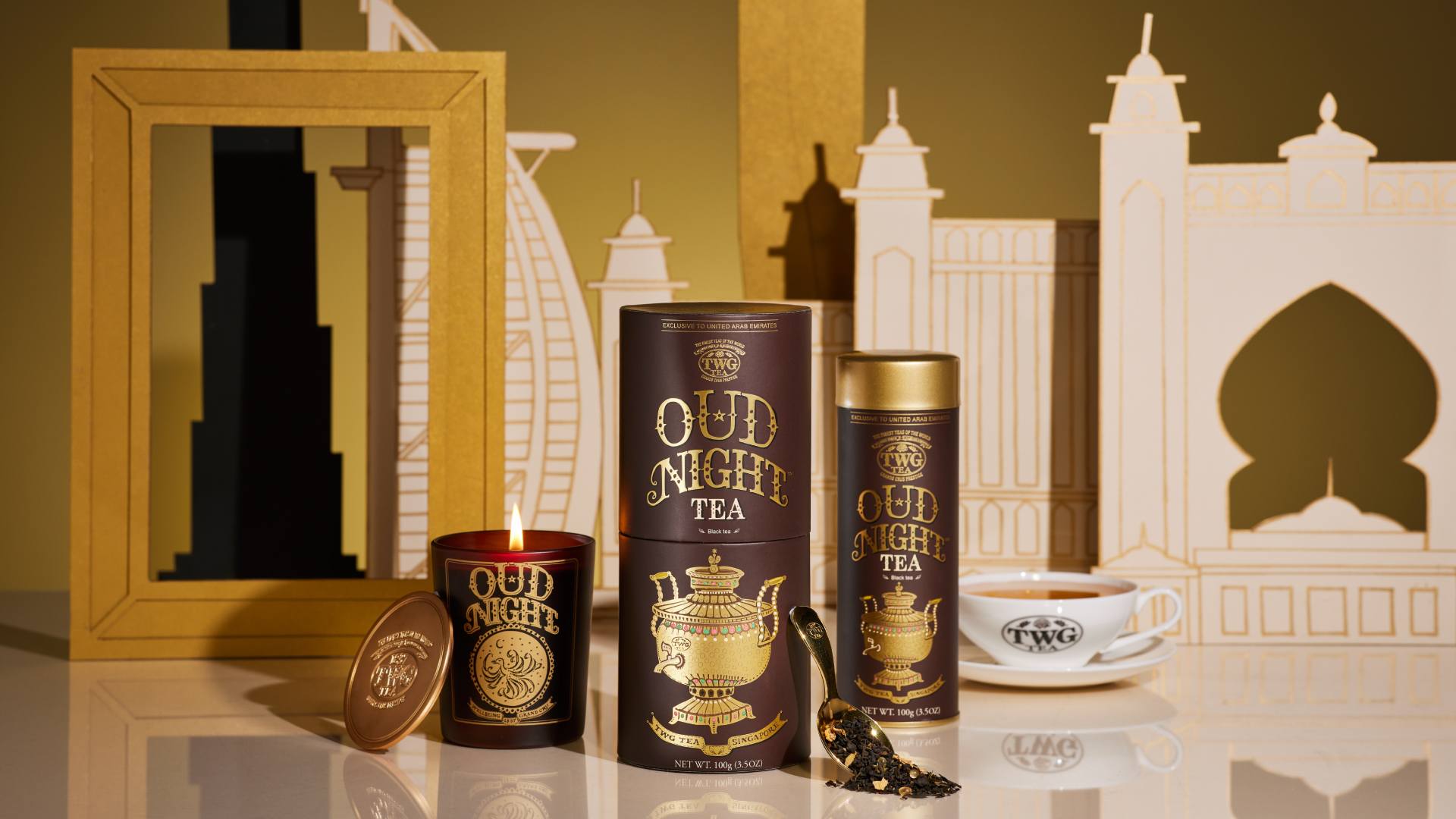
Long before it perfumed royal courts and desert majlis, oud carried stories: of caravan routes and coastlines, of embers kept burning through the night. Tea travelled those same routes, and now, TWG Tea, the world’s finest luxury tea brand, unites them in Oud Night Tea, a distinguished addition to the Grand Mode Tea Collection created exclusively for the United Arab Emirates. The evocative black tea unfolds in richly layered notes of molten resin, vanilla, smouldering rose flowers, rare calambac, incense and delicate smokiness.
Drawing upon the brand’s unrivalled expertise in sourcing the finest harvests from renowned tea-producing regions around the world, this debut marks the international launch of a new collection of country-exclusive teas. Guided by its intimate knowledge of the history, tea traditions and culture in each of its locations, as well as the tastes and preferences of tea lovers around the world, TWG Tea’s master blenders compose every tea as a perfumer creates a fragrance — layering exceptional tea leaves, rare ingredients and evocative aromas to reveal an entirely new experience in the teacup. Capturing the flavours, heritage and spirit of place, each exclusive blend will celebrate both the finest teas that define the country and TWG Tea’s singular artistry in transforming them into an unforgettable sensory journey.

Crafted from exceptional whole leaf black tea sourced directly from the world’s finest tea gardens, Oud Night Teareflects TWG Tea’s unwavering pursuit of excellence in sourcing, blending and crafting the world’s most extraordinary teas. Expertly blended to reveal remarkable depth and complexity, it is an homage to the ancient trade routes that carried tea and oud across India, the Arabian Peninsula and beyond. A tribute to the region’s enduring cultural legacy, this exclusive creation is available at TWG Tea Boutiques in Dubai and Abu Dhabi.
Steeped in Legacy
For centuries, Oud has been revered as one of the world’s most precious aromatic woods, treasured by royalty and noble families across the Middle East for its immense rarity, craftsmanship and cultural significance. Traditionally burnt in homes and mosques as a gesture of hospitality and reverence, its rich and captivating fragrance has become an enduring symbol of the region’s cultural heritage.
With Oud Night Tea, TWG Tea transforms this ancient treasure into an infusion: rare oud reveals a dark, earthy sensuality within the cup, while smouldering rose, molten resin, rare calambac, incense and lingering vanilla unfold in harmonious layers. Housed in a collectible tin in the colour of aged oud, lacquered in deep brown and traced with gold, Oud Night Tea offers tea lovers a new way to experience a fragrance it has cherished for centuries.
The Ritual of Oud
The ritual extends beyond the teacup with the Oud Night Tea Scented Candle, part of the Perfume of Tea Collection, crafted by TWG Tea’s master blenders in collaboration with a secret French parfumeur and cirier renowned for creations for the most luxurious fashion houses. Filling the air with warm notes of calambac, incense and smoky black tea, the candle is meticulously made through an artisanal process — beginning with the distillation of six kilograms of Oud Night Tea leaves to capture the essence of the blend, hand-poured into heat-resistant brushed glass, and finished with a 100% cotton wick, individually primed and hand-straightened for a clean, even burn.
Among these creations, the Oud Night Tea Scented Candle stands as the collection’s most evocative ode yet: a fragrance and an infusion, born of the same enduring legend.
Oud Night Tea from the Global Country-Exclusive Tea Collection, AED108 (100g). Oud Night Tea Scented Candle, AED339. Available from September 2026 exclusively at all TWG Tea Boutiques across the United Arab Emirates: Dubai Mall and Mall of the Emirates in Dubai, and The Galleria Al Maryah Island in Abu Dhabi.
Hospitality
ATM 2026 unveils new VIDEC research highlighting the growing influence of OTAs across Middle East travel
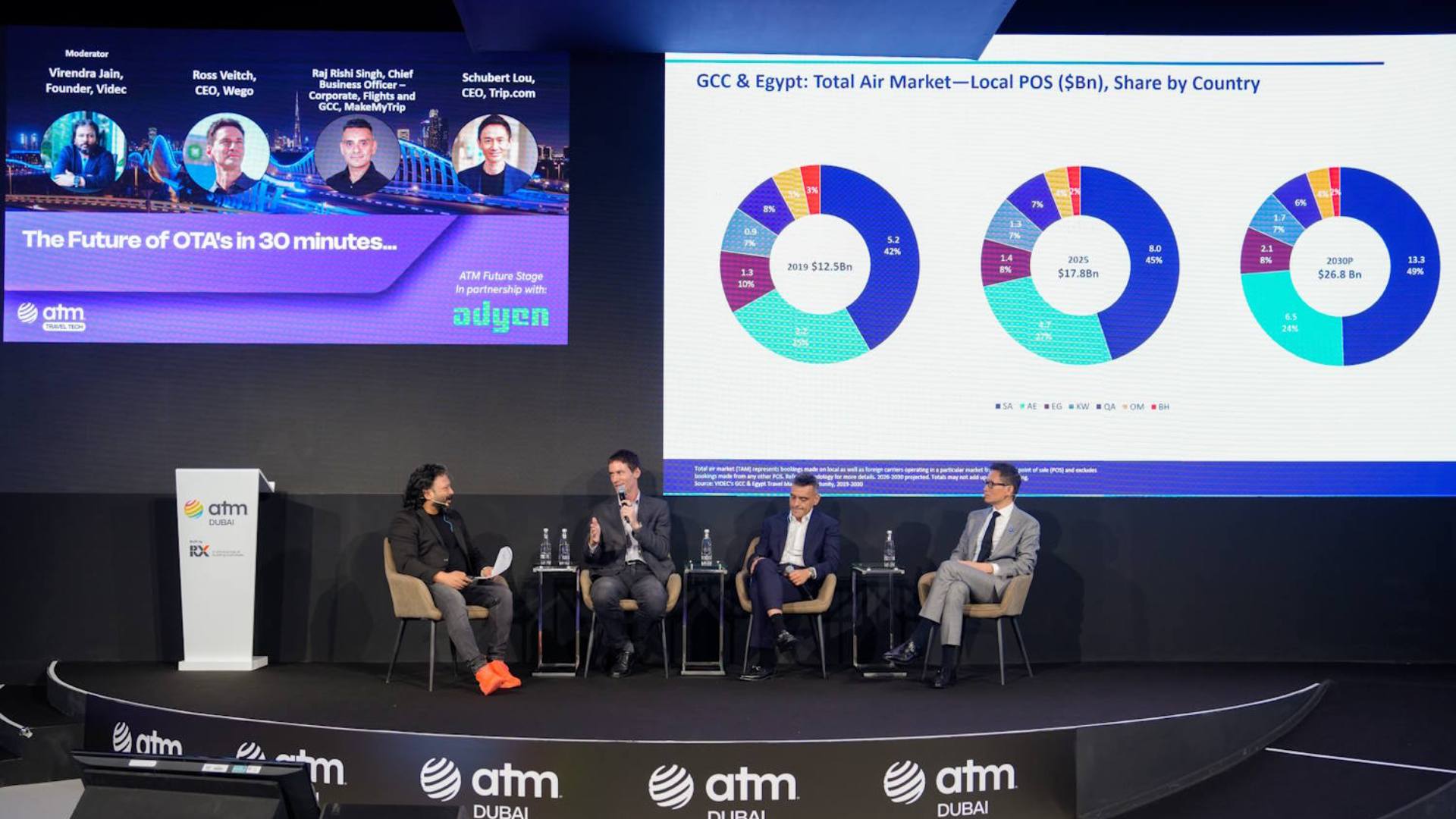
Online travel channels are set to play an increasingly important role in the UAE travel market’s recovery, with online air penetration forecast to rise to 52% by 2030, according to new research from VIDEC presented at Arabian Travel Market (ATM) 2026.
VIDEC’s GCC & Egypt Travel Market Sizing & OTA Benchmarking Study, 2019–2030 examines the fastest-growing travel segments, market projections and distribution trends shaping the UAE and wider region, including the growing influence of online travel agencies (OTAs).
The research forecasts that the UAE air market, measured using a demand-side methodology based on bookings made at the local point of sale (POS), will reach US$6.5 billion by 2030, driven primarily by online channels and the recovery of corporate travel demand. Online penetration is forecast to increase from 42% in 2025 to 46% in 2026 and 52% by the end of the decade.
The findings also highlight the scale of the wider UAE aviation market. UAE airports handled approximately 160 million passengers in 2025, with low-cost carriers accounting for 35% of traffic. Passenger volumes among low-cost carriers increased by 81%, from 31 million in 2019 to 56 million in 2025, while network carriers carried 103 million passengers in 2025, compared with 97 million in 2019.
VIDEC also estimates the UAE to be the region’s largest air market in gross booking value (GBV) terms, valued at US$55 billion in 2025 across local and global points of sale.
Virendra Jain, CEO and Co-Founder of VIDEC, said: “The UAE’s travel market opened strong in 2026. Between 2023 and 2025, Emirati carriers recorded robust growth, particularly the low-cost carriers. That momentum carried into the first two months of 2026, after which the market saw significant setbacks.
“Capacity for full-service carriers remains 15–25% below pre-war levels, while low-cost carriers (LCCs) – local as well as the likes of Air India Express, flynas and IndiGo – are recovering faster and are expected to end 2026 closer to their 2025 capacity. Flying point-to-point and catering primarily to short-haul regional demand, LCCs are leading the rebound as this segment is the first to return.”
Competition within the OTA market is also intensifying. According to VIDEC, MakeMyTrip maintained its leadership of the UAE air OTA market in 2026, supported by the South Asian diaspora and higher fares, while Trip.com has grown rapidly to become the second-largest air OTA after entering the UAE market more recently. In the hotel OTA category, Booking.com and Agoda together account for approximately 70% of the market.
Danielle Curtis, Regional Portfolio Director – UAE, RX Global, said: “VIDEC’s findings demonstrate how technology and changing booking behaviour are reshaping the UAE travel market. As online penetration continues to increase, the relationship between travellers, OTAs and travel suppliers is evolving rapidly, creating opportunities for both established platforms and newer market entrants.
“Providing access to research of this depth, and bringing the findings together with perspectives from some of the world’s leading online travel businesses, is an important part of ATM’s role in helping the industry understand where the market is heading and identify the opportunities that will shape its next phase.”
Following the VIDEC research presentation, the changing competitive landscape was explored during The Future of OTAs in 30 Minutes, which brought together Ross Veitch, CEO, Wego; Raj Rishi Singh, Chief Business Officer – Corporate, Flights and GCC, MakeMyTrip; and Schubert Lou, CEO, Trip.com.
The panel examined the future role of OTAs as regional and global platforms compete for a greater share of the increasingly digital traveller journey. The discussion explored how evolving consumer expectations and new technologies are changing online travel, as well as the importance of localisation, customer experience and payments in building loyalty and capturing growth.
Taking place from 14–17 September 2026 at Dubai World Trade Centre, the 33rd edition of Arabian Travel Market is being held under the theme ‘Travel 2040: Driving New Frontiers Through Innovation and Technology’, bringing the global travel community together to strengthen partnerships, exchange knowledge and explore the trends shaping the next era of tourism.
Concluding today, ATM is now in its 33rd edition and remains the leading international travel and tourism event in the Middle East, bringing together the global travel community to develop partnerships, share knowledge and explore new business opportunities across the sector.


Strong Tile of Spain presence at CERSAIE 2026
RAW Coffee Company Launches PROOF Bakery, Bringing Fresh Baking to Its Specialty Coffee Experience
Moonrise Takes Dubai Cuisine to Almaty with AUYL Collaboration



-
News11 years ago
SENDQUICK (TALARIAX) INTRODUCES SQOOPE – THE BREAKTHROUGH IN MOBILE MESSAGING
-

 Trending11 months ago
OPPO A6 Pro 5G Review: Reliable Daily Driver
-

 Tech News2 years ago
Denodo Bolsters Executive Team by Hiring Christophe Culine as its Chief Revenue Officer
-
 VAR1 year ago
Microsoft Launches New Surface Copilot+ PCs for Business
-

 Automotive2 years ago
AGMC Launches the RIDDARA RD6 High Performance Fully Electric 4×4 Pickup
-
Tech Interviews3 years ago
Navigating the Cybersecurity Landscape in Hybrid Work Environments
-
 Tech News2 years ago
Toshiba Announces MG10-D Series of Enterprise HDDs with Capacities up to 10TB
-

 Tech News1 year ago
Nothing Launches flagship Nothing Phone (3) and Headphone (1) in theme with the Iconic Museum of the Future in Dubai