
 Have a question? +971 56 404 0503




Tech News
Toshiba Unveils New Canvio Flex and Canvio Gaming 2.5” Portable Hard Drives


Toshiba Electronics Europe GmbH (Toshiba) has unveiled new designs for its Canvio Flex and Canvio Gaming 2.5-inch portable hard drives (HDDs). The stylish, lightweight, and functional units offer simple plug-and-play operation with USB3.2 Gen1 and capacities of 1TB, 2TB, and 4TB.
Catering to the needs of the modern digital lifestyle, the Canvio Flex presents itself in an elegant, warm silver finish, embodying a stylish portable storage solution that delivers unparalleled flexibility. With the inclusion of both USB Type-C and Type-A cables, this compact and lightweight HDD can effortlessly connect to Android and iOS smartphones and tablets, Macs and Windows PCs and other compatible devices, without the need for reformatting. This cross-device feature allows families, students, professionals, digital nomads and travellers to securely backup and access their important files and cherished memories, even on the go.
Tailored for gamers who need extra game space, the Canvio Gaming is a great choice. Its sleek dark grey metallic finish and blue LED complement the design of the latest gaming consoles. Moreover, the Canvio Gaming features an ‘always on’ mode, allowing for quicker resume times for ongoing games and quick response times when moving to the next gameplay.
“Since their initial release, our Canvio Flex and Canvio Gaming external hard drives have experienced a robust uptake in the market, providing customers with straightforward and convenient data storage solutions for specific user scenarios,” stated Larry Martinez-Palomo, Vice President of the Storage Products Division at Toshiba Electronics Europe. “With the introduction of new sleek and stylish designs, we are making them even more enticing, and this is sure to be met with appreciation.”
The new Toshiba Canvio Flex and Canvio Gaming hard drives will be available in 1Q 2025.









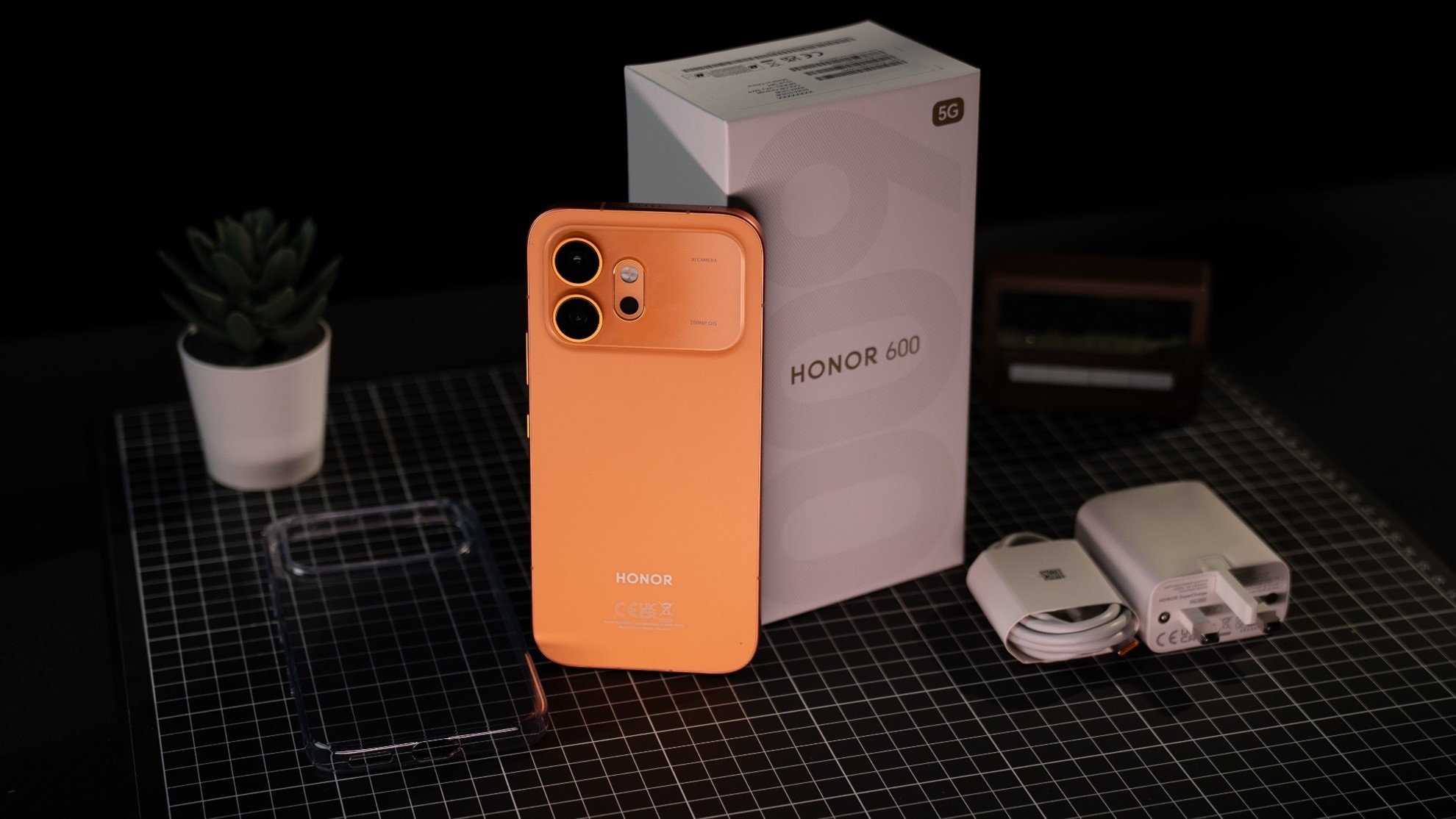
In a challenging global smartphone market, HONOR has demonstrated exceptional growth, according to the latest industry reports.
Data from Counterpoint Research reveals that global smartphone shipments declined by 6% year-over-year in Q1 2026. Despite this downturn, HONOR stood out by achieving the highest growth among leading brands, exceeding 25% year-over-year.
Further reinforcing this performance, IDC reported that HONOR also ranked as the fastest-growing brand among the top 10 smartphone manufacturers globally.
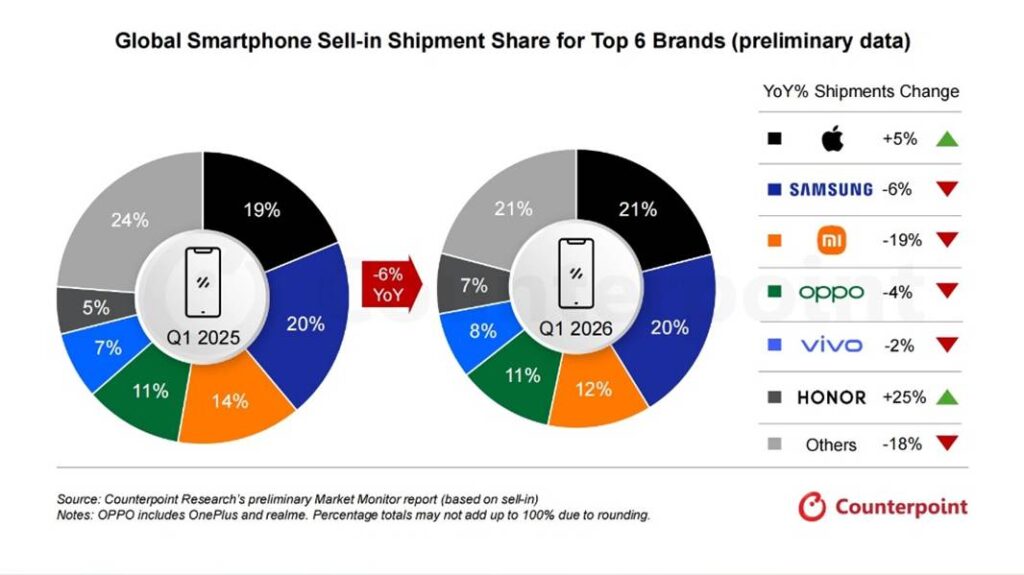
Counterpoint attributes HONOR’s strong performance to its strategic overseas expansion and regionally tailored product portfolio. This growth was further supported by aggressive promotional efforts and effective strategic execution, enabling the company to outperform the broader market even amid rising component cost pressures.
HONOR’s strong global momentum reflects its ability to consistently deliver high-quality, competitive products tailored to diverse consumer needs across markets, supported by a growing ecosystem of connected devices and IoT products that enhance user experience and drive brand loyalty.
Building on this success, HONOR is set to expand its presence in the Middle East and Africa region with the upcoming launch of its HONOR 600 Series including HONOR 600 and HONOR 600 Pro. The new lineup will feature a flagship-level 200MP AI camera system, powerful AI imaging capabilities including AI Image to Video 2.0, and an industry-leading 7,000mAh battery. Combined with premium design and flagship-class performance, the series is positioned to redefine user experience in its segment.
As competition intensifies across the global smartphone landscape, HONOR’s strong performance underscores its growing influence among leading brands. With continued investment in innovation, ecosystem development, and regional expansion, the company is well positioned to capture new opportunities and sustain its growth momentum in the quarters ahead.
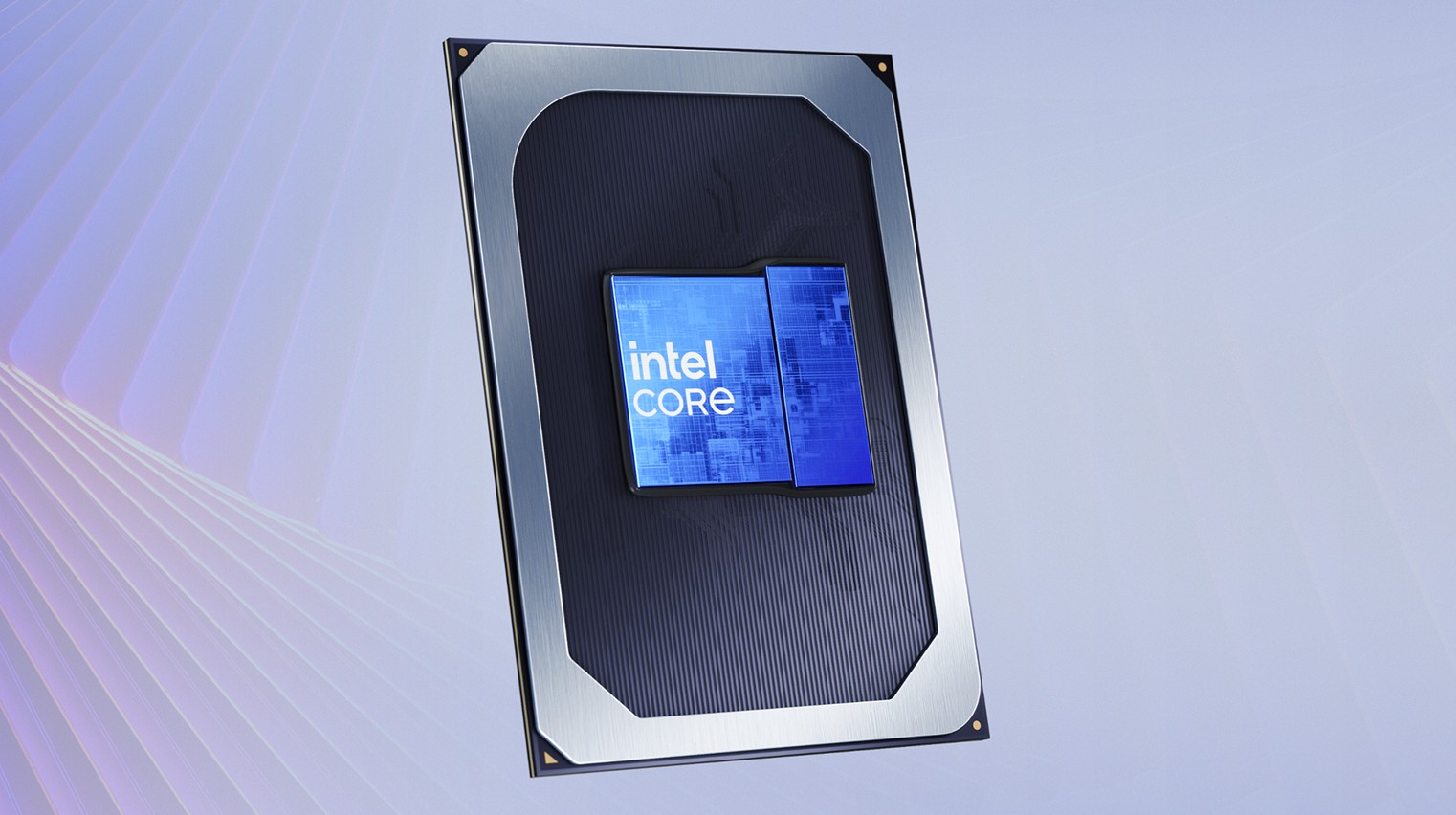
Intel has introduced its latest Intel Core Series 3 mobile processors, aimed at expanding advanced computing capabilities to value buyers, commercial users, and essential edge deployments.
The launch reflects a broader shift in the industry, where performance, efficiency, and AI readiness are no longer confined to premium systems but are increasingly expected across all tiers of computing.
Built on the architectural foundations of Intel’s newer Core platforms and leveraging advanced process technology, the Core Series 3 processors are designed to deliver a balanced combination of performance, battery efficiency, and scalability. The focus is on enabling reliable, everyday computing while supporting emerging workloads, including AI-driven applications.
Driving Value-Oriented Performance
Intel positions Core Series 3 as a significant upgrade path for users operating on older systems. Compared to five-year-old PCs, the new processors deliver up to 47% improvement in single-thread performance and up to 41% gains in multi-thread workloads. GPU-based AI performance also sees notable enhancements, enabling improved responsiveness in modern applications.
This performance uplift is complemented by a strong emphasis on efficiency, with reduced processor power consumption and optimisations aimed at extending battery life for mobile systems.
AI Capability Moves to the Mainstream
One of the key differentiators of the Core Series 3 platform is the introduction of hybrid AI-ready architecture within the value segment. With support for up to 40 platform TOPS, Intel is enabling a new class of systems capable of handling AI workloads at the device level.
The platform also integrates modern connectivity standards, including Thunderbolt 4, Wi-Fi 7, and Bluetooth 6, ensuring compatibility with next-generation peripherals and networks.
Expanding into Essential Edge Deployments
Beyond traditional laptops, Intel is positioning Core Series 3 as a scalable solution for edge computing environments. The processors are designed to support a wide range of applications, including robotics, smart buildings, retail systems, and industrial deployments.
By combining AI acceleration with energy efficiency, the platform aims to deliver the performance required for real-time processing while maintaining operational reliability in diverse environments.
Ecosystem and Availability
Intel expects broad adoption across the ecosystem, with more than 70 designs from OEM partners set to launch across multiple form factors. Consumer and commercial systems powered by Core Series 3 are rolling out through 2026, while edge-focused deployments are expected from Q2 onwards.


Cloudera, the only company bringing AI to data anywhere, today released its latest global survey, The Data Readiness Index: Understanding the Foundations for Successful AI, examining how prepared enterprises are to support AI at scale. Surveying more than 300 IT leaders in the EMEA region, including strong insights from Saudi Arabia, the report finds that while AI adoption is growing, most organizations still lack the data foundation needed for success.
The findings highlight a sharp contrast in how effectively organizations track their data. Nearly 9 in 10 EMEA IT leaders claim complete visibility into where all their data resides, compared to just 32% of respondents in Saudi Arabia. Furthermore, 62% of Saudi respondents cite data access restrictions as a major roadblock to effective data use.
This gap highlights an emerging ‘AI readiness illusion’: the belief that organizations are prepared to scale AI even as critical data challenges remain unresolved.
“Enterprises aren’t struggling to adopt AI, they’re struggling to operationalize it beyond experiments,” said Sergio Gago, Chief Technology Officer at Cloudera. “AI is only as effective as the data that fuels it. Without seamless access to all their data, organizations limit the accuracy, trust, and business value that AI can deliver. You can’t do AI without data.”
AI Adoption is High, but ROI Remains Elusive
While AI is now deeply embedded across the enterprise, achieving consistent returns on investment remains difficult due to a sharp geographical divide in implementation hurdles. Across EMEA, the struggle is largely centered on the inputs, with data quality issues (18%) and cost overruns (16%) cited as the primary causes of lackluster ROI. However, Saudi Arabia presents a different challenge focused on execution. In the Kingdom, weak integration into workflows is the overwhelming barrier at 29%, nearly doubling the concern over data quality, which sits at 15%.
These regional nuances are further tangled by significant infrastructure limitations. Around 65% of respondents in KSA report that performance constraints have hindered operational initiatives, highlighting the immense difficulty of scaling AI across fragmented environments.
Bridging The Data Gap
At the core of these challenges is a significant disconnect between data optimism and operational reality.
The report highlights that 95% of KSA respondents are highly confident in their data, but only 32% of that data is currently fully governed. While this outpaces the broader EMEA region, where only 26% of data is governed despite 91% confidence, it highlights a critical execution gap that organizations are now racing to fill.
The Kingdom is uniquely positioned to bridge this divide with 100% of Saudi respondents ready to adopt new governance frameworks, and 79% being extremely willing to transform their operations. This regional commitment suggests that Saudi Arabia’s proactive approach will likely outpace its peers in the race toward AI and digital maturity.
Strategic Alignment and the Accountability Gap
While leadership in both the EMEA and KSA regions understands the necessity of data infrastructure, the execution and accountability frameworks are worlds apart. More than 90% of EMEA respondents report a well-defined data strategy tied directly to business objectives, while only over half (53%) of Saudi Arabian respondents feel the same level of alignment.
Accountability and internal culture further widen this divide. In EMEA, 69% of leaders hold the CIO or CTO chiefly responsible for data readiness, whereas in Saudi Arabia, only 35% place ultimate responsibility on this role, indicating a more emerging ownership structure.
Beyond accountability and alignment, respondents in Saudi Arabia face a unique internal hurdle: 50% struggle with insufficient data literacy, while nearly a third (32%) cite a lack of executive sponsorship.
Data Readiness Will Define the Next Phase of Enterprise AI
As enterprise AI shifts from experimentation to execution, data readiness is emerging as the defining factor separating leaders from laggards.
Organizations able to fully access and govern all their data, wherever it resides, are far better equipped to deliver trusted, scalable AI. Notably, every respondent in the report indicated their organization is willing to adapt existing frameworks to support true data readiness.
As enterprises confront the limits of the AI readiness illusion, the path forward is clear: unlocking AI’s full value will require more than ambition; it will demand genuine data readiness. Those that close this gap will be best positioned to drive lasting impact and lead the next era of intelligent business.

WHEN UNCERTAINTY TESTS THE REAL OPERATING VALUE OF AUTONOMOUS AI TEAMS

HONOR Emerges as Fastest-Growing Smartphone Brand Despite Global Market Decline
RESILIENCE ACROSS BORDERS NAVIGATING GLOBAL UNCERTAINTY



-
News10 years ago
SENDQUICK (TALARIAX) INTRODUCES SQOOPE – THE BREAKTHROUGH IN MOBILE MESSAGING
-

 Tech News2 years ago
Denodo Bolsters Executive Team by Hiring Christophe Culine as its Chief Revenue Officer
-
 VAR1 year ago
Microsoft Launches New Surface Copilot+ PCs for Business
-

 Trending6 months ago
OPPO A6 Pro 5G Review: Reliable Daily Driver
-

 Tech Interviews2 years ago
Navigating the Cybersecurity Landscape in Hybrid Work Environments
-

 Tech News9 months ago
Nothing Launches flagship Nothing Phone (3) and Headphone (1) in theme with the Iconic Museum of the Future in Dubai
-

 Automotive2 years ago
AGMC Launches the RIDDARA RD6 High Performance Fully Electric 4×4 Pickup
-

 VAR2 years ago
Samsung Galaxy Z Fold6 vs Google Pixel 9 Pro Fold: Clash Of The Folding Phenoms